The right buyer for a distinctive home may be looking for more than a place to live. Knowing how to market a unique property starts with identifying what sets it apart, then shaping the campaign for people who will value that feature. Specialist communities, compelling photography and a clear account of the property’s character can help it reach those buyers.
It’s understandable to wonder whether an unusual design, setting or layout will appeal to enough buyers. The answer isn’t to disguise what makes the home different. Instead, present its strengths clearly and put them in front of people most likely to appreciate them.
This guide explains how to define your likely buyer, reach relevant audiences through social media and specialist channels, and use photography and video to bring the property to life. It also covers what to look for in an agent: speak with at least three and assess their experience, pricing approach, marketing ideas and advice on presenting your home. With a considered plan and an experienced guide, you can give your property’s distinctive qualities room to shine.
Key Takeaways
- Identify the distinctive feature that will matter most to a likely buyer, then shape the campaign around that motivation.
- Use relevant social media, hashtags and specialist communities to put the property in front of people already interested in its character.
- Tell the story behind the home and tailor the campaign to its design, setting and your selling goals.
- Choose imagery that captures both the property’s details and the lifestyle it offers, rather than relying only on room-by-room views.
- When weighing an agent’s approach, look for thoughtful pricing advice, relevant marketing ideas and local context, including a neighbourhood market report.
1. Targeting buyers who value the property’s distinctive features
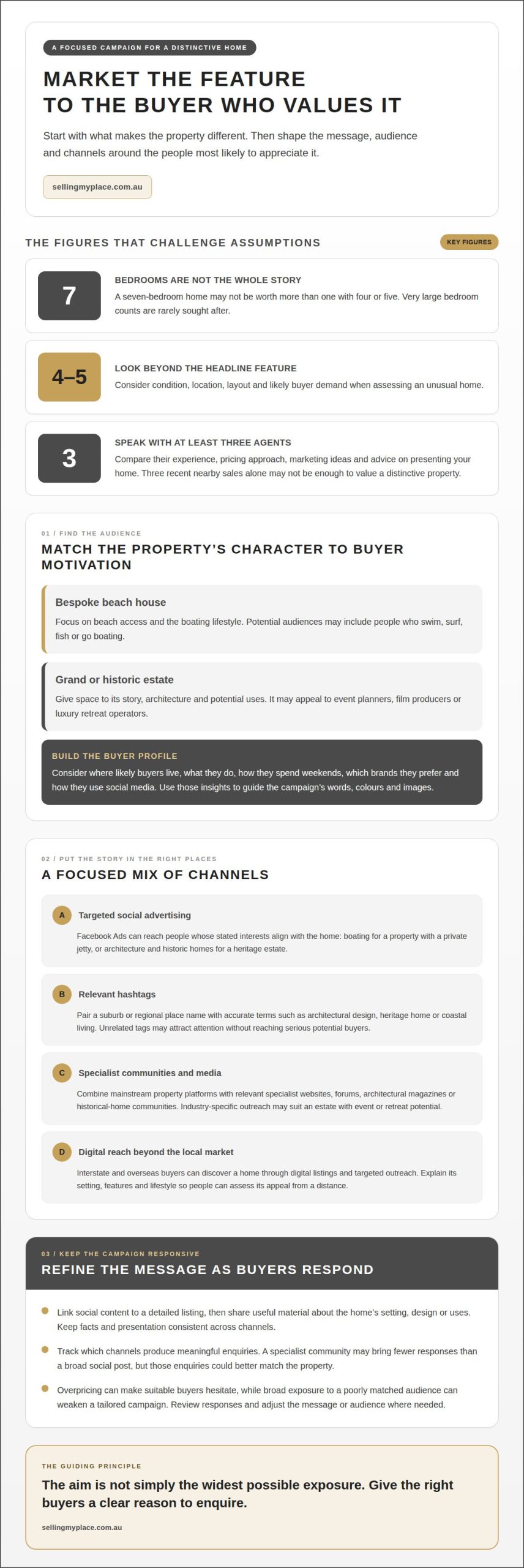
A practical first step in how to market a unique property is identifying the feature with the strongest appeal. A bespoke beach house, for example, may suit buyers who swim, surf, fish or go boating. A grand estate could interest event planners, film producers or luxury retreat operators. The same feature that delights one audience may matter little to another, so tailor the campaign to people most likely to value it.
Build a buyer profile before choosing the campaign’s language and channels. Consider where likely buyers live, what they do, how they spend weekends, which brands they prefer and how they use social media. Then think about the words, colours and images that will speak to them. For a coastal home, foreground beach access and the boating lifestyle. For a historic estate, give more space to its story, architecture and potential uses.
Property size alone doesn’t determine value. A home with seven bedrooms, for instance, may not be worth more than one with four or five, because very large bedroom counts are rarely sought after. Look beyond headline features and consider the property’s condition, location, layout and likely buyer demand. Three recent nearby sales aren’t enough on their own to value an unusual home. Its distinctive features and the audience they attract also matter.
Established buyer relationships can help put a distinctive property in front of people already looking for something similar. Relevant buyer networks and suitable property media can work together to reach a focused audience. The aim is not simply the widest possible exposure, but a clear reason for the right buyers to enquire. That is how to market a unique property with care: help it stand out for the right reasons.
Interstate and overseas buyers can discover a property through digital listings and targeted outreach to relevant buyer networks. Clear information about the home’s setting, features and lifestyle helps people assess its appeal from a distance before arranging a closer look.
Overpricing can make suitable buyers hesitate, while broad exposure to a poorly matched audience can weaken a tailored campaign. Set a considered pricing approach and focus media on people most likely to value the property’s distinctive features.
Allow time to find the right buyer. Unusual homes may take longer to sell than standard properties, so a seller and agent should avoid rushing the campaign or compromising on value. Review buyer responses as they come in, then adjust the message or audience where needed. A steady approach gives the property’s particular strengths a better chance to connect with someone who genuinely appreciates them.
2. Social media targeting, hashtags and specialist communities
Social campaigns for a unique home should centre on its defining characteristics, not a generic stream of property posts. Start with a clear audience, then match the platform, images and message to what those buyers care about. A heritage house, for example, calls for different content from a coastal retreat or architect-designed residence.
Use Facebook Ads to reach people whose stated interests align with the property. A home with a private jetty could be promoted to audiences interested in boating, while a heritage estate may suit people following architecture or historic homes. Keep each campaign focused: an ad built around one distinctive feature, with a direct path to property details, gives people a clear reason to click.
Hashtags can help organise social posts around a property’s style, location and lifestyle. Pair a suburb or regional place name with relevant terms such as architectural design, heritage home or coastal living. Choose tags that describe the actual property; broad or unrelated hashtags can attract attention without reaching serious potential buyers.
Which marketing channels work best for unusual properties in Australia? Combine social media advertising with specialist websites or forums that serve the likely audience. Architectural magazines and historical-home communities can complement mainstream property platforms, while industry-specific outreach may suit an estate with event or retreat potential.
Digital campaigns can also target audiences by geography. For an Australian home with interstate appeal, direct advertising towards relevant areas beyond the local market. Geofenced digital advertising may help place a campaign near locations or audiences connected to the property’s appeal. The message should explain why the home suits that audience, rather than relying on location alone.
Make the campaign useful beyond the first post. Link social content to a detailed listing, then share new material that answers likely questions about the home’s setting, design or uses. A short post about a restored feature, for example, can lead readers to fuller property information. Keep the facts and presentation consistent across channels.
Finally, track which channels produce meaningful enquiries and adjust the campaign accordingly. A specialist community may bring fewer responses than a broad social post, but those enquiries could better match the property. An agent can coordinate targeted advertising, relevant industry outreach and specialist placements into one coherent plan. For tailored guidance on reaching the right audience, discuss your property marketing.
3. What Will Actually Help You Market a Unique Property?
A standard listing may describe the rooms, but a unique home needs a clear account of what sets it apart. Distinctive design, architectural style, historical significance, location, zoning or exceptional features can all make a property stand out. Explain those qualities accurately rather than disguising them or describing them as ordinary.
Start the listing with the feature that matters most, then connect it to a real experience. A home designed around a garden courtyard might offer a sheltered place for outdoor dining. For a historic residence, explain its architectural details and the story behind its design. Specific, accurate descriptions help buyers picture the property and understand what distinguishes it from comparable homes.
What makes a property unique or unusual in Australia? It may be its architecture, history, setting, zoning or a feature that’s uncommon in its local market. The defining quality depends on the home itself, so sellers should focus on what genuinely distinguishes that property.
How do you write a compelling listing for a distinctive property? Lead with its strongest genuine point of difference, then support it with clear details about the layout, setting and features. Explain its inspiration or history where that adds meaning, and avoid claims the property cannot substantiate.
Australian advertising and disclosure requirements can vary between states and territories. Keep listing claims accurate and supported, and ensure the campaign accounts for the requirements that apply to the property’s location.
How much does a premium property marketing campaign cost in Australia? The price depends on the campaign’s scope, production, placements and duration, with a quote provided after a request. The right mix depends on the property and the seller’s goals, rather than a fixed package.
Choose a sale method to suit the property and likely buyer response. An auction, offers by a set date, offers-over listing or formal tender may suit different campaigns. Auction or private treaty isn’t automatically better for a unique property. The choice depends on the buyer pool, your priorities and how offers are best managed.
Extend the listing with materials that bring the property’s character to life. A tailored virtual tour can show how rooms connect, while a professional video can share the home’s story and history. Themed open homes may suit an architect-designed residence or historic property, giving visitors a reason to engage with its character.
Specialist channels can complement mainstream platforms. Architectural magazines and historical-home websites may reach readers drawn to design or heritage. Magazine-style brochures with bespoke branding, targeted direct mail, and collaborations with local businesses or influencers can add further exposure. Match each choice to the property, your goals and current market conditions, then keep the message consistent across listings and campaign materials.
4. Using professional photography and videography
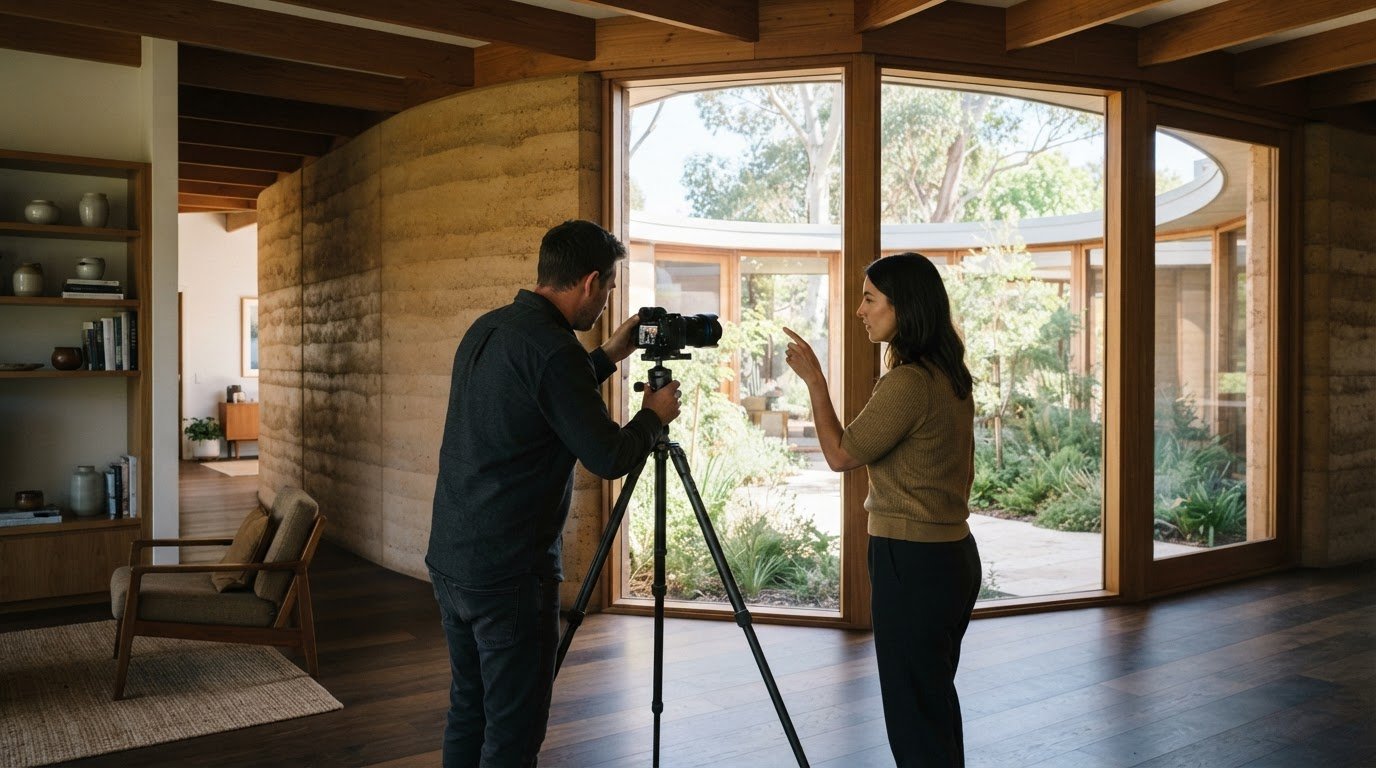
For distinctive real estate, professional photography should show what makes the property worth seeing. Plan a shot list around its strongest features, such as a sculptural staircase, established garden or unusual roofline. Capture both straightforward and artistic angles: a clear view helps buyers understand the layout, while a carefully chosen detail conveys atmosphere. Each frame should support the property’s appeal, not compete with it.
Location can be the main point of difference. For a home beside a beach, on a hillside or within extensive grounds, aerial photography can show how the property sits within its surroundings. Drone images and a fly-through video can reveal access, landscape and the relationship between the home and its setting. These views help interstate buyers understand context that interior photographs alone can’t provide.
Use lifestyle-led photography and video alongside room-by-room coverage. A veranda set for breakfast, a sunlit studio or a path through a native garden can show how daily life might unfold. Keep each scene tied to the property’s genuine features. For example, a rural home’s video could move from its entrance to the outdoor entertaining area, then show the surrounding landscape.
A strong video needs a clear purpose. Rather than rushing through every room, build a simple sequence around the home’s character: establish the setting, introduce its defining design details, then show how key spaces connect. A heritage house might open with its façade and original features, while an architect-designed home could highlight the flow between indoor and outdoor areas.
Photography should reflect the likely audience’s interests. If buyers are drawn to architecture, give considered attention to materials, lines and craftsmanship. If the property’s appeal lies in coastal living, balance interior images with views of the setting and outdoor spaces. Consistent colour and lighting help the listing feel cohesive, while honest framing gives buyers a clear sense of each space.
Virtual tours can add an interactive 3D experience for buyers who can’t attend in person. Use the tour to make the layout easy to follow, and pair it with professional photographs that draw attention to specific features. Together, still images, aerial footage and video give a unique home a fuller introduction, helping the right audience understand its character before arranging a closer look.
Marketing a unique property can include a distinctive video and a mix of straightforward and artistic photography. This varied approach helps communicate the property’s individual appeal. Lifestyle-led images and video can convey its character and the experience of living there, rather than relying only on a room-by-room walkthrough.
For a unique property whose point of difference is its location, drone photography and a drone fly-through video are recommended. These formats can make the setting part of the visual story, complementing lifestyle-led scenes and a distinctive video. Choose the visual approach according to what sets the property apart, so the photography and footage reinforce its strongest point of difference.
5. Choosing an agent with experience selling unusual properties
The right estate agent does more than place a listing online. They need to understand what makes the home distinctive, identify likely buyers and build a campaign around those strengths. Before appointing someone, speak with at least three agents. This gives you a clearer basis for comparing their experience, proposed strategy and advice.
Ask anyone advising on your sale to explain their experience with properties that share meaningful characteristics with yours. A past sale needn’t be identical, but they should show how they recognised a property’s appeal and reached suitable buyers. Look for specific examples of creative marketing, such as specialist media or tailored presentation, rather than broad claims about being able to sell anything.
Discuss the pricing approach in detail. For unusual homes, a handful of nearby sales may not capture the value of distinctive design, setting or features. A considered assessment weighs relevant comparable sales alongside the property’s condition, buyer demand and point of difference. Ask how that reasoning can be presented clearly to potential buyers.
Compare campaign proposals by looking at the audiences, channels and materials they include, and why each suits your property. For example, an architect-designed home may call for design-focused media, while a rural estate could benefit from imagery that conveys its setting. Consider how enquiry quality will be reviewed and how the campaign can be adjusted.
Include practical advice on property presentation. An experienced agent can identify which details deserve attention before photography and which features should lead the listing. For a home with an unusual floor plan, they might recommend showing how rooms connect. For a heritage property, they could highlight original details with accurate, considered wording.
Discuss costs and fee structures openly before making a decision. Compare what each proposal includes, how marketing is handled and how fees relate to the sale. The lowest proposed cost alone doesn’t show whether a campaign suits the home. Clear explanations help you understand the trade-offs without relying on promises of a particular result.
Finally, notice how each agent listens. Do they ask about your priorities, understand the home’s less obvious strengths and explain their recommendations plainly? Selling a distinctive property calls for close attention throughout the campaign. Choose the agent whose evidence, pricing approach and marketing ideas fit your home, not simply the most polished presentation.
Ready to discuss a tailored approach to selling? Talk through your property sale.
Kincade International Direct Sales: Neighborhood Market Reports
Kincade International Direct Sales offers Neighborhood Market Reports to help sellers consider local market context alongside a distinctive property’s features. If you’re preparing to sell, this can support a more informed discussion about positioning and your next steps.
For owners who want help beyond local context, Kincade International Direct Sales also provides Pre-Sale Property Consulting and Residential Property Listing Services. Buyer Representation is available for buyers seeking guidance with a distinctive home. These services offer practical support at different stages, from preparing for a sale to navigating a purchase.
Each property has its own story and selling considerations. To discuss your plans, contact Kincade International Direct Sales.
Give your property a thoughtful next step
A distinctive home deserves a sale plan that respects both its character and your priorities. The next decision is how much support you want, from preparing the property for sale to managing its listing or buying journey. A clear conversation can help turn your ideas into practical next steps without losing sight of what makes the home special.
Kincade International Direct Sales offers Residential Property Listing Services, Buyer Representation and Pre-Sale Property Consulting. These services support owners preparing to sell and buyers seeking guidance with a distinctive property. If you’re considering how to market a unique property, begin with the outcomes that matter most to you, then shape the approach around them.
Contact Kincade International Direct Sales to discuss your property plans and the support that could suit your next move. A considered beginning can make the road ahead feel clearer, and help you move forward with confidence.
Frequently Asked Questions
What Will Actually Help You Market a Unique Property?
A coherent campaign works best when every part reinforces the same reason to consider the property. For example, if its defining quality is a calm, secluded setting, make sure the listing, campaign materials and inspection experience help buyers understand that atmosphere. Before launch, settle on the central message and use it to guide what you feature, which audiences you reach and how enquiries are handled.
How should you identify the target buyers for a unique property?
Start with the practical needs the property could meet, then distinguish likely buyers from people who are simply curious. A home with a large workshop, for instance, may attract someone seeking space for a hands-on hobby or business. Review questions and feedback from early inspections, too. Enquiries about access, storage or room use can show which features matter most and help refine the campaign.
Should you use professional photography, video, drone footage, or virtual tours?
Choose media according to what a buyer needs to understand. Professional photographs clarify finishes and room proportions; video can communicate how the home feels to move through. Aerial footage helps when the relationship between the house and its surroundings matters, while a virtual tour lets distant buyers explore the layout. For example, a multi-level home may benefit from a tour that makes the connections between floors easy to follow.