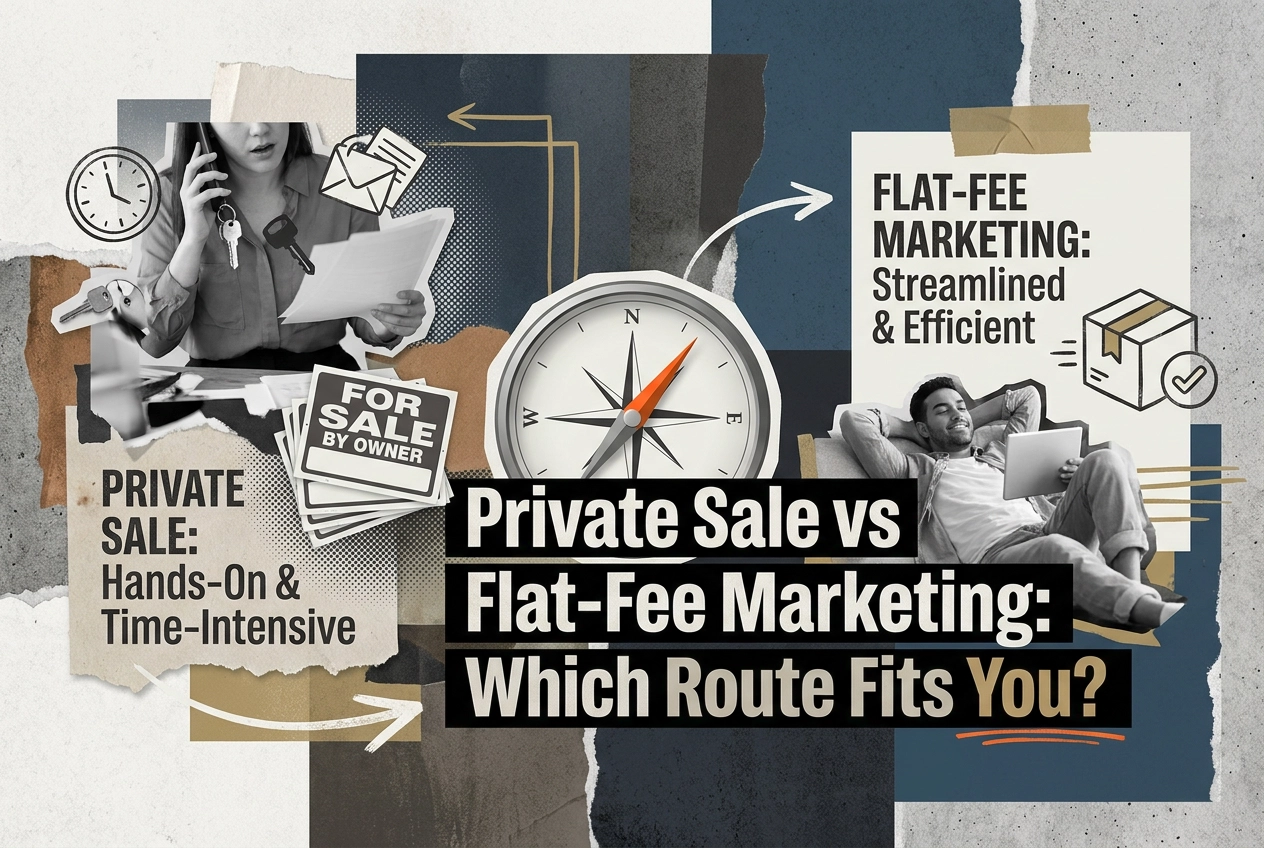
So you want to sell your home without handing over a commission? The real choice is not private sale versus flat-fee marketing. It is how much of the sale you want to run. A private house sale puts every task, from pricing to buyer chats, in your hands. Flat-fee marketing buys back the campaign build and some admin. For example, sellingmyplace.com.au says its flat-fee service from $799 excl. GST includes listing, marketing floor plans, free online valuations, pricing strategy and guides. That is a company claim, not an independent verification, so weigh it as one option. In this post, we will map what a private house sale really involves, what flat-fee marketing actually buys, who does what in each route, where control stays with you, and where convenience is bought. We will also ask how many hours a week you can give and how confident you are handling buyer enquiries. We will also cover a legal and state checklist before you sell a house privately, plus FAQs. Then we will land on one deciding question: how much of the sale do you want to run? Let’s find the route that matches your hours, not the hype.
What a Private House Sale Really Involves
A private house sale means selling without listing under a traditional agent. You keep the proceeds minus your own costs rather than paying a commission percentage, and you keep every task: pricing, listing, inspections, enquiries, negotiation and the contract timeline. For how this plays out across Australia, see Private House Sales Australia: The 2026 Landscape.
Price discovery is yours. Queensland Government guidance suggests an independent valuation plus a look at comparable asking prices, so you land on a realistic figure rather than an aspirational one. Legal review is yours too: the same guidance says to get a solicitor to check the contract before signing, and never to sign if anything in it makes you uncomfortable.
The upside is genuine. You choose the marketing, the inspection times, your negotiation stance and which offer you accept, with no third party filtering your buyers.
What Flat-Fee Marketing Actually Buys You
A private sale leaves the campaign build entirely to you. Flat-fee marketing sells that build back as a paid service rather than a commission: you pay one set fee and keep your equity instead of surrendering a percentage of the sale price.
Per sellingmyplace.com.au, the flat-fee service starts from $799 excl. GST and includes listing, marketing floor plans, free online valuations, pricing strategy and seller guides. Treat that as a company claim rather than independently verified, and check what’s actually inside a flat-fee property marketing package before signing.
Day to day, the listing and campaign assets are built for you, so you are not producing photos, floor plans or portal listings from scratch.
Scope matters though. Buyer-enquiry handling, negotiation, legal review and cooling-off management are not stated as part of the flat-fee service, so confirm exactly what is covered first.
Both routes are commission-free. A flat fee buys back the campaign build, not the whole sale.
Who Does What in Each Route: The Full Task Map
So the flat fee buys the campaign build. But who actually does each job once your home is listed? Here is the honest split.
| Task | Private sale | Flat-fee marketing |
|---|---|---|
| Pricing | You research comparables and set the figure yourself. | A pricing strategy is included, though the final decision remains yours. |
| Listing | You assemble and upload it. | Listing is included, per sellingmyplace.com.au. |
| Floor plans | You arrange or create them. | Marketing floor plans are included, per sellingmyplace.com.au. |
| Enquiries | You field the calls, texts and emails. | Same, because enquiry handling is not described as included. |
| Inspections | You run open inspections and private viewings. | Confirm whether inspection support sits in your package before assuming it does. |
| Negotiation | You negotiate and decide on offers. | Same, unless you separately engage a negotiator or agent. |
| Contract and legal | You arrange solicitor review and manage the process. | Same. |
| Cooling-off | You manage the statutory steps. In Queensland, a prescribed warning statement sits directly above the buyer’s signature, per Queensland warning statement rules. | Same. |
Control stays with you in both routes. The real difference is how much of the campaign build is done for you. To weigh that against commission, see our guide to Evaluating ROI: Flat-Fee Marketing vs. Agency Commissions.
Where Control Stays With You in Both Routes
Here’s the part that doesn’t change, whichever route you pick: you’re still the decision-maker.
You set the asking price, and you’re the one who adjusts it if the market pushes back. You screen every enquiry personally, so the buyers who walk through your home are the ones you chose. When offers land, you sit across the negotiating table and say yes, no, or come back with more.
You appoint your own solicitor and set the contract timeline, rather than waiting on someone else’s diary. And you keep the full sale price less your own costs. There’s no commission percentage deducted at settlement in either route.
That’s the honest trade-off. Flat-fee marketing can take the campaign build off your plate, but it doesn’t take your authority away. Next, let’s look at exactly where convenience is bought.
Where Convenience Is Bought
Yes, the control stays with you. What a flat fee changes is who builds the campaign.
Listing creation and marketing floor plans are produced for you rather than by you, so you skip the fiddly work of getting a property online. A pricing strategy is bundled in too, which shortens the research phase for sellers unsure where to start. Free online valuations add a reference point before you commit to a figure, though it pays to know how accurate Australian property valuation tools really are. Seller guides then walk you through the process, so you are not piecing requirements together from scratch.
The boundary worth testing is what happens once the listing goes live. Enquiry handling and negotiation are not stated as part of the flat-fee service, so ask before you sign up.
How Many Hours a Week Can You Genuinely Give?
Now that you know what a flat fee buys back, the next question is how much time you can actually put in. No reliable public data quantifies the weekly hours a private sale takes, so treat this as a self-assessment, not an average.
Ask yourself four blunt questions:
- Enquiries: can you reply to new buyer enquiries within a few hours, most days, for the length of the campaign?
- Inspections: can you host open homes or private viewings on weekends and evenings without cancelling on buyers?
- Admin: can you keep on top of contract documents, disclosures and solicitor correspondence alongside your job and family?
- Follow-up: can you chase quiet buyers, re-engage past inspections and keep momentum going if the first fortnight is slow?
If you work shifts, care for someone, or juggle a packed household, be honest. A thin week is exactly when a campaign stalls.
The middle path is simple. If the honest answer is a few hours a week, a flat fee that removes the campaign build can free up the time you do have for enquiries and negotiation.
For a fuller walk-through of the selling process, see Property for Sale in Australia: The Complete Guide to Listing and Selling Your Home.
How Confident Are You Handling Buyer Enquiries?
Time is only half the test. The other half is whether you can run the enquiry process yourself. That means screening strangers, asking about finance pre-approval, booking viewings, answering questions about the building and the neighbourhood, and following up when someone goes quiet. Then comes negotiation: lowball offers, counteroffers, conditions, and holding your price when folding would be easier. It feels different when the property is your home. Ask yourself honestly: can you decline an offer without apologising? Can you keep buyer details organised? Can you stay calm if a deal collapses? Poor screening is a real risk here, so it pays to understand how unsuitable buyers slip through. Neither private sale nor flat-fee marketing removes these tasks unless you separately hire someone. The confidence test matters more than the marketing test.
The Deciding Question: How Much of the Sale Do You Want to Run?
So here it is: how much of the sale do you actually want to run? A private house sale and flat-fee marketing aren’t rivals; they’re points on a control-versus-convenience scale.
Want to run everything and keep every dollar of campaign savings? Sell privately. Want pricing and negotiation to stay yours, but not build the listing and campaign yourself? Flat-fee marketing fits. You can see how the value stacks up in Comparing the Value: Flat-Fee Packages vs. Traditional Commissions.
The two mismatch traps: paying a flat fee expecting full sale management, or choosing a pure private sale while hoping spare hours will appear.
Run this one-minute checklist:
- Hours you can genuinely give each week.
- Confidence handling enquiries and offers.
- Legal support already arranged.
- How much campaign build you want outsourced.
Next, let’s check the legal and state rules before you list.
Legal and State Checklist Before You Sell House Privately
Your decision is made, so now protect it. Every commission-free route still ends at a contract, and Queensland is the only state where the legal rules behind this piece were verified in detail.
Queensland Government guidance is blunt: always have a solicitor check the house sale contract before you sign, and don’t sign if anything in it makes you uncomfortable.

That state also requires a cooling-off warning statement on the contract, in prescribed wording, sitting directly above the buyer’s signature. Most residential sales there carry a five business day cooling-off period, and a buyer who terminates during it pays up to a 0.25% termination penalty of the purchase price.
Don’t generalise any of that. Cooling-off rules, warning statements and penalties differ by state and territory.
Confirm you’re using the current contract form for your state; the College of Law flagged the 2026 edition of the Contract for Sale and Purchase of Land in April 2026.
Solicitor fees vary and weren’t sourced here, so request quotes rather than relying on a general estimate. Think of a review as a small cost against a six-figure transaction, and remember it applies whether you sell privately or use flat-fee marketing.
FAQ: Private House Sale vs Flat-Fee Marketing
Still deciding between a private house sale and flat-fee marketing? Here are the quick answers.
Do I need a solicitor for a private house sale? Yes. Guidance advises having a solicitor check the contract before signing, and that applies whether you sell privately or use flat-fee marketing.
What does flat-fee marketing include? Per sellingmyplace.com.au, from $799 excl. GST, it covers listing, marketing floor plans, free online valuations, pricing strategy and guides. Confirm whether enquiry handling or negotiation are included.
Is a private sale cheaper than using an agent? Both routes avoid agent commission, but private sellers still pay for marketing, legal review and their own time.
Can I switch routes if it is not working? Yes. Many sellers start privately and add paid campaign support, so the decision is not permanent.
Does flat-fee marketing handle cooling-off? That is not stated as part of the service. In Queensland, the warning statement and cooling-off obligations sit with the contract, so confirm with your solicitor.
Do the same rules apply everywhere? No. Cooling-off periods and contract requirements are state-specific, so check your own state’s guidance before listing.
Choose the Route That Matches Your Hours, Not the Hype
So the honest answer comes down to hours and confidence, not hype. Both routes are commission-free; the real difference is how much of the campaign build and admin you hand over.
If you can give the sale steady hours each week and handle buyer enquiries without dread, a private house sale keeps every commission dollar in your pocket. If the campaign build is the part you cannot fit in, a flat fee from $799 excl. GST covers listing, marketing floor plans, free online valuations, pricing strategy and guides.
Either way, the non-negotiables do not move: arrange solicitor contract review, confirm your state’s cooling-off rules, and never sign a contract you are uncomfortable with.
Not sure where to start? Grab a free online valuation and work through the step-by-step selling guides before you list.
Conclusion
Choosing between a private house sale and flat-fee marketing is not about hype. It is about your hours, your confidence, and how much of the campaign you want to run yourself.
Both routes avoid agent commission. A private sale keeps every commission dollar with you if you can give steady weekly hours and handle buyer enquiries without dread. A flat fee from $799 excl. GST covers the campaign build, listing, marketing floor plans, pricing strategy and guides when that admin will not fit.
The non-negotiables do not move: solicitor contract review, your state’s cooling-off rules, and never signing a contract you are uncomfortable with. Remember too that the decision is not permanent; you can add campaign support later.
Start with a free online valuation, then work through the step-by-step selling guides before you list.
Frequently Asked Questions
What does a private house sale involve?
A private house sale means selling without listing under a traditional agent. You keep the proceeds minus your own costs rather than paying a commission percentage, but you also keep every task: pricing, listing, inspections, enquiries, negotiation and the contract timeline.
What does flat-fee marketing actually buy you?
Flat-fee marketing sells the campaign build back as a paid service rather than a commission. Per sellingmyplace.com.au, the service starts from $799 excl. GST and includes listing, marketing floor plans, free online valuations, pricing strategy and seller guides. That is a company claim, not independently verified. Buyer-enquiry handling, negotiation, legal review and cooling-off management are not stated as part of the flat-fee service, so confirm what is covered before signing.
Do I still control the sale if I use flat-fee marketing?
Yes. In both routes you set the asking price, screen enquiries, decide which offers to accept, appoint your own solicitor and keep the full sale price less your own costs. A flat fee changes who builds the campaign, not who makes the decisions.
How do I know if I have the time for a private sale?
The post suggests a self-assessment. Ask whether you can reply to buyer enquiries within a few hours most days, host open homes or private viewings on weekends and evenings, keep up with contract documents and solicitor correspondence, and chase quiet buyers. No reliable public data quantifies the weekly hours a private sale takes.
Do I need a solicitor to check the contract?
Yes. Queensland Government guidance advises having a solicitor check the house sale contract before signing, and never signing if anything in it makes you uncomfortable. This applies whether you sell privately or use flat-fee marketing.