Negotiation Strategies for Private Sellers to Weigh Offers and Terms
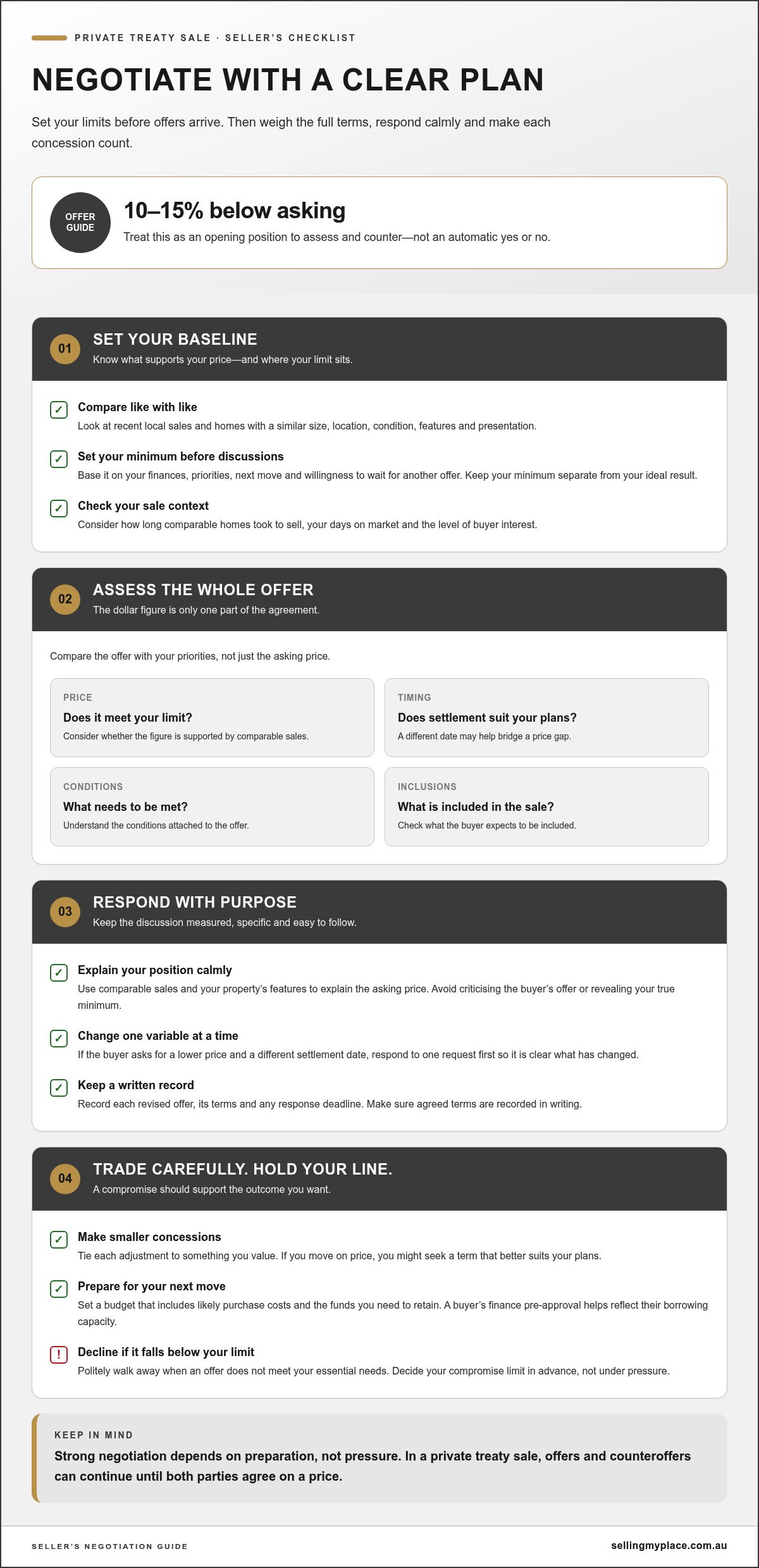
The strongest negotiation strategies for private sellers start with a clear minimum price and a view of the terms that matter most. In an Australian private treaty sale, offers and counteroffers generally move back and forth until buyer and seller agree on a price. An offer 10 to 15% below the asking price can be an opening position to consider and counter, rather than an automatic yes or no.
It’s understandable to focus first on the dollar figure, especially when selling a home carries personal and financial weight. But settlement timing, conditions and inclusions can matter just as much as price. Preparing in advance helps you respond calmly, protect your priorities and keep a promising conversation moving.
This guide explains how to assess an offer’s timing, compare its full terms, understand what may matter to a buyer and manage emotions during negotiation. You’ll also learn how to make a counteroffer, when a compromise may suit your plans and when it may be wiser to walk away.
Key Takeaways
- Use comparable sales, buyer demand and your own minimum price to shape an asking price and decide where you can be flexible.
- Read listing history and price changes for context, then assess each offer on its merits rather than rushing to respond.
- Compare settlement timing, conditions and inclusions alongside the price, and make sure agreed terms are recorded in writing.
- Understand what matters to a buyer while keeping your own financial limits and negotiating priorities private.
- Stay calm, make measured counteroffers and be ready to walk away if the offer doesn’t meet your essential needs.
1. How Can You Be Successful in Sales Negotiations?
Set your asking price by comparing recent local sales with your home’s condition, features and buyer demand. Before discussions begin, decide on the minimum offer you’d accept, based on your priorities and next move. That gives you a clear walk-away point rather than leaving the decision to a pressured moment.
Compare homes with a similar size, location and presentation, then consider how long they took to sell. Days on market and buyer interest can indicate whether your price is attracting attention or needs reconsidering. A price grounded in comparable sales gives buyers a clear reason to take your asking price seriously.
Assess your negotiating position before responding. Consider your preferred sale timing, how much flexibility you have and what matters beyond price. If a buyer offers 10 to 15% below asking, treat it as an opening offer you can assess and counter, not an automatic acceptance. Decide which terms you might trade for a stronger overall outcome.
Keep your bottom line separate from your ideal result. Your minimum should reflect your finances, plans and willingness to wait for another offer. If you’d accept a smaller compromise to secure a suitable buyer, decide your limit in advance. A private treaty negotiation can continue through counteroffers until both parties agree on a price.
Set a budget for your next move before negotiating, including likely purchase costs and funds you need to retain. Buyers should arrange finance pre-approval before looking, so their budget reflects their borrowing capacity. As a seller, don’t assume a buyer can stretch to your preferred figure. Focus on the offer and terms they can put forward.
Strong negotiation depends on preparation, not pressure. Practise a calm response to a low offer, such as explaining how comparable sales and your property’s features support the asking price. Avoid revealing your true minimum, making rushed concessions or criticising a buyer’s offer. Substantial requests need clear reasons. A weak justification can backfire when it is easy to challenge.
Make concessions in smaller steps and tie each one to something you value. For instance, if you adjust the price, you might seek a term that better suits your plans. Aim for an agreement you can feel good about without alienating buyers. If an offer falls below your limit, politely decline and be prepared to walk away.
2. Timing offers using listing history and price reductions
Listing history gives context for an offer, but it doesn’t dictate your response. Compare how long your property has been advertised with recent local sales and buyer interest. Repeat inspections may mean buyers are still weighing value, while fewer enquiries can signal that the asking price or presentation needs attention. Consider the whole pattern before treating a low offer as a verdict on your property.
Buyers researching a private sale can track local sales data for 2–3 months before making an offer. Sellers can use comparable properties to judge whether a proposed price reflects current conditions. Compare location, condition, size and features, then consider each property’s listing history. Auction results may provide useful local context, but private treaty offers are negotiated directly and may involve different timing and terms.
In Australia, a written property offer is generally not legally binding before contracts are signed and exchanged, and the process varies by state. Distinguish an offer or acceptance during negotiations from the contract stage. Allow time to understand the proposed terms and have the contract reviewed as needed before signing.
Respond to a low offer calmly and with a clear reason. Explain how comparable sales support your asking price, then counter with a figure you can justify. If you’re selling and the buyer says they can’t afford that amount, ask whether a different term could bridge the gap. A polite decline is also a sound response when the offer falls below your minimum.
After inspections, separate documented issues from general bargaining. For example, a buyer requesting an A$10,000 reduction after a building and pest report should identify the findings behind that request. Consider the report, the likely repair work and the offer’s other terms. You can accept the request, propose a smaller adjustment or decline it with a concise explanation.
When countering, change one variable at a time. If the buyer asks for a lower price and a different settlement date, respond to one request first. This helps both parties see what changed and what remains open. Keep a written record of each revised offer, its terms and any response deadline, so details don’t blur across conversations.
For a considered review of your position and offer response, explore private-sale negotiation guidance suited to your property and circumstances.
3. Negotiating settlement dates, deposits, inclusions and conditions
A strong property offer covers more than price. In an Australian private sale, buyers and sellers can negotiate the settlement date, deposit, conditions and inclusions. These terms may help bridge a price difference, provided both parties understand what they’re agreeing to.
Start with timing. A buyer may prefer a shorter settlement, while you might need extra time to arrange your next move. If the buyer offers a settlement date that doesn’t suit, counter with a date that works better for your plans. A clear proposed date gives both parties something specific to discuss.
Deposit terms deserve equal care. The holding deposit after an accepted property bid is typically 10% of the purchase price. The deposit should go into the seller’s conveyancer’s or solicitor’s trust account, not a personal account. In a private sale, the holding deposit should be paid through the agent’s trust account. Confirm the agreed arrangements in writing.
Conditions affect a deal’s certainty and timing. An offer may depend on finance approval, the sale of another property, or a satisfactory building and pest inspection. Consider what each condition means for your plans and whether its timing is workable. For example, if you’re prepared to accept a shorter finance period, you could keep the price firm rather than conceding on both points.
Cooling-off arrangements also need care. In an Australian private treaty purchase, the cooling-off period can be negotiated, and reducing or waiving it may make an offer more attractive to a seller. However, rules differ between states, and a period may apply depending on the property’s value and location. Get legal guidance on the contract and applicable terms before agreeing to a change.
Make inclusions precise. If a buyer wants particular appliances, curtains or other fixtures, list exactly what stays. Don’t rely on a conversation or assumptions about what “included” means. Apply the same care to repairs: describe the agreed work clearly and have it recorded in the contract of sale.
These negotiation skills work best when every change is documented. Ask buyers to put their offers and requested terms in writing, then review price, settlement, deposit and conditions together. Ensure every negotiated condition, repair and inclusion appears in the contract. Engage a qualified conveyancer or solicitor to review the agreement and help you understand your commitments before signing.
4. Understanding buyers’ circumstances and keeping your own private
A buyer’s circumstances can explain the terms they propose, but they don’t determine your response. Ask practical questions about their preferred settlement timing, finance progress and conditions. For example, a buyer needing a longer settlement may have a genuine timing constraint. Understanding the request helps you judge whether another term could make the offer workable.
Listen for the concern behind a request before countering. If a buyer says the price is too high, ask which comparable sales shaped their view. If they’re worried about repairs, ask them to identify the inspection findings they mean. A clear concern gives you something concrete to address, rather than prompting a defensive exchange.
Keep your negotiating position private. You can explain the property’s value without sharing your minimum price, financial pressures or urgency to sell. If a buyer asks how much you’ll accept, redirect the discussion to their written offer and terms. That keeps the conversation focused on decisions both parties can make.
While contracts are being prepared and finalised, keep other genuinely interested buyers engaged. Respond promptly to enquiries, share accurate property information with everyone and don’t suggest an offer is accepted when it isn’t. If another buyer makes an offer, assess its terms and timing. A competing offer may strengthen your position, but don’t invent interest or apply pressure that could damage trust.
Direct, timely communication can prevent small misunderstandings from slowing negotiations. Acknowledge a buyer’s message, clarify what you need answered and give a realistic time for your response. If they ask whether a fixture stays, for example, answer clearly and record any agreed inclusion in the contract. Keep important discussions in writing so both parties can refer to the same details.
A buyer’s agent represents the buyer’s interests, so treat their questions as part of the negotiation, not as personal criticism. Ask them to put the buyer’s offer, conditions and preferred timing in writing, then respond to the terms. If the buyer’s agent raises a finance concern, clarify the proposed condition and timeframe rather than asking for private financial details.
Use a simple communication routine: note each buyer’s offer, requested terms, questions and your next response. Keep separate records for each party and share updates accurately. This makes it easier to compare proposals without disclosing another buyer’s private details. Clear boundaries, thoughtful listening and steady replies help you understand buyer priorities while protecting your own decisions.
5. Managing emotions and being prepared to walk away
A home sale can feel personal, especially when buyers criticise features you value. Treat each comment as information about the buyer’s priorities, not a judgement of your home or decisions. Before replying, pause, reread the offer and compare it with your written limits. That small step can stop frustration from shaping a costly response.
Preparation gives you something steady to return to. Keep your minimum acceptable price, preferred terms and walk-away point in your notes. If an offer falls below your threshold, counter once with a reasoned figure or decline politely. Don’t make a concession simply to end an uncomfortable conversation. A serious buyer can still negotiate respectfully.
Manage the pace as well as the words. If a buyer’s message leaves you angry or disappointed, draft a reply and review it before sending. Remove personal remarks and keep the response focused on the offer. For example, explain that the price doesn’t meet your expectations, then state what figure or term you’d consider. Clear, calm language helps keep discussions constructive.
Top-performing sales negotiators are 2.2 times more likely to be prepared to manage emotions in negotiations. Apply that principle by rehearsing responses to predictable moments: a low offer, a request for repairs or pressure to decide quickly. A trusted person can read your draft and help identify wording that sounds defensive. Keep the final decision yours, grounded in your plans.
Walking away is practical when an offer conflicts with your essential needs. Revisit your notes and consider whether the proposed price, conditions and timing work together. If the buyer won’t move and the deal would leave you worse off than waiting, decline without criticising them. If one term remains workable, make a measured counteroffer. Either way, let your priorities, not the heat of the moment, guide your decision.
Keep every offer, counteroffer and agreed change in writing. Written records help you track what each party proposed and avoid relying on memory during an emotional exchange. If negotiations stall, take time to review the figures and terms before reopening discussion. A calm, specific response is more useful than an immediate reaction, particularly when the next decision affects your move.
For steady guidance as you weigh an offer or decide whether to counter, discuss your property negotiation.
The same discipline can guide private car sellers: use positive language and keep emotions out of negotiations. Focus replies on the offer and the points under discussion, rather than reacting to a buyer’s tone. Staying calm and professional can build buyer trust. Measured wording keeps the exchange focused and makes it easier to discuss a proposal without personal remarks.
Kincade International Direct Sales: Residential Property Listing Services
Kincade International Direct Sales offers Residential Property Listing Services for Australian owners who want support marketing and managing the sale process. Its flat-fee model includes professional photography, floorplans and neighbourhood market reports, helping sellers present their property and assess local context as offers arrive.
Consider this option if you want to manage negotiations directly while using listing support to prepare your home for market. Pre-Sale Property Consulting can also help you consider sale preparation and pricing before listing, while Buyer Representation is available to buyers seeking support with their purchase.
Your priorities may include the price you’ll accept and settlement terms that suit your next move. Explore Kincade International Direct Sales’ packages and choose the listing support that fits your sale.
Take your next step with a clear plan
Your next decision can be about the kind of support that best fits your sale. If you’re preparing to list, Kincade International Direct Sales offers Pre-Sale Property Consulting to help you think through the work ahead. Its Residential Property Listing Services support owners who want to market their property, while Buyer Representation is available for people seeking support with a purchase.
With your priorities in view, decide whether to handle each conversation yourself or seek guidance for the parts that feel complex. The negotiation strategies for private sellers that suit you are those that protect your essential needs while keeping a workable path open for the other party. A considered next step can make the move from offer discussions to a decision feel more manageable.
Contact Kincade International Direct Sales to discuss your property plans and find a suitable way forward.
Frequently Asked Questions
How Can You Be Successful in Sales Negotiations?
Successful negotiations begin with a defined outcome and a calm, consistent way to communicate it. Before responding, write down what would make the deal workable, what needs clarification and which points you’ll raise with the buyer. If an offer arrives by phone, for example, ask for its full terms in writing before deciding. This creates a clear record and gives you space to make a considered decision.
What negotiation strategies work best for private sellers in Australia?
Negotiation strategies for private sellers work best when they combine clear evidence, respectful listening and consistent responses. In a private treaty sale, a written offer validity period can help both parties understand when a response is expected. Set a reasonable deadline, communicate it plainly and don’t imply that another offer exists unless it does. This keeps expectations clear without turning the discussion into a contest.
What should a private seller do before negotiating with a buyer?
Prepare a sale file before discussions begin. Include property documents, a list of fixtures that stay or go, known maintenance information and your preferred contact method. Make a short agenda for buyer conversations, such as clarifying proposed conditions and settlement needs. In NSW, the NSW Government advises buyers to carefully review the contract of sale before making an offer, whether the property is sold by private treaty or auction.
How should sellers respond to low offers, counteroffers, and requests for a discount?
Respond to the specific request, not the emotion it brings up. Ask the buyer to explain the basis for a discount, then address each point with relevant information. If an offer includes several changes, clarify which matters most to the buyer before deciding what to counter. Keep your response courteous and precise, and don’t accept a revised term verbally without understanding its effect on the full proposed agreement.
How can private sellers negotiate confidently without an agent?
Negotiation strategies for private sellers can include a written process: keep a dated record of offers, questions and responses, and set aside time to review each proposal before replying. Kincade International Direct Sales offers property listing packages and acts as a licensed intermediary for listing purposes, not as a real-estate agent negotiating on your behalf. For contracts or other legal matters, engage a qualified conveyancer or solicitor.
