Property settlement process: what happens and what to pay
Settlement is the legal and financial handover that transfers a property from seller to buyer. In Australia, it usually takes place 30 to 90 days after the contract is signed or exchanged, depending on the contract. This guide explains the property settlement process, including what happens when ownership changes hands.
It’s natural to think of settlement as the finish line. It’s also when the final funds, property-related adjustments and ownership documents come together. Knowing what each part means can make this major transition easier to manage.
Here, you’ll learn how to prepare, what to check before settlement, which costs may be adjusted between buyer and seller, and how agreed contract changes can affect the process. You’ll also find out what happens on settlement day and what follows once the property is yours.
Key Takeaways
- Settlement transfers legal ownership and finalises the financial side of a property sale; the date is set out in the contract.
- In Australia, settlement usually takes place 30 to 90 days after the contract is signed or exchanged, depending on the contract.
- Arrange the final inspection before settlement day so there’s time to raise concerns about the property’s condition or agreed repairs.
- Review the adjustment statement carefully: it divides property-related charges between seller and buyer, with responsibility changing at settlement.
- Prepare for the handover by organising insurance, moving arrangements and any required contract changes with the other party’s agreement.
Pre-settlement inspections
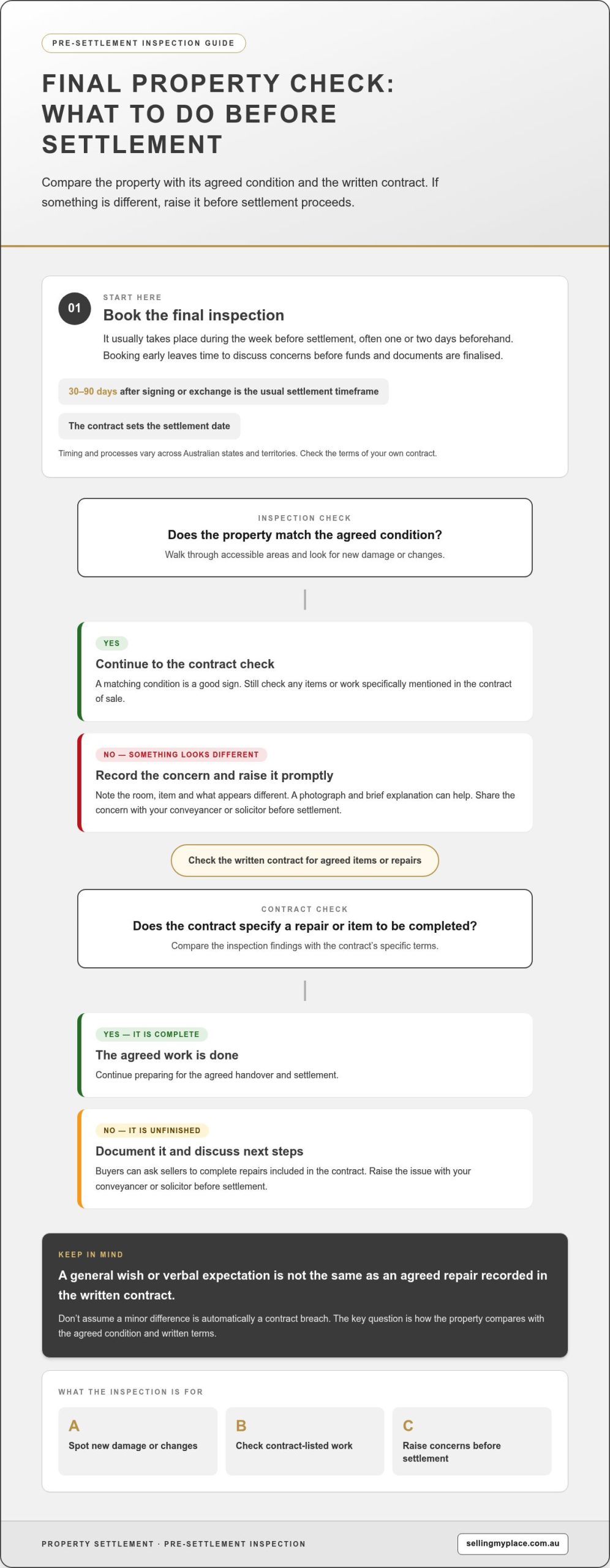
A pre-settlement inspection gives the buyer a final chance to compare the property’s condition with what was agreed at purchase. It’s a practical check before the contract of sale is finalised, not a replacement for earlier inspections or enquiries. For example, the buyer can look for new damage and check whether repairs promised in the contract are complete.
Settlement rules and timelines vary across Australian states and territories, and the contract sets the settlement date. Regional processes also affect how ownership transfers, so buyers should check the terms of their own contract rather than assume another territory’s timing applies.
In Australia, settlement usually takes place 30 to 90 days after the contract is signed or exchanged, depending on the contract terms. Across the country, the process typically takes 1 to 3 months to complete fully.
The final inspection usually takes place during the week before settlement, often one or two days beforehand. Booking it ahead of settlement day leaves time to raise concerns with a conveyancer or solicitor and discuss next steps before funds and documents are finalised.
Use the inspection to compare the property with the agreed condition and the contract’s specific terms. A focused check can cover:
- Walk through each accessible area and look for damage that wasn’t present when you agreed to buy.
- Check items or work specifically mentioned in the contract of sale, such as a repair the seller agreed to complete.
- Record any concern clearly, noting the room, item and what appears different.
- Raise issues promptly with your conveyancer or solicitor, before settlement proceeds.
During the process, buyers can ask sellers to complete unfinished repairs included in the contract. For instance, if the contract specifies a repair to a particular area, the buyer can check during the final inspection whether it’s been completed. The written contract matters: a general wish or verbal expectation isn’t the same as an agreed repair recorded in it.
If the inspection reveals a concern, describe it precisely and share it with your conveyancer or solicitor before settlement. A photograph, location and brief explanation can make the issue easier to understand. Don’t assume a minor difference is automatically a contract breach. The key question is how the property compares with the agreed condition and written terms.
For buyers, the inspection is the final practical opportunity to identify a change before ownership transfers. Sellers can help make the handover clear by completing contractually agreed repairs before the appointment. Arrange the inspection early enough for both sides to discuss any concerns before settlement day.
What steps should be taken to prepare for a property settlement?
Preparing for settlement means coordinating the contract, funds, insurance and handover in advance. Buyers and sellers each have tasks that help the agreed transfer proceed smoothly.
Preparing documents and funds
Settlement documents record the agreed transaction details and support the transfer of funds and ownership. The buyer’s conveyancer or solicitor handles legal requirements and enquiries after the contract is signed. Settlement agents coordinate with the buyer and lender to arrange payment to the seller.
Keep the contract of sale and settlement correspondence organised, and respond promptly to requests from your conveyancer. Buyers should understand how the deposit already paid relates to the purchase price and the remaining balance. Clear records help distinguish amounts paid from the funds still needed to complete settlement.
Preparing funds and insurance
Preparing funds means arranging access to the amount needed to complete the purchase, including the balance due at settlement. In Australia, the deposit is normally paid upfront to secure the property. Account separately for the remaining amount and other settlement costs.
Buyers should arrange building and contents insurance from the purchase date. The property and its contents need cover during the transaction, not just after moving in. Keep lender communications and payment instructions together so funds can be arranged with the lender and conveyancer ahead of settlement.
Getting ready for settlement day
Settlement day brings together the practical handover and the transfer of funds and documents. Buyers generally don’t need to attend in person because their conveyancer or solicitor handles settlement. The settlement agent works with the buyer and lender to transfer funds to the seller, while the relevant government agency registers the ownership transfer.
Sellers living in the property need to move out in time to hand over the keys after settlement. They should notify their gas and electricity providers when ownership changes. Conveyancers write to councils and water authorities to help update property accounts as part of the changeover.
Before settlement day, align your moving plans with the settlement date in the contract. For example, a buyer can arrange access and key collection with the agent once settlement is complete and registration has taken place. Sellers can schedule removal and utility notifications around the agreed handover, rather than assume keys can be exchanged earlier.
- Buyers: organise building and contents insurance from the purchase date, and keep lender and conveyancer communications accessible.
- Sellers: plan to vacate in time for key handover, then notify gas and electricity providers of the ownership change.
- Both parties: keep settlement documents together and promptly address requests affecting the agreed purchase price or transfer.
For owners preparing a sale, settlement and sale preparation guidance can help clarify the steps leading to handover.
Settlement adjustments and outgoing payments
Settlement brings together the remaining purchase price, lender funds and adjustments for property-related charges. Reviewing how each amount is calculated helps buyers understand what will be transferred to the seller.
Adjusting settlement amounts
Settlement adjustments divide property-related charges between the seller and buyer. The seller is responsible up to settlement day, and the buyer is responsible from then on. These adjustments affect the amount each party pays or receives at settlement.
Depending on the transaction, adjustments can include council rates, water charges and body corporate fees. Stamp duty, stamp duty concessions and the First Home Owner Grant may also feature in settlement calculations. The adjustment statement shows how relevant amounts are allocated across the ownership period.
Before authorising your conveyancer or solicitor to proceed with final settlement, review the pre-settlement adjustment statement. Check the listed charges, the dates used to divide them and the resulting amount payable. After settlement, responsibility for ongoing costs, rates and charges transfers to the buyer.
Lender funds and seller payment
Lender funds and the buyer’s available funds are combined to pay the seller at settlement. The full amount due must be accounted for before ownership can transfer.
On settlement day, the buyer’s conveyancer or solicitor and lender coordinate the transfer of funds to the seller. The buyer pays the balance of the purchase price after accounting for the deposit and any settlement adjustments. The lender draws down the buyer’s loan, and the settlement payment is debited from the loan account.
Once settlement is complete, the buyer should receive settlement details, including a statement of adjustment showing how funds were distributed. Keep this record with the contract and other purchase documents. It provides a clear account of final payments and the charges allocated to each party.
Settlement costs and fees
Australian property settlement costs can include stamp duty, council rates, water charges and body corporate fees, alongside adjustments and other transaction payments. The charges depend on the property, location, contract and applicable concessions. The settlement statement records the amounts due.
In Victoria, land transfer duty is usually paid at settlement, but buyers have up to three months after settlement to pay. Stamp duty and other adjustments should not be treated as interchangeable: duty relates to the transfer, while adjustments divide property charges between seller and buyer.
To understand the total outgoing amount, compare the purchase price balance with each listed adjustment and payment. Ask your conveyancer or solicitor to explain any entry you can’t reconcile before authorising the final transfer. This clarifies the funds required and the amount going to the seller.
Meaning of property settlement
Property settlement is the legal and financial step that transfers ownership from seller to buyer. It completes the transaction after the parties have agreed on a purchase, paid the deposit, signed and exchanged the contract, and completed any cooling-off period. The contract sets the settlement date, tying this milestone to the agreement rather than simply to moving day. A property settlement process explained through these milestones separates signing from the actual transfer of ownership.
The settlement period starts when the contract of sale is signed and ends on the scheduled settlement day. During this time, the buyer’s solicitor or conveyancer handles legal requirements and makes enquiries about the property. The buyer and seller remain bound by the contract, but ownership has not yet changed hands. Signing creates agreed obligations; settlement completes the transfer.
On settlement day, the remaining purchase funds are transferred, documents are exchanged and ownership is registered through the relevant government agency in the buyer’s state or territory. The seller receives the funds due, and the buyer becomes the new owner once registration is complete. In Victoria, for example, the transfer of land document transfers ownership from seller to buyer.
Settlement also addresses interests affecting the title. Transfer documents can provide for third-party rights, including caveats and previous mortgages, to be removed or released so clear title can pass to the buyer. A mortgage doesn’t disappear simply because the purchase price has been paid. The required documents and funds must deal with the existing interest as part of the transaction.
Registered ownership details also matter when more than one person buys a property. In Victoria, joint owners hold the property jointly, and if one owner dies, ownership automatically passes to the surviving owner or owners. Tenants in common, by contrast, can hold equal or unequal shares and dispose of their interest as they see fit. These ownership forms shape what the title records.
Settlement is more than a payment or key handover. It brings together the agreed price, transfer documents, title interests and registration. In Victoria, the buyer pays the balance, receives the property title and becomes the registered owner at settlement, taking possession unless otherwise arranged. The practical handover follows the legal change, though its timing depends on the parties’ arrangements.
For buyers, the clearest way to understand the process is to separate three events: contract, settlement and registration. The contract records what the parties agreed; settlement completes the financial and document exchange; registration records the buyer as owner. With the property settlement process explained through these distinct stages, it’s clear why paying a deposit or signing the contract doesn’t itself transfer ownership.
That distinction is central to property settlement: the seller’s obligations are completed, the buyer’s payment is finalised, and the ownership record changes. The state or territory’s registration process and the contract terms determine how the transfer is recorded and what follows for possession.
What are the steps in the Australian property settlement process?
The process moves from a signed contract to payment, registration and handover. The contract sets the settlement date, while the buyer’s conveyancer or solicitor coordinates legal enquiries and documents. With the property settlement process explained in stages, it’s easier to see how each task leads to the transfer.
In Australia, settlement usually occurs 30 to 90 days after the contract is signed or exchanged, depending on its terms. In New South Wales, most settlements take place 42 days after contracts are exchanged. The agreed date gives both parties and their representatives a timetable for completing the remaining tasks.
- The contract is signed or exchanged. The settlement period begins, and the buyer’s conveyancer or solicitor handles legal requirements and enquiries about the property. Outstanding contract conditions need attention because they can affect whether the transaction is ready to proceed.
- Documents and funding are prepared. The conveyancer arranges transfer documents, including provisions for removing or releasing third-party rights such as caveats and previous mortgages. The buyer, lender and conveyancer coordinate the funds required to pay the seller. Loan approval delays or missing paperwork can hold things up.
- Final amounts are brought together. The conveyancer arranges stamp duty to be paid at the same time as settlement. Adjustments account for relevant property charges, such as council rates, water charges and body corporate fees. The buyer’s funds and lender’s contribution are coordinated for the final transfer.
- Settlement takes place. The buyer’s and seller’s representatives, along with their lenders, complete the financial and document exchange. In Australia, the process normally takes about an hour. Buyers generally don’t need to attend in person because their conveyancer or solicitor handles the transaction.
- Ownership is registered and possession follows. The transfer is registered through the relevant government agency in the buyer’s state or territory. Once settlement is complete and the buyer is registered with the Land Titles Office, they can collect the keys from the agent. In Victoria, the buyer becomes the registered owner and takes possession unless otherwise arranged.
Some purchases involve linked transactions. In a simultaneous settlement, the buyer sells one property and buys another on the same day, using the sale proceeds to fund the purchase. Because the transactions depend on each other, a delay in the sale can affect the purchase, so representatives coordinate both settlements.
Outstanding contract conditions, loan approval delays, missing paperwork or title issues can delay settlement. If a delay arises, the parties’ conveyancers manage the necessary communication and next steps. After settlement, the buyer should receive details, including a statement of adjustment confirming how funds were distributed.
Understanding the property settlement process explained as a sequence helps clarify what to expect: contract requirements come first, then funding and documents, followed by settlement and registration. If you’re preparing to sell, discuss your property sale plans and the steps that lead to settlement.
Kincade International Direct Sales: Residential Property Listing Services
Kincade International Direct Sales offers Residential Property Listing Services for Australian owners preparing to bring a home to market. Its commission-free marketing service includes professional photography, floorplans and neighbourhood market reports, with listings remaining active until sold and no time limits.
Turn to the service when you’re planning a sale and want to organise how your property is presented to buyers. Pre-Sale Property Consulting can help you consider the preparation and marketing approach, while Buyer Representation supports people looking for help on the purchasing side. Neighbourhood Market Reports can also provide local context as you consider your next move.
For a measured next step, contact Kincade International Direct Sales or visit sellingmyplace.com.au.
Take your next property move with confidence
With the property settlement process explained, you can look beyond the handover and start planning what comes next. A sale or purchase is also a chance to make considered decisions about timing, presentation and the support that suits your plans.
If you’re preparing to sell, Kincade International Direct Sales’ Residential Property Listing Services and Pre-Sale Property Consulting can support your planning. If you’re buying, Buyer Representation offers support on the purchasing side. The right next step is the one that helps you move forward with clarity and keep your priorities in view.
Contact Kincade International Direct Sales to discuss your property plans and where to begin.
Take it one decision at a time. A considered move can help you make a confident start on what comes next.
Frequently Asked Questions
What is settlement?
Settlement is the point in a property sale when the financial and legal handover is completed. The seller receives the amount due, and the buyer’s ownership transfer is registered through the relevant state or territory agency. Signing a contract alone, for example, doesn’t make the buyer the registered owner. Settlement completes the transaction, while registration records the new ownership and possession follows the parties’ arrangements.
Can I move in straight away after settlement?
You can usually take possession after settlement if the contract doesn’t make different arrangements. In Victoria, the buyer takes possession at settlement unless otherwise agreed. Before organising removalists, confirm when keys can be collected and whether the seller has vacated. For instance, settlement may be complete while the practical key handover is still being arranged through the agent. Plan your move-in to match the possession terms in your contract.
When do I pay my deposit and stamp duty?
The deposit is normally paid upfront to secure the property, following the payment arrangements for your purchase. Stamp duty is commonly arranged by the conveyancer for payment at settlement. In Victoria, land transfer duty is usually paid then, although buyers have up to three months after settlement to pay. Keep the deposit receipt and settlement figures together to distinguish the initial payment from later amounts due.
What is property settlement in Australia?
In Australia, property settlement is the legal and financial completion of a property transaction between buyer and seller. It follows the signed and exchanged contract, deposit payment and completion of any cooling-off period. The contract sets the agreed settlement date. For example, the buyer may have paid a deposit but still needs settlement and registration before becoming the registered owner.
What happens on settlement day when buying property in Australia?
On settlement day, the buyer’s and seller’s representatives coordinate funds and documents to complete the transaction. The buyer’s lender contributes the loan funds, and the seller receives the amount due. The ownership transfer is then registered through the relevant government agency in the buyer’s state or territory. Buyers generally don’t attend in person; their conveyancer or solicitor handles the arrangements and communicates when settlement is complete.
What are the buyer’s and seller’s responsibilities before settlement?
Before settlement, the buyer needs to organise the required funds, arrange building and contents insurance from the purchase date, and complete a final inspection. The seller must meet the contract terms and, if living in the property, move out in time for key handover after settlement. Sellers should also notify gas and electricity providers when ownership changes. Both parties should address outstanding contract requirements promptly.
What is a settlement agent or conveyancer, and what do they do?
A conveyancer manages property transfer matters, including legal requirements and enquiries after the buyer signs the contract. A settlement agent works with the buyer and lender to arrange the transfer of funds to the seller on settlement day. Together, their roles help coordinate documents, payments and registration. For example, a buyer’s conveyancer can explain an entry in the adjustment statement, while the lender arranges its contribution to settlement funds.
What happens if settlement is delayed or fails in Australia?
Outstanding contract conditions, loan approval delays, missing paperwork or title issues can delay settlement. In New South Wales, interest may be charged if the buyer can’t pay all settlement costs by the settlement date. The parties can change settlement terms if they both agree.
Final Inspection Checklist: Prepare for Settlement
What if the easiest way to avoid a settlement-day surprise is to start preparing before the buyer arrives? A final inspection can bring small details into sharp focus, from the property’s condition to the items listed in the contract. This final inspection checklist for sellers helps you get organised without turning the last days of your sale into a scramble.
It’s understandable to wonder what the buyer may check, whether cleaning or a minor repair could lead to disagreement, and which keys, remotes or manuals need to be handed over. The final inspection is generally an opportunity for the buyer to check the property against its condition at the time of sale, allowing for fair wear and tear, and to confirm agreed inclusions and any required work.
Use this practical Australian checklist to prepare the home, review inclusions and plan a clear handover. We’ll cover the rooms and features to check, the small jobs worth completing before inspection, and the details to gather for settlement, so you can approach handover with more confidence and fewer avoidable surprises.
Key Takeaways
- Use a final inspection checklist for sellers to work through the property room by room, rather than relying on a rushed final glance.
- Compare items that will remain with the sale contract and any written agreements so inclusions are clear.
- Separate routine presentation issues from damage, missing items or agreed repairs that may need follow-up.
- Plan access, inspection-day preparation and handover details in advance, including keys, remotes and manuals.
- For questions about contract terms or settlement arrangements, follow your conveyancer’s advice.
Final inspection checklist for sellers: what the buyer is checking
Before settlement, the buyer is generally given an opportunity to revisit the property and check that its condition is consistent with the sale agreement, allowing for fair wear and tear where applicable. For sellers, the contract and any written agreements are the practical starting point: they clarify what stays, what must be completed and what the buyer may reasonably expect to see at handover.
There isn’t one inspection scope that applies to every Australian sale. Timing, access arrangements and expectations can vary according to the contract and the state or territory. Use your sale documents as the guide, and direct questions about contract meaning or settlement arrangements to your conveyancer.
What does a buyer usually look at during a final inspection?
A buyer may look over the property’s visible condition, check agreed fixtures and fittings, and see that the home and relevant areas are accessible. They may compare what they see with the property’s earlier presentation, the contract and any written agreement about inclusions or repairs. For example, if a refrigerator is listed as staying, they may check that it remains at the property. If a repair was agreed, they may look for a visible sign it has been completed.
This visit isn’t automatically a fresh building inspection or a comprehensive assessment of the property’s structure and systems. A general Home inspection can involve a broader evaluation, while the final inspection is usually focused on checking the agreed condition and inclusions before settlement. The exact scope still depends on the relevant sale documents and arrangements.
As you prepare, keep these common areas in mind. The contract determines what applies to your sale:
- Visible changes or damage since the buyer last viewed the property.
- Fixtures, fittings and other items identified as included in the sale.
- Any agreed repair or other specific written commitment.
- Access to the home and any areas the buyer is permitted to inspect.
What is the seller’s role before settlement?
Your role is to prepare the property in line with the agreement and make the handover practical. That can mean checking each room, ensuring agreed inclusions are still in place, arranging completion of any agreed work and gathering keys or access devices. Organise inspection access through the appropriate sale contacts, rather than making assumptions about timing or entry.
A seller’s preparation role is to present the agreed property, preserve its inclusions and organise a clear handover.
Keep practical tasks separate from contractual interpretation. Note what has been completed, retain relevant receipts or messages, and take clear photos if you need a record of an item or repair. Whether a particular condition or item meets the contract is a contractual question, not something to settle by guesswork on inspection day. If there’s uncertainty, pass the details to your conveyancer for advice.
A useful final inspection checklist for sellers isn’t about promising a flawless home. It’s about knowing what the sale documents require, checking the details that matter and making the transition to settlement more orderly for everyone involved.
Before the final inspection: prepare the home and check agreed inclusions
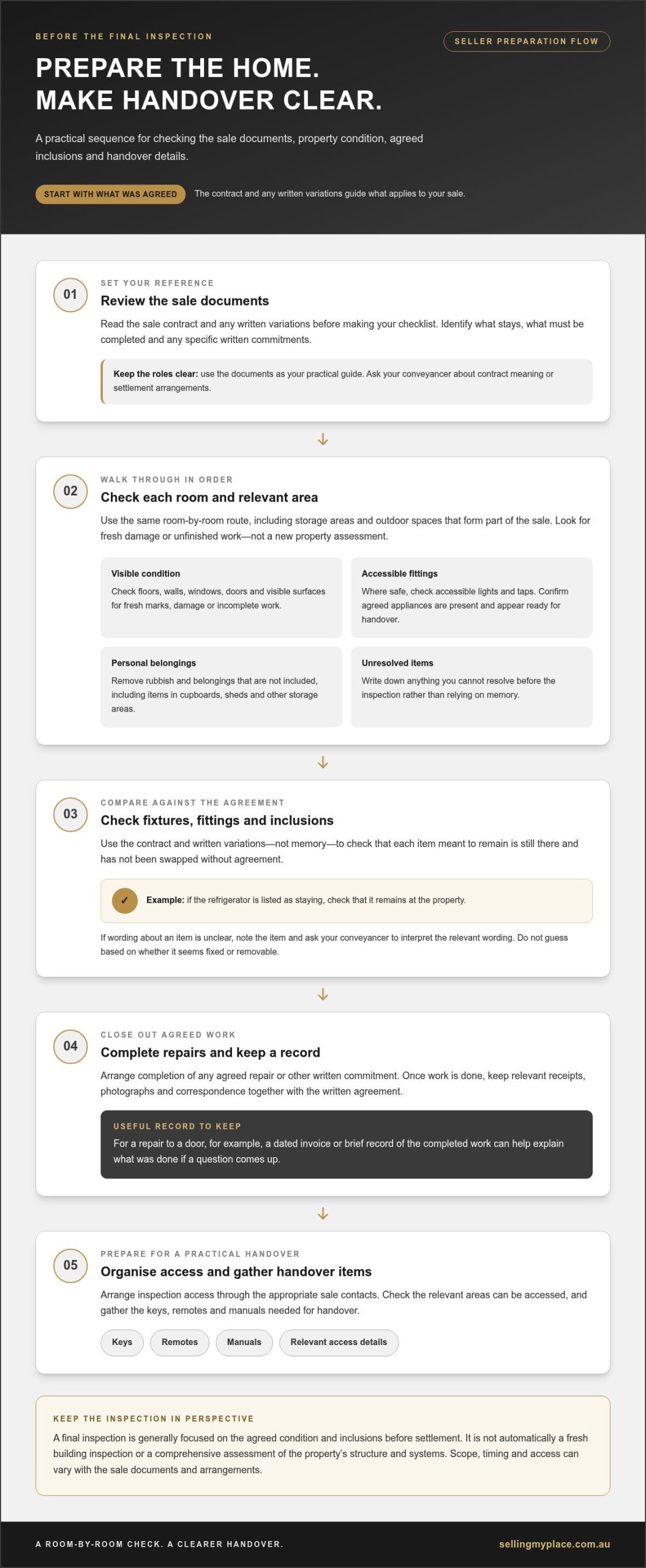
A steady preparation routine beats a rushed lap of the house. Start with the sale contract and any written variations, then make a room-by-room list of what to check, remove or leave behind. This keeps practical jobs tied to what was actually agreed, rather than assumptions about what a buyer might expect. If you’re managing the sale yourself, a clear process such as this guide to selling your own home can help you organise the wider steps, too.
Room-by-room property condition check
Walk through each room in the same order, including storage areas and outdoor spaces that form part of the sale. Look for new damage or unfinished work, and check accessible fittings only where it’s appropriate and safe. The aim is practical: spot anything that needs attention, not to create a new property assessment.
- Check floors, walls, windows, doors and visible surfaces for fresh marks, damage or incomplete work.
- Where safe, check accessible lights and taps, and confirm agreed appliances are present and appear ready for handover.
- Remove rubbish and personal belongings that aren’t included, including items in cupboards, sheds or other storage areas.
- Make a note of anything you can’t resolve before the inspection, rather than relying on memory.
Fixtures, fittings and agreed inclusions
Use the contract and written variations as your reference for items meant to remain. Check each one is still there and hasn’t been swapped for a different item without agreement. A fixture can be easy to overlook during packing, especially if it’s something you use every day, so compare the documents against each room rather than relying on memory.
If wording about an item is unclear, don’t guess based on whether it seems fixed in place or removable. Note the item and ask your conveyancer to interpret the relevant wording. That keeps preparation moving while leaving contractual meaning to the right adviser.
Agreed repairs deserve the same orderly approach. Once work is completed, keep any relevant receipts, photographs and correspondence together with the written agreement. For instance, if you arranged a repair to a door, a dated invoice or a brief record of the completed work can help explain what was done if a question comes up. Keep the records easy to find, but don’t assume they change the terms of the sale.
A useful final inspection checklist for sellers can be as simple as a room-by-room list with three columns: check, remove and leave. Mark off each task as you go, then compare the property against the inclusion list. If you’d value informed guidance as you organise the sale, get property sale advice tailored to your next steps.
Final inspection concerns: condition, repairs and what to document
A buyer raising a concern at the final inspection doesn’t automatically change the sale agreement. First, identify what they’ve noticed and whether it relates to the property’s agreed condition, an item included in the sale or a repair you agreed to complete. A dusty shelf or minor presentation issue is different from new damage, a missing inclusion or work that appears unfinished.
That distinction matters, but don’t decide on the spot that an issue is insignificant or that you must offer a particular remedy. Any obligation or possible response depends on the contract, the facts and the relevant state or territory. Keep communication calm and pass the details to your conveyancer for guidance before agreeing to a change or making a commitment.
How to respond if the buyer raises a concern
Listen first. Ask which room, item or agreed repair they’re referring to, and make a note of the specific concern. Then compare it with the sale documents and any written repair agreement. A clear description, such as “the laundry tap is leaking” or “the listed outdoor table isn’t present”, is more useful than a general comment that something is wrong.
Keep your reply factual and measured. You might acknowledge the concern and say you’ll review the relevant documents and seek advice. Avoid promising to repair, replace or pay for anything until you understand what was agreed and have received appropriate conveyancer guidance. If the issue is unclear, request the details in writing so everyone is responding to the same point.
What evidence should sellers keep?
Make a simple record while the details are fresh. Save dated photos of the relevant area, copies of repair records or receipts, and messages or written agreements about the item. Keep them together in one folder, with filenames or notes that identify the room and date. These records won’t determine what the contract means, but they can help your conveyancer understand the sequence of events.
A compact comparison can help organise the facts before you follow up:
Observed issue: A mark on a wall, a missing agreed item or a repair the buyer says remains outstanding.
Relevant agreement: The contract clause, inclusion list or written repair arrangement that appears relevant.
Follow-up action: Locate supporting photos or correspondence, record what you know and refer the question to your conveyancer.
Use your final inspection checklist for sellers to note the concern without treating it as a settled dispute. If it’s routine presentation, record it accurately. If it involves damage, an inclusion or agreed work, preserve the evidence and seek advice promptly. This keeps the discussion grounded in the documents and leaves any decision about contractual remedies to the appropriate process.
Inspection-day checklist for sellers: access, presentation and handover
A simple run sheet can make inspection day feel far less rushed. Use this final inspection checklist for sellers in order: confirm access, prepare the property, have handover items ready, then record any follow-up. Keep arrangements consistent with the sale documents and coordinate access through the relevant sale contacts. If questions develop into a broader discussion about sale terms, these property sale negotiation tips offer useful context.
The day before: final readiness checks
Confirm the inspection time and access plan with the relevant sale contacts, rather than assuming the buyer can enter independently. Finish any agreed cleaning, remove belongings that aren’t included and leave agreed items where they belong. Gather handover materials in one place so keys, remotes and manuals don’t get packed or misplaced in the final rush.
- Check the agreed time, access method and any instructions for gates, alarms or shared entry points.
- Do a final tidy and remove rubbish or personal items that aren’t part of the sale.
- Keep agreed inclusions in place and collect keys, garage remotes, access devices and appliance manuals.
- Put relevant handover notes together, such as which key opens a particular door.
At inspection time: keep access straightforward
Follow the access plan arranged through the sale contacts. Make sure the buyer can reach the areas they’re entitled to inspect, including any relevant storage or outdoor spaces, and avoid leaving access devices where they could be misplaced. If you’re present, be courteous and allow the inspection to proceed without hovering. If you’re not, make sure the agreed arrangements are clear.
Keep your notes nearby, but let the buyer raise any questions through the established contact. If an issue needs a response, record the specific item and follow up calmly rather than debating the contract at the doorway.
After the inspection: record and follow up
Once the inspection is finished, note any concerns raised, who received them and who will follow up. A short written summary helps keep details clear, especially if several items need attention. Keep communication courteous and timely, and use writing where practical so the request and response are easy to refer back to.
- Record the exact room, item or work mentioned, without adding assumptions.
- Save relevant messages and pass contract questions or proposed changes to your conveyancer promptly.
- Confirm who is handling each follow-up and keep a copy of any response or agreed next step.
Inspection day is one part of the wider handover. For support organising your property sale and the next steps, get advice about your sale.
From final inspection to settlement: get steady support for the next step
The inspection is a milestone, not the finish line. A clear close-out sequence helps you move from any follow-up questions to a practical handover, while keeping settlement decisions with the people responsible for advising on your contract. Your final inspection checklist for sellers can help you keep track of the last details, but it doesn’t replace guidance tailored to your sale documents.
A simple seller close-out sequence
Work through the remaining tasks in order, and keep a written record as you go. This gives you a clear reference if a question arises and helps prevent small handover details from getting lost among settlement arrangements.
- Confirm inspection follow-up. Record any concern raised, the response and any action agreed in writing. If the issue could affect your obligations, refer it to your conveyancer before making a commitment.
- Check the handover plan. Confirm how and when keys, remotes and other access devices will be provided, and make sure agreed items are accounted for.
- Follow settlement advice. Ask your conveyancer about contract interpretation, required steps and timing for your transaction. These details can depend on the contract and the relevant jurisdiction, so avoid relying on general assumptions.
Keep the roles clear. Your conveyancer advises on the contract and settlement arrangements; practical preparation means following that advice, keeping agreed handover details organised and completing any confirmed actions. If something changes or an issue remains unresolved, share the relevant written record promptly rather than trying to settle a contractual question informally.
When broader selling advice can help
Questions at the end of a sale can also highlight where informed support across the wider process is useful. Kincade International Direct Sales offers pre-sale consulting to help owners understand the steps involved in selling and approach decisions with greater clarity. Its conveyance advice can provide guidance through a complex sale, alongside the role of your conveyancer. The residential property listing services guide offers broader context on organising a sale, from preparing the listing to managing the process through to handover.
Take the next step steadily: resolve outstanding questions through the appropriate contacts, confirm the handover plan and follow your conveyancer’s settlement guidance. For owners who are also preparing for their next move, specialist representation from Robert Caicedo Real Estate can help navigate residential transactions with clarity and confidence. With those details in order, the final stretch can feel more manageable and less like a scramble.
Speak with the team about selling support and get informed guidance for the wider sale process.
Move towards settlement with confidence
A well-used final inspection checklist for sellers can do more than help you prepare for one appointment. It gives you a clear starting point for the last stage of your sale, so you can make decisions calmly and keep moving towards the next chapter. If your next move involves financing another property, The Home Loan Partners can provide tailored guidance through the mortgage process. Let your sale documents and conveyancer guide settlement-specific questions, and focus on the practical handover.
Kincade International Direct Sales offers commission-free property marketing and advisory services for residential owners, with professional photography and floorplans as part of its offering. Its flat-fee approach means you can use listing and advisory support without paying a traditional agency commission.
Talk with the team about your property sale to discuss commission-free marketing and advisory support.
Frequently Asked Questions
Is the final inspection the same as a building inspection?
No. A buyer’s final inspection is generally a pre-settlement check of the property against the sale agreement, rather than a new, detailed assessment of its structure or building systems. A building inspection has a different purpose and scope. If the buyer raises a concern about a defect, avoid treating the final inspection as a technical report; note the concern and refer contract-related questions to your conveyancer.
Can a seller attend the buyer’s final inspection?
Possibly, but whether you attend depends on the arrangements made for the sale and any relevant contract terms. Coordinate access through the appropriate sale contacts rather than arriving unexpectedly or assuming you need to be present. If you do attend, give the buyer room to look around and keep any discussion calm and factual. This can help avoid turning a practical visit into a pressured negotiation.
What happens if the buyer finds damage at the final inspection?
Damage may prompt a request for clarification or action, but the outcome depends on when it occurred and what the contract requires. For example, a new crack or a broken fitting may need to be considered differently from a mark that was already visible when the buyer agreed to purchase. Record the location and details, avoid admitting liability or promising a remedy on the spot, and promptly seek your conveyancer’s advice.
Do sellers need to leave appliances and manuals at the property?
Leave appliances that are identified as inclusions in the sale documents, and don’t remove or swap them without agreement. Manuals aren’t automatically an inclusion in every sale, so check the contract and any written arrangements. If you have a manual for an appliance staying behind, placing it with the appliance is a considerate handover touch. Keep personal documents or account details out of manuals and paperwork you leave.
Should utilities remain connected until settlement?
There isn’t one rule that suits every property or transaction. If utilities are disconnected too early, it may affect access to services before settlement; leaving accounts active also has practical and billing implications. Check your contract and discuss timing with your conveyancer, then arrange any provider notifications to match your circumstances. If the property is vacant, clarify who is responsible for access and services during the period before handover.
Can a buyer request repairs after the final inspection?
A buyer can raise a concern or ask for a repair, but a request doesn’t automatically change the contract. Whether you’re required to act depends on the agreement, any relevant written promises and the circumstances of the issue. Don’t agree to a repair, payment or change to settlement arrangements before getting advice. Send the request and supporting details to your conveyancer so you can understand your position and available next steps.
When should sellers complete the final inspection checklist?
Start your final inspection checklist for sellers early enough to deal with agreed work and locate inclusions, then revisit it close to the inspection. The buyer’s visit is commonly arranged in the lead-up to settlement, but the contract and local arrangements determine timing. A practical approach is to do an initial pass while packing, then a final check the day before access, leaving time to follow up any overlooked handover detail.
