Pre-Sale Property Consulting: Prepare Your Home for a Smarter Sale
What if the smartest pre-sale improvement is the one you decide not to make? Preparing a home can quickly become a long list of repairs, updates and styling ideas, but not every project will suit your property or sale goals. Pre-sale property consulting helps you sort through the options before you commit time and money.
If you’re unsure where to begin, you’re not alone. It’s natural to want your home looking its best while questioning whether each change will make a meaningful difference to its presentation or sale readiness. A considered plan can replace that uncertainty with clear priorities.
In this article, you’ll learn how pre-sale advice can help you assess your property, choose improvements and organise the steps towards going to market. We’ll also look at how preparation connects with the wider sale process, from market insights to photography and floorplans. With the right guidance, you can make decisions that fit your circumstances and move from preparation into marketing with greater confidence.
Key Takeaways
- Use pre-sale property consulting to shape a preparation plan around your home’s condition, your circumstances and your sale goals.
- Consider maintenance and presentation separately from optional renovations or styling, so you can weigh priorities before committing.
- Work through a simple sequence: clarify your goals, review the property, identify priorities and agree on practical next steps.
- Gather relevant property information and note outstanding questions early to make preparation decisions more straightforward.
- Connect your preparation plan with the next marketing steps, including property photography, floorplans and neighbourhood market reports.
What Is Pre-Sale Property Consulting, and When Can It Help?
Pre-sale property consulting is tailored advice that helps homeowners plan how to prepare a property before marketing it for sale. Rather than starting with a renovation wish list, the process considers the home’s condition, your goals and your priorities, then helps clarify which steps make sense before the next stage of selling.
Consulting guides decisions; it doesn’t guarantee a particular sale price or result. It’s also different from hands-on styling, building work or property management. Advice can help you decide whether presentation changes belong in your plan, while services such as photography, floorplans and listing support relate to marketing the property.
For example, you might be weighing up whether to address a maintenance issue, refresh a room or leave the home largely as it is. A pre-sale plan helps compare those options against the property and your circumstances, rather than making decisions under pressure. Selling can carry plenty of emotion, especially when a home holds family memories or marks a major change. Planning can make the practical decisions feel more manageable.
What does a pre-sale property consultant help you consider?
Advice brings together three connected questions: what condition is the property in, how is it likely to present to buyers, and what needs attention before marketing? This can help distinguish essential preparation from optional improvements or styling. Home staging, for instance, focuses on preparing a residence to appeal to potential buyers. Consulting takes a broader planning view, helping you decide whether presentation steps belong in your particular plan.
With pre-sale property consulting, you can weigh possible actions before committing time or resources. The aim is a considered set of next steps, not a one-size-fits-all checklist. Those decisions can then inform the move into marketing and selling, without assuming that any particular preparation will guarantee a faster sale or higher price.
When should you seek pre-sale advice?
Seek guidance while you still have room to plan, before marketing begins and decisions become rushed. That might be when you’re considering a move, preparing to sell an inherited property or responding to a change in household needs. Starting early gives you time to sort through questions in a calmer order.
There’s no single ideal time for everyone. The property’s condition, your priorities and your circumstances all shape what preparation is practical. Even if your plans are still taking shape, early advice can help you understand the decisions ahead and move towards sale with a clearer sense of direction.
How Pre-Sale Consulting Turns Uncertainty into a Clear Plan
A useful plan doesn’t begin with a shopping list of upgrades. It starts with a conversation about what you hope to achieve, followed by a practical review of the property and decisions about what deserves attention. Pre-sale property consulting brings those pieces together, so you can approach preparation with a clearer sense of direction.
What happens during a pre-sale consultation?
The discussion can cover your sale goals, timing considerations and concerns about getting the property ready. Perhaps you’re unsure whether to address a maintenance issue, how much preparation feels manageable or what needs to happen before marketing can begin. The adviser helps surface those questions and consider them alongside the home’s current condition and your circumstances.
You don’t need to arrive with every decision made. The value is in working through what matters, identifying what still needs thought and distinguishing practical priorities from assumptions or pressure to do everything at once. You can clarify which decisions are immediate and which can wait until you know more.
How does advice become a practical preparation plan?
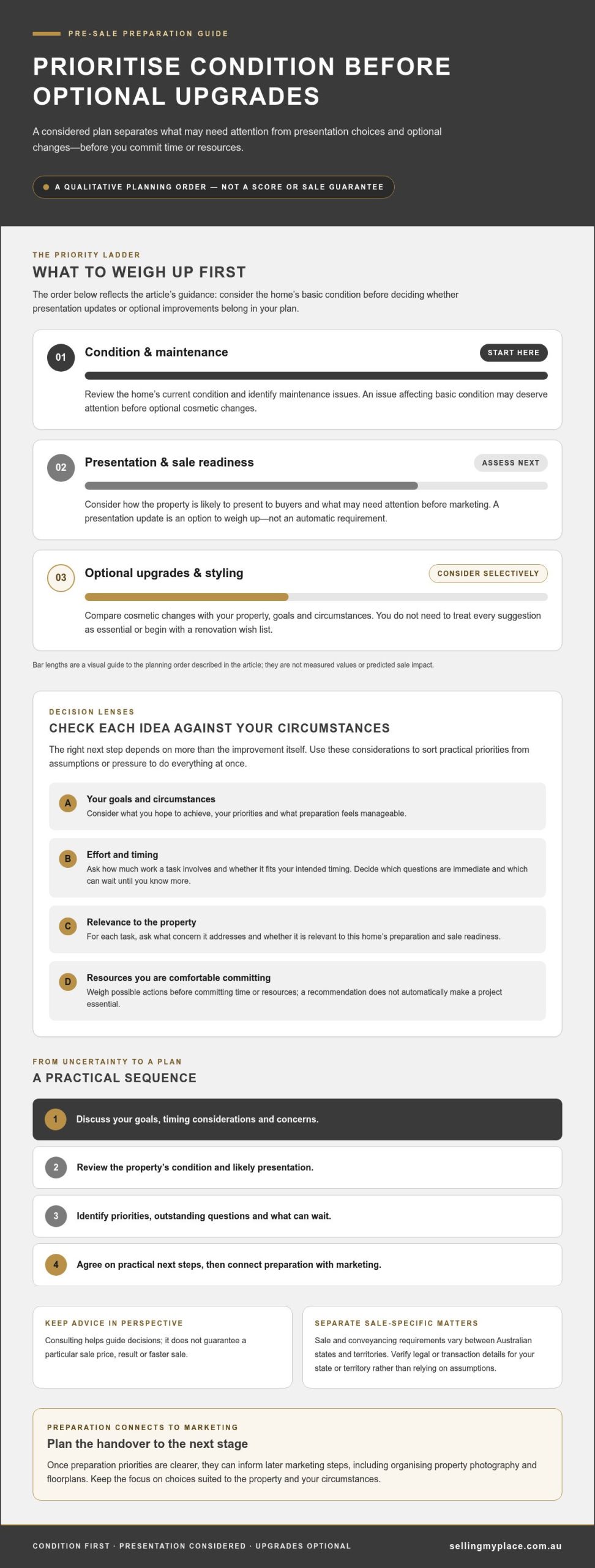
Recommendations can be grouped by priority, likely effort and relevance to sale readiness. For instance, an issue affecting the home’s basic condition may warrant attention before optional cosmetic changes. A presentation update might be worth considering, but that doesn’t mean it must be part of your plan. The right choice depends on the property, your priorities and the resources you’re comfortable committing.
Keep perspective when considering improvement ideas. Ask what concern each task addresses, how much work it involves and whether it fits your intended timing. The goal is to make an informed choice, not to treat every suggestion as essential or assume a particular project will change the sale result.
Sale and conveyancing requirements can vary between Australian states and territories. Legal or transaction details relevant to your sale need careful, state-specific verification rather than assumptions based on general advice. Keep preparation decisions separate from matters that require advice specific to your sale and jurisdiction.
In practice, the steps are straightforward: discuss your goals, review the property, identify priorities, then agree on what happens next. This sequence helps you make informed choices and connect preparation with later marketing steps, such as organising photography and floorplans, without promising a particular price or timeframe.
If you’re weighing up what to do first, you can discuss your pre-sale plans and start shaping a considered approach.
Which Pre-Sale Improvements Should You Prioritise?
Start by separating issues that affect the home’s condition or day-to-day presentation from optional upgrades chosen mainly for a different look. Pre-sale property consulting can help you compare possible tasks against the property’s needs, likely buyer expectations and your own priorities. The aim isn’t to improve everything, but to decide what’s relevant before you commit time and resources.
| Task | Issue addressed | Effort | Dependencies | Reason to consider it |
|---|---|---|---|---|
| Attend to visible maintenance concerns | Wear or faults that may distract from the home’s condition | Varies with the issue | May need further assessment before work is planned | Helps make the property feel cared for and ready to present |
| Declutter and clean key areas | Spaces that feel crowded or difficult to view | Often manageable, depending on the home | Sorting belongings and planning access | Can make rooms easier to understand during a viewing |
| Refresh a presentation detail | A visible cosmetic distraction | Usually limited, but depends on the change | Choosing a suitable approach and organising the work | May help create a more consistent overall impression |
| Consider a larger renovation or styling change | A broader functional or aesthetic concern | Potentially substantial | Scope, timing and other preparation decisions | Worth weighing carefully against your goals and sale readiness |
Should you repair, renovate, style or sell as-is?
Repairs address condition; renovations change or update the home; styling focuses on presentation. Selling as-is may also suit your circumstances. These choices aren’t interchangeable, and none automatically improves the sale outcome. Consider the purpose and scope of each option rather than assuming every project adds value.
How can you decide what is worth doing before listing?
Ask whether the issue is visible, how it may affect a buyer’s experience, what effort is involved and how it fits your sale timing. A leaking tap, for example, is different from a colour choice you’d simply prefer to change. Consider likely buyer expectations in context, not as a reason to pursue every possible upgrade.
Imagine a home with a dated kitchen and several minor maintenance tasks. Rather than begin a major renovation, a considered plan might prioritise practical readiness first, then revisit whether the kitchen needs any presentation changes. That keeps decisions grounded in the home and your priorities. For wider context, consider how preparation choices relate to research on determining a home’s market value in Australia.
A Practical Pre-Sale Property Consulting Checklist for Homeowners
A little organisation before making decisions can make sale preparation feel more manageable. Use this checklist to gather your thoughts and identify what needs attention. It’s a starting point for discussion, not an exhaustive list of documents or a substitute for state-specific legal advice.
What should you have ready before discussing your sale?
- Goals: Note why you’re considering a sale, your intended timing and what a suitable outcome looks like for your circumstances.
- Property condition: Write down known repairs, maintenance concerns and improvements already completed. Include areas you’re unsure about.
- Priority decisions: List what matters most to you, along with any work you’re reluctant to take on or questions about whether it’s worthwhile.
- Preparation: Consider household routines, access to different areas of the home and how much time you can realistically give to getting ready.
- Marketing readiness: Record questions about what needs to be organised before photography, floorplans or property marketing can proceed.
Gather relevant property information and documents you already have, such as records of completed work or other details that may help explain the home’s condition. Keep a separate list of unanswered questions. This makes it easier to distinguish what you know from what needs further advice.
How can you keep preparation manageable?
Once you’ve discussed your situation, sort actions into three groups: decisions still to make, tasks you’ve agreed to organise, and items to revisit before marketing. Some owners can handle straightforward organising themselves, such as clearing surfaces or arranging access. Questions involving conveyancing, legal obligations or technical issues may call for appropriate professional advice. Requirements can vary across Australian states and territories, so avoid relying on a general checklist for legal matters.
Be realistic about sequence and capacity. A task may depend on access to a room, need to fit around family routines or require consideration alongside other work. Keep the agreed priorities visible, perhaps in a short written list, so optional jobs don’t quietly take over the plan.
Preparation should support your next steps, not become an endless project. If a new idea comes up, compare it with your original goals and decide whether it’s essential, useful or simply a preference. That check-in helps keep attention on sale readiness while leaving room to adapt if your circumstances change.
For a considered plan shaped around your property and priorities, discuss pre-sale consulting support.
How Kincade International Direct Sales Supports Your Pre-Sale Decisions
Kincade International Direct Sales provides pre-sale property consulting and real estate advisory services for Australian residential property owners. The focus is on helping you think through preparation decisions in context: your goals, the property’s condition and what you want organised before marketing begins.
That advice connects early planning with the practical steps that follow. Rather than treating preparation and marketing as unrelated tasks, you can consider how decisions about the home fit alongside sale planning, conveyance considerations and the listing materials you’ll need. No preparation plan can promise a particular price or sale timeframe, but a clear sequence can make the process easier to manage.
What support can sit alongside pre-sale consulting?
Pre-sale property consulting can sit alongside neighbourhood market reports and broader marketing preparation. Professional photography and floorplans are part of the wider listing offering, helping prepare property information for presentation to buyers. They’re marketing elements, not a guarantee of what a consultation or preparation work will achieve.
Conveyance advice can also help you consider transaction-related steps. It’s distinct from legal representation, and any legal requirements that apply to a sale should be considered in the context of the relevant Australian state or territory.
For owners looking at the wider selling pathway, Kincade International Direct Sales offers property marketing on a flat-fee, commission-free basis. Listings remain active until sold, with no time limits or agency commissions. This gives you a clear way to consider how preparation leads into listing and marketing.
What is a useful next step for a homeowner?
Begin with the details you already know. Think about your reasons for selling, likely timeline, concerns about the property and the decisions you’d like help weighing up. You don’t need every answer ready. A conversation can start with the home and your priorities, then help clarify which questions deserve attention first.
That steady start can make the next choices feel more manageable, whether you’re still weighing up a move or beginning to prepare for market. Talk through your property sale plans with Kincade International Direct Sales and take the next step with a considered plan.
Move Towards Sale with a Clearer Plan
Preparing your home for sale doesn’t mean taking on every repair, renovation or presentation idea. A clear set of priorities can help you focus on what’s relevant to your property, your circumstances and your readiness to move forward.
Pre-sale property consulting and real estate advisory services can help you consider those decisions before marketing begins. Kincade International Direct Sales connects preparation with broader sale support, including neighbourhood market reports, professional photography and floorplans. Its property marketing model is flat-fee and commission-free, with no promise of a particular sale price or timeframe.
You don’t need every detail settled before taking the next step. Start with your goals, concerns and likely timing, then work through the decisions in a manageable order. Talk through your property sale plans and begin shaping an approach that feels right for your home and circumstances.
Frequently Asked Questions
Is pre-sale property consulting worth it?
It can be useful if you’re unsure what to address before selling or how to organise the work. Pre-sale property consulting helps you consider your home’s condition, your priorities and the steps ahead before committing to optional improvements. Its value is in clearer decisions and planning, not a guaranteed sale price or a promise that every recommendation will increase buyer interest. It can help you focus on what’s relevant to your circumstances.
What does a pre-sale property consultant do?
A pre-sale property consultant helps you think through preparation before marketing begins. This may involve discussing your sale goals, reviewing concerns about the property and identifying practical priorities. The adviser can help separate necessary preparation from optional work and map out possible next steps. Advice should reflect your home and circumstances, rather than follow a one-size-fits-all renovation checklist. You remain in control of which tasks, if any, you decide to pursue.
When should I get pre-sale property advice?
Consider seeking advice when you’re beginning to think about selling, particularly if you’re unsure what work to do or when to start. An earlier conversation gives you more room to weigh options and organise priorities before marketing preparations gather pace. You don’t need every detail decided first. Your goals, questions and concerns provide a useful starting point for working out what deserves attention and what can wait.
What should I fix before selling my house?
There’s no single repair list that suits every property. Start by noting known condition issues and anything that could affect a buyer’s understanding or experience of the home. Then consider each task in light of its relevance, the effort involved and your priorities. An adviser can help organise those decisions, but no repair or improvement should be treated as a guaranteed way to raise the sale price.
Should I renovate my house before selling?
A renovation isn’t automatically the right choice before selling. Consider the home’s current condition, the scope of the proposed work, your available time and what you hope to achieve. For some owners, maintenance or presentation tasks may be more suitable; others may prefer to sell without major work. Pre-sale advice can help you compare these options in context, without assuming a renovation will deliver a particular return or sale outcome.
Can pre-sale consulting guarantee a higher sale price?
No. Preparation advice can’t guarantee a particular sale price or a faster sale. The outcome depends on factors including market conditions, buyer decisions and the property’s features. Consulting can help you make informed choices about readiness and presentation, then plan the steps ahead with greater clarity. Treat it as decision support, not a promise of a financial result. A considered plan helps you focus on actions that suit your home and circumstances.
Can I get pre-sale property advice without using a traditional commission agent?
Yes. Property advice and the structure of a marketing service are separate considerations. Kincade International Direct Sales offers pre-sale consulting alongside commission-free, flat-fee property marketing for residential owners. The advice can help you plan preparation, while the wider service supports the selling journey. You can outline your goals, concerns and likely timeline to discuss how these options fit your plans, without assuming the marketing approach guarantees a particular sale outcome.
Tips for a Fast House Sale: A Practical Australian Seller’s Checklist
The fastest way to sell your home may be to slow down before it goes on the market. These tips for a fast house sale start with reducing buyer hesitation, not rushing into a listing or accepting the first offer. When your home is prepared, priced with current comparable sales in mind and presented clearly, serious buyers have fewer reasons to hold back.
It’s understandable to feel pressure to move quickly, especially when there’s a big life change behind the sale. But a fast result shouldn’t mean making decisions in the dark or leaving important tasks until inspection day. A little structure can help you attract early interest while keeping your expectations and priorities in view.
This practical Australian seller’s checklist will help you decide what to tackle before launch, how to shape a pricing and marketing plan, and what to look for as enquiries, inspections and offers come in. Whether you’re selling by owner or using professional support, you’ll have a clearer way to prepare, compare your options and make considered decisions without feeling hurried.
Key Takeaways
- Use these tips for a fast house sale to build a clear plan around your timing, priorities and what buyers are looking for.
- Compare recent sales of similar homes with current competing listings to support a realistic price position, rather than relying on a formula.
- Help buyers assess your home with clear photographs, accurate listing details and a floorplan that answers practical questions.
- Review enquiries, inspection attendance and buyer feedback regularly to spot when your presentation, listing information or price positioning may need attention.
- Compare selling by owner, traditional agency support and flat-fee marketing based on the involvement, guidance and fee structure that suit you.
Tips for a Fast House Sale Start With a Clear, Realistic Plan
A move can be time-sensitive, whether you’re coordinating a new job, a family change or your next home. But setting a firm sale date before you know how ready the property is or what buyers are doing can add pressure without giving you more control. Treat a fast sale as a goal shaped by your preparation, buyer demand and the terms you’re willing to accept.
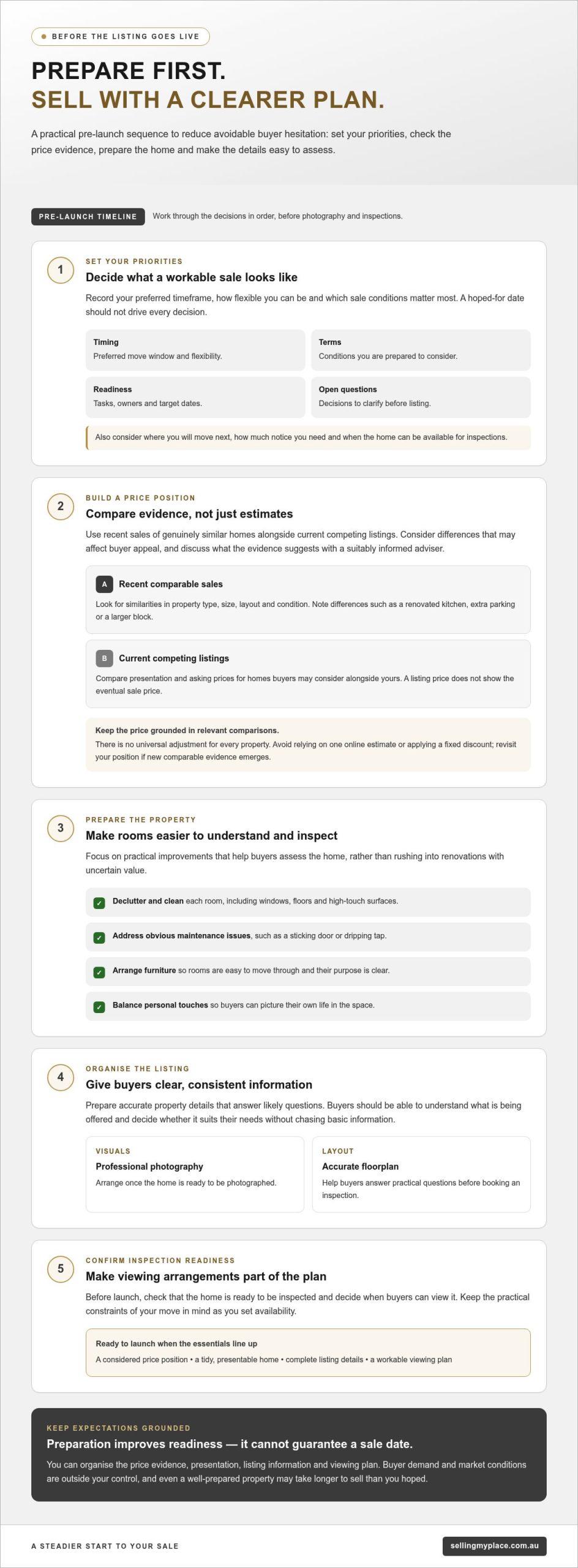
Preparation before launch can reduce avoidable buyer hesitation by making the home, its price and its key details easier to assess. Start with four practical areas: set a considered price position, prepare the property for presentation, organise accurate marketing information and decide how buyers can view the home. Then record your preferred timing, acceptable terms and what needs to happen before you can move.
What Can You Control When Selling a Home Quickly?
You can organise the parts of the sale that are in your hands. Buyers and market conditions aren’t controllable, and even a well-prepared property may take longer to sell than you’d hoped. Focus first on a price position informed by comparable evidence, a tidy and presentable home, and listing information that answers likely questions. These steps improve readiness; they can’t guarantee a particular result or timeframe.
Before the listing goes live, check that the home is ready to be photographed and inspected, and that the property details are consistent and complete. Buyers should be able to understand what’s being offered and decide whether it suits their needs without having to chase basic information.
Set Your Sale Priorities Before You List
Write down your preferred timeframe, how flexible you can be and which sale conditions matter most. Consider practical constraints, too: where you’ll move next, how much notice you need to organise the move, and when you can make the home available for inspections. If you’re considering a seller-led approach, this overview of For Sale By Owner (FSBO) offers background on the model. Check sale or contract questions against relevant Australian advice.
Turn those priorities into a working checklist. Assign each task, set a realistic deadline and record decisions that still need advice. For example, one household member might coordinate repairs while another gathers property information. The right split depends on your circumstances. This simple plan keeps urgent tasks visible without letting a hoped-for sale date drive every decision.
- Timing: preferred move window and flexibility.
- Terms: conditions you’re prepared to consider.
- Readiness: tasks, owners and target dates.
- Open questions: decisions to clarify before listing.
With your priorities recorded, you’ll have a steadier basis for the next decisions: setting a price position and preparing the property for buyers.
Price and Prepare Your House Before the Listing Goes Live
Price and presentation work together. Buyers weighing your home against other options may lose interest if the asking price seems out of step with the evidence or the property is difficult to assess from its listing. One of the most useful tips for a fast house sale is to do this thinking before launch, when you still have time to make considered adjustments.
Evidence-based price preparation means comparing recent sales of genuinely similar homes with current competing listings, then accounting for differences that may affect buyer appeal. It doesn’t mean applying a fixed discount or relying on one online estimate. For a closer look at the process, read this 2026 guide to determining a home’s market value.
How to Set a Realistic Asking Price
Look for recent sales with meaningful similarities in property type, size, layout and condition. Note where a comparison differs: a renovated kitchen, extra parking or a larger block may affect how useful that sale is as a guide. Then review current listings buyers are likely to consider alongside yours. Compare their presentation and asking prices, but remember that a listing price doesn’t show the eventual sale price. Discuss what the evidence suggests with a suitably informed adviser, and revisit your position if new comparable evidence emerges. For context on weighing offers, see these property sale negotiation tips.
An asking price set too high for the available evidence may discourage buyers from enquiring or inspecting, especially if competing homes appear to offer better value. There’s no universal adjustment that suits every property. Aim for a price position you can explain using relevant comparisons, and be ready to consider both the buyer’s offer and its conditions.
A Pre-Launch Home Preparation Checklist
Choose practical improvements that help buyers understand and inspect the property, rather than rushing into renovations with uncertain value. Before photography, work through this short list:
- Declutter and clean each room, including windows, floors and high-touch surfaces.
- Address obvious maintenance issues, such as a sticking door or a dripping tap.
- Arrange furniture so rooms feel easy to move through and their purpose is clear.
- Keep personal touches balanced so buyers can picture their own life in the space.
- Once the home is ready, arrange professional photography and an accurate floorplan.
Clear images and a reliable floorplan help buyers judge the home before they book an inspection. Kincade International Direct Sales provides professional photography and floorplans as part of its property marketing service. For guidance on preparing your property or reviewing your sale approach, explore pre-sale support.
Make Your House Easy to Discover, Understand and Inspect
A buyer who can quickly understand a home’s layout, features and practical details is better placed to decide whether to enquire or book an inspection. Accurate listing materials help buyers assess whether a property suits their needs and make more informed enquiries. Treat the photographs, description and floorplan as one set of information, and check that they tell a consistent story.
What Buyers Need From Your Listing
Use clear photographs that represent the home honestly and help buyers understand how rooms connect. Pair them with accurate property details, useful room descriptions and a well-prepared floorplan. Before publishing, check that the description matches what a buyer will see in person. For further guidance on presenting a home online, read this guide to residential property listing services.
A simple question-and-answer check can reveal gaps in your listing:
- How does the home flow? Use the floorplan and images to show the connection between living areas, bedrooms and outdoor spaces.
- What are the rooms used for? Give each room a clear, accurate description rather than relying on photos alone.
- What details might affect a buyer’s decision? Confirm the relevant property information and have reliable answers ready for common enquiries.
If a detail is uncertain, verify it before the listing goes live. Clear information builds confidence; vague or inconsistent details can leave buyers with questions that might otherwise have been answered upfront.
Prepare for Inspections Without Adding Unnecessary Stress
Inspection access needs to work for buyers and your household. Choose times that offer reasonable opportunities to view the home while fitting around work, school, pets and other routines. If several people share the home, agree on the plan in advance so everyone knows what to expect.
Before each viewing, focus on a short reset rather than trying to make the house perfect:
- Clear everyday clutter from key surfaces and walkways.
- Open curtains and switch on lights where needed.
- Secure personal belongings and confidential paperwork.
- Make sure buyers can move through the main rooms comfortably.
After each inspection, note attendance, recurring questions and feedback. If visitors repeatedly ask about the same feature, consider whether the listing needs clearer information. These observations can help you refine the buyer experience as the campaign progresses. Kincade International Direct Sales provides residential listing and marketing support, with details available through its listing options.
Use Early Buyer Feedback to Keep Your Sale Moving
Once your home is listed, buyer response gives you useful evidence about how the campaign is landing. Rather than reacting to every comment, look for patterns across enquiries, inspection attendance, questions and offers. These tips for a fast house sale are about making measured decisions, not changing course simply because the first few days feel quiet.
A Simple Process for Reviewing Buyer Response
After each inspection, record how many people attended, what they asked and any feedback they shared. Note the quality of enquiries and offers, too: are buyers asking relevant questions, requesting another look or proposing terms you can consider? Compare this with the expectations you set before launch. If you’re managing enquiries yourself, this step-by-step guide to selling your own home may help you organise the process.
Look for repeated signals. One visitor’s preference may be personal; several buyers asking about the same missing detail or expressing the same concern could point to something worth addressing. A trusted adviser can help you judge whether feedback is a pattern or an isolated view.
What to Revisit if Enquiries Are Slow
Work through the likely causes in a calm order before changing your strategy. Check whether the listing is reaching buyers, whether the photographs and description represent the property clearly, and whether inspection times are manageable for people interested in viewing. Then revisit your price position against current comparable evidence and competing listings.
Change one well-supported element at a time, then observe whether the response shifts. If you update the listing details and adjust the price simultaneously, it may be harder to tell what helped. Keep a short review record:
- Enquiries: volume and recurring questions.
- Inspections: attendance and any consistent feedback.
- Offers: price, conditions and how well the terms fit your priorities.
- Next step: the single change you’ll make, or why you’ll hold steady for now.
A quiet spell doesn’t automatically call for an incentive or price change. Consider the offer’s conditions and likely net proceeds alongside the headline amount, and seek advice if you’re unsure. A considered response can protect your sale priorities while keeping the campaign responsive.
Kincade International Direct Sales offers real estate advisory support to help owners interpret buyer response and consider next steps. Review the available sale support.
Choose a Fast-Sale Pathway That Fits Your Priorities
The right sale pathway depends on how much time you can give the process, how confident you feel handling buyer communication and what kind of support you want. Selling by owner, using traditional agency support or choosing flat-fee marketing are different ways to organise the work. None guarantees a faster sale or a higher price, so compare responsibilities and support before committing.
| Pathway | Seller involvement | Marketing support | Advice and fee structure |
|---|---|---|---|
| Sell by owner | You manage buyer enquiries, inspections and sale decisions. | You organise the listing and any photography or floorplan support you need. | You retain direct control, and should identify the advice you need and how any services are charged. |
| Traditional agency support | You make key decisions while agreeing on who handles campaign tasks and buyer contact. | Review the agreed scope for listing exposure, photography and floorplans. | Review the advice provided, commission or other fees, contract terms and your responsibilities. |
| Flat-fee marketing | You may retain decision-making control while taking responsibility for agreed seller tasks. | Review the agreed scope for listing, photography and floorplan support. | Understand the flat-fee structure, advisory support, contract terms and any additional responsibilities. |
How to Compare Selling Options
Don’t compare pathways by headline fee alone. Review the listing exposure provided, whether photography and a floorplan are included, what advice is available and which tasks remain yours. Read the contract carefully so the fee structure, term and responsibilities are clear before you agree. Choose a level of hands-on involvement that fits your available time and confidence, not just your preferred sale date.
Kincade International Direct Sales provides commission-free residential property marketing for a single flat fee. The service includes listing support, professional photography, floorplans and advisory support, so owners can retain control of key decisions while drawing on help with their sale. Consider how that combination fits the tasks you want to manage and the guidance you need.
Prepare for the Next Step After an Offer
An offer is more than its price. Review the conditions, proposed timing and settlement requirements as a complete package, and consider how each part fits your stated priorities and next move. Before committing to legal documents, seek conveyancing or other qualified professional advice relevant to your circumstances. Keep written records of offers, questions and agreed next steps so everyone involved is working from the same information.
For an overview of the support and responsibilities available through Kincade International Direct Sales, explore property sale options.
Take the Next Step With a Sale Plan That Fits
A well-managed sale starts with choices you can explain: a price position informed by evidence, a home ready for buyers to inspect, and a pathway that suits your time and appetite for involvement. These tips for a fast house sale can help you act with purpose, but buyer demand and decisions remain outside your control. A clear plan keeps your goals in view without making speed the only measure of success.
Kincade International Direct Sales provides commission-free property marketing through a single flat-fee model. The service includes professional photography, floorplans and an Agent Advisory Service, and listings remain active until sold with no time limit. This gives owners marketing and advisory support while keeping the sale free of agency commissions.
Talk through your sale plan with Kincade International Direct Sales to explore its flat-fee marketing and advisory support.
Frequently Asked Questions
How can I sell my house quickly without underselling it?
Set your price using recent sales of genuinely comparable homes and the current competition, then assess each offer against both price and conditions. Consider your preferred timing, settlement needs and likely net proceeds before deciding what you’re willing to accept. Strong preparation and clear marketing can help buyers assess the property, but no approach guarantees a quick sale. If evidence or offers are difficult to interpret, seek advice before changing your expectations.
What should I fix before listing my house for a fast sale?
Start with obvious maintenance and presentation rather than rushing into major renovations. Fix practical issues such as a dripping tap or sticking door, declutter, clean thoroughly and make rooms easy to move through. These steps help buyers focus on the home and its layout. Consider whether larger work is worthwhile for your property, budget and timing before committing. Have the home ready before photography and check that listing details are accurate.
Is it better to stage a house before selling?
Staging may help buyers understand how rooms can be used, but it isn’t essential for every home. First try simple presentation: remove excess furniture, clear surfaces, improve lighting and keep the layout easy to navigate. Consider professional staging if it addresses a specific presentation challenge and fits your circumstances. Weigh the expected benefit against the effort and cost, and avoid assuming staging will guarantee a faster sale or a higher offer.
How much does pricing affect how quickly a house sells?
Pricing can influence whether buyers consider your home alongside competing listings. A price that appears out of step with recent comparable sales, condition or current alternatives may discourage enquiries and inspections. There’s no universal discount or formula that determines the right asking price. Review relevant evidence, understand how your property differs from comparisons, and reassess if buyer response is consistently weaker than expected. Market conditions and buyer decisions also affect timing.
Can I sell my house fast without using a traditional real estate agent?
Yes. You can sell by owner, or use a marketing and advisory service while retaining responsibility for key decisions. The right fit depends on the time and confidence you have for managing enquiries, inspections and offers. Kincade International Direct Sales provides commission-free property marketing for a single flat fee, supported by professional photography, floorplans and an Agent Advisory Service. Review what’s included, what you’ll manage and the available advice before choosing.
What happens if my house gets few enquiries after listing?
Review the evidence before making a change. Check whether the listing is visible, the photos and description are clear, and inspection access is workable. Compare your price positioning with current comparable sales and competing homes. Then look for repeated feedback rather than reacting to one comment, and consider changing one well-supported element at a time. Avoid rushed price changes or incentives without weighing the offer terms and likely net proceeds.
How can professional photos and a floorplan help sell a house faster?
Professional photographs can help buyers see the home’s presentation, while an accurate floorplan makes its layout and room relationships easier to understand. Together with a precise description, these materials let people assess whether the property may suit them before arranging an inspection. They can support clearer, more informed enquiries, but can’t guarantee a faster sale. Check that images represent the home honestly and that the floorplan and listing details are accurate.
