Is Home Staging Worth It in Australia? Weighing Costs and Sales
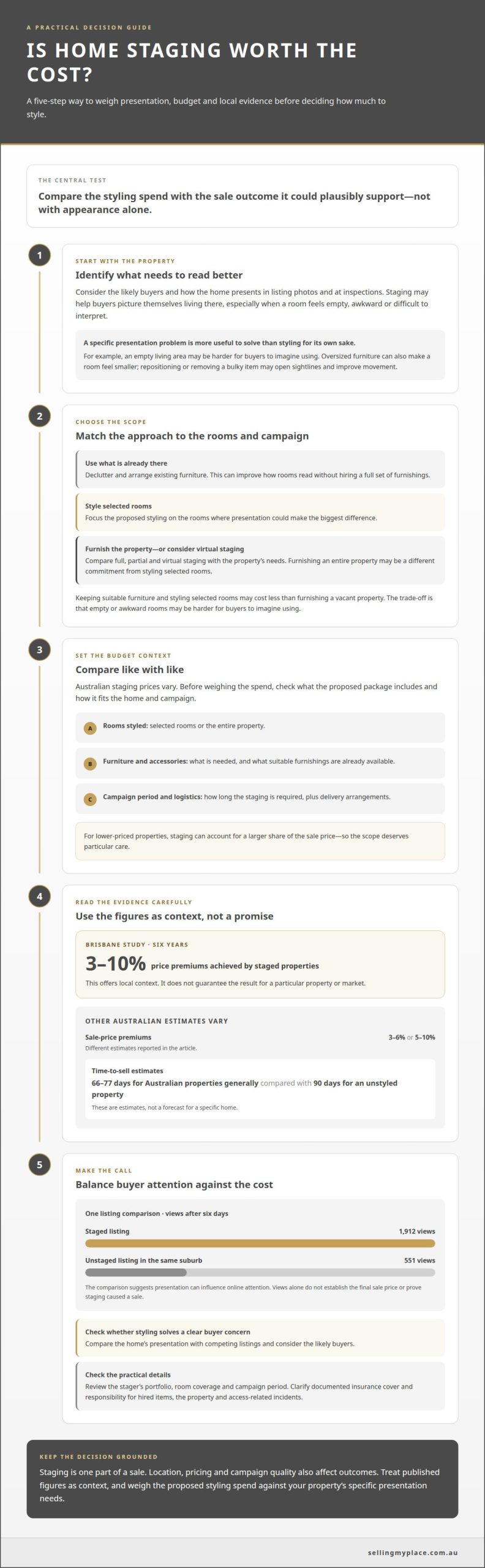
Home staging can be worth the cost in Australia when the likely sale uplift outweighs the styling spend. If you’re asking whether home staging is worth it in Australia, a six-year Brisbane study offers useful local context: staged properties achieved price premiums of 3 to 10 per cent. Those results can inform your decision, though the value of staging depends on the property and its market.
It’s understandable to weigh the upfront cost carefully, especially when selling involves plenty of decisions. To decide whether home staging is worth it in Australia, consider whether presentation could help buyers connect with your home, not just whether styled rooms look appealing.
This article explains Australian staging costs and how staged listings compare with unstaged sales, including what the Brisbane findings can and can’t tell you. You’ll have a clearer basis for deciding whether staging suits your property and sale plans.
Key Takeaways
- Judge staging by its potential to improve buyer appeal and the likely sale outcome, not by appearance alone.
- Compare the cost of full, partial and virtual staging with the needs of your property and campaign.
- Staged and unstaged listings can attract different levels of buyer attention, but presentation is only one part of a sale.
- A six-year Brisbane study found staged properties achieved price premiums of 3 to 10 per cent, offering local context rather than a guaranteed result.
- Use pre-sale advice and neighbourhood market insights to decide where presentation could make the biggest difference.
Why Property Styling Costs Matter So Much in 2026
Staging is a selling expense to weigh against possible changes to sale price and time on market. Estimates vary across Australia, so consider your property’s likely buyers and what needs to improve in its presentation.
Sale price and time-to-sell outcomes
Staging presents a property to help buyers picture themselves living there; its potential value lies in buyer appeal. Australian estimates of sale-price premiums vary: one range is 3-6%, while another is 5-10%.
Time-to-sell estimates vary too, from 66 to 77 days for Australian properties generally, compared with 90 days for an unstyled property. These figures provide context, not a forecast for a specific estate. A quicker sale may also reduce the time a home needs to stay ready for inspections.
Costs for lower-priced properties
For lower-priced properties, staging can account for a larger share of the sale price.
That makes the scope important. Keeping suitable furniture and styling selected rooms may cost less than furnishing a vacant apartment. The trade-off is presentation: buyers may find empty or awkward rooms harder to imagine using.
Australian staging price ranges
Australian staging prices range from styling selected rooms to furnishing an entire property.
These amounts help frame your budget, but the property’s size, existing furnishings and campaign length also affect the scope. Compare the proposed inclusions with the rooms buyers will see to judge whether the cost is worthwhile.
Anecdotal price comparisons and premiums
Anecdotal comparisons show how presentation may influence buyer attention, but they cannot isolate staging from location, pricing or marketing. One comparison recorded 1,912 views for a staged listing and 551 for an unstaged listing after six days.
For a A$750,000 property, a hypothetical 2% uplift equals A$15,000; a 2.5% uplift equals A$18,750. LJ Hooker reported a potential 7.5-12.5% sale-price boost from styling. These examples illustrate possible outcomes, not a guaranteed return.
Are home staging costs tax deductible in Australia? There is no single answer: tax treatment can depend on the property’s use and your circumstances. Keep staging costs separate from your estimated sale price when assessing the financial outcome.
What are the risks or downsides of staging a home for sale? The main risk is spending more than the sale outcome justifies. Styling can also look generic or misrepresent a property, so match the furniture and presentation to the home and its likely buyers.
Comparison of staged and unstaged listings
Staged listings use furniture and styling to show how rooms might work for everyday living; unstaged listings show the property as it is. This difference can shape buyers’ first impressions online and at inspections, although sale outcomes also depend on location, price and campaign quality.
In one Australian comparison, a professionally staged listing received 1,912 views after six days, while an unstaged listing in the same suburb received 551. The gap suggests presentation can influence online attention, where buyers often make quick decisions about which homes to inspect. Views alone, however, don’t establish the final sale price or prove staging caused a sale.
Time on market offers another comparison. One estimate puts styled Australian homes at an average of 33 days to sell, while a separate figure reports 66% of staged homes selling within their first two weeks. These measures use different timeframes, so they shouldn’t be treated as directly interchangeable. They do show why sellers may consider presentation when planning a campaign.
Choose a stager whose work suits the home, rather than simply opting for the most elaborate look. A portfolio can show whether their furniture choices suit similar floorplans and buyer groups. Reviews may indicate how clients describe communication, installation and removal. Compare the proposed room coverage and campaign period with your property’s needs, and clarify the scope before selling begins.
Insurance matters, too. Staging brings furniture into the property and involves moving it through rooms, so documented cover for relevant risks can clarify responsibilities if damage occurs. The arrangement should specify who is responsible for hired items, the property and access-related incidents. These practical details matter as much as the visual result.
For an unstaged home, decluttering and arranging existing furniture can improve how rooms read without hiring a full set of furnishings. Oversized furniture can make a room feel smaller; removing or repositioning a bulky item may open sightlines and improve movement. Staging is most useful when it solves a specific presentation problem, such as an empty living area that feels difficult to interpret.
To judge the likely value, compare the home’s presentation with competing listings and consider whether styling addresses a clear buyer concern. A property sale planning discussion can help connect presentation choices with the wider campaign.
Home staging costs in Australia
Staging costs vary with the home, furniture needed and campaign period. To decide whether it is worthwhile, compare similar inclusions and consider the presentation your property needs.
Costs by city and property type
Australian estimates differ by location, property size and campaign length, so local examples can help frame your budget.
For sellers asking, “Is home staging worth it in Australia?”, these differences show why property type and location matter alongside average costs.
Factors affecting staging costs
The main cost drivers are the rooms styled, the furniture and accessories needed, the campaign duration and delivery logistics.
Timing and distance can affect the total. Partial staging can reduce expenses by 30-50% compared with full vacant staging.
Furniture rental costs
Furniture rental is generally part of a staging arrangement, along with delivery, placement and the hire period.
Furniture rental can help present a home in listing photos, while the right setup for inspections depends on your needs. Choose an approach based on whether buyers need to see physical furniture during visits or a visual guide to an empty room’s potential.
Brisbane study of staged property sales
A six-year Brisbane study by Cape Cod Residential and the Interior Design Association examined 144 staged properties. It found an average price premium of A$69,017, with premiums ranging from 3 to 10 per cent. For a seller weighing presentation costs, those figures offer local evidence of how staged sales performed across the study period.
The reported average gives a dollar-based view alongside the percentage range. A$69,017 is a study-wide average, not a predicted uplift for every home. The actual amount represented by a percentage premium depends on the sale price. This distinction matters: a seller’s budget decision should relate to their property and likely buyer market, not simply the study average.
The upper end is notable, but the study’s distribution adds useful context. Thirty per cent of staged homes achieved a premium above A$100,000. That finding shows high premiums occurred for a portion of the properties, rather than describing every staged sale. It also makes the range more informative than focusing only on the highest result.
Timing was another reported outcome: 49% of the 144 properties sold in the first week, and 87% sold within four weeks. Those figures describe the staged properties in the study. They do not give an unstaged comparison, so they show how quickly these homes sold, rather than proving staging alone shortened each sale campaign.
For a Brisbane owner, the findings are most useful as a decision-making reference. Consider whether rooms need a clearer purpose, whether likely buyers value a furnished setting and how the staging scope fits the campaign. For example, a vacant living area may be difficult to interpret in photographs; selective furniture can make its use easier to picture.
The study’s price premiums also need to be weighed against the cost of styling. Compare the expected sale range with the staging quote, including the rooms covered and hire period. Then consider the property’s condition, location and presentation against similar homes. The study’s 3 to 10 per cent range can frame the discussion, but should not be treated as a promised return.
Brisbane’s results add a local perspective to the wider question of whether staging makes financial sense. The study found that staged properties recorded substantial premiums and relatively quick sales over its six-year period. For an individual seller, the practical next step is to relate those findings to their property, target buyers and campaign budget, rather than aim for the study’s highest outcome.
Which Australian property types benefit most from staging?
Staging is most useful when presentation helps buyers understand a home’s layout, scale or purpose. Both the property type and what feels unclear in its current condition matter. For example, furniture in an empty living room can show how a lounge and dining area might fit together.
Vacant apartments can benefit because bare rooms offer few visual clues about their function. A dining nook beside the kitchen, or a compact bedroom furnished with a bed and side table, can help buyers assess the space. Staging can also make listing photographs easier to interpret, particularly in an open-plan apartment.
Family homes may benefit when rooms could serve several purposes. Arranging a spare bedroom as a study, for instance, gives buyers a clear example of how the space might work. In a larger home, consistent styling can connect living areas and bedrooms without making every room feel identical.
Unusual layouts and small rooms call for especially careful furniture choices. Oversized pieces can make a room appear smaller, while well-proportioned furniture can clarify circulation and likely use. In a narrow living area, arranging seating to preserve a clear walkway can show how the room functions day to day.
Staging can also help when existing furnishings distract from a property’s features. Personal collections, crowded surfaces or furniture blocking sightlines can draw attention away from the room. A pared-back presentation can refocus attention on built-in storage, window placement or an open connection to the garden.
Buyer feedback offers one reason to consider this approach: 82% of buyers said staging helped them visualise living in a home. That finding speaks to the value of making a property’s potential easier to picture, rather than proving every home needs full staging. A furnished townhouse and a vacant apartment may need different approaches.
High-end homes may benefit from carefully coordinated presentation across entertaining and private spaces. But a larger property doesn’t automatically need hired furniture in every room. The key question is whether presentation makes the home’s design and lifestyle clearer to likely buyers, from the main living space to a quiet retreat or guest room.
An occupied home may need styling in selected rooms rather than replacement of all existing furnishings. Assess what already works, what competes for attention and which spaces seem difficult to use. This connects the plan to the property’s strongest features and likely buyers.
For tailored guidance on preparing a specific home for sale, discuss your property’s presentation needs.
Kincade International Direct Sales: Pre-Sale Property Consulting
Kincade International Direct Sales offers Pre-Sale Property Consulting to help owners plan a sale and decide where preparation could make a difference. If you’re weighing staging against other priorities, advice can help connect your home’s presentation with likely buyers and the market.
Neighbourhood market reports and Real Estate Advisory Services can inform decisions about positioning a property, while Residential Property Listing Services support the sale campaign. This guidance can help you consider whether full staging, selective styling or using existing furnishings best suits your plans. Keep the decision grounded in your property and its market, rather than assuming every home needs the same approach.
If you’re preparing to sell and would value a considered view of your next steps, explore Kincade International Direct Sales’ packages.
Make your next sale decision with confidence
Whether home staging is worth it in Australia depends on how well the presentation plan fits your property, likely buyers and wider selling strategy. Treat styling as one part of preparing a home, not a substitute for clear positioning or a well-managed sale.
Before committing, consider what you want buyers to notice first and whether furniture or simpler presentation changes would help them see the home’s potential. A considered plan keeps attention on choices that support your priorities while allowing for the practical demands of a major move.
Kincade International Direct Sales also offers Buyer Representation for people navigating a purchase, alongside services for owners preparing to sell. If you’re weighing your next move, talk with Kincade International Direct Sales about your property plans.
With a clear view of your goals, you can take the next step feeling more prepared and in control.
Frequently Asked Questions
Partial vs Full Staging: Which Is Worth the Cost?
Partial staging can suit an occupied home with furnishings that already work, while full staging can help present a vacant property consistently. The better fit depends on which rooms need attention and what buyers may struggle to picture. For example, keep a dining table that fits well, but add furniture to an empty living area. This focuses spending where presentation can clarify a room’s function.
Can home staging increase my sale value?
Yes, staging can contribute to a higher sale value by helping buyers understand a home’s use and appeal. To assess the financial case, compare your target sale outcome with the full styling expense, including the hire period and selected rooms. Stronger presentation may support buyer interest, but the property’s condition, location, pricing and competition also influence offers.
Do staged properties really attract more views online?
Staged homes can attract more online views: a comparison of two similar listings in the same suburb found higher view counts for the staged property. Photos are often a buyer’s first encounter with a home, so clear layouts and appropriately scaled furniture can make a listing easier to assess. The cover image, asking price and listing exposure also affect whether people click through.
What Are the Rooms That Should Be Staged Always?
No room must always be staged. Prioritise spaces where buyers need help understanding the layout or purpose. Living areas, kitchens and the main bedroom often shape a buyer’s impression because they show everyday use. If the kitchen is already clear and functional, styling may add little. An empty second bedroom, by contrast, could be shown as a guest room or study to illustrate its flexibility.
What are the benefits of staging your property?
Staging can make room proportions, circulation and possible uses easier to understand in listing photos and at inspections. It can also create a considered visual thread that helps buyers move between spaces without distractions. A dining setting, for instance, can show how an open-plan area works, while a desk can demonstrate a spare room’s potential without changing its layout.
What do Australian Real Estate Agents think?
There is no single view shared by every Australian real estate agent. Advice depends on the home, its likely buyers and how it compares with competing listings. An agent may see value in staging a vacant property with confusing room proportions, while recommending decluttering and existing furniture for a well-presented occupied home. Focus the discussion on the specific presentation gaps staging would address.
What’s Typically Included in Sydney Staging Packages?
A Sydney staging package may involve temporarily furnishing the property with furniture, art and homewares, then setting it up for listing photos and buyer inspections. The scope matters: rooms covered, hire duration and whether the home needs furnishing from scratch all affect what the package delivers.
How much does home staging cost in Australia?
These options meet different needs: physical furniture supports inspections, while virtual styling changes listing images without furnishing rooms for visits.
