Sell Your Home With Confidence: Pricing to Inspections
You can sell your home in Australia without a traditional real estate agent. Knowing how to feel confident selling your own home starts with understanding the work involved: pricing and preparing the property, marketing it, responding to buyers and managing the sale.
It’s reasonable to weigh the potential commission savings against the time and responsibility of managing a sale yourself. A private sale gives you more direct control, but you’ll need to make informed decisions at each stage and arrange qualified support for legal matters and settlement.
This guide covers whether a private sale suits your circumstances, how to present and promote your home, and what to consider when buyers visit. It also helps you weigh potential savings against the practical demands, so you can choose an approach that feels clear and manageable.
Key Takeaways
- You can sell your home privately in Australia, but weigh the hands-on work and local requirements against the control it gives you.
- Set a realistic asking price using comparable local sales, and keep your marketing claims accurate and your personal details protected.
- Prepare your home for inspections by making its best features easy to see and readying clear answers to buyers’ questions.
- Listen for what prospective buyers need, then explain how the property’s features suit their plans.
- Compare potential commission savings with the costs, time and responsibilities of marketing and managing the sale yourself.
1. Should I Sell My Home Myself?
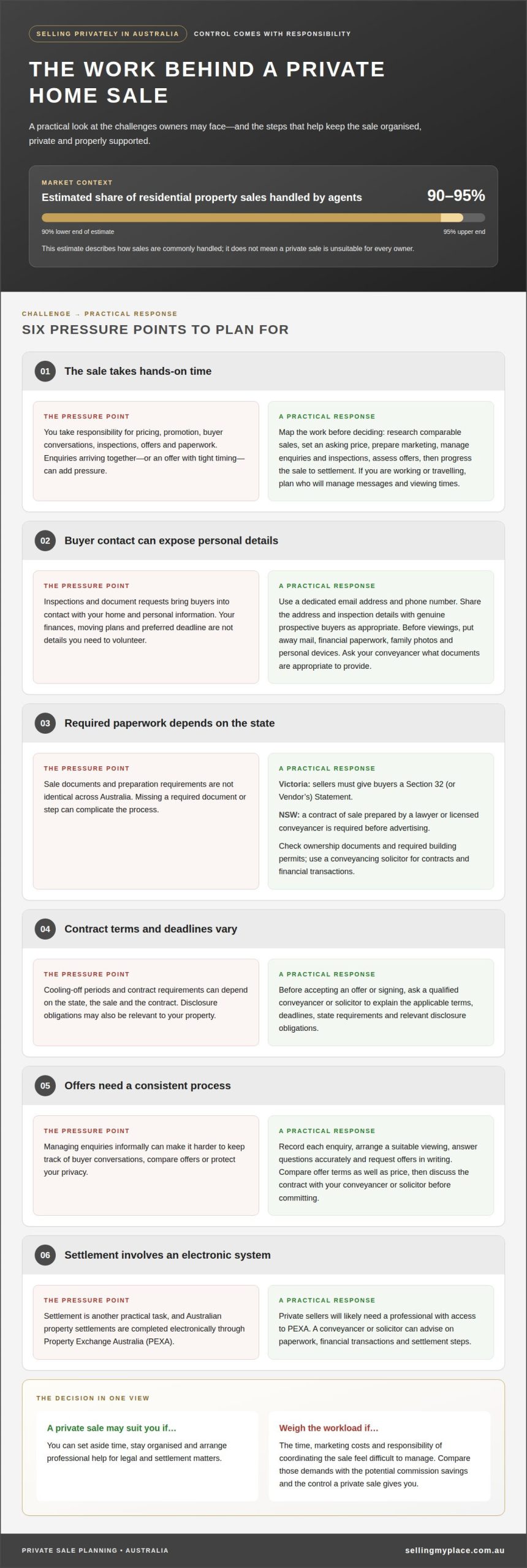
You can sell your home privately in Australia; owners aren’t legally required to use a real estate agent. The choice is whether you can take on pricing, promotion, buyer conversations, inspections and paperwork while managing your other commitments. Real estate agents handle an estimated 90% to 95% of residential property sales, but that doesn’t make a private sale unsuitable for every owner. Examining how residential brokerages such as Ray Lyon Realty analyse local market conditions and property presentation can help owners appreciate the depth of research that professional agencies bring to a campaign.
Map out the work before deciding. You’ll need to research comparable sales, set an asking price, prepare marketing, respond to enquiries, organise inspections, assess offers and progress the sale to settlement. Each step takes time and follow-up. Several enquiries at once or a time-sensitive offer can make a private sale demanding, so plan who will manage messages and inspection times if you’re working or travelling.
Protecting your privacy takes planning. Use a dedicated email address and phone number for enquiries, and share the property address and inspection details with genuine prospective buyers as appropriate. Put away mail, financial paperwork, family photographs and personal devices before viewings. Answer questions about the home without volunteering details about your finances, moving plans or preferred deadline. If a buyer requests documents, ask your conveyancer what is appropriate to provide.
Paperwork depends on the state. In Victoria, sellers must give buyers a Section 32 (or Vendor’s) Statement. In NSW, the NSW Government requires a contract of sale prepared by a lawyer or licensed conveyancer before the property is advertised. Check ownership documents and required building permits, and ask a conveyancing solicitor to help handle contracts and financial transactions.
Cooling-off periods and contract requirements vary between states and can depend on the sale and contract. Before accepting an offer or signing, ask a qualified conveyancer or solicitor to explain the applicable terms, deadlines and state requirements, including disclosure obligations relevant to your property.
Use a consistent process for enquiries, inspections and offers: record each enquiry, arrange a suitable viewing, answer questions accurately and request offers in writing. Compare the terms as well as the price, then discuss the contract with your conveyancer or solicitor before committing. A calm, consistent approach keeps conversations professional and helps protect your privacy.
Settlement adds another practical task. Australian property settlements are completed electronically through Property Exchange Australia (PEXA), so private sellers will likely need a professional with access to the system. A conveyancer or solicitor can advise on paperwork, financial transactions and settlement steps; Conveyance Advice can help you understand this part of the sale.
A private sale also means coordinating the details yourself, from tracking enquiries to preparing for inspections and following up on offers. Marketing costs and the time needed to organise each step are factors to consider. If you can set aside time, stay organised and engage professional help for legal and settlement matters, selling privately may suit you. If those responsibilities feel difficult to manage, weigh the workload against other sale options before choosing.
2. Marketing privately with photos, listings and virtual tours
A listing needs to introduce your home before buyers arrive. Use clear, well-lit photographs that show each room’s layout and features. Professional photography can present spaces consistently, while a floorplan helps buyers understand how the rooms connect. Keep descriptions accurate: call a living area sunny only if the photos and viewing support that description.
Build the listing around the details buyers need to decide whether to enquire. Include the property’s location, room configuration, notable features and inspection arrangements. Check every detail against the property and relevant paperwork before publishing. For example, don’t describe a room as a bedroom based only on its furnishings; make sure the description accurately reflects the home.
Choose marketing channels with reach and access in mind. Options include property-listing websites, social media, signage, brochures and local print advertising. Some major real estate platforms don’t accept for-sale-by-owner listings, which can limit where a private seller advertises. Check which channels accept private listings, then coordinate the wording, photographs and inspection details so buyers see a consistent message.
Virtual tours can help buyers explore a home remotely before arranging a visit. Move steadily from the entrance through the main living areas, bedrooms and outdoor spaces. Keep the camera level, show how rooms connect and avoid lingering on personal belongings. Pair the tour with still photographs and a floorplan, so viewers can orient themselves rather than relying on video alone.
Off-market promotion is more limited and targeted, while broad marketing aims to reach more prospective buyers. A quieter campaign may suit sellers who value discretion; wider exposure can put the home in front of people beyond their existing network. Decide based on your privacy preferences, likely audience and willingness to coordinate enquiries. Neither approach guarantees a particular sale price.
Private-sale prices don’t follow a fixed discount compared with agent-assisted sales. The result depends on the property, comparable local sales, buyer demand and how effectively the listing reaches interested people. Broad exposure may create more opportunities for competing interest, but photographs and advertising alone can’t establish what buyers will offer.
Budget for the whole campaign, not just the listing. Australian home-sale marketing, including professional photography, online listings, signage, social posts, brochures and print advertisements, could cost several thousand Australian dollars. Set priorities before committing: strong images and a clear listing may matter more to your campaign than using every available channel.
For a more organised campaign, prepare one accurate set of property details and reuse it across each chosen channel. If you’d like help shaping a private-sale listing and its marketing, discuss your listing plans.
3. Preparing and styling the home for inspections
Prepare each room so buyers can understand its purpose and imagine using it. Clear benches, remove excess furniture and open curtains before an inspection. In a compact lounge, moving a bulky chair can make the walkway and seating area easier to see. Focus on clean surfaces and uncluttered spaces rather than hiding features buyers may want to inspect.
Work through the home in order: entry, living areas, kitchen, bedrooms, bathrooms and outdoor spaces. Fix small distractions, such as a loose cupboard handle or a burnt-out light, and make sure doors and windows open. A tidy garden path and clear entrance also help visitors move safely from the street to the front door.
Styling should highlight the property’s real strengths, not disguise its condition. A simple dining-table setting can suggest how the space works, while neutral furnishings can help buyers focus on room size and natural light. Treat styling as a way to present the home, not a promise about its sale price.
Plan inspections around the home’s best features. If the kitchen receives morning light, schedule a viewing when that feature is visible. Before buyers arrive, check lighting, ventilation and access to areas they may want to see, including storage and outdoor spaces. Keep pets secure and personal items put away, so visitors can focus on the property.
For an open inspection, set clear start and finish times in the listing and prepare the entrance before visitors arrive. Walk through the property first to check that each room is accessible and presentable. Keep a floorplan available and be ready to explain practical features such as storage, heating or the connection between indoor and outdoor living areas.
During the inspection, give buyers room to look around. Stay available for questions and answer based on what you know about the home. If you don’t know, note the question and follow up after checking the details. This keeps the conversation useful without turning the viewing into a sales pitch.
After each open inspection, note recurring comments and questions. If several buyers say a room feels dark, check whether curtains, furniture placement or lighting affect the impression. Make one practical adjustment before the next viewing, then note whether it improves the space. A short checklist for presentation, access and follow-up gives every inspection a consistent routine.
Good preparation helps buyers see the home clearly and lets you host inspections with purpose. Before each viewing, check the entrance, switch on lights where needed, clear benches and make advertised features easy to see.
4. Listening to buyers and matching features to their needs
A buyer’s questions can reveal what matters to them. Ask open questions during a viewing, such as what they hope the home will make easier, then listen without interrupting. Someone who works from home may value a quiet study, while a buyer with young children may focus on a fenced yard or nearby parks.
After each conversation, use a simple approach: note the buyer’s priorities, identify relevant features and explain the connection honestly. If they need bike storage, point out the garage or other storage areas. If they’re considering entertaining, show how the kitchen connects with the dining area or outdoor space.
Keep a brief record of recurring questions from inspections. Buyers may ask about natural light, storage, maintenance or the layout between bedrooms and living areas. Group similar comments and prepare clear answers for the next viewing. This helps you explain the home consistently instead of trying to recall every conversation on the spot.
Match features to buyers’ needs without overselling. A spare room can serve as a study, but describe it as a flexible space rather than promising it suits everyone. If someone asks about a fixture, renovation or property document, answer based on what you know. Note anything that needs checking and follow up with accurate information.
Different buyers value different things. One may appreciate a low-maintenance garden; another may want room for children or pets. Instead of reciting a prepared list of features, ask which parts of the property stood out. Their answer helps you explain why that feature may be practical for them.
Negotiating is easier when you separate a buyer’s needs from their offer. A request for a different settlement date, for example, is a term to consider alongside the proposed price. Write down the offer and each requested condition, then review them carefully before responding. Enthusiasm is useful context, but the written terms are what you need to assess.
Give buyers time to think after a viewing. Don’t press for an immediate decision; invite them to send questions or clarify what they’d like to know. If a buyer is concerned about room size, provide measurements or show how the floorplan explains the layout. Specific information makes the conversation more useful.
After each inspection, review your notes and refine your explanations. If several buyers ask about the same feature, prepare a concise, factual answer for the next conversation. This steady process helps you respond to buyers’ needs while keeping claims about the home accurate and consistent.
5. Potential savings on real estate commission
Commission is one of the main costs to compare when deciding how to sell. Selling without a real estate agent can save a seller around 2% in commission, but the sale price and other costs also matter. The useful comparison is the amount left after sale-related expenses, not the commission figure alone.
In Australia, real estate agents typically charge commission of 1% to 3.6% of a home’s sale price. The actual amount depends on the agreed commission and final sale price, so compare the written terms rather than relying on a general rate.
A private sale can reduce commission costs, but it doesn’t remove the work or all expenses. Account for your time, marketing and the legal and conveyancing steps involved. Decide which tasks you’ll handle yourself and where you’ll need professional support. This gives you a more realistic view of potential savings than simply subtracting an agent’s commission from the sale price.
Sale price matters as much as the fee. A higher commission rate may still leave a seller with more if the agent achieves a sufficiently stronger result. Reviewing market guidance from residential specialists like AW Homes of Bellabay Realty highlights how professional pricing strategy and promotion work together to drive final returns. Compare likely outcomes using realistic local sales evidence, then account for commission and other costs for each option. Don’t treat a potential saving as money in hand before considering the full transaction.
If you’re weighing agent representation, the ACCC recommends getting property-value opinions from different agents and requesting a written schedule of potential fees before signing an agreement. Compare what each fee covers, how commission is calculated and when it becomes payable. Written details make differences easier to spot and reduce the chance of comparing unlike arrangements.
For a private sale, list the costs you expect to manage, including marketing and professional conveyancing support. Compare the total with the proposed commission and other sale expenses. A simple side-by-side calculation can show whether the potential saving is worth taking responsibility for the extra tasks.
The clearest takeaway is to compare net proceeds, not commission in isolation. Use a realistic sale-price estimate, subtract the costs associated with each route and consider the time you’ll personally invest. If you want to work through the numbers and sale approach for your property, discuss your selling options.
Kincade International Direct Sales: Residential Property Listing Services
Kincade International Direct Sales offers Residential Property Listing Services for Australian homeowners who want to manage their sale while using professional marketing support. Listings include professional photography, floorplans and neighbourhood market reports, with a 0% commission structure and no time limits on the listing.
This may suit owners who are comfortable handling buyer conversations and inspections but want help presenting their property to a wider audience. Pre-Sale Property Consulting can help with decisions before listing, while Buyer Representation and Real Estate Advisory Services support other parts of the property journey.
If you’re considering a private sale, decide which tasks you want support with and which you’re ready to manage yourself. Explore Kincade International Direct Sales’ flat-fee packages at sellingmyplace.com.au and choose the option that fits your marketing needs.
Take your next step with a clear plan
The decision isn’t simply whether to sell privately. It’s how you want the process to fit around your time, priorities and the transition ahead. Knowing how to feel confident selling your own home starts with choosing an approach you can manage and taking a practical first step, rather than trying to solve every detail at once.
Write down what matters most to you, such as staying closely involved, keeping the process organised or having guidance with specific parts of the sale. That short list can help you focus conversations and make choices that feel aligned with your circumstances. If you’d like support weighing your options, contact Kincade International Direct Sales to discuss your next step.
Selling a home marks a meaningful change, and taking time to make a considered plan is part of protecting what matters. Move forward at a pace that works for you, with the right support around the decisions you choose to make. You can take this one step at a time.
Frequently Asked Questions
Should I Sell My Home Myself?
A private sale can suit you if you have time to manage enquiries, inspections and decisions, and can arrange qualified support for legal matters. Knowing how to feel confident selling your own home starts with deciding which tasks you’ll handle and where you want help. For example, you might manage viewings yourself and engage a conveyancer or solicitor for contract and settlement guidance.
How much can I save by selling my own home?
Your potential saving depends on the commission you avoid, the final sale price and the expenses you take on. Compare written fee terms with your expected private-sale costs, including marketing and professional assistance. Then consider the value of your time. Lower expenses don’t automatically mean a better financial result if the sale price differs from your estimate.
Should you sell your own house?
Consider a private sale if you can stay organised, communicate clearly with buyers and make time-sensitive decisions. It may be less suitable if work, caring responsibilities or a move leave little time for inspections and follow-up. Before choosing, list the tasks you’re willing to manage, the support you’ll need and your priorities for the sale. That makes the decision personal, rather than simply about commission.
Why is it not more common to sell your own property?
Owners may choose an agent because a private sale puts marketing, buyer contact and sale coordination in their hands. Major portals such as Realestate.com.au and Domain don’t accept listings directly from individual owners, so reaching buyers through those platforms requires a licensed intermediary. Sellers may also want support with negotiations or professional paperwork. These practical considerations can outweigh the appeal of handling the sale directly, especially when time is limited.
What are the steps to sell your own home in Australia?
Start by researching comparable sales and setting an asking price. Arrange the state-specific sale documents, then organise photography, a listing and inspection times. Respond to enquiries, record offers and compare their terms before deciding. Once you accept an offer, work with a qualified conveyancer or solicitor on the contract and settlement process. Keep written records of decisions and buyer communications as you go.
How much does it cost to sell a home without a real estate agent in Australia?
There’s no single standard total: costs depend on your marketing choices and the professional support your sale needs. To understand how to feel confident selling your own home, create a budget with separate lines for advertising, photography, presentation, conveyancing and other transaction expenses. Listing these categories before launch helps you compare a private sale with an agent-assisted approach on a like-for-like basis.
How can I estimate a realistic asking price for my home in Australia?
Compare sale prices for similar homes in the same local market, accounting for differences in condition, layout, land and features. A renovated kitchen, extra parking or a busy road can affect how closely a comparison fits. Use several genuinely comparable sales rather than relying on one standout result, and consider an independent appraisal for an objective market perspective.
How do I prepare and stage my home for sale?
Start with a room-by-room tidy, clear walkways and put away personal items that distract from the space. Make small visible repairs, such as tightening a loose handle, and ensure storage areas are accessible. Arrange furniture simply to show how each room functions. Before photography or a viewing, open curtains, switch on lights where needed, and make entrances and outdoor areas presentable.
