Private Property Sale Contract Australia: A Guide for Independent Sellers
What if the only thing standing between you and a successful, commission-free sale isn’t a lack of expertise, but a simple stack of paperwork? Selling your family home is a deeply personal milestone, and it’s completely natural to feel a flutter of nerves when navigating a private property sale contract australia for the first time. You might worry that without a traditional agent, you’re leaving yourself open to legal pitfalls or that the state-specific terminology is just too dense to untangle. We understand that this isn’t just a transaction; it’s the start of your next chapter, and you want to ensure every detail is handled with care and precision.
The good news is that you don’t need to pay a premium for professional protection. You can take full control of your journey while staying firmly on the right side of the law. This guide will walk you through the essential components of a valid agreement, from the latest 2026 NSW cooling-off notices to the mandatory Queensland disclosure statements. We’ll preview exactly how to organise your documentation and understand your local obligations, so you can move forward with the calm confidence of a seasoned pro and keep your hard-earned equity where it belongs.
Key Takeaways
- Learn why the timing of your paperwork is vital, particularly in states like NSW where you must have your contract ready before you even list the property for sale.
- Master the essential components of a private property sale contract australia to ensure your legal names and Title References are documented correctly from the start.
- Navigate complex state-specific disclosure rules, such as Victoria’s Section 32, to protect your interests and provide complete transparency to your buyer.
- Gain the confidence to manage initial offers and holding deposits independently, allowing you to negotiate special conditions without a middleman.
- Discover how expert advisory support can bridge the gap between signing the contract and reaching a successful settlement day.
What is a Private Property Sale Contract in Australia?
Think of your sales contract as the legal roadmap for your entire selling journey. It is far more than just a formal piece of paper; it is the foundation of your legacy and the document that ensures your home’s transition is handled with the respect it deserves. In the Australian property market, this agreement establishes the ground rules between the Vendor (that’s you, the seller) and the Purchaser (the buyer). While it might feel like a final step, a private property sale contract australia is actually your very first priority. In states like New South Wales, it’s a legal requirement to have this document prepared before you even put your home on the market. Having it ready to go gives you a “steady hand” during negotiations, projecting a sense of professional authority that puts buyers at ease and reduces your own stress levels.
This document initiates the formal conveyancing process, which is the legal transfer of land title from one person to another. By preparing early, you aren’t just ticking a box; you’re taking control of the narrative. You’ll know exactly what you’re offering, what stays with the property, and what the timeline looks like, long before the first viewer walks through your front door.
Private Treaty vs. Auction Contracts
Most independent sellers choose a Private Treaty sale because it offers a more personal, measured pace. Unlike an auction where the hammer falls and the deal is final, a private treaty allows you to invite offers and negotiate on your own terms. This method provides a wonderful emotional benefit: you maintain control over who buys your home and under what conditions. It’s a partnership-based approach that feels less like a high-stakes gamble and more like a thoughtful consultation. You have the flexibility to adjust settlement dates or include specific clauses that an auction simply wouldn’t permit.
The Cooling-Off Period Explained
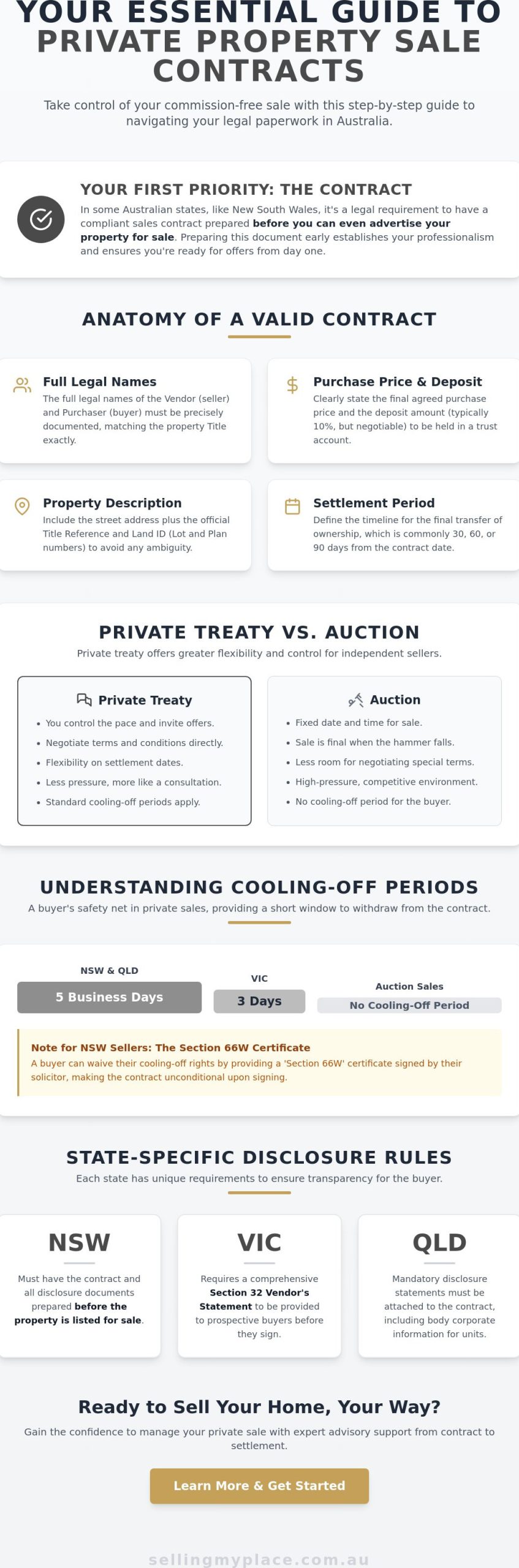
The cooling-off period is a standard feature of most private sales across Australia, acting as a short safety net for the buyer. Typically, this lasts between 3 and 5 business days, depending on your state. For instance, buyers in New South Wales and Queensland generally enjoy 5 business days, while those in Victoria have 3. It’s vital to remember that these rights don’t apply at auctions or if a property is passed in but sold on the same day. In some cases, particularly in NSW, a buyer might provide a “Section 66W” certificate. This document, signed by their solicitor, waives the cooling-off period entirely, making the contract unconditional from the moment it’s signed. Understanding these nuances helps you manage your expectations and stay grounded during the final stages of the deal.
Essential Components of a Valid Sales Contract
Precision is your best friend when drafting a private property sale contract australia. While the document marks the financial end of your time in a home, it’s also the legal shield that protects your interests until the keys change hands. To ensure the agreement is binding and robust, you must start with the basics: the full legal names of all parties. It sounds simple, but ensuring these match the Title exactly is crucial. If you’re selling as a couple or through a trust, every detail must be mirrored in the contract. You’ll also need to clearly state the agreed purchase price and the deposit requirements, which is typically 10% of the sale price held in a trust account, though this can be negotiated to suit both you and your buyer.
The property itself needs a flawless description. This goes beyond the street address. You must include the Title Reference and Land ID (Lot and Plan numbers) to ensure there’s no ambiguity about what’s being sold. Finally, the settlement timeframe, whether it’s 30, 60, or 90 days, provides the heartbeat of the transaction, giving both parties a clear date to work toward. Gaining a deep understanding of the nuances of the private sale process ensures you don’t miss these critical details, allowing the transition to feel like a shared success rather than a legal hurdle.
Mandatory Disclosure Documents
Transparency is the cornerstone of a stress-free sale. In Australia, you’re legally required to provide specific documents that prove you have the right to sell and inform the buyer about the land’s status. A current Title Search is non-negotiable; it’s the proof of your ownership. You’ll also need Zoning Certificates, such as a Section 10.7 in NSW, which tells the buyer what the land can actually be used for. Don’t forget to highlight any easements or covenants. If there’s a shared driveway or a restriction on building heights, disclosing this early prevents a buyer from pulling out later. These documents aren’t just red tape. They’re tools that build trust and protect you from future claims of non-disclosure.
Chattels and Fixtures: What Stays and What Goes?
The backbone of a solid private property sale contract australia is accuracy, especially regarding the physical items in the home. Disputes often arise over “grey area” items like dishwashers, custom-made curtains, or that heirloom light fitting in the dining room. As a rule of thumb, fixtures are items “fixed” to the property (like a built-in oven), while chattels are moveable (like a fridge). To avoid settlement day surprises, be explicit. If you plan to take the designer pendant lights with you, list them as exclusions. If the garden shed stays, list it as an inclusion. If you’re feeling unsure about how to categorise your belongings, you can always reach out for a guiding hand to clarify these final details.
State-Specific Requirements and Disclosure Rules
Navigating a private property sale contract australia requires an understanding that our states don’t always play by the same rules. It’s like a neighbourly chat where the dialect changes just slightly as you cross the border. While the heart of the transaction remains the same, the legal requirements for disclosure vary significantly depending on where your property is located. In New South Wales, the law is quite firm: you must have a draft contract prepared before you even put up a “For Sale” sign or share a photo online. This isn’t just about red tape; it’s about ensuring every potential buyer has the full story from the very first minute, protecting you from claims that you’ve withheld vital information.
Down in Victoria, the Section 32 Vendor Statement is your most important companion. This document discloses everything from land tax and rates to building permits and encumbrances. Failure to include a complete and accurate Section 32 can be a deal-breaker. Checking the latest private sale contract requirements will help you stay on top of these local nuances and ensure your paperwork is beyond reproach. Queensland sellers typically use standard REIQ contracts, but these must include a specific “Warning Statement” to be valid. Meanwhile, in Western Australia, the process revolves around the “Offer and Acceptance” (O&A) system, where the contract is formed when you formally accept a buyer’s written offer on a prescribed form.
The Consequences of Non-Disclosure
What happens if a document is missing or a detail is incorrect? It’s not just a minor hiccup. A missing disclosure can give a buyer the legal right to rescind the contract, meaning they can walk away and take their deposit with them, often right up until the day of settlement. You could also face legal penalties for providing misleading information, even if it was an honest mistake. Essentially, vendor disclosure serves as a vital legal safeguard that protects the seller from future disputes by ensuring total transparency from the outset.
Navigating Regional Variations
Because these rules are so specific to each state, hiring a local expert is a wise move even if you are managing the marketing yourself. State laws even impact how you can handle an “off-market” listing or a pre-sale consultation. Seeking professional Conveyance Advice is the best way to ensure your specific sale is compliant with local regulations. This regional expertise provides the steady hand you need to manage the complexities of the private property sale contract australia, giving you the freedom to focus on finding the right buyer for your home’s next chapter.
Managing the Contract Process Without a Traditional Agent
Taking the reins of your home sale is an empowering choice. You don’t need a middleman to facilitate a genuine conversation between two parties who both want the same thing: a fair and transparent transition. When an offer comes in, it is often accompanied by a small holding deposit. This isn’t a legal requirement, but it is a lovely way for a buyer to say, “We are serious about your home.” Because you have already prepared your private property sale contract australia, you can respond with speed and clarity. This is particularly effective for off-market property buyers who appreciate a streamlined, professional approach without the usual fanfare. It shows you’re ready to do business.
Today, the process is smoother than ever thanks to eConveyancing platforms and digital signature tools. You can exchange documents in minutes, keeping the momentum high while you and the buyer are still in that “celebratory” mindset. If the technical side feels like a lot to juggle, you can always book a consultation with a property advisor to ensure your digital exchange is as secure as a traditional handshake. This modern approach doesn’t just save time; it provides a clear, digital audit trail that protects everyone involved.
Common Special Conditions to Consider
Negotiation is really just a series of “what ifs” that help both parties feel secure. Most buyers will request a “Subject to Finance” clause, giving them a window; typically 14 days; to finalise their mortgage approval. You will also frequently see “Subject to Building and Pest Inspection.” These aren’t hurdles to be feared. They are simply steps that give the buyer the peace of mind they need to commit. For your own protection, you might consider a sunset clause. This ensures that if the buyer doesn’t meet their conditions by a specific date, you are free to return the property to the market without delay.
The Exchange of Contracts
The term “exchange” is exactly what it sounds like. Two identical copies of the private property sale contract australia are signed; one by you and one by the purchaser; and then physically or digitally swapped. This is the pivotal moment when your home moves from being “Under Offer” to “Sold.” It is also when the full deposit, usually 10%, is paid. This money isn’t paid directly to your bank account just yet. Instead, it is held safely in a regulated trust account by a solicitor or conveyancer, acting as a stakeholder until the final settlement day arrives.
Moving from Contract to Settlement with Expert Support
Once the ink is dry on your private property sale contract australia, you enter the home stretch. This period, typically spanning 30 to 90 days, is a time of transition and preparation. You’ll likely host a building and pest inspector; remember, they are simply doing their job to ensure the buyer feels as secure in their decision as you do. Then comes the final pre-settlement walkthrough, usually occurring 24 to 48 hours before the keys change hands. It’s a final chance for the buyer to see that the home is in the same condition as when they signed. Approach this with a spirit of hospitality; it’s the final handover of your property’s legacy to its new keepers.
You don’t have to walk this path entirely alone. While you’ve chosen the independent route, our Real Estate Advisory Services act as a vital bridge, providing the expertise of a seasoned guide without the intrusive pressure of traditional commissions. This “steady hand” approach ensures that if a minor hiccup arises during the settlement period, you have a professional partner to consult. It’s about having the best of both worlds: the freedom of a private sale and the security of expert backing. This Agent Advisory Service ensures you stay grounded and confident until the final cent is transferred.
The financial benefit of a commission-free sale is often the difference between a good result and a life-changing one. By managing your own private property sale contract australia, you retain tens of thousands of dollars that would otherwise disappear into high marketing costs and agency fees. It’s a celebratory moment when you realise that your personal effort has directly contributed to your family’s next chapter. There is a deep sense of pride in navigating this process yourself, knowing you’ve protected your equity through a successful, self-managed outcome.
Professional Advisory vs. High Commissions
Why pay 2% or 3% of your home’s value when a flat-fee model offers a much better return on investment? By opting for Pre-Sale Property Consulting and professional Floorplans, you present your home in its best light while keeping your hard-earned equity. It’s a strategic choice that values your financial future over an agent’s overheads. Our philosophy is simple: we provide the professional backing you need without the hefty price tag, ensuring you feel supported but always in the driver’s seat.
Your Next Steps to a Successful Sale
Preparation is the key to a calm and efficient settlement. Start by organising your paperwork early to avoid last-minute dashes to the solicitor. Combining savvy Sale by owner strategies with high-quality photography and professional listing services ensures you attract the right buyers from the start. You’ve got the tools, the knowledge, and the heart to make this happen. Ready to take the lead? Start your commission-free journey today and see how rewarding a self-managed sale can truly be.
Your Path to a Confident and Profitable Sale
Taking the lead on your home sale is a powerful way to honour the life you’ve built within its walls. You’ve now gained a clear understanding of how to navigate state-specific disclosure rules, identify the essential components of a valid agreement, and manage the transition from offer to settlement. Successfully handling a private property sale contract australia is the final piece of the puzzle that allows you to step into your next chapter with your equity fully intact. It’s about more than just paperwork; it’s about the pride that comes from a job well done.
You don’t have to navigate the final steps alone. With average seller savings of $20,000 and our Expert Agent Advisory Service included in every package, you can bypass hidden commissions and restrictive time limits entirely. We’re here to provide the steady hand and professional support you need to ensure your journey is as smooth and rewarding as possible. Sell your home smarter and keep 100% of your profit with our flat-fee packages. You have the knowledge and the heart to make this a success, and we’re excited to see you flourish in your next adventure.
Frequently Asked Questions
Can I write my own property sale contract in Australia?
You can technically draft your own agreement, but it’s a bit like performing surgery on yourself. A private property sale contract australia must adhere to strict state legislation, such as the 2026 Law Society edition in NSW, to be legally binding. Most independent sellers use a solicitor or conveyancer to ensure all prescribed documents are included. This professional touch protects you from a buyer rescinding the deal later due to a technicality.
How much does it cost to have a contract of sale prepared?
The cost of preparing your documentation depends on the complexity of your land and the required disbursements. Disbursements are the fees paid to government agencies for title searches, zoning certificates, and drainage diagrams. While we don’t quote specific legal fees, you’ll find that investing in professional contract preparation is a small fraction of the cost you’d save by avoiding traditional agent commissions. It’s an investment in your peace of mind.
What is the difference between a contract of sale and a vendor statement?
Think of the contract as the “how” and the vendor statement as the “what.” The contract outlines the agreed price, names, and the timeline for the transition. The vendor statement, known as a Section 32 in Victoria, discloses the property’s history; things like rates, building permits, and any easements. Both documents are essential for a transparent transaction, ensuring the buyer has all the facts before they commit to the purchase.
Does a private sale contract need to be witnessed by a lawyer?
A lawyer doesn’t need to witness your signature, but an independent adult usually must. This person should be someone who isn’t a party to the sale. With the recent shift toward digital platforms, many contracts are now signed electronically using secure verification methods. This modern approach makes the process much more accessible for families managing their own sale, allowing you to sign from the comfort of your own living room.
What happens if a buyer pulls out of a private sale contract?
If a buyer pulls out during the cooling-off period, they’ll typically forfeit a small penalty, such as 0.25% of the purchase price in NSW or Queensland. However, once the contract becomes unconditional, the consequences are much more serious. They would likely lose their entire 10% deposit. You may also have the legal right to seek further compensation if the property eventually sells for a lower price than the original agreed amount.
Can I sell my house privately if I still have a mortgage?
Yes, selling with an existing mortgage is a very common part of the Australian property landscape. Your conveyancer or solicitor will coordinate a “discharge of mortgage” with your bank. On settlement day, the bank is paid the outstanding balance directly from the sale proceeds. The remaining equity is then transferred to your account. It’s a seamless process that your legal team manages behind the scenes while you focus on your move.
Is a verbal offer legally binding in Australian real estate?
No, a verbal offer is never legally binding in any Australian state or territory. Even if you’ve agreed on a price and shaken hands, nothing is final until a written private property sale contract australia is signed by both parties and formally exchanged. This requirement for a written agreement is a vital protection for you, ensuring there’s no confusion about the terms or conditions before the deal becomes official.
What is the standard settlement period for a private property sale?
There is no single “standard” timeframe, but 30, 60, or 90 days are the most frequent choices. In New South Wales, a 42-day settlement is quite traditional, but the beauty of a private sale is the flexibility it offers. You can choose a date that aligns with your family’s needs, whether you want a quick 21-day turnaround or a longer period to organise your next home. It’s all about what works best for your transition.
