Vendor Advocate vs Selling Privately for Property Sellers
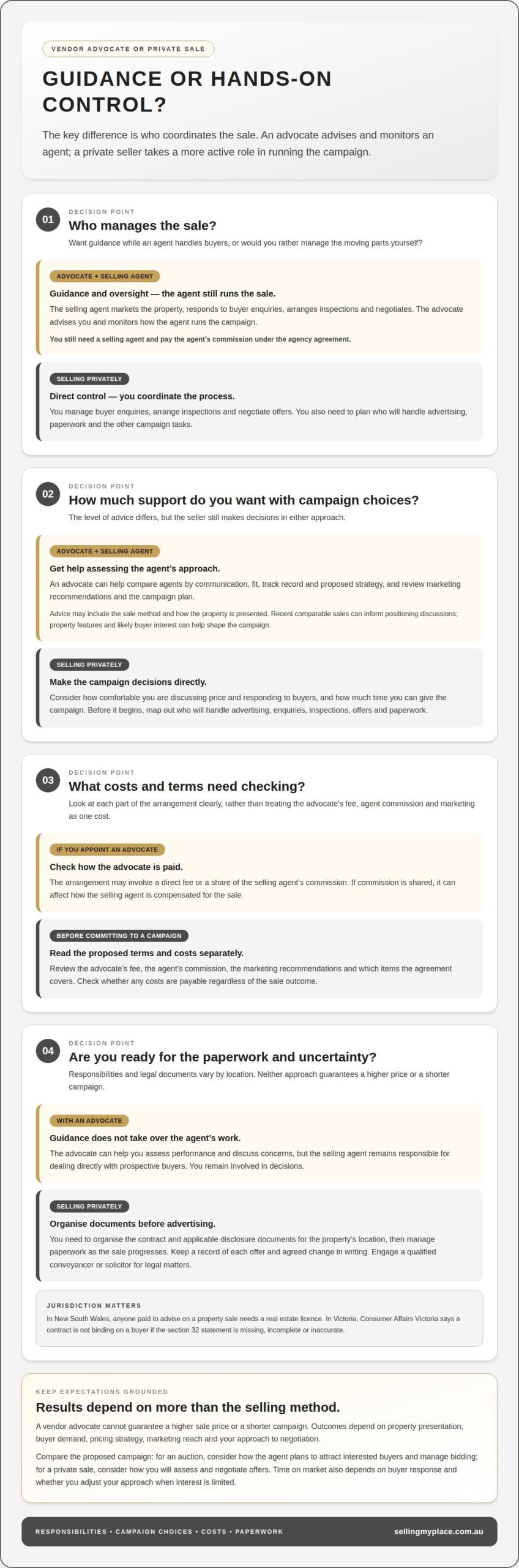
Paying for a vendor advocate doesn’t mean handing over the sale. In the vendor advocate vs selling privately decision, the key difference is who manages the process: an advocate advises you and monitors a selling agent, while selling privately means taking a more active role yourself. With an advocate, you still need a selling agent and pay the agent’s commission under the agency agreement.
It’s understandable to want control over a major sale while also seeking support with the details. The right approach depends on how involved you want to be, how comfortable you are handling the sale and whether you’d value help assessing an agent’s strategy and agreement.
This guide explains what a vendor advocate does, when the service may suit you and how it compares with selling privately. It covers responsibilities, fees and the involvement each option requires, helping you choose a clear, manageable path.
Key Takeaways
- A vendor advocate supports the seller by advising on the agent and campaign, while the selling agent manages the sale itself.
- Choose the approach that matches how involved you want to be, from making the decisions yourself to having guidance through the process.
- Understand how an advocate is paid, including whether the arrangement involves a direct fee or a share of the selling agent’s commission.
- Compare agent commission and marketing arrangements by looking at what each covers and how the proposed campaign fits your property.
- If you prefer a sale-by-owner approach, residential listing services and pre-sale property consulting can help with practical parts of preparing and marketing your property.
What Is a Vendor Advocate, and When Is One Worth It?
A vendor advocate advises the seller and monitors the sale, while a selling agent markets the property and deals with buyers. The distinction matters whether you appoint an advocate before choosing an agent or bring one into an existing campaign.
Advocate and selling agent roles
A selling agent handles marketing, buyer enquiries, inspections and negotiations. A vendor advocate advises you and monitors how the agent runs the campaign. You still need a selling agent if you appoint an advocate, and pay the agent’s commission under the agency agreement when the property sells.
For example, after appointing an agent, you might ask an advocate to review the agent’s communication, campaign progress and response to buyer interest. The advocate can help you assess performance and discuss concerns, but the selling agent remains responsible for dealing directly with prospective buyers. Consider whether you want independent guidance, rather than expecting the advocate to take over the agent’s work.
Marketing and sale method advice
An advocate can help compare agents based on communication, fit, track record and proposed strategy. They can also review marketing recommendations and the campaign plan, helping you understand each proposal before committing. A shortlist built around these factors can lead to a more considered choice than relying on familiarity alone.
Advice may also cover the sale method and how the marketing plan presents your property to buyers. Recent comparable sales can inform conversations about positioning, while the property’s features and likely buyer interest help shape the campaign. Rules differ between Australian jurisdictions: in New South Wales, anyone paid to advise on a property sale needs a real estate licence. In Victoria, Consumer Affairs Victoria says a contract is not binding on a buyer if the section 32 statement is missing, incomplete or inaccurate.
Fees and selling costs
A vendor advocate may be paid through a direct fee or a share of the selling agent’s commission. The arrangement affects how the advocate is compensated, so read the proposed terms alongside the agency agreement. If commission is shared, it can affect how the selling agent is compensated for the sale.
Consider the advocate’s fee separately from the agent’s commission and campaign marketing costs. Review the agent’s recommendations, which marketing items the agreement covers and whether any costs are payable regardless of the sale outcome. These details help you understand the full arrangement before appointing an advocate or proceeding directly with an agent.
Comparing vendor advocates with selling privately
These options differ in who coordinates the sale and how much you handle yourself. Your circumstances, available time and confidence negotiating with buyers all matter.
Choosing between advocacy and private selling
A vendor advocate provides advice and oversight, while a private sale puts you in charge of the process. You manage buyer enquiries, arrange inspections and negotiate offers yourself. Consider how comfortable you are discussing price and responding to buyers, as well as how much time you can give the campaign.
An advocate may suit sellers who want support assessing an agent’s approach. Selling privately may appeal if you prefer making decisions directly and staying involved at each step. Before appointing an agent or selling privately, map out who will handle advertising, enquiries, inspections, offers and paperwork. This simple division of responsibilities can reveal gaps before the campaign begins.
Sale price and time on market
A vendor advocate cannot guarantee a higher sale price or a shorter campaign than selling through an agent or privately. Results depend on factors such as property presentation, buyer demand, pricing strategy, marketing reach and your approach to negotiation.
Compare the proposed campaign rather than assuming one selling method will produce a better result. For an auction, consider how the agent plans to attract interested buyers and manage bidding. For a private sale, consider how you’ll assess and negotiate offers. Time on market also depends on buyer response and whether you adjust your approach when interest is limited.
Private sale requirements and paperwork
Legal requirements and sale documents vary across Australian states and territories. As a private seller, you need to organise the contract and applicable disclosure documents for the property’s location, then manage the paperwork and transaction as the sale progresses. Engage a qualified conveyancer or solicitor for legal matters.
Keep the process organised: identify the documents required, arrange them before advertising, and record each offer and agreed change in writing. Paperwork can affect whether a buyer is properly informed and how the transaction proceeds, so include document preparation in your campaign plan rather than leaving it until an offer arrives. Engage a qualified conveyancer or solicitor for legal matters.
Private selling gives homeowners direct control, but it also means taking responsibility for the campaign’s moving parts. An advocate offers guidance while an agent handles the sale; it doesn’t remove the need for an agent or the seller’s decisions. If a private route feels right, a sale-by-owner approach can be a practical starting point for organising the next steps.
Reasons a seller might use an advocate
A property sale can involve agent selection, campaign decisions, buyer conversations and practical arrangements. Most people sell a property once every ten or twenty years, so sellers may value guidance through unfamiliar steps. An advocate can help narrow the agent shortlist, review the proposed approach and give the seller one point of contact for questions.
That support may matter if you have limited time to research agents or coordinate sale details. Preparing marketing, considering commission, handling legal matters and managing practical tasks all take time. An advocate can help you work through decisions with the selling agent, rather than organising every conversation independently.
Support with agent selection and oversight
Agent selection is a key reason to consider advocacy. An advocate can compare agents based on communication, fit, track record and strategy, then help review the agency agreement and campaign proposal. This may suit sellers who are unsure how to assess an agent’s plan or want another perspective before making an appointment.
After appointment, the advocate can monitor the selling agent’s performance and help you raise concerns about campaign progress. For example, if the agreed marketing plan is underway but buyer interest is limited, you can discuss the situation with the advocate and agent. That conversation can clarify what has happened and which next steps are realistic.
Some sellers prefer support with sale details so they can focus on the outcome. An advocate may provide a more guided experience, while the selling agent remains responsible for marketing, buyer enquiries and negotiations. Advocacy adds advice and oversight, but you still need to make decisions and approve the agent’s work.
Practical help and realistic expectations
Some vendor advocates also offer property cleaning, preparation or clearing for a fee. If your home needs work before marketing, this support may help coordinate practical tasks alongside agent selection. Identify which jobs will most improve presentation and which can be left alone, rather than treating every suggested improvement as essential.
Advocacy may be less useful if you want to manage every part of the campaign yourself or already feel confident choosing and overseeing an agent. It also doesn’t remove the selling agent’s commission under the agency agreement. The right choice depends on whether the guidance and coordination suit your circumstances.
Keep expectations realistic: an advocate can help assess strategy and agent performance, but cannot control buyer demand or guarantee a particular sale result. Before appointing one, list the decisions where you want support, such as comparing agents, reviewing marketing or tracking campaign progress. This helps you judge whether the service meets your needs.
How much does a vendor advocate charge in Australia, and who pays the fee?
Vendor advocates in Australia may use different fee structures. An advocate may be paid through a direct fee or a share of the selling agent’s commission. Understand who receives each payment and how it relates to the agent’s commission before appointing an advocate.
Direct fees and commission sharing
With a direct-fee arrangement, you pay the advocate according to the agreed terms. Check how the fee is calculated, when it’s payable and what work it covers. For example, the agreement should state whether the fee covers agent selection, campaign advice or oversight after an agent is appointed.
With commission sharing, the advocate receives an agreed share of the selling agent’s commission. You still pay the agent’s commission under the agency agreement when the property sells. Ask how the share affects the amount paid to the agent and whether the advocate’s payment changes if the sale price or campaign outcome differs from expectations.
State rules can also matter. In New South Wales, a vendor advocate must be actively licensed to legally share a real estate agent’s commission. When comparing payment models, remember that a direct fee and a commission share are different arrangements, and commission-sharing requirements apply in that state.
What to review before agreeing
Before signing, read the advocate’s agreement alongside the selling agent’s agency agreement. Focus on these points:
- Payment method: Is the advocate paid a direct fee or through commission sharing?
- Payment trigger: When does the fee become due, such as on appointment or after settlement?
- Scope: Does the agreement cover agent selection, campaign advice, or ongoing performance reviews?
- Other costs: Are marketing expenses and the agent’s commission separate from the advocate’s fee?
These details reveal the full payment structure, beyond the headline fee. A direct fee is distinct from commission, while a shared commission links the advocate’s payment to the agent’s commission arrangement. Compare what each model pays for, not just the payment label.
The key question isn’t simply “How much?” but what guidance the fee covers and how payment works. If you want help choosing an agent, you may value a clearly defined advisory arrangement; if you want ongoing campaign oversight, consider what work the fee includes. Use the written terms to understand who pays, when payment is due and how it relates to the sale.
What are the typical real estate agent commission rates and marketing costs in Australia?
Real estate agent commission and marketing costs depend on the property, location, agent and campaign plan. No single figure applies to every Australian sale, so compare written proposals by what they cover, how payment is calculated and which costs are separate from commission.
Commission may be a percentage of the sale price or a fixed amount. The agency agreement should explain the calculation, when commission is payable and whether other charges are separate. A percentage-based fee changes with the final sale price; a fixed fee does not. Compare the full agreement, not just the headline rate.
Compare commission arrangements
Ask each agent to outline the proposed commission and the work it covers. Check whether the fee includes the services you expect and note any conditions tied to the agreement or sale. If an advocate shares commission, factor that in too: you still pay the selling agent’s commission under the agency agreement when the property sells.
Marketing costs are a separate part of a campaign budget. They may depend on the advertising channels chosen, the property’s presentation needs and the agent’s recommendations. An online listing, photography, floorplans and printed material may be proposed, but the package varies. Review each item and its purpose before agreeing to the spend.
Assess the marketing plan
Ask how each proposed item supports the campaign and reaches its intended buyers. Photography and floorplans, for example, can present the home clearly in listing material, while broader advertising may aim to reach more prospective buyers. The key question is whether the recommendation suits your property and marketing goals, not whether the plan contains the most items.
For a fair comparison, place agent proposals side by side and separate commission from marketing expenses. Check when each cost is payable, whether it’s due upfront or later, and what happens if the property doesn’t sell. Then consider the full campaign cost alongside the services and strategy offered.
A neighbourhood market report can put an agent’s pricing and campaign recommendations in context. Use recent comparable sales and property-specific details to discuss whether the proposed approach is realistic. This won’t set the commission or marketing budget, but it gives you a clearer basis for assessing the plan against your sale priorities.
To talk through the selling costs and listing approach for your property, discuss your sale options.
Kincade International Direct Sales
Kincade International Direct Sales can help Australian homeowners who want a practical alternative to appointing a traditional selling agent. Its residential property listing services support owners pursuing a sale-by-owner approach, while pre-sale property consulting and neighbourhood market reports can inform preparation and pricing decisions. Buyer representation is also available for people who need support on the purchasing side of a property move.
If you’re weighing advocacy against managing the sale yourself, these services offer a way to consider what support would help with your particular plans. You can contact Kincade International Direct Sales to discuss your property and the next step that suits you.
Choose a sale path that fits your next chapter
Before deciding, consider the role you want once your property is ready for market. Do you want to manage buyer conversations and campaign decisions yourself, or would advice and oversight make the process more manageable? Choosing between a vendor advocate and selling privately comes down to the level of involvement and support that suits your circumstances.
If you’re planning a sale, Kincade International Direct Sales offers Residential Property Listing Services, Buyer Representation and Pre-Sale Property Consulting. These options can support different points in a property move, whether you’re preparing to sell, exploring a sale-by-owner approach or buying your next home. You can discuss which direction aligns with your plans and the practical help you’re looking for.
Talk with Kincade International Direct Sales about your next step, and move forward with a clearer sense of what suits you.
Frequently Asked Questions
Do I still pay the selling agent’s commission?
Yes. If you appoint a selling agent, the agency agreement sets out the commission payable when the property sells. A vendor advocate’s fee is separate and may be a direct fee or a share of the agent’s commission. If you sell privately without an agent, there’s no selling-agent commission under an agency agreement, but you still need to account for marketing and sale costs.
How do you handle pricing?
Build a pricing view from comparable sales, your property’s condition and features, and current buyer interest. Supporting a valuation with at least three comparable prices gives you a practical basis for discussion. For example, compare homes with similar attributes and consider how differences affect their appeal. If you’re selling privately, keep the asking price and any changes consistent across your advertising and buyer conversations.
What does a vendor advocate do when selling a property in Australia?
A vendor advocate advises you during the sale and can support agent selection and campaign oversight. For example, they may help assess an agent’s proposed strategy, review the agreement or discuss campaign progress. They don’t replace the selling agent’s role in dealing directly with buyers. You remain involved in decisions, including whether to accept an offer or change the campaign.
What is the difference between a vendor advocate and a selling agent in Australia?
A selling agent markets the property and handles buyer enquiries and negotiations. A vendor advocate advises you about the agent and sale process. If an offer arrives, for example, the agent communicates with the buyer, while the advocate can help you consider the proposed terms. Their roles differ, even when both are involved in the same sale.
Can you sell a house privately in Australia without a real estate agent?
Yes. Australian homeowners can sell privately in every state and territory, but paperwork requirements vary by location. In New South Wales and the ACT, a contract of sale is required before listing. In Victoria, the section 32 vendor statement must be provided before contracts are signed. Engage a qualified conveyancer or solicitor to handle legal matters and prepare the required documents for your sale.
What are the pros and cons of using a vendor advocate versus selling privately?
A vendor advocate can advise on agent selection and campaign decisions, which may help if you want guidance through unfamiliar steps. Selling privately gives you direct control, but you take responsibility for advertising, buyer enquiries, inspections and negotiations. Consider a typical week during the campaign: if you can manage those tasks and respond promptly to buyers, private selling may suit you; if you want advice, advocacy may be a better fit.
How to Sell Your Own Home: A Step-by-Step Guide to Sale by Owner in Australia
What if you could keep the A$20,000 you were prepared to pay in commissions and put it directly into your family’s future instead? It is a question more Australians are asking as they look to take the reins of their own property journey. Choosing a sale by owner approach isn’t just about saving money; it is about maintaining control over your most valuable asset while ensuring the process remains sophisticated and seamless.
We understand that selling a home is deeply personal and can feel quite daunting, especially with the weight of legal paperwork and the fear of underselling. You deserve to feel empowered and protected throughout this transition. This guide will show you how to master the private sale process, allowing you to retain 100% of your equity through professional marketing and expert advisory.
We will walk through the essential steps for a successful Australian sale, covering everything from the new July 2026 anti-money laundering regulations to the secrets of a high-impact listing. You’ll discover how to balance the technical details with a heartfelt approach, ensuring you have a steady hand to guide you toward a result you can truly celebrate.
Key Takeaways
- Learn how a sale by owner approach keeps your hard-earned equity in your pocket by replacing traditional commissions with a sophisticated, professional strategy.
- Identify high-impact improvements through a pre-sale consultation and use local market data to set a price that attracts genuine interest from the right buyers.
- Discover how to access the same digital infrastructure as the big agencies, ensuring your listing shines on Australia’s leading property portals.
- Gain the confidence to manage enquiries and qualify buyers effectively, keeping your inspection schedule focused on serious, high-intent contenders.
- Understand the critical legal milestones from the initial offer to the final settlement to ensure a smooth and protected transition for your family.
What is “Sale by Owner” and is it Right for Your Australian Property?
Selling a home is often the biggest financial and emotional transition a family makes. Traditionally, this meant handing the keys to an agent and watching a significant chunk of your equity disappear in commissions. However, a For Sale by Owner (FSBO) approach is changing that narrative across Australia. It is a commission-free alternative where you, the owner, lead the way. This isn’t about being on your own in a cold, transactional sense; it’s about stepping into a partnership where you control the story of your home while experts handle the heavy lifting of the digital infrastructure.
We’ve seen a clear shift from old-school high-commission models to modern flat-fee professional services. Why? Because homeowners realise they are the true experts on their property’s history, the best local coffee spots, and the way the afternoon sun hits the back deck. There’s a common myth that a private sale is only for lower-priced properties. That simply isn’t true. High-end homes benefit immensely from the direct, authentic connection between a seller and a buyer, ensuring no detail of the home’s legacy is lost in translation. Choosing a sale by owner strategy allows you to maintain total control while retaining 100% of your property’s equity.
The Financial Logic: Commission vs. Flat-Fee
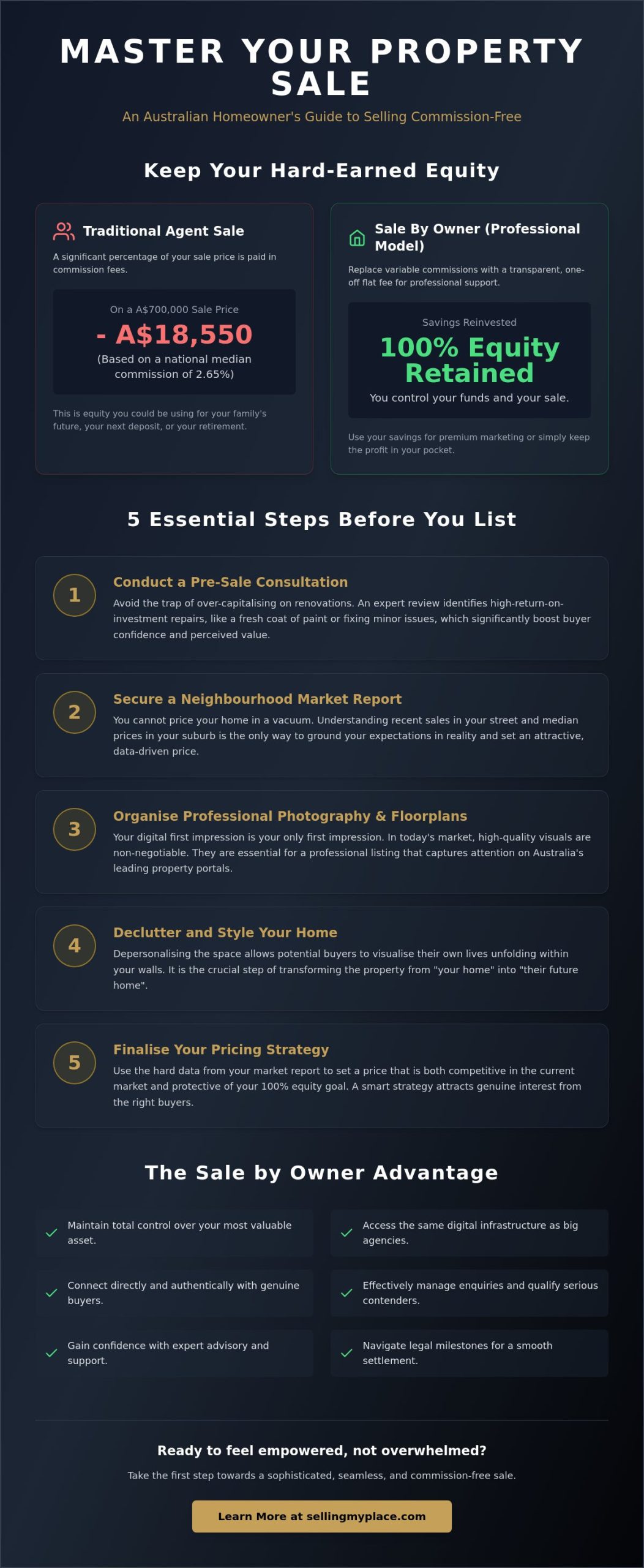
The numbers tell a compelling story. According to research from June 2026, the national median commission for agents sits at roughly 2.65%. On a A$700,000 sale, that is A$18,550. It’s a massive sum that could be better used for your next deposit or retirement fund. By choosing a sale by owner model, you replace that variable percentage with a transparent flat fee. This allows you to reinvest those savings into premium marketing, like professional photography and floorplans, ensuring your home looks just as polished as any listing on the market. Plus, many of these arrangements offer “listed until sold” peace of mind, removing the ticking clock of a traditional 90-day agency agreement.
Is Your Mindset Ready for a Private Sale?
Success in a private sale often comes down to a steady hand and a genuine love for your community. Are you ready to be the primary advocate for your home? You don’t need to be a shark-like negotiator. In fact, most buyers find it refreshing to speak directly with the person who has actually lived in the house. Your passion is your greatest asset. When you combine that local insider knowledge with a professional support system, the stress of the process begins to melt away. It’s about feeling empowered, not overwhelmed, as you guide your family toward its next chapter.
Preparing Your Home: The 5 Essential Steps Before You List
Preparation is the bridge between a property that sits on the market and one that sells for a premium price. When you choose a sale by owner strategy, you aren’t just tidying up for a weekend open home; you are curateing an experience for a future family. This process requires a steady hand and a clear focus on where your efforts will yield the highest return. Before the first buyer walks through your front door, follow these five essential steps to ensure your home stands out in the competitive Australian market.
- Step 1: Conduct a Pre-Sale Property Consultation. Avoid the trap of over-capitalising on renovations. An expert review identifies high-ROI repairs, like a fresh coat of paint in a modern neutral or fixing that leaky tap, which can significantly boost buyer confidence.
- Step 2: Secure a Neighbourhood Market Report. You cannot price your home in a vacuum. Understanding the recent sales in your street and the median prices in your suburb is the only way to ground your expectations in reality.
- Step 3: Organise Professional Photography and Floorplans. Your digital first impression is your only first impression. High-quality visuals are non-negotiable for a professional-looking listing.
- Step 4: Declutter and Style. Depersonalising the space allows buyers to visualise their own lives unfolding within your walls. It’s about moving from “your home” to “their future.”
- Step 5: Finalise Your Pricing Strategy. Use the data from your market report to set a price that is competitive yet protective of your 100% equity goal.
The Power of Professional Photography and Floorplans
In the digital age, your home’s “open house” begins the moment a buyer scrolls past your listing on their phone. Using iPhone photos is perhaps the costliest mistake a private seller can make. Professional photography uses light and angles to tell a story, creating an emotional pull before the first inspection even begins. Equally vital are accurate floorplans. They don’t just show the layout; they help serious buyers plan their furniture placement and understand the flow of the home. This reduces “tyre-kicker” enquiries and ensures those who do book a viewing are already halfway to making an offer. If you want to see how professional visuals can transform your listing, consider booking a pre-sale property consultation to get your home camera-ready.
Leveraging Neighbourhood Market Reports
With the Reserve Bank of Australia holding the cash rate at 4.35% as of June 2026, buyers are more discerning than ever about value. A comprehensive market report is your shield against low-ball offers. It should include detailed data on properties currently for sale and those that have settled in the last six months. When a buyer questions your asking price, you won’t need to rely on emotion. Instead, you can point to concrete local data to justify your position. Your local insider knowledge, paired with these hard facts, makes you a more formidable negotiator than any generic agent who might be juggling twenty other listings at once.
Marketing Your Property to a Global Audience
Once your home is camera-ready, it is time to share your story with the world. Many people worry that a sale by owner approach limits their reach to just a “For Sale” sign on the front lawn. This couldn’t be further from the truth. In fact, a professional private sale strategy utilises the exact same digital infrastructure as the largest agencies in the country. You can place your home where the eyes already are: on major property portals like Realestate.com.au and Domain.com.au. Understanding how modern residential property listing services work can help you make the most of this digital reach without paying traditional agent commissions. To maximise your results, developing a structured property marketing plan in Australia ensures every channel works together to attract the right buyers at the right price.
The beauty of this modern approach is the “Listed Until Sold” philosophy. Traditional agency agreements often trap you in a 90-day window, creating a sense of frantic urgency that can lead to rushed decisions or underselling. Why put that pressure on your family? By removing the ticking clock, you maintain a position of strength. You can wait for the right buyer who truly values the legacy you’ve built, rather than settling for the first offer just to meet an agent’s deadline. It is about moving at a pace that respects the emotional weight of the transition.
Writing Descriptions That Sell
Your property description shouldn’t read like a dry inventory of bedrooms and bathrooms. Buyers can see those details in the data section. Instead, use this space to paint a picture of the lifestyle your home offers. Does the breakfast nook catch the soft morning sun? Is there a particular spot in the garden where the kookaburras gather at dusk? This heartfelt, evocative language creates an emotional bridge. To keep readers engaged on mobile devices, use short, punchy sentences and clear bullet points. It makes the information accessible for busy families scrolling through listings between school runs or work meetings.
The Global Connection
Australia remains a highly attractive destination for international buyers looking for stability and community. A robust digital marketing network ensures your residential property for sale is visible to expats and overseas investors alike. This global reach is a significant advantage, as it broadens your buyer pool beyond just the local neighbourhood. Managing these enquiries doesn’t have to be a headache, even with different time zones. By using integrated digital tools, you can respond to questions at your own pace, ensuring every potential buyer feels welcomed and informed, no matter where they are in the world.
Handling Enquiries, Inspections, and the Art of Negotiation
Once the enquiries start rolling in, the process shifts from digital screens to your front doorstep. This is the moment where the “steady hand” approach becomes your greatest asset. Many homeowners worry that a sale by owner means they have to act like a high-pressure salesperson. In reality, the most successful private sales are built on neighbourly warmth and transparent communication. You aren’t “selling” so much as you are hosting a guest who might become the next custodian of your family home.
To protect your time and peace of mind, it is vital to qualify buyers before they arrive. Ask gentle but direct questions over the phone. Have they spoken to a lender? Are they familiar with the local area? This simple step ensures your inspection schedule is filled with genuine contenders rather than weekend tyre-kickers. It allows you to maintain a stress-free routine that suits your lifestyle, rather than rearranging your life for every casual enquiry.
What about the “money talk”? It’s the part people fear most. If a buyer asks about price, stay grounded in the data you gathered from your market report. You don’t need to feel awkward when you have facts on your side. Simply state your position with calm confidence, knowing you have the right to protect your property’s value. Negotiation is not a battle; it is a conversation about value and legacy. For a deeper dive into how to approach these conversations with confidence, our guide on property sale negotiation tips for Australian homeowners can help you prepare for every scenario.
Mastering the Private Inspection
Aim for a welcoming, grounded atmosphere when preparing for an inspection. Open the blinds to let in that beautiful Australian light and ensure the home feels fresh and inviting. Remember the “less is more” rule. Let buyers explore at their own pace. Stay nearby to answer questions about the local schools or the best nearby parks, but give them the space to imagine their own furniture in the rooms. After they leave, a quick, friendly follow-up text is a great way to gather honest feedback without being pushy.
Expert Backing: The Agent Advisory Service
You don’t have to navigate the complex world of offers alone. While you lead the inspections, having access to real estate advisory services provides a professional safety net. If a “lowball” offer arrives or a buyer’s representative gets aggressive, your advisor can help you interpret the situation and draft a strategic response. This support bridges the gap between a verbal offer and a legally binding contract, ensuring you never feel out of your depth. If you are ready to take the next step with professional support, explore our real estate advisory services to see how we can help you secure the best result.
The Legal Finish Line: Conveyancing and Settlement
Reaching the stage where you have accepted an offer is a moment for genuine celebration. It is the culmination of your hard work and the start of a new chapter for your family. However, the path from “Offer Accepted” to “Settlement Day” involves a series of technical milestones that require precision and a steady hand. While a sale by owner approach puts you in the driver’s seat, you aren’t expected to navigate the legal complexities of property law in isolation. This final phase is about ensuring a secure, transparent transfer of your most valuable asset.
In Australia, the legal transfer of property is a formal process that begins with the Contract of Sale. Depending on your state, specific disclosure requirements must be met before the sale is finalised. For instance, Victorian sellers must provide a Section 32 Vendor Statement, while those in South Australia require a Form 1. Since July 1, 2026, new federal Anti-Money Laundering (AML) laws also require all parties to provide identification documents for verification. Engaging a professional conveyancer or solicitor to handle these details ensures your interests are protected, turning a complex process into a calm and orderly transition. If you are also navigating the purchase of your next home at the same time, understanding the full strategy for selling and buying a house at the same time in Australia can help you coordinate both settlements without the stress of bridging finance or missed deadlines.
Navigating Conveyance Advice
One of the most effective ways to reduce stress is to organise your legal paperwork before the first buyer even walks through your front door. This proactive approach prevents last-minute hurdles and builds immediate trust with potential buyers. Common pitfalls, such as missing building permit disclosures or failing to secure an ATO Clearance Certificate for properties valued at A$750,000 or more, can cause significant delays. By seeking early conveyance advice, you can identify these requirements early, protecting your equity and ensuring the settlement process remains a smooth experience for everyone involved.
The Kincade Partnership: Why You Aren’t Selling Alone
Choosing a direct sales model means you lead the conversation about your home’s heart and history, while we provide the professional infrastructure to support your journey. You keep 100% of your profit and pay 0% in agent commissions. Instead, you benefit from a single, transparent flat fee that covers everything from high-end marketing to expert advisory. It is a partnership built on empathy, community roots, and the shared goal of seeing your family thrive. You have the local knowledge; we have the steady hand to help you cross the finish line with confidence.
Organise your professional property listing with Kincade today and take the first step toward a more empowered way to sell.
Stepping Into Your Next Chapter with Confidence
Selling your family home is a significant milestone that deserves both professional precision and a personal touch. You now have the roadmap to navigate the Australian market, from the initial pre-sale consultation to the final settlement. By combining your unique insider knowledge of your property with a high-impact digital presence, you can reach the right buyers without sacrificing your hard-earned equity.
Choosing a sale by owner path doesn’t mean you have to be a solo act. It is about taking control while having a steady hand to guide you through the technical details. Every package we offer includes professional photography and floorplans to ensure your home looks its absolute best. You also gain access to our Agent Advisory Service for expert negotiation support, helping you save an average of A$20,000 in agency commissions.
Start your commission-free sale journey with Kincade International Direct Sales
Your property’s legacy is in good hands because it is in your hands. We look forward to helping you secure a future that is as bright and stable as the home you have built.
Frequently Asked Questions
Is it legal to sell my own home in Australia without an agent?
Yes, it is perfectly legal to sell your property privately in every Australian state and territory. You aren’t required by law to engage a licensed real estate agent. You must, however, ensure you comply with state-specific disclosure requirements, such as providing a Section 32 in Victoria or a Form 1 in South Australia. Additionally, all sellers must now adhere to federal Anti-Money Laundering laws that came into effect on July 1, 2026.
How much can I actually save with a “Sale by owner” model?
The savings are often significant, typically ranging from A$15,000 to over A$30,000 depending on your property’s value. Since the national median commission for agents is approximately 2.65%, a sale by owner approach allows you to keep that entire amount as equity. By removing the commission, you can reinvest a small portion into premium marketing while keeping the vast majority of the profit for your family’s next move.
Will my property appear on Realestate.com.au and Domain if I sell privately?
Yes, your home will receive full exposure on Australia’s leading property portals. While these websites don’t allow individual private sellers to upload listings directly, professional service providers facilitate this for you. This ensures your home is visible to the millions of buyers who use these platforms every day. You get the same digital reach as a traditional agency without the high commission costs associated with their services.
How do I determine the right price for my home without an agent appraisal?
You can set a confident price by using a Neighbourhood Market Report to analyse recent settled sales in your street. With the RBA holding the cash rate at 4.35% as of June 2026, buyers are looking for genuine value. Basing your price on hard data rather than an emotional estimate helps you justify your position during negotiations. This evidence-based approach is often more accurate than a generic agent appraisal.
What happens if I can’t sell my property within 90 days?
There is no need to worry about a ticking clock. Unlike traditional agency agreements that often expire after 90 days, a professional private sale model typically operates on a “listed until sold” basis. This removes the frantic pressure to accept a low offer just to meet a deadline. You have the freedom to wait for the right buyer who truly appreciates the lifestyle and legacy your home offers.
Do I need a lawyer for a private house sale?
Yes, you must engage a qualified conveyancer or solicitor to handle the legal transfer of the property. While you lead the marketing and inspections, a legal professional is essential for preparing the contract of sale and managing the settlement process. They ensure all paperwork is compliant with state laws and that your equity is protected when the funds are transferred on settlement day. This provides a vital layer of security.
How do I handle negotiations if I’m not a salesperson?
You handle them with a steady hand and a focus on helpfulness. You don’t need to be a master negotiator; you just need to be the expert on your own home. If an offer feels complex or a buyer is being difficult, you can call upon real estate advisory services for expert support. This partnership ensures you have a professional advocate in your corner to help bridge the gap between an offer and a signed contract.
Can I still use professional photography if I’m selling the home myself?
Absolutely, and it is one of the most important steps for a successful sale. Every professional listing package should include high-end photography and floorplans to ensure your home stands out online. These visuals create the emotional pull that brings buyers to your door. By using the same professional tools as the big agencies, you ensure your private listing looks sophisticated, polished, and ready to achieve a premium result.
