Preparing Your House for Sale: 2026 Australian Guide
What if the secret to a record-breaking sale price in 2026 isn’t that $50,000 kitchen renovation you’ve been agonising over, but rather the things you choose to take away? We understand that the thought of learning how to prepare your house for sale can feel completely overwhelming, especially when you’re balancing a busy family life with the fear of over-capitalising. It’s a high-stakes transition, and you want to ensure every dollar spent adds genuine value to your final result without draining your hard-earned equity.
Most homeowners believe they need to fix every minor imperfection to attract a buyer, yet the most successful sales often come down to strategic subtraction and polished digital presentation. You’re likely looking for a way to stand out in the local market without losing your sanity or your savings in the process. This guide will show you how to prioritise your efforts for maximum impact. We’ll walk through a clear, stress-free checklist that covers everything from clever decluttering to the importance of professional photography, ensuring your home is ready for its close-up while you stay focused on your family’s next chapter.
Key Takeaways
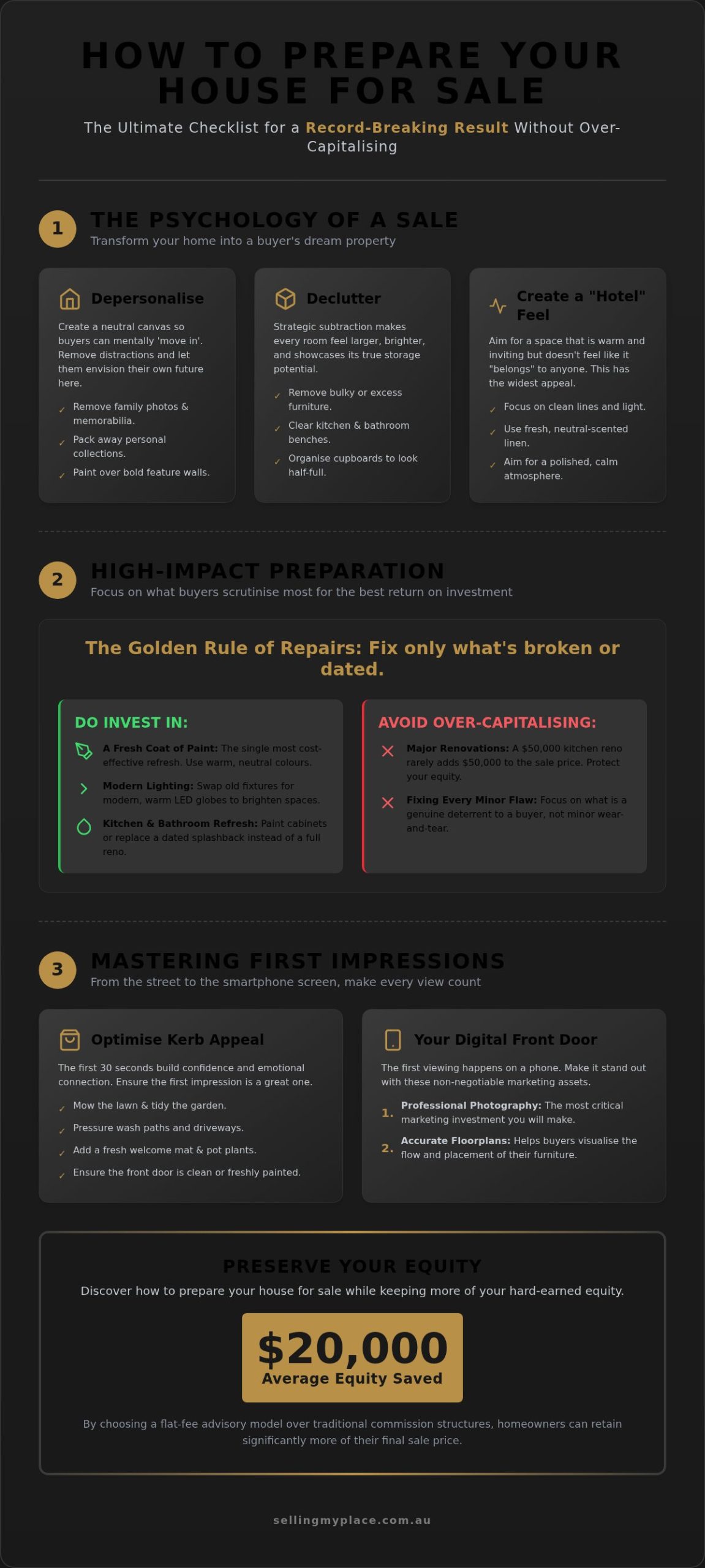
- Learn how to create a neutral canvas and a “hotel feel” so buyers can easily visualise their own lives within your home.
- Apply the Golden Rule of repairs by focusing only on what’s broken or dated, ensuring you don’t over-capitalise before the sale.
- Understand why professional photography and floorplans are non-negotiable for making a powerful first impression on a smartphone screen.
- Discover how to prepare your house for sale while keeping an average of $20,000 more of your equity through a flat-fee advisory model.
- Optimise your kerb appeal to ensure the first 30 seconds of an inspection build immediate confidence and emotional connection.
The Psychology of a Sale: Decluttering and Depersonalising
Selling a home is often one of the most emotional chapters of your life. It’s where you’ve raised kids, celebrated milestones, and built a sanctuary. However, when you’re looking at how to prepare your house for sale, the first step is a psychological shift: you’re no longer selling a “home”, you’re presenting a “property”. This transition can feel a bit bittersweet, but it’s the most effective way to ensure a buyer falls in love with the space just as much as you once did.
The core of this process is depersonalising. The goal is to create a neutral canvas. If a potential buyer sees your family portrait in the hallway or your collection of vintage cricket bats in the study, they’re subconsciously reminded that they are a guest in someone else’s space. We want them to feel like they’ve just walked into their own future. Utilising proven home staging techniques helps bridge this gap, turning your personal sanctuary into a space that speaks to the widest possible audience. It’s about helping them mentally “move in” before they’ve even made an offer.
Think of the last time you stayed in a high-end boutique hotel. It felt warm, inviting, and lived-in, yet it didn’t feel like it “belonged” to anyone specific. That’s the gold standard for your presentation. It often starts with strategic subtraction. Removing bulky furniture pieces that block the natural flow of a room can instantly make a lounge feel twice its actual size. It’s amazing how much more light a room can hold once you’ve cleared out that oversized armchair that’s been in the corner for a decade.
We know this is easier said than done if you’re still living there with toddlers or a golden retriever. The trick isn’t to be perfect 24/7; that’s simply not realistic. Instead, it’s about having a “five-minute flurry” plan. Keep a few large, stylish baskets handy to quickly sweep up toys or pet accessories before an inspection. This keeps the house “inspection-ready” without making daily life a chore.
Creating a Neutral Palette
Buyers are often looking for a fresh start. While you might love your feature wall in a bold terracotta, it can be a mental block for others. Neutral colours like soft greys, warm whites, or “greige” do more than just look clean; they reflect light and make rooms feel significantly more spacious. By removing highly specific personal collections, you’re clearing the mental noise. This allows a buyer to focus on the architectural bones of the house rather than your taste in decor. When you’re figuring out how to prepare your house for sale, remember that “less is more” applies to every surface, from the kitchen bench to the mantelpiece.
The “Deep Clean” Checklist
A superficial tidy-up won’t cut it in 2026. Buyers are savvy; they’ll look at the details to judge how well the home has been maintained overall. This isn’t just about appearances, it’s about building trust.
- The “Hidden” Inspection: Yes, people will open your pantry and linen cupboards. Organised, half-empty shelves suggest the house has ample storage, whereas a packed cupboard suggests the home is too small.
- Sparkle and Shine: Focus on windows, grout lines in the bathroom, and steam-cleaning the carpets. These are the high-impact areas that signal a “well-loved” and healthy home.
- The Scent Factor: Avoid heavy air fresheners, which can trigger suspicions of hidden mould or pet issues. Instead, rely on natural ventilation and perhaps a single, subtle scent like eucalyptus or freshly laundered linen to create a sense of calm.
Strategic Repairs: Where to Invest for the Best ROI
When you’re deciding how to prepare your house for sale, it’s easy to feel pressured into expensive, full-scale renovations. You might hear stories about new kitchens adding value, but the reality is often quite different. Our Golden Rule is simple: only fix what is visibly broken or painfully dated. You want to avoid over-capitalising, which happens when the cost of your repairs exceeds the actual value they add to the final sale price. Your goal is to protect your equity, not spend it all on a house you’re about to leave.
A fresh coat of paint remains the single most cost-effective way to transform an interior. It’s remarkable how a warm, neutral white can hide years of scuffs and instantly make a space feel “new” again. Pair this with a lighting upgrade by swapping out old, yellowing plastic fixtures for modern, warm LED globes. These small changes create a sense of polished consistency throughout the home. Instead of a $30,000 kitchen gut-job, consider a “refresh” by painting old cabinetry or replacing a dated splashback. These tactical updates resonate with buyers without draining your bank account.
The “Quick Fix” Hit List
Buyers often use small maintenance issues as a barometer for how well the rest of the house has been cared for. A leaky tap or a wonky cupboard door might seem minor to you, but to a nervous buyer, it signals a potential list of hidden headaches. Walk through your home with a critical eye and tackle the easy wins. Replace dated door handles and mismatched tapware for an instant modern lift. Ensure every light switch and power point is scrubbed clean and functions perfectly. If you’re feeling stuck on where to start, our expert advisory service can help you prioritise the repairs that truly move the needle.
Flooring and Window Treatments
Your floors and windows occupy a huge amount of visual real estate. You don’t always need to replace carpets; a professional deep clean can often restore their life and remove lingering “house smells”. However, if the carpet is threadbare or heavily stained, a budget-friendly replacement in a neutral tone is usually worth the investment. For window treatments, focus on light. Remove heavy, dark drapes that block the sun. Clean, modern blinds or simple sheer curtains can make a room feel airy and inviting. If you have original floorboards hidden under old lino, consider polishing them. It’s a classic Australian feature that adds character and value for a relatively modest outlay. Knowing how to prepare your house for sale is about making these smart, tactical choices that celebrate the home’s existing strengths.
Street Appeal: Making the First 30 Seconds Count
They say you never get a second chance to make a first impression. In the world of real estate, that impression is often formed before a buyer even steps out of their car. Kerb appeal is your home’s first handshake. It sets the emotional tone for the entire inspection. If the exterior looks neglected, buyers may subconsciously assume the internal maintenance has been ignored too. When considering how to prepare your house for sale, starting at the boundary line is just as vital as the work you do inside.
Pressure washing is one of the most satisfying and high-impact tasks you can undertake. It’s incredible how years of grime on driveways and paths can vanish, revealing the original colour of the concrete or pavers beneath. Similarly, your garden needs to look manicured rather than just “tidy”. This involves a few key steps:
- Sharp edging: Define the lines along your paths and lawn to create a professional, clean finish.
- Fresh mulch: Use a dark mulch to make your plants stand out and keep weeds at bay.
- Strategic pruning: Cut back any overgrown shrubs that block windows or obscure the home’s architecture.
This level of attention to detail reassures a buyer they’re walking into a home that’s been truly cherished. The front door then acts as the final psychological focal point of the exterior. It’s where the buyer stands while the agent prepares the keys, giving them a moment to scrutinise the details. A fresh coat of paint here is a small investment with a huge emotional payoff. Choose a colour that complements your home’s existing palette but adds a touch of sophisticated personality. Whether it’s a classic navy, a contemporary charcoal, or a crisp, welcoming white, it signals that the home is modern and cared for.
The Entryway Experience
Small details at the threshold create a sense of welcome. Ensure your house number is visible and matches the home’s style; it’s a minor touch that adds instant polish. A brand-new welcome mat and a couple of healthy potted plants can soften the entry. Don’t forget the evening “drive-by”. Check that exterior lighting is functional and clean, as many buyers will cruise past after work to see how the home looks at night.
Outdoor Living Spaces
Australians value the outdoors, so treat your verandah or deck as an extension of the house. Staging these areas is a core part of how to prepare your house for sale for our local market. A clean BBQ area or a fire pit setup helps buyers visualise a lifestyle of relaxed summer evenings. Finally, ensure the lawn is freshly mowed before every open home. It’s the final piece that makes the property feel complete.
Visual Marketing: Your Digital Front Door
In 2026, the property market moves at the speed of a thumb-swipe. Before a potential buyer ever pulls up at your kerb, they’ve already walked through your hallways digitally. This makes your online listing the true “first inspection”. When you’re learning how to prepare your house for sale, understanding this digital-first reality is crucial. It’s no longer enough to have tidy rooms; you need images that stop the scroll and evoke an immediate emotional response. Your digital presentation needs to be as polished as the home itself.
Professional photography is a non-negotiable investment for any serious seller. It’s the difference between a house that sits on the market and one that sparks a bidding war. The camera sees differently than the human eye, picking up every stray power cord or smudge on a window. You’ll need to ensure the house is actually cleaner for the lens than it would be for a dinner party guest. High-definition sensors are notoriously unforgiving, so those “hidden” dust bunnies under the sofa or fingerprints on the stainless steel fridge might suddenly become the stars of the show. Think of the camera as a guest with perfect vision.
Photography: Capturing the Light
Timing is everything when it comes to capturing your home’s best side. We often recommend “Golden Hour” for exterior shots, that soft, honey-hued window just before sunset that makes every brick and leaf look magical. Inside, a professional photographer uses wide-angle lenses to capture the full volume of a room, helping buyers understand the layout without the “fish-eye” distortion of a cheap smartphone camera. Professional photos attract three times more clicks than DIY shots, ensuring your property gets the attention it deserves from the very first day it hits the portals.
The Role of Floorplans
While photos provide the “vibe”, floorplans provide the logic. They allow a buyer to “mentally move in” by measuring their existing furniture against your rooms. Accurate measurements build a bridge of trust, showing that you have nothing to hide and that the home’s proportions are exactly as described. This clarity is essential for buyers who are trying to narrow down their shortlist from their couch.
Use your floorplan to highlight flexible living zones or future renovation potential. Perhaps that sunroom could be a home office, or the master suite has space for an additional walk-in robe. By providing a comprehensive digital listing, you’re giving buyers the confidence to book a physical viewing. If you want to ensure your property stands out with high-end visual marketing and expert advice, reach out to our advisory team to discuss your listing needs.
The Financial Prep: Equity Preservation and Advisory
You’ve done the hard work of painting, decluttering, and polishing your home’s presentation. However, the final and perhaps most critical step in how to prepare your house for sale is securing your financial outcome. It’s easy to get caught up in the “vibe” of the sale and forget that at its heart, this is a major financial transition. Understanding the true cost of selling is vital. Traditional agency models often rely on a percentage-based commission, which can feel like a penalty for your home’s success. In 2026, many Australians are realising that they can achieve a record-breaking result without sacrificing a massive chunk of their hard-earned equity.
By opting for a Sale by owner approach, the average seller is able to keep an average of $20,000 more of their equity in their own pocket. That’s a significant sum that could go toward your next deposit, a well-deserved holiday, or your retirement fund. You don’t have to navigate this alone, though. Utilising a professional Agent Advisory Service allows you to access the same high-level strategy and staging advice used by top-tier agents, but within a much fairer financial framework. It’s about being the expert of your own home while having a steady, professional hand to guide you through the complexities.
Part of this “steady hand” approach includes getting your legal ducks in a row early. Seeking expert Conveyance Advice before you even hit the market is a smart move. It ensures your contract of sale is robust and ready to go the moment a buyer makes an offer, preventing unnecessary delays that can sometimes see a deal fall through. When you’re looking at how to prepare your house for sale, financial and legal readiness is just as important as a fresh coat of paint.
Determining Your Market Value
Setting the right price is a delicate balance of data and local insight. It’s important to look at actual recent sales in your specific pocket of the neighbourhood, rather than just the “asking” prices you see online. Emotion can often cloud our judgement when it comes to our own homes, so rely on hard numbers to set a realistic reserve. For a deeper dive into this process, read our guide on how to determine the market value of a home in Australia. This ensures you enter negotiations with confidence and a clear bottom line.
The Flat-Fee Advantage
The traditional commission model is often shrouded in mystery, but the flat-fee alternative is refreshingly transparent. Paying for your marketing and advisory services upfront is almost always smarter than paying a percentage of your final sale price at the end. It allows you to budget accurately and ensures that every extra dollar the market is willing to pay stays with you. At Kincade International Direct Sales, we empower you to take control of your sale journey while providing the professional tools—like photography and floorplans—you need to succeed. See how our flat-fee model can save you thousands on your next sale.
Your Next Chapter Starts with a Smart Strategy
Taking the first step toward selling your home is a significant life transition, and it’s completely natural to want everything to be perfect. As we’ve explored, knowing how to prepare your house for sale in 2026 isn’t about expensive renovations or chasing every minor flaw. It’s about strategic presentation, from the initial “hotel feel” of your decluttered lounge to the digital front door of your professional photography and floorplans. By focusing on high-impact repairs and kerb appeal, you create an emotional connection that resonates with buyers the moment they see your listing.
Beyond the aesthetics, protecting your equity is the most rewarding part of the process. With our Expert Agent Advisory Service and global marketing reach, you can navigate the market with local Australian expertise while saving an average of $20,000 in commissions. You have the power to be the expert of your own sale journey without the stress of traditional agency costs. Download our Full Seller’s Guide and start your commission-free journey today. We’re here to help you move forward with confidence and a steady hand.
Frequently Asked Questions
How much should I spend on preparing my house for sale?
You should aim to spend between 1% and 2% of your property’s estimated value on preparation. This range typically covers essential maintenance, professional cleaning, and cosmetic updates like fresh paint without the risk of over-capitalising. It’s about making smart, tactical improvements that protect your equity while ensuring the home presents at its absolute best for the first weekend of inspections.
Is it worth renovating the kitchen before selling?
A full kitchen renovation is rarely worth the investment just before a sale. Most buyers prefer to choose their own finishes, and you risk spending more on a new fit-out than you’ll actually recoup in the final price. Instead, we recommend a “refresh” by painting old cabinetry, replacing dated handles, or installing a modern splashback to provide a high-impact visual lift for a fraction of the cost.
Do I really need professional photography if I have a good smartphone?
Professional photography is a non-negotiable investment because your first inspection happens on a smartphone screen. While modern phones are impressive, they can’t match the wide-angle lenses and lighting expertise of a professional who knows how to capture a room’s true volume. High-quality images attract significantly more interest on property portals, which is a vital part of how to prepare your house for sale effectively.
How do I keep my house tidy for inspections while living in it?
The most effective strategy for living in an “inspection-ready” home is to use the “basket method” for quick tidying. Keep several large, stylish baskets handy to quickly sweep up toys, mail, or pet accessories before a potential buyer arrives. Focus on keeping high-impact areas like kitchen benches and bathroom vanities completely clear of daily clutter to maintain that polished, hotel-like feel without the stress.
What is the most important room to focus on when preparing to sell?
The kitchen is universally considered the most important room to get right for a successful sale. It acts as the emotional heart of the home and is often the space where buyers spend the most time scrutinising the details. If your kitchen feels clean, bright, and functional, it builds immediate confidence. Once the kitchen is polished, focus your attention on the main living area and the master bedroom.
Can I sell my house myself and still get a professional price?
Yes, you can absolutely achieve a professional price by selling the property yourself, especially when supported by expert advice. By using flat-fee marketing and an Agent Advisory Service, you reach the same audience as traditional agents while keeping an average of $20,000 more of your equity. This approach allows you to act as the expert on your own home while ensuring your digital presentation is world-class.
How long does it typically take to prepare a house for market?
Most homeowners should allow between two and four weeks to properly prepare their property for the market. This timeline provides enough space for deep cleaning, decluttering, and completing minor repairs without the process becoming overwhelming for the family. It also ensures you have plenty of time to book professional photography during the “Golden Hour” to make sure your online listing truly stands out from the competition.
What are the most common mistakes people make when preparing to sell?
The most common mistakes are over-capitalising on expensive renovations and neglecting the property’s street appeal. Many sellers spend thousands on internal upgrades that don’t offer a clear return, while forgetting that the front garden is the home’s first handshake. Another frequent error is failing to learn how to prepare your house for sale by depersonalising, which prevents buyers from mentally moving into the space during an inspection.
