
What if the A$20,000 you saved on your property sale wasn’t just a number on a balance sheet, but the strategic “war chest” that secures your next family home? For many Australians, the thought of re-entering the market brings a wave of genuine anxiety, especially when faced with the aggressive auction culture that defines our local landscape. You might worry about being locked into a restrictive exclusive agreement or, worse, paying a double commission that eats into your hard-earned equity. It’s a lot to manage while you’re trying to imagine your new life in a different neighbourhood. Understanding how to negotiate with a buyer’s agent is the key to transforming this stress into a grounded, professional partnership.
We believe your property journey should feel like a supported transition, not a transactional battle. In this article, you’ll learn the professional tactics to negotiate terms with a buyer’s advocate so their expertise works solely for your benefit. We’ll show you how to move past the industry jargon and secure a transparent, flat-fee agreement that feels fair and protective. We will explore how to access those elusive “silent” off-market listings and use professional auction bidding to shield your savings. It’s about finding that steady hand to guide you home with total confidence (and perhaps a bit of well-deserved excitement, too).
Key Takeaways
- Understand the vital shift from being a “customer” of a selling agent to a “client” with a dedicated advocate who works exclusively in your corner.
- Learn how to negotiate with a buyer’s agent to secure a transparent, flat-fee agreement that prioritises your long-term stability over a quick transaction.
- Gain the upper hand in the competitive Australian market by accessing “silent” off-market listings and professional bidding strategies that protect your equity.
- Identify and avoid “Dual Agency” conflicts of interest to ensure your representative remains a truly independent, steady hand throughout the process.
- Discover how reinvesting the average A$20,000 saved through a commission-free sale can provide the “war chest” needed to hire expert representation for your next purchase.
What is Buyer Representation and Why is it Essential in 2026?
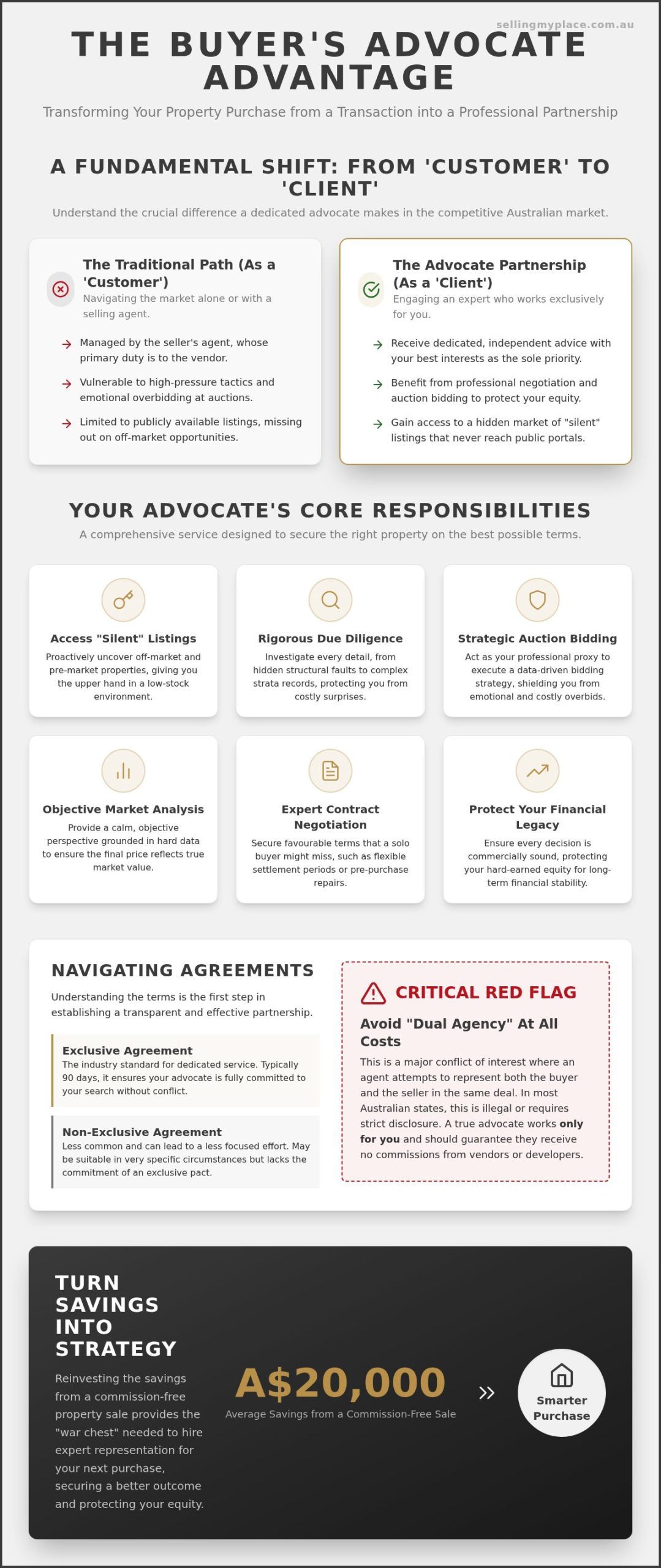
In the Australian property market of 2026, the traditional way of buying a home has fundamentally shifted. For decades, purchasers were often treated merely as “customers” of the selling agent; someone to be managed rather than truly served. Today, buyer representation has evolved into a professional partnership where your advocate works exclusively for you. It’s a fiduciary alliance that moves you from the outside looking in to having a seat at the professional table. Understanding What is a Buyer’s Agent? is the first step in reclaiming your power during a purchase. With property stock levels remaining stubbornly low across the country, having a professional in your corner isn’t just a luxury. It’s a strategic necessity to access “silent” listings that never reach the public portals. Buyer representation is the professional insulation between a buyer and the high-pressure tactics of selling agents.
The 2026 market demands a different approach. It’s no longer enough to wait for an alert on your phone. You need someone who can walk into a local agency and ask about the homes that aren’t on the market yet. This proactive stance is what separates a successful purchase from a missed opportunity. When you learn how to negotiate with a buyer’s agent, you’re essentially hiring a steady hand to guide you through these complexities with heart and expertise.
The Core Purpose of a Buyer Advocate
A skilled advocate does more than just browse listings. They act as your eyes and ears on the ground, identifying properties that match your specific lifestyle needs long before the “For Sale” sign goes up. This includes a deep dive into the bones of a building. They execute rigorous due diligence to uncover potential deal-breakers, such as hidden structural issues or complex strata records that could drain your superannuation later. By removing emotional bias, they ensure every decision is grounded in data. They provide a calm, objective perspective when the stakes feel highest. It’s about finding the right fit for your family’s future, not just any house that’s available.
How Representation Protects Your Financial Legacy
Protecting your equity is at the heart of this partnership. We’ve all seen the adrenaline-fuelled energy of a Saturday auction lead to emotional overbidding. An advocate prevents this by acting as your proxy, ensuring the final bid aligns with true market value rather than a vendor’s optimistic expectations. Beyond the price, they secure favourable contract terms that a solo buyer might miss. This might mean negotiating a flexible settlement period to align with your own house sale or ensuring specific repairs are completed before you pick up the keys. They protect your financial legacy through expert, level-headed negotiation.
The Different Types of Buyer Representation Agreements in Australia
Entering into a formal agreement with a professional advocate is a significant milestone in your property journey. In Australia, these documents are governed by state specific legislation, such as the Property and Stock Agents Act or the Estate Agents Act. These laws ensure that your interests are protected through a clear legal framework. However, the fine print is where the real partnership is defined. Understanding how to negotiate with a buyer’s agent starts with recognising that these agreements are not one size fits all. They are negotiable tools designed to align your advocate’s incentives with your long term lifestyle goals.
One of the most critical elements to verify is the absence of “Dual Agency.” This occurs when an agent attempts to represent both the buyer and the seller in the same transaction. In most Australian jurisdictions, this is a clear conflict of interest and often illegal without rigorous disclosure. To ensure your advocate is truly independent, look for a clause that guarantees they receive no kickbacks or commissions from vendors or developers. A “steady hand” guide should only have one master: you.
Exclusive vs. Non-Exclusive Agreements
Most reputable advocates prefer an exclusive agreement, typically lasting for 90 days as per 2026 REBAA standards. While “exclusive” might sound restrictive, it’s often the only way to secure high quality off-market listings. Why? Because an advocate won’t tap into their private network or “silent” neighbourhood contacts if they feel you might bypass them at the last minute. Conversely, non-exclusive or “open” agreements are often used for auction bidding only. These are useful if you’ve already found the home but need a professional to handle the high pressure environment of the auction floor without the emotional fog of war.
Standard Clauses You Must Understand
Before you sign a “Buyer’s Authority to Purchase,” pay close attention to the fee structure. You have the right to negotiate between a percentage-based fee and a transparent flat-fee model. Many families find that a flat-fee provides more peace of mind, as it removes any incentive for the agent to encourage a higher purchase price. You should also scrutinise the termination rights. Ensure there is a clear “sunset clause” that allows you to exit the partnership if the search isn’t progressing as expected. If you’re feeling unsure about the legalities, it’s always wise to reach out for professional advice before committing your signature.
Use this quick checklist before signing any representation document:
- Duration: Is the agreement capped at a reasonable timeframe, such as 60 or 90 days?
- Scope: Does it clearly define the specific property types and price ranges they are searching for?
- Fees: Is the total cost, including any engagement fees, clearly capped and documented?
- Termination: Can you end the agreement with a standard notice period if the relationship isn’t working?
How to Negotiate with a Buyer’s Agent: Strategy to Settlement
Once the paperwork is finalised, the real work begins with a deep-dive strategy session. This is your first opportunity to learn how to negotiate with a buyer’s agent regarding the actual search parameters. It’s about more than just the number of bedrooms; it’s about defining the lifestyle you’re building. Are you looking for a quiet cul-de-sac for the kids to play, or a vibrant urban centre close to work? By clearly separating your “must-haves” from “nice-to-haves”, you empower your advocate to filter out the noise. This ensures they only present properties that truly align with your family’s future, saving you from the exhaustion of endless, fruitless inspections.
During this phase, your advocate also takes the lead on coordinating essential due diligence. They’ll organise building, pest, and strata inspections, often using their own trusted network of professionals. This isn’t just about ticking boxes; it’s about having a seasoned expert interpret the reports for you. They can help you understand if a minor crack is just “settling” or a sign of something more serious. This level of professional oversight provides the peace of mind you need when making one of life’s biggest financial decisions.
Uncovering Off-Market Opportunities
The “hidden market” is where some of the best Australian properties change hands without ever appearing on a public website. These “silent listings” are often sold through private agent networks to avoid high marketing costs or maintain vendor privacy. When you’re figuring out how to negotiate with a buyer’s agent, ask specifically about their local relationships. A well-connected advocate should have their finger on the pulse of the neighbourhood, finding sellers before they’ve even chosen a listing agent. This first-mover advantage significantly reduces competition, allowing you to secure a home without the stress of a public bidding war.
Professional Negotiation and Auction Tactics
The auction floor is a high-stakes environment where adrenaline can easily cloud your judgement. Having a “steady hand” representative bid on your behalf is a massive tactical advantage. They know how to read the room, when to slow the pace, and exactly when to strike. They act as your emotional shield, ensuring you never reveal your limit to the selling agent. In private treaty scenarios, they use comparable sales data to counter the selling agent’s narrative, ensuring the price you pay is grounded in reality. Whether it’s handling a pre-auction offer or waiting for the hammer to fall, their professional distance protects your equity and your peace of mind.
Evaluating a Buyer Representative: Questions to Ask
Choosing a representative is about finding a steady hand who respects your family’s financial legacy and emotional well being. The most common hurdle families face is the perceived cost of the service. Is the fee truly worth it? When you look at the return on investment, a skilled advocate often pays for themselves by securing a purchase price significantly lower than what an unrepresented, emotional buyer might pay. It’s about protecting your equity from the start. Understanding the role of Professional Residential Property Listing Services can help you visualise the full property cycle, ensuring your transition from seller to buyer is seamless and supported.
Vetting for Experience and Empathy
You need to know if your advocate has the depth of experience to handle complex negotiations. Ask how many years they’ve operated as a dedicated buyer’s advocate compared to their time as a sales agent. This distinction is vital; you want someone who has fully transitioned into the mindset of a purchaser’s ally. Request testimonials from buyers who shared your lifestyle needs or financial aspirations. Did the agent find a home that genuinely improved that family’s daily rhythm? A background in real estate advisory allows them to provide holistic advice that looks beyond the four walls of a house.
Understanding Fee Transparency
This stage is where you learn how to negotiate with a buyer’s agent regarding their own professional costs. Start by negotiating the balance between the engagement fee, paid upfront, and the success fee, payable upon settlement. You should also ask for a written guarantee that they don’t receive kickbacks or “referral fees” from vendors or third party services. This ensures their loyalty remains solely with you. Finally, confirm exactly how the fee is calculated. You want to avoid “bracket creep,” where the agent’s commission increases simply because the property price did. A flat fee model is often the most transparent way to keep everyone’s incentives aligned.
Before committing, always verify your representative’s licensing and professional standing. In Australia, you can check their credentials through state based regulatory bodies or industry organisations like REBAA. It’s a simple step that provides immense peace of mind, ensuring your advocate is held to the highest ethical standards. If you’re ready to find a partner who values your property journey as much as you do, get in touch with our team for a grounded, confidential consultation.
The Kincade Advantage: Reinvesting Your Equity for a Smarter Purchase
At Kincade International Direct Sales, we believe that selling your home shouldn’t be treated as a separate battle from buying your next one. Our philosophy is rooted in the idea of a seamless transition, where selling smarter ensures you have the resources to buy better. When you choose a Sale by owner strategy through our commission-free model, you’re doing more than just saving on fees. You’re effectively creating a A$20,000 “war chest,” which is the average saving our clients experience. This capital provides the perfect foundation for hiring a professional advocate. It’s perhaps the most strategic way to look at how to negotiate with a buyer’s agent; you aren’t just haggling over a fee, you’re reinvesting your own equity to secure a superior future.
Our Agent Advisory Service acts as the vital bridge between your successful sale and your next front door. We act as the steady hand (the seasoned expert you can lean on) to manage the complexity of this life transition. By removing the burden of high marketing costs and traditional commissions, we empower you to focus on what truly matters: your family’s long-term stability and lifestyle legacy. It’s a partnership that values your peace of mind as much as the final result.
Integrated Real Estate Advisory
The journey begins long before the “Sold” sticker goes up. Our pre-sale consulting is designed to prepare you for the mindset of a savvy buyer, helping you understand market value from both sides of the fence. We also emphasise the importance of professional Conveyance Advice to ensure that every legal step is handled with precision, protecting you from settlement delays that can disrupt a purchase. By leveraging global marketing insights, we help you apply a broad perspective to your local neighbourhood decisions, ensuring your next home is a sound investment in every sense; for those exploring property options overseas, you can visit MaddisonV Properties to learn about their premier advisory and management services in London.
We’re not here for a single transaction; we’re here to help you build a legacy. A dedicated advisor who understands the nuances of both selling and buying provides a level of protection that a standard agent simply can’t match. It’s about more than just four walls and a roof. It’s about ensuring your equity is shielded at every turn. If you’re ready to see how this integrated approach can work for you, the next step is simple. You can integrate buyer representation into your 2026 property plan today by reaching out for a quiet, neighbourly chat about your goals. Let’s make your next move your best move.
Step into Your Next Chapter with Confidence
The journey from selling your family home to securing your next sanctuary is a major life transition that deserves a steady hand. By understanding how to negotiate with a buyer’s agent, you’ve moved from being a passive observer to a savvy market participant. You now know that professional advocacy isn’t just about the auction floor; it’s about finding those silent off-market gems and ensuring every clause in your agreement protects your financial legacy. It’s about turning the stress of low stock levels into a strategic advantage through clear, fee-transparent partnerships.
At Kincade, we’re here to help you bridge that gap. Our 0% commission structure on your sale allows you to save an average of A$20,000 in commissions, providing the perfect “war chest” to fund your purchase journey. Combined with our Expert Agent Advisory Service, we ensure your equity remains shielded while you focus on building your family’s future. Are you ready to move forward with a partner who values your long-term stability and lifestyle goals above all else?
Secure your next home with expert Buyer Representation from Kincade and let’s start this exciting new chapter together. Your ideal lifestyle is well within reach, and we’d be honoured to help you find it.
Frequently Asked Questions
What is the average cost of buyer representation in Australia in 2026?
In 2026, buyer representation fees across Australia vary based on the level of service required. In major capital cities, you might expect to pay between 1.5% and 3% of the purchase price, or a fixed fee ranging from A$8,000 to A$21,000. In other key regions, fees typically range between 1% and 2.7%. Learning how to negotiate with a buyer’s agent can help you find a structure that fits your budget, especially when reinvesting the A$20,000 saved on your commission-free sale. If you’re considering using those savings for a new vehicle, you can read more about Private Fleet to see how professional advocacy can also reduce the cost of your next car.
Yes, one of the primary advantages of professional representation is access to the “hidden market.” Many properties are sold as silent listings through private agent networks without ever being advertised on major portals. This allows you to avoid the high-pressure environment of a public campaign and reduces competition from other buyers. A well-connected advocate uses their local relationships to uncover these opportunities, giving you a distinct first-mover advantage in a low-stock market.
Is a buyer representation agreement legally binding in all Australian states?
Yes, buyer representation agreements are legally binding documents regulated by state-specific legislation. These frameworks are in place across Australia to protect both parties, defining the scope of service, fee structures, and the duration of the partnership. It’s essential to review the termination clauses and ensure the document reflects the specific terms you’ve discussed with your advocate before signing the authority.
How does a buyer advocate differ from a standard real estate agent?
The fundamental difference lies in who the agent represents. A standard real estate agent is a vendor’s advocate, legally bound to achieve the highest possible price for the seller. A buyer’s advocate, however, works exclusively for the purchaser. This shift turns you from a “customer” into a “client” with a fiduciary ally. Their role is to protect your interests, uncover property faults, and negotiate the lowest possible price while ensuring a smooth, supported transition into your new home.
What happens if I find a property myself while under an exclusive agreement?
Under a standard exclusive agreement, a fee is typically payable to the advocate regardless of who found the property during the contract period. This ensures the agent is motivated to dedicate their full resources and network to your search. However, when learning how to negotiate with a buyer’s agent, you can request a “carve-out” for specific properties you’ve already identified. Always clarify these terms upfront to maintain a transparent and harmonious partnership throughout your property journey.
Can I hire a buyer representative for auction bidding services only?
Many professionals offer a specific “Auction Bidding Only” service for a reduced flat fee. This is an excellent option if you’ve already found your dream home but feel anxious about the aggressive Australian auction culture. A representative will attend the auction on your behalf, using a steady hand to bid strategically without revealing your emotional limit. This service often costs around A$500 to A$1,100, depending on the state and the level of pre-auction due diligence required.
Do I need a buyer representative if I am a first-home buyer?
While not mandatory, first-home buyers often benefit most from professional guidance. Navigating the 5% Deposit Scheme or various stamp duty concessions in 2026 can be complex for those new to the market. An advocate provides the professional insulation needed to avoid overpaying due to inexperience. They help you understand the true market value of a property, ensuring your first step onto the property ladder is grounded in data rather than adrenaline and high-pressure sales tactics.
How long does a typical property search take with professional representation?
A professional property search typically takes between 30 and 90 days. This timeframe allows your advocate to thoroughly scan the market, perform due diligence on potential homes, and tap into their off-market networks. While some purchases happen much faster, a methodical approach ensures you don’t rush into a decision you might regret later. Most agreements are structured for a 90-day period, aligning with 2026 REBAA standards to give you ample time to find the right fit.