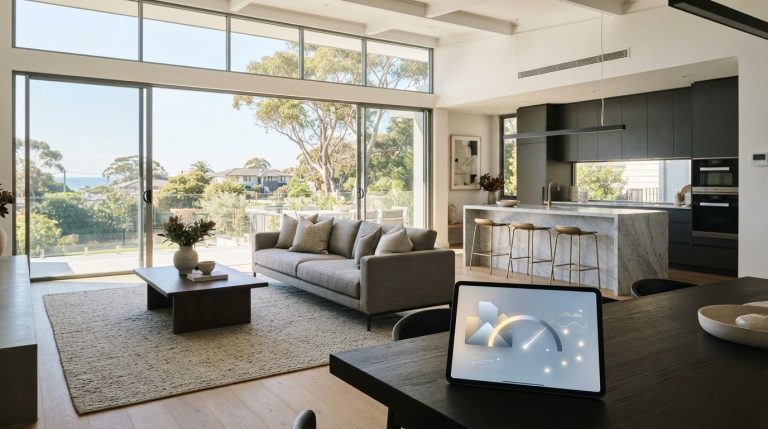
When selling a townhouse privately, buyers may ask about more than the home itself. Your title, owners corporation or body corporate arrangements, shared facilities and strata records can all shape their questions. Knowing what to gather, how to present the property and how to manage buyer interest can make the process clearer and help you avoid confusion.
You can stay in control of your sale and still use practical listing support. This guide covers townhouse-specific records, pricing and presentation, marketing, enquiries, inspections and offers. It also explains how a fixed-fee listing service can help with portal exposure while you manage listing edits, buyer enquiries and inspections.
Use the steps below to prepare a workable plan, understand which details buyers may want to know about shared areas and ownership arrangements, and identify where a qualified conveyancer or solicitor can help with sale documents. You can then choose the level of listing support that suits your needs.
Key Takeaways
- Selling a townhouse privately means you lead the sale, with fixed-fee listing support available.
- Check your title and organise relevant owners corporation records so you can explain shared areas and property details clearly.
- Plan pricing, presentation and marketing around your townhouse’s layout, outdoor space, parking and shared facilities.
- Set a consistent process for responding to enquiries, arranging respectful inspections and recording offers.
- Compare listing packages by their included features and price, while keeping control of listing edits, enquiries and inspections.
Selling a townhouse privately: what makes it different?
A private sale is owner-led: you decide how the property is presented, respond to buyers, arrange inspections and consider offers. You can manage these tasks yourself and use listing support to reach buyers online. Kincade International Direct Sales (KIDS) acts as a licensed intermediary for listing purposes, while you remain in control of listing edits, access and sale decisions.
Townhouse is a style of home, not a single ownership arrangement. Depending on the title, a property may have shared access, common property or an owners corporation, also called a body corporate in some contexts. Buyers may want to know which areas belong to the individual lot, which are shared and how shared areas are maintained.
These details sit alongside the home’s condition and likely buyer expectations. A private courtyard, shared driveway or common garden can affect how you describe the property and plan inspections. Clear, accurate information helps buyers picture day-to-day living and reduces the chance of confusion later. Private selling is legal across Australia, but sale, disclosure and contract requirements differ between states and territories.
How title and shared areas can affect a townhouse sale
Start with the title and the documents available for your property. Don’t assume a neighbouring townhouse has the same arrangement: ownership and shared-area responsibilities can differ within the same development. Buyers may ask about shared entryways, driveways, gardens or other common property, as well as owners corporation records that explain arrangements affecting the lot.
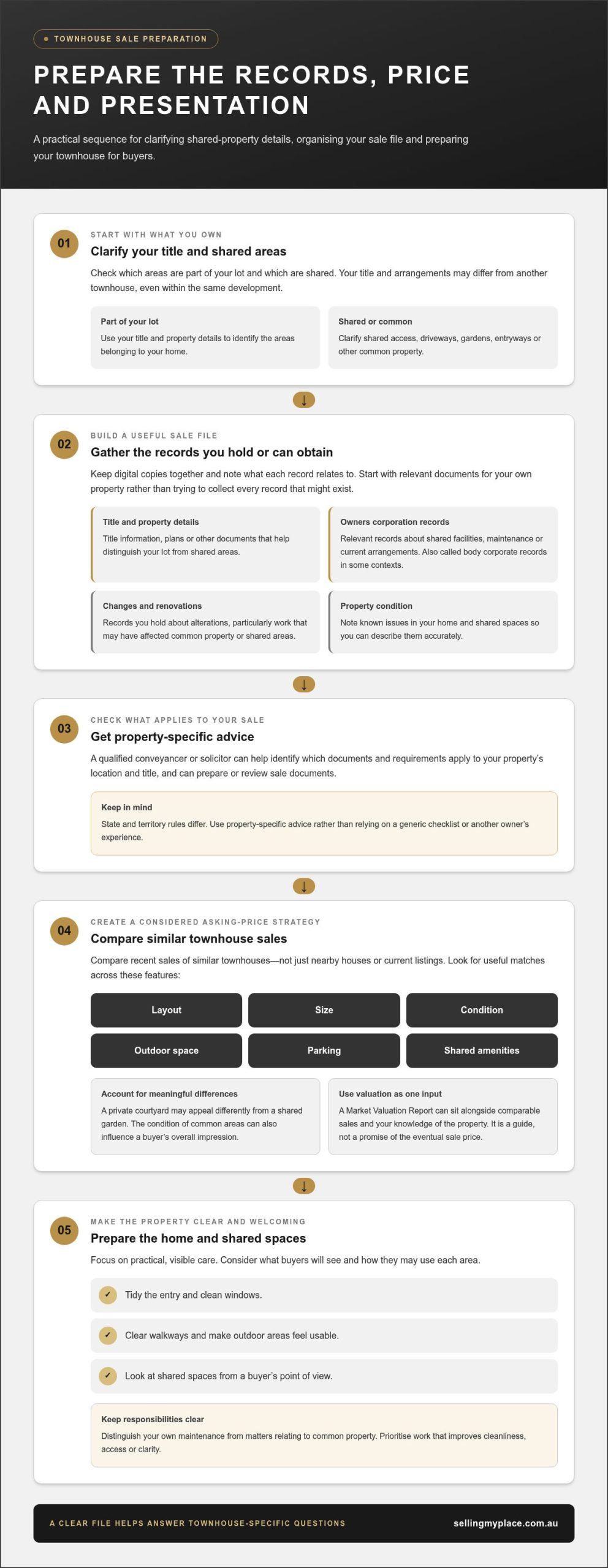
- Identify which areas are part of your lot and which are shared.
- Gather relevant title and owners corporation or body corporate records you hold or can obtain.
- Note known condition issues in both private and shared areas.
A qualified conveyancer or solicitor can help you understand the property-specific documents and which requirements apply to your sale. State and territory rules vary, so use property-specific advice rather than relying on a general checklist or another owner’s experience.
What private selling means for the owner
Selling a townhouse privately means you lead the sale without handing the whole process to an agent. You decide how to manage access, host inspections and assess offers. While many vendors choose private negotiation for flexibility over timing and price, comparing different transaction methods—such as property auctions run by Auction Property Ltd—can offer helpful insight into how competitive bidding structures work in practice. A listing intermediary has a different role: it can provide portal and marketing support, but it doesn’t take over your decisions or replace your responsibility to understand the sale process.
Private selling doesn’t remove the need for professional legal advice. Engage a qualified conveyancer or solicitor to advise on the applicable requirements and prepare or review sale documents. KIDS provides listing support as a licensed intermediary, not as a real estate agent or conveyancer. With the right documents and a clear understanding of your title, you can prepare to answer townhouse-specific questions with confidence.
Prepare a townhouse sale: records, condition and pricing
A well-organised preparation file makes it easier to answer buyer questions and decide what needs attention before your townhouse is listed. You don’t need to collect every document that might exist. Start by understanding your property’s title, organising records you already hold and getting advice on what applies to your specific sale.
Gather townhouse records and clarify shared-property details
Townhouse titles and shared-property arrangements vary, so build your checklist around your own documents rather than assuming another property in the complex works the same way. Keep digital copies together and note what each record relates to.
- Title and property details: gather your title information and any plans or property documents that help distinguish your lot from shared areas.
- Owners corporation or body corporate records: collect relevant records available to you, such as information about shared facilities, maintenance or current arrangements.
- Changes and renovations: keep records you hold about alterations, particularly where work may have affected common property or shared areas.
- Property condition: note known issues in your home and shared spaces, so you can describe them accurately and plan presentation accordingly.
A qualified conveyancer or solicitor can help identify which documents and requirements apply to your property’s location and title. State and territory rules differ, so don’t rely on a generic checklist as a substitute for property-specific advice.
Set a considered price and prepare the property
For a considered asking-price strategy, compare recent sales of similar townhouses, not just nearby houses or current listings. Look for useful matches in layout, size, condition, outdoor space, parking and shared amenities. Then account for meaningful differences: a private courtyard may appeal differently from a shared garden, while the condition of common areas can influence a buyer’s overall impression.
A Market Valuation Report can be one input alongside comparable sales and your knowledge of the property. Treat it as a guide for your decisions, not a promise of the eventual sale price. For more on the factors that inform a pricing view, see this guide to determining a home’s market value.
Presentation starts with practical, visible care. Tidy the entry, clean windows, clear walkways and make outdoor areas feel usable. Look at shared spaces from a buyer’s point of view, but distinguish your own maintenance from matters relating to common property. Prioritise work that improves cleanliness, access or clarity, and weigh each repair on its own merits rather than assuming it will deliver a particular return.
If you’d value support as you organise records and pricing inputs, discuss your townhouse sale preparation.
Market your townhouse privately and present its strongest features
A strong listing helps buyers picture both the home and how it fits into its surroundings. For a townhouse, explain the layout and practical features while being precise about what’s private and what’s shared. Clear details build confidence; broad claims can leave buyers unsure what they’re viewing.
Present layout, outdoor space and shared amenities clearly
Describe the home in the order a buyer might experience it: entry, living areas, bedrooms and outdoor space. Be specific about features such as stairs between levels, built-in storage, a study nook, courtyard access or allocated parking. If an outdoor area is part of your lot, call it a private courtyard. If it’s communal, describe it as a shared garden or facility instead.
Photography and a floorplan work together. Photographs show condition, natural light and the feel of rooms. A clear floorplan helps buyers understand room flow, proportions and how levels connect. Include shared amenities only when the description and images make their status clear. Avoid wording or images that could suggest a communal area belongs exclusively to your townhouse.
Choose listing reach and marketing assets
Plan your marketing around three things: the facts buyers need, visuals that help them assess the property, and channels that put the listing in front of them. This simple checklist can keep your message consistent:
- Property facts: layout, bedrooms, bathrooms, parking, storage, outdoor areas and which facilities are shared.
- Visual assets: accurate photographs and a floorplan that reflects the home’s layout.
- Distribution: online property portal listings, a dedicated property website where included, and a signboard if suitable for the property and its arrangements.
Property portals help buyers discover listings, while a dedicated property website gives your townhouse its own space for the description and visual material. A signboard can offer another way for people nearby to notice the sale, but it complements, rather than replaces, accurate online information.
Every Kincade International Direct Sales package includes a listing on major property portals and local platforms such as Homely and Soho, professional photography, enquiry forwarding by SMS and email, and access to a 24/7 seller dashboard. Signature and Prestige also include a dedicated property website and URL. You retain control of listing edits, while Kincade International Direct Sales acts as a licensed intermediary for listing purposes. Keep the wording consistent across each channel, and check that the photos, floorplan and description all tell the same story.
For owners selling a townhouse privately, a focused set of accurate facts and visuals can help buyers assess whether the home suits their needs before arranging a visit. If you’d like support planning your listing, explore townhouse marketing support.
Manage townhouse enquiries, inspections and offers with care
A steady process helps buyers get timely answers and makes it easier to track who has viewed the property and what they’ve asked. Townhouses can add practical considerations: shared entryways, common areas and building arrangements may affect how you coordinate access. Set expectations early, then keep a clear record as interest develops.
Organise enquiries and townhouse inspections
Use a spreadsheet or notebook to record each buyer’s name, contact details, questions, inspection request and any follow-up. Reply consistently, even if you’re simply acknowledging an enquiry and letting the buyer know when you’ll provide an answer. KIDS forwards enquiries by SMS and email and provides a seller dashboard, helping you keep track while you remain responsible for responses and inspection arrangements.
For each inspection, plan a simple sequence:
- Respond: note the buyer’s questions and answer accurately, or record what you need to clarify.
- Arrange access: agree on a suitable time and explain where to meet, how to enter and which areas are shared.
- Host the viewing: make the route through the home clear and respect neighbours’ privacy and access to common areas.
- Follow up: record feedback and any next steps so you can respond consistently.
If access involves a shared entrance, driveway or building procedure, explain the arrangement before the buyer arrives. Don’t suggest that a communal space is part of your private lot, and avoid obstructing shared paths during a viewing. These small courtesies help inspections run smoothly for buyers and neighbours alike.
Consider offers and handle contract steps appropriately
Look beyond the headline price when comparing offers. Record the proposed deposit, any conditions, the buyer’s requested timing and other terms in writing. A clear comparison makes it easier to weigh what matters to you and discuss the details with your conveyancer or solicitor. For a framework on reaching and assessing terms, use this property sale negotiation guide.
Contract and disclosure processes differ across Australia. Before listing or responding to an offer, ask a qualified conveyancer or solicitor which documents and steps apply to your property and state or territory. State-specific documents may include a Contract of Sale or vendor statement. Don’t rely on a general online checklist to decide when documents must be prepared or provided.
KIDS forwards enquiries and provides sellers with dashboard access, while you retain control of buyer communications, inspections and offer decisions. KIDS does not provide legal advice, contracts or conveyancing. Engage a qualified conveyancer or solicitor for legal matters and contract preparation. For listing support that leaves you in charge of managing buyer interest, get in touch about your townhouse sale.
Use fixed-fee listing support while keeping control of your townhouse sale
Selling a townhouse privately doesn’t mean you have to manage every part of getting your listing online alone. Kincade International Direct Sales (KIDS), a service of Kincade International Realty, provides fixed-fee marketing packages and acts as a licensed intermediary for listing purposes. It isn’t a real estate agent or conveyancer, and you remain in charge of your sale’s day-to-day decisions.
Every package includes a Market Valuation Report, enquiry forwarding by SMS and email, access to a 24/7 seller dashboard, professional photography, and listings on Realestate.com.au and local portals such as Homely and Soho. You can use the report as one input to pricing decisions, review forwarded buyer enquiries and keep track of your listing while deciding how to respond and arrange inspections.
Match listing support to the marketing you need
The packages differ in price and included marketing assets. Choose based on the presentation materials and level of support that suit your townhouse, rather than assuming any option will achieve a particular sale result. Prices below are ex GST.
- Classic: $799 ex GST. Includes the features in every package and a 600 × 900 mm For Sale signboard.
- Signature: $999 ex GST. Includes everything in Classic, plus a 1200 × 1800 mm For Sale signboard, a dedicated property website and URL, and email and phone expert support.
- Prestige: $1,999 ex GST. Includes everything in Signature, plus 15-20 professional photographs, a floorplan redraw, a Facebook and Instagram ad campaign, 50 premium A4 brochures, a 1-on-1 dedicated specialist, a James Edition listing and a 1200 × 1800 mm Photo signboard.
Signature and Prestige include a dedicated web address for the property; Prestige adds a broader set of visual and promotional materials. For a townhouse, photographs and a floorplan can help buyers understand the levels, room flow and relationship between indoor and outdoor spaces. Keep each asset accurate, especially when showing shared facilities.
Keep ownership of decisions while using listing support
With KIDS, you retain control of listing edits, enquiries and inspections. The service supports portal listings and forwards enquiries, but you decide how to communicate with buyers, schedule access and consider offers. That distinction matters if you want practical marketing support without handing over the choices that shape your sale.
Kincade International Network exposure extends across Australia, the United Kingdom and the United States. Listings remain active until sold, withdrawn or two years from the commencement date, whichever occurs first. Each package has a fixed fee and 0% commission. Package prices are ex GST.
KIDS doesn’t provide legal advice, contracts or conveyancing. Engage a qualified conveyancer or solicitor for contract preparation and legal questions, including requirements that apply to your state or territory. To compare the packages and get started, discuss your townhouse sale with KIDS.
Take the next step with confidence
Selling a townhouse privately is a series of considered decisions, not a test of how much you can do alone. Start by writing down what you want to manage yourself, where you’d value practical listing support, and which property-specific questions need professional legal advice. This gives you a clear starting point without committing to a process that doesn’t suit your circumstances.
A townhouse sale also marks a change in the place you’ve called home. Give yourself room to prepare carefully, ask questions and choose the level of support that fits your plans. KIDS offers fixed-fee listing packages with 0% commission, while you remain in control of the sale decisions. Explore the packages and get started with KIDS.
With a thoughtful plan and a qualified conveyancer or solicitor for legal matters, you can move forward at your own pace and stay in control of the decisions that matter. If your townhouse sale is the first step towards relocating or investing overseas, boutique agencies like King Estates offer helpful insight into luxury properties and coastal lifestyle living abroad.
Frequently Asked Questions
Is selling a townhouse privately legal in Australia?
Yes. It is legal for Australian property owners to sell privately in every state and territory, provided the sale meets the requirements that apply to the property and its location. For a townhouse, the title may affect which records or disclosures are relevant. This is general information, not legal advice. Before listing or signing documents, engage a qualified conveyancer or solicitor to explain the requirements for your circumstances and help you understand the documents involved.
Do all townhouses have an owners corporation or body corporate?
No. Arrangements depend on the title and the rules applying in the relevant state or territory. Some townhouse communities have shared property and a formal owners corporation or body corporate, while others are structured differently. Check the title and property records rather than relying on what applies next door. A qualified conveyancer or solicitor can explain which records and obligations relate to the townhouse you’re selling.
Can I sell a townhouse with a tenant living in it?
A sale with a tenant in place may be possible, but tenancy conditions and applicable rules can affect inspections, access and what buyers need to know. Review the tenancy documents before planning viewings, and don’t assume you can enter or change arrangements without the required notice. Make the occupancy situation clear in buyer communications, and seek qualified advice about the rules that apply to your property.
Can a buyer make an offer subject to finance on a townhouse?
Yes, a buyer may propose a finance condition as part of an offer. Its effect depends on the exact wording and the contract, so don’t treat a general explanation as advice about your legal position. Keep the proposed terms in writing and ask your qualified conveyancer or solicitor to review the documents. Consider conditions and proposed timing alongside the price when weighing an offer.
What happens if a townhouse buyer withdraws their offer?
It depends on whether the buyer has made an offer only or the parties have entered into a binding contract, as well as the contract terms and applicable rules. Don’t assume a withdrawal has no consequences or that a sale is assured. Contact your qualified conveyancer or solicitor promptly, share the relevant communications and documents, and get advice on what to do next. Keep other buyer enquiries organised in the meantime.
Should I disclose townhouse renovations that affect shared areas?
Records of work affecting shared property may be relevant, particularly if approval was involved. What needs to be disclosed depends on the property documents and applicable law, so avoid guessing whether approval was required or obtained. Gather plans, approvals and correspondence you hold, then ask a qualified conveyancer or solicitor what matters for your sale. Describe the work accurately and distinguish documented facts from anything you’re unsure about.
Do townhouse buyers usually ask for owners corporation records?
Buyers may ask about shared facilities, levies, rules or available records if the townhouse has an owners corporation or similar arrangement. What’s relevant depends on the title and jurisdiction. Before responding, sort the records you hold by topic, such as shared-area maintenance or building rules, and get advice from a qualified conveyancer or solicitor about which information applies. Don’t assume another townhouse’s records or arrangements are the same as yours.