
A quick online estimate is a starting point, not a definitive price. Under ideal conditions, leading automated models estimate sale prices within 5-10% for 50-70% of properties. That’s the practical limit of the accuracy of online property appraisal tools: useful for a first indication, but not a substitute for an assessment that accounts for a home’s individual features and current local conditions.
It makes sense to want a clear figure before making a major property decision. Online calculators are quick and convenient, but their accuracy depends on the property data and comparable sales available. The right option depends on how precise and formal the answer needs to be.
This guide explains how Australian online property calculators produce estimates, why their results can differ, and when those figures are useful. You’ll also learn how online estimates compare with paid valuation options, so you can choose the right next step.
Key Takeaways
- Use an online estimate as an initial guide: under ideal conditions, leading automated models estimate sale prices within 5-10% for 50-70% of properties.
- Compare estimates from more than one tool and look at the range, not just the highest figure.
- Understand what a formal valuation adds: an assessment can account for a home’s condition, renovations and features that automated data may miss.
- Compare costs with the purpose of the valuation: paid desktop reports and certified valuations serve different needs and have different price ranges.
- Allow for less reliable estimates when comparable sales are scarce or a home is an apartment, prestige property or otherwise unusual.
How accurate are online property valuations?
Online valuations offer a fast indication, but their accuracy depends on the available property data and comparable sales. Under ideal conditions, leading automated models estimate sale prices within 5-10% for 50-70% of properties.
For Australian homeowners, the key is knowing what each estimate can support. An online figure can help you start planning a sale, but it is not a substitute for a formal valuation when you need one.
Comparing Estimates and Professional Valuations
An online estimate is an automated guide, an agent appraisal draws on local sales knowledge, and a formal valuation is a professional assessment of a property’s value. Knowing the difference helps you use the right figure for the decision ahead.
Online platforms return instant estimates; agent appraisals can reflect recent local sales and a home’s particular features. However, an agent appraisal is not a legally binding valuation. A formal valuation may include an in-person assessment, considering condition, renovations, location and nearby amenities. It can take 7-14 days, rather than arriving instantly.
A seller, for example, can use an online figure as an early reference, then discuss comparable sales with an agent. If a buyer needs a formal valuation, they should engage a registered valuer. A quick estimate may not be suitable for decisions that require formal documentation.
How Automated Models Estimate Property Values
Automated valuation models use property records, recent sales and market trends to estimate value. In Australia, a model looks for comparable properties, then uses their sale prices alongside details such as property type, location and recorded features.
The result depends on the quality and relevance of those inputs. A standard home in an active market may have plenty of recent comparable sales. An estimate based on incorrect property details or older sales may be less representative. Different platforms can also use different models and data, producing different estimates for the same address.
One tool might give more weight to nearby sales, while another focuses more on broader market trends. Neither instant result captures every detail a person could assess during an inspection. Online property appraisal tools are only as useful as the data they can access and the way their models interpret it.
Checking and Improving an Estimate
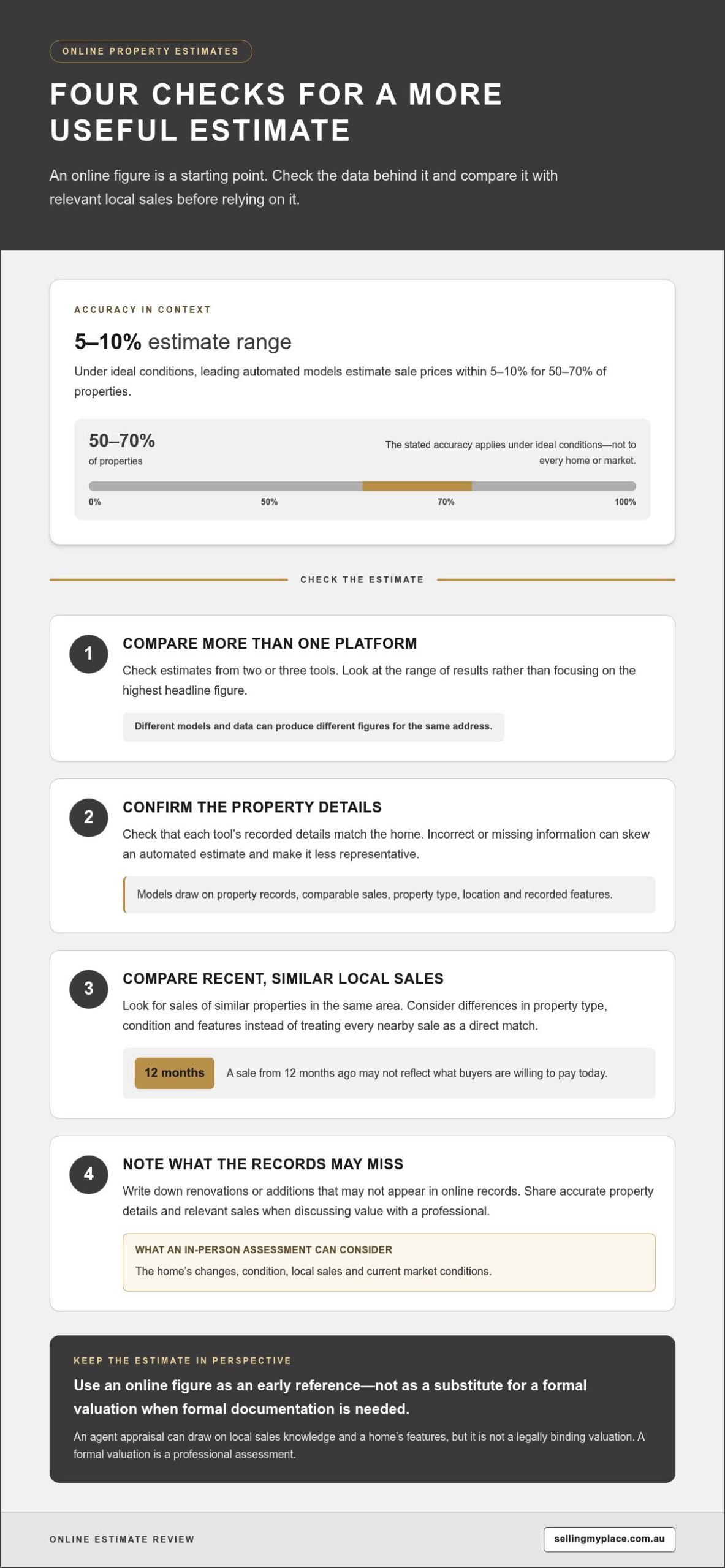
Check an online estimate by comparing results from two or three platforms and reviewing the range, rather than focusing on one headline figure. Confirm that the property details shown by each tool match the home, as incorrect records can skew an estimate.
Then compare the estimate with recent sales of similar properties in the same area. Look for meaningful differences in property type, condition and features, rather than treating every nearby sale as a direct match. A sale from 12 months ago may not reflect what buyers are willing to pay today.
To prepare for professional advice, note renovations or additions that may not appear in online records. An in-person assessment can consider those changes alongside local sales and current market conditions. The online figures remain useful context, but presenting accurate property details and relevant examples gives a professional a clearer starting point for discussing value.
What is an online property value calculator?
An online property value calculator uses recorded property details and sales data to generate an automated estimate. Australian homeowners can use one for a quick indication, but formal valuations serve a different purpose and involve a more detailed assessment.
Automated Models and Professional Appraisals
An automated model calculates an estimate from property records and comparable sales, while a professional appraisal applies human assessment to the property and its local market. A quick estimate and a formal report are not interchangeable.
Australian banks use automated valuation models and recent market data, including comparable sales, property features and location trends. For refinancing, a professional bank valuation is necessary. For some Australian home loan applications, a valuer may inspect the property in person before preparing a formal valuation.
Most mortgage lending, estate settlements, divorce proceedings and court cases require valuation reports from licensed professional appraisers. These reports must meet documentation and credibility standards. A calculator can help homeowners understand an indicative figure, but it doesn’t provide that formal report. For property owners managing overseas assets or UK investments that require formal documentation, professional valuation firms such as Winfields Surveyors London offer the certified, on-site assessments needed to satisfy legal and financial requirements.
Generating Online Valuations in Australia
Online property valuation algorithms analyse recent sales, property characteristics, location and market trends to estimate value. They compare the home with properties that share relevant features, then process the available information through an automated model.
For example, a calculator may use recorded land and building details alongside recent sales in the area. If the records accurately describe the home and comparable sales reflect current conditions, the model has more relevant inputs. Missing or incorrect details can make its estimate less representative of the property as it stands.
Some platforms combine automated valuation models with comparative market analysis and, at times, input from real estate professionals. The mix varies between tools, so homeowners may see different results for the same address. An online figure remains an estimate, not a formal property valuation.
Free Online Valuation Tools
Free online tools are typically calculators on property portals that return an instant automated estimate. They offer an accessible starting point without requiring a formal report.
That convenience is useful when exploring a possible sale or tracking broad market trends. A calculator may show a range or a single figure, based on the property information and sales data available to its model. Treat the result as a guide, not as a documented valuation for lending or legal matters.
For a practical comparison, enter the same address and property details into more than one platform. Review the estimates together and note differences in the data shown. A spread between results can signal that the tools rely on different records or methods.
How Often Valuations Are Updated
Australian online valuations are refreshed as platforms add property records and sales data, but update timing varies between tools. There is no single schedule shared by every calculator.
Check when an estimate was generated and consider whether its comparable sales reflect current market conditions. A sale from 12 months ago may not represent what buyers would pay today, particularly if local trends have shifted.
Before a sale decision, use the online figure as context alongside recent comparable sales and property details. For guidance on how estimates fit into a selling decision, discuss your property sale plans.
Limitations of automated valuation algorithms
An instant estimate reflects the records and comparable sales available to a model, not a physical inspection. Missing property details, market movement and distinctive features can all affect the result.
Accuracy Limits of Automated Algorithms
Automated algorithms find patterns in recorded sales and property information, but they cannot assess every factor that influences buyers. Incorrect details in property databases can skew an automated valuation or comparative market analysis. A home’s condition, visual appeal and recent maintenance may also be difficult to capture in records.
Renovations are a clear example. An algorithm may not know about a $100,000 kitchen renovation if the improvement isn’t recorded, so its estimate may not reflect the home as it stands. Models also don’t physically inspect properties or capture buyers’ emotions and impulses, which can influence what they’re willing to pay.
Market timing presents another limitation. A sale from 12 months ago may not reflect what buyers would pay today, and an online estimate may not immediately respond to market shifts or location-specific changes. Treat the output as a data-based guide, not a complete answer to the question of what a particular buyer might offer.
Comparative market analysis has its own blind spots. A comparison may miss differences in site size, garage size, outbuildings, accessory dwelling units or property condition. For example, two homes with similar recorded floor areas may have different outdoor spaces or upkeep needs, which can affect their estimated values.
Estimates for Regional and Unusual Properties
Estimates are generally more useful for standard homes in active markets, where abundant comparable sales give a model relevant examples. In a regional area with fewer recent sales, an algorithm may have less closely matched evidence, making its comparison less specific to that home and location.
Apartments can also differ in ways that headline records do not capture. Condition, layout and features may affect value, while a sale from another apartment nearby may not be a close match. The model can only weigh distinctions represented in its data.
Prestige and unique homes are harder to value online because distinctive attributes may have no close comparable. Unusual design, extensive grounds or special additions may not fit patterns drawn from standard property sales. A human assessment can consider characteristics an algorithm may not recognise.
Use the estimate as a prompt for closer comparison: review the recorded property details, then consider whether the sales used resemble the home in condition, features and setting. This helps show where the model’s evidence is strong and where it may leave important differences out.
Costs of professional appraisals and online tools
Online calculators provide instant property estimates, while paid valuation services offer different levels of detail. In Australia, the cost depends on the assessment type and its purpose. Weigh the fee against what the valuation needs to establish, such as a sale guide or formal report.
It uses available property information and sales evidence without an in-person inspection, making it a lower-cost option than a detailed report. The trade-off is scope: a desktop assessment may not capture physical features or condition that become clear during an inspection.
These can provide more analysis than a basic desktop assessment, but paid desktop valuations are not legally binding. This matters if you need a valuation for a formal lending or legal purpose, rather than a more informed estimate of value.
These ranges describe different categories of professional work, so they should not be treated as interchangeable quotes. A formal assessment may involve an inspection and a more detailed report than a desktop estimate.
Timing also forms part of the comparison. Automated property appraisal systems return instant results, while professional appraisals typically take 7-14 days. For an owner weighing a sale, an instant figure can help with early planning; a professional report takes longer but can consider property details beyond a calculator’s records.
For example, a homeowner could begin with online estimates to understand the broad range, then decide whether a paid desktop report or formal valuation fits the next step. If refinancing, an estate settlement, divorce proceedings or a court case is involved, the required documentation can make a professional report more suitable than an instant calculator result.
A real estate agent can also use recent local sales and past sale prices to estimate a property’s value. That appraisal offers market context for selling, but it is not a legally binding valuation. Its usefulness depends on the current market, comparable properties and the home’s features. For sellers managing residential assets overseas, such as in the UK, regional specialists like Taylors Estate Agency show how local expertise captures nuances that automated systems often miss.
Compare each option by asking what evidence it includes, whether it involves an inspection, and what the report is intended to support.
In short, online estimates suit quick orientation, while paid reports provide more analysis. Match the cost and turnaround time to the decision: an initial selling plan may need market context, while formal lending or legal matters can require a professional valuation report.
How accurate are online property estimates in regional areas and for apartments or unusual homes?
Online estimates are most useful when a property has close comparables and the market has regular sales. Homes with fewer direct matches, including apartments and distinctive properties, may have less relevant evidence behind their estimates. Judge the figure against the type of property and sales data the model uses.
When nearby sales are scarce, a calculator may draw on sales from a wider area. But properties in different localities can vary in access to services, infrastructure and buyer demand. A sale elsewhere may offer context without reflecting the appeal or setting of the specific property.
Consider two houses with similar recorded floor areas. One might be near local amenities, while the other has a larger site or different condition. An automated model can only account for details in its records, so a broad comparison may be less meaningful. Recent sales of similar property types in the same locality are a more relevant reference.
Apartments bring another comparison challenge. A nearby sale may be in the same building but differ in layout, condition or outlook. Comparative market analysis can also miss differences in site size, garage size, outbuildings, accessory dwelling units and property condition. Compare like with like, including the features and condition recorded for each sale.
Unusual and prestige homes are harder to value with automated tools because standard sales may not capture their distinctive attributes. Extensive grounds, unusual design or a unique layout can set a property apart from the model’s usual comparisons. A professional inspection can add context, particularly where renovations or additions have changed the home beyond what property records show.
Some improvements need careful interpretation. Solar panels can positively affect property value, but the effect varies with system size, age and location. A calculator without those details cannot distinguish between installations. Likewise, an unrecorded extension may make a property appear more comparable to smaller homes than it really is.
For a regional, apartment or unusual property, treat the online figure as one reference point. Compare it with recent sales that share the property’s type, location and meaningful features. Then note which differences could explain a gap between the estimate and those sales. That gives a real estate professional more useful context for an appraisal.
If you’re preparing to sell a distinctive or regional home, get guidance on your property sale using local sales and property-specific details.
Kincade International Direct Sales: Residential Property Listing Services
Kincade International Direct Sales can help you turn an online estimate into a considered selling plan. Its Residential Property Listing Services support Australian homeowners preparing to bring a property to market, while Neighborhood Market Reports add sales context to an automated figure.
For owners weighing renovations, timing or how to present a home, Pre-Sale Property Consulting can help shape decisions before listing. Buyer Representation is available for people assessing a purchase and comparing an asking price with relevant property information.
An online calculator is a starting point, not a selling strategy. Pairing its estimate with local market context can help you approach the next decision with a clearer view of your property and plans. To discuss your next steps, contact Kincade International Direct Sales or visit sellingmyplace.com.au.
Turn your estimate into a considered next step
A property estimate becomes more useful when it helps you make a decision that fits your plans. Rather than chasing a single perfect figure, consider what you need to decide next: preparing to sell, assessing a purchase or understanding which improvements matter before going to market. That context gives the accuracy of online property appraisal tools a practical role, without asking an automated figure to make the decision for you.
Kincade International Direct Sales offers Residential Property Listing Services, Buyer Representation and Pre-Sale Property Consulting to support different stages. The right next step depends on whether you’re planning a sale, weighing a purchase or preparing your home. A conversation can connect the property information you’ve gathered with the decision ahead.
Contact Kincade International Direct Sales to discuss your property plans. Take the next step with a clearer sense of what matters to you.
Frequently Asked Questions
What should I do if I need a more detailed valuation than what is provided by the online tool?
Choose the next assessment based on why you need the figure. For a sale discussion, an agent can consider local sales and the features buyers may notice. If you need formal documentation for lending, legal proceedings or an estate matter, engage a registered valuer. Before arranging an assessment, gather details of renovations, property features and comparable sales to provide useful context.
Where does the property data and insights come from?
Online calculators generally draw on property records, recent sales and market trends. Government records and property databases can supply details such as location, property type and recorded features. Some platforms combine automated calculations with comparative market analysis or input from real estate professionals. If a property record omits an extension, for example, the estimate may not reflect the home’s current layout or size.
How accurate are online property appraisal tools in Australia?
Accuracy depends on the property and the quality of its comparable sales data. Under ideal conditions, leading automated models estimate actual sale prices within 5-10% for 50-70% of properties. That result applies to a portion of properties, not every home. A standard property in an active market has more relevant comparisons than a distinctive home with few similar recent sales.
What is the average error rate of Australian online property valuations?
There isn’t one average error rate that describes every Australian calculator or property. Under ideal conditions, top-performing automated valuation models estimate sale prices within 5-10% for 50-70% of properties. This is a performance range, not a promised margin for an individual home. Compare the estimate with recent, similar sales and consider whether the tool has accurate property details before interpreting its gap from a sale price.
Which Australian property appraisal websites and tools are most accurate?
No single ranking establishes one Australian platform as the most accurate for every home. Compare two or three tools using the same address, then check whether each shows the correct property features and recent comparable sales. A wide spread between estimates signals uncertainty in the available data or methods. For a sale decision, use the results as context alongside professional advice.
How do online appraisals compare with a real estate agent’s appraisal and a professional valuation?
An online appraisal produces an automated estimate; an agent’s appraisal adds local sales knowledge, while a professional valuation provides a formal assessment. An agent’s appraisal is not legally binding. A seller exploring an asking price may find an agent’s view useful, while a lender or court matter may require a professional valuation report. Match the assessment to the decision and documentation required.
What data do Australian online property appraisal tools use?
Australian tools commonly analyse recent sales, property characteristics, location and market trends. Their records may include property type and features that help identify comparable homes. Some platforms also draw on comparative market analysis or professional input. Check the address and recorded details shown in the estimate: a missing pool, incorrect bedroom count or unrecorded addition can lead the model to compare the home with properties that aren’t close matches.
What factors can make an online property appraisal inaccurate?
Incorrect records, limited comparable sales and market changes can all distort an online estimate. A model may miss renovations, maintenance, condition or features absent from its data. A recent kitchen upgrade, for instance, may not appear in property records, while an older sale may no longer reflect current buyer demand. Unique layouts, large sites and differences between nearby homes can also weaken the comparison behind the estimate.