
A calmer sale often starts with fewer competing decisions, not more. Avoiding stress when selling property isn’t about controlling every twist; it’s about knowing what needs attention now, what can wait and who can help. From preparing for inspections to weighing an offer or adjusting plans, it’s easy to feel pulled in several directions at once.
If you’re unsure where to begin, you’re not alone. Selling a home is a significant change, and practical tasks can sit alongside plenty of emotion. A clear plan can make the next step feel manageable, while realistic milestones help you stay focused without expecting everything to happen at once.
This guide will help you set priorities, organise the sale into a sensible sequence and feel more in control of decisions and communication. You’ll also learn how practical support, such as pre-sale consulting, listing services, photography and floorplans, can ease the workload while you remain involved in your sale. The aim is a steadier process, clearer choices and more confidence as plans unfold.
Key Takeaways
- Reduce uncertainty by separating what you can influence from the outcomes you can’t control.
- Make avoiding stress when selling property more achievable by turning broad goals into clear, manageable steps.
- Look for patterns in buyer feedback before making changes, rather than treating one comment as a verdict on your home.
- Agree on communication routines and share practical tasks to protect your time and energy during the sale.
- Consider how flat-fee, commission-free marketing and advisory support can clarify responsibilities while keeping you involved in decisions.
Why selling property can feel stressful, and what you can control
Selling a home is more than a set of practical jobs. It can mark a move, a change in household plans or the closing of a meaningful chapter, while requiring decisions about preparation, timing and offers. It’s understandable if the process feels demanding, especially when several important things need your attention at once.
Sale-related stress often grows from uncertainty, competing tasks and decisions with real consequences. You may be organising the property while keeping up with everyday responsibilities, responding to inspection arrangements and considering buyer feedback. The pressure can feel heavier when it’s unclear who is handling each task or what needs to happen next. Every owner’s circumstances are different, so there’s no single pace or plan that suits everyone.
Which parts of selling tend to create the most pressure?
Preparation can bring a long list of jobs, from deciding what needs attention to getting the home ready for photography and inspections. Deadlines, inspection availability and regular communication can add to the workload. Offers may feel especially weighty because they call for careful consideration, not an automatic response. When responsibilities aren’t clearly divided, even small tasks can blur into one overwhelming list.
What can sellers influence, and what must they allow for?
You can organise the work around your sale: gather relevant information, plan preparation, set out when you’re available and agree how decisions will be reviewed. A simple task list can clarify who is responsible for each job. Setting a regular time to consider updates can also stop every message from feeling urgent.
Some things remain outside your control. You can’t guarantee when buyers will be interested, how they’ll respond to the property or when an offer may come forward. Trying to predict every outcome can use energy without making the process more certain. Instead, focus on the choices in front of you and the information that helps you make them thoughtfully.
A clear plan won’t control every part of a property sale, but it can turn a complex process into a series of more manageable decisions. That’s a practical starting point for avoiding stress when selling property: know what you can act on, and allow room for what you can’t. Simple routines that support your wellbeing can help too; this overview of stress management techniques offers broader ideas for handling pressure.
How to make a property sale feel manageable with a simple plan
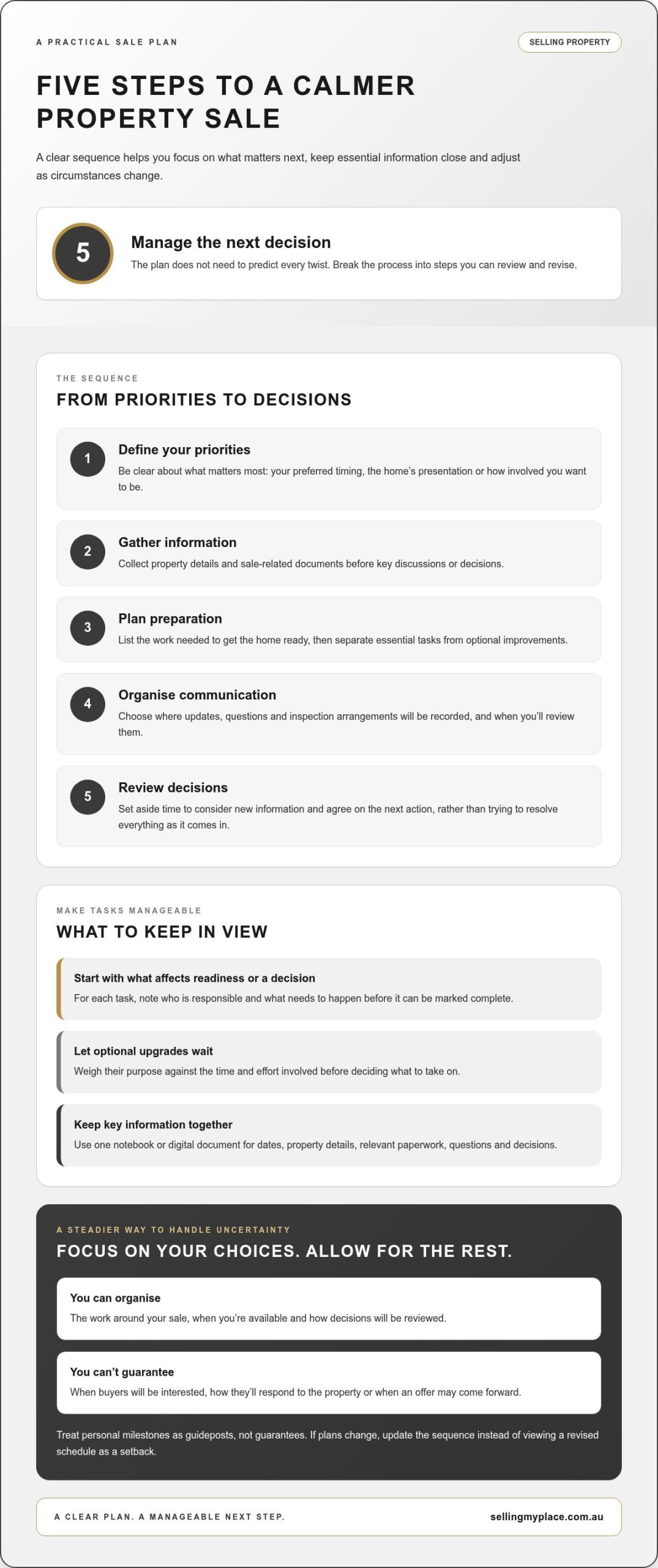
A useful plan doesn’t need to account for every twist. Its job is to show you what matters next, keep essential information close and make progress easier to see. To make avoiding stress when selling property more achievable, break the process into steps you can review and adjust as circumstances change.
Try this simple sequence:
- 1. Define your priorities. Be clear about what matters most, such as your preferred timing, the home’s presentation or how involved you want to be.
- 2. Gather information. Collect property details and sale-related documents before key discussions or decisions.
- 3. Plan preparation. List the work needed to get the home ready, then separate essential tasks from optional improvements.
- 4. Organise communication. Decide where updates, questions and inspection arrangements will be recorded, and when you’ll review them.
- 5. Review decisions. Set aside time to consider new information and agree on the next action, rather than trying to resolve everything as it comes in.
How should you prioritise sale tasks?
Start with tasks that affect readiness or a decision you need to make. For each job, note who is responsible and what needs to happen before it can be marked complete. Optional upgrades can wait until you’ve weighed their purpose against the time and effort involved. Set personal milestones for preparation, listing readiness and availability, but treat them as guideposts, not guarantees. If plans change, update the sequence instead of viewing a revised schedule as a setback.
What information can reduce uncertainty early?
Use one central place, such as a notebook or digital document, to keep dates, property details, relevant paperwork, questions and decisions. That way, important information isn’t scattered across messages and reminders. Market reports and comparable property information can help frame expectations, but they aren’t a promise of the price your home will achieve. For more context, read How to Determine the Market Value of a Home in Australia: The 2026 Seller’s Guide.
Small, specific tasks make a large goal easier to manage. “Prepare the home” can become a list of separate jobs, each with an owner and a realistic target date. This lets you see what’s done, what’s underway and what can wait, without expecting the sale to follow a perfectly smooth path. If you’re selling independently, How to Sell Your Own Home: A Step-by-Step Guide to Sale by Owner in Australia offers further guidance on the process.
When practical guidance would help you shape your sale plan, explore property sale support to clarify your next steps while staying involved in decisions.
How to handle uncertainty, feedback and offers without feeling overwhelmed
Feedback and offers can feel personal, particularly when you’ve invested time and care in your home. A steadier approach is to treat each response as information to assess, not as a verdict or a decision you need to make on the spot. This can make avoiding stress when selling property more achievable, even when the next step isn’t immediately clear.
How can you keep buyer feedback in perspective?
One buyer’s comment may reflect their preferences, budget or circumstances, rather than an objective judgement of your property. Record feedback and look for recurring themes. If several people mention the same practical issue, consider whether a change fits your sale plan. A single suggestion doesn’t automatically mean you should alter the home or its presentation.
Give yourself a little time before making emotionally charged changes. Pause, review what you’ve heard and discuss any possible adjustment with your adviser. This helps you respond deliberately, rather than letting one inspection shape the entire campaign.
How can you make offer decisions with a clearer head?
An expression of interest signals that a buyer may want to discuss the property, but it isn’t the same as a clear offer ready for your decision. The detail and effect of communications can vary, so clarify what the buyer is proposing and what, if anything, they’re asking you to agree to. You don’t need to treat interest as a commitment to proceed.
Before reviewing an offer, revisit your priorities and questions. Consider the whole proposal, not just the headline amount. You might want to understand any conditions, proposed timing, inclusions and response deadline. For legal questions about contract terms, use appropriate conveyance advice.
| Decision factor | Question to consider |
|---|---|
| Offer amount | How does it fit with your expectations and priorities? |
| Conditions | What does the buyer require before proceeding? |
| Timing | Does the proposed schedule work for your circumstances? |
| Inclusions | Is it clear what is included in the proposal? |
Use the table to organise your thinking, not to predict which offer will succeed. If something is unclear, ask for clarification before responding. For more ideas on weighing proposals and communicating your position, see Mastering the Deal: Expert Property Sale Negotiation Tips for Australian Homeowners.
A short pause can create room for a better decision. For structured guidance as you assess buyer responses, explore property sale advisory support.
How to protect your time, boundaries and energy during a sale
A property sale can bring a steady stream of messages, questions and practical jobs. Setting a few clear routines helps you stay informed without feeling that you need to be on call every moment. It’s a useful part of avoiding stress when selling property, especially when sale tasks sit alongside work, family commitments and the ordinary rhythm of home life.
What boundaries make sale communication easier?
Agree on one reliable channel for routine updates, then keep key decisions and agreed next steps in writing. Choose practical times to review messages, such as once in the morning and again later in the day, rather than checking continuously. Set a simple process for urgent questions too: clarify what counts as urgent and which channel should be used. Important matters can then be raised promptly without every update feeling like an emergency.
Be clear about who needs to take part in decisions. A household member might coordinate access for inspections, while another keeps the task list up to date. An adviser can help organise sale-related information or discuss marketing, while you retain the final say on decisions that matter to you. Shared responsibility works best when everyone knows what they’re handling.
How can you preserve your energy during the sale?
Keep ordinary routines where you can. Protecting time for work, meals, rest or family plans gives the sale a place in your week without allowing it to take over. Some flexibility will be needed for preparation and buyer access, so identify in advance where you can adapt and where you need notice. A shared calendar can help household members coordinate commitments and avoid last-minute confusion.
When can outside support ease the workload?
Notice which tasks are taking the most effort. You may find it difficult to organise listing details, arrange photography and floorplans, interpret neighbourhood market information or decide what to prepare before going to market. Residential property listing and advisory support can take defined tasks off your plate while leaving you involved in decisions. A flat-fee, commission-free marketing model can also make service costs more predictable. For more context, see Professional Residential Property Listing Services: The Modern Australian Seller’s Guide.
Support should make responsibilities clearer, not add pressure or speak over you. Choose the parts of the process where guidance would genuinely help, then agree how updates and decisions will be handled. To share the practical load while staying involved in your sale, explore property listing and advisory support.
How the right selling support can help you move forward calmly
Good support should make the moving parts of a sale easier to understand, not add another layer of pressure or take your voice out of decisions. You can stay involved in choices about your home while sharing specific tasks with people who understand the selling process. For owners focused on avoiding stress when selling property, the key is finding support that fits the way they want to sell.
What should useful property-selling support help with?
Practical marketing support can reduce the jobs you need to coordinate yourself. Kincade International Direct Sales provides residential property marketing on a flat-fee, commission-free basis, with listing support, professional photography, floorplans and neighbourhood market reports. Listings remain active until sold. These defined services can help you organise how your home is presented and promoted, without promising a particular price, buyer response or timeline.
Pre-sale consulting and advisory support can help you clarify priorities, make sense of the next steps and identify where guidance would be useful. That might mean planning what to prepare, understanding the marketing material or working out which decisions need your attention. The aim is to share practical responsibilities while keeping you informed and involved, not to guarantee a stress-free sale.
How can you take the next step without rushing?
Start with one simple prompt: what part of selling feels hardest to manage right now? Write down the concern, whether it’s organising the listing, preparing the home or knowing what to do next. Then note the kind of help that would make a real difference. A focused conversation is often easier than trying to solve every part of the sale at once.
Seeking information doesn’t mean you need to make an immediate commitment. It gives you a chance to understand what support involves and decide whether it suits your priorities. Take the time you need to consider your options and keep ownership of the decisions that matter to you.
Selling is a meaningful transition, and you don’t have to work out every detail alone. To explore a more manageable way to prepare for your sale, talk through your property-selling plans.
Take your next step with a clearer plan
A more manageable sale starts with focusing on what you can influence: set clear priorities, break preparation into practical tasks and give yourself space to review feedback and offers. Simple communication boundaries can protect your time, while the right support can make responsibilities easier to understand without taking decisions out of your hands. These are useful foundations for avoiding stress when selling property, even when plans need to change.
Kincade International Direct Sales provides commission-free property marketing and advisory support through a flat-fee model. Listing support includes professional photography, floorplans and neighbourhood market reports, with listings remaining active until sold. Clear, defined support can help you organise the practical parts of selling while staying involved in your sale.
You don’t need to have every detail worked out before exploring your options. Start by identifying the part of the process you’d most like help with, then take the next step at your own pace. Talk through your property-selling plans and explore a more manageable way to prepare for selling. With a clear plan and support that suits your needs, you can move forward with greater confidence.
Frequently Asked Questions
How can I reduce stress when selling my property?
Reduce pressure by making the sale easier to organise, one decision at a time. Write down your priorities, gather relevant property information and break preparation into manageable tasks with clear responsibilities. Keep dates, questions and decisions in one place, and set regular times to review updates instead of monitoring messages constantly. You can’t control buyer timing, but a practical plan can help you focus on informed choices and adjust as needed.
What is the most stressful part of selling a property?
There isn’t one most stressful part for every seller. Preparation, deadlines, inspections, communication and weighing offers can all feel demanding, particularly when they compete with everyday responsibilities. The pressure often increases when it’s unclear who is handling a task or what needs attention next. Identifying your personal pressure points helps you decide where a simple routine, clearer responsibilities or practical selling support could make the process feel more manageable.
Can I sell my property without feeling overwhelmed?
You may not be able to remove every challenge, but you can make the work feel more manageable. Start by separating essential tasks from optional improvements, then set realistic milestones for preparing and listing your home. Keep space in your plan for changes, and share practical responsibilities where possible. Selling involves uncertainty, so aim for steady progress rather than expecting every step to happen exactly as planned.
How do I stay calm when receiving an offer on my property?
Pause before responding and review the proposal against the priorities you set before an offer arrived. Consider the terms as well as the headline amount, including any conditions, timing, inclusions and response deadline. If something is unclear, seek clarification and take time to understand what you’re being asked to decide. An expression of interest may signal buyer interest, but it isn’t necessarily a complete offer or a commitment to proceed.
What happens if my property takes longer to sell than expected?
A longer sale process can be frustrating, but it doesn’t mean you need to make a rushed decision. Review buyer feedback for recurring themes, consider whether your marketing and sale plan still reflect your priorities, and discuss possible adjustments with an adviser. Kincade International Direct Sales keeps listings active until sold, with no time limit. Buyer interest and timing can’t be guaranteed.
Should I use a property adviser to reduce stress when selling?
A property adviser may help if you’re unsure what to do next, find planning the sale time-consuming or want support interpreting market information. Pre-sale consulting and advisory support can help clarify priorities and organise next steps, while you remain involved in decisions. Kincade International Direct Sales provides commission-free property marketing and advisory services through a flat-fee model. Consider which tasks you’d genuinely like help managing before deciding what support suits you.
How can I manage inspections and buyer feedback without losing my routine?
Set practical availability for inspections and agree how arrangements and updates will be communicated. A shared calendar or task list can help household members coordinate access and preparation without relying on one person to remember everything. Protect everyday routines where possible, while allowing some flexibility for sale-related commitments. After inspections, record feedback and look for patterns before making changes; one buyer’s comment isn’t necessarily a reason to alter your plans.
Does selling with support mean I lose control of the sale?
No. Useful support should clarify responsibilities and help with practical tasks while keeping you involved in important decisions. For example, listing support, professional photography, floorplans and neighbourhood market reports can assist with preparing and marketing your property, while advisory support can help you plan. Agree on how you’ll receive updates and which decisions you’ll make. A flat-fee, commission-free model is one option for owners who want practical support while retaining involvement.