
What if selling your home yourself didn’t mean handling every detail alone? If you’re weighing how to sell your own house in australia, a clear sequence can help you stay in control: prepare the property, organise the paperwork, reach buyers and respond to offers. You can lead the key decisions while using professional support for tasks that need specialist advice or practical marketing help.
Sale documents and requirements vary between states and territories, so getting the legal foundations right is an important early step. This guide takes you through preparation and pricing, marketing, buyer enquiries, inspections, offers and settlement. It also explains how photography, floorplans, pre-sale advice and flat-fee listing support can fit into an owner-led sale.
Key Takeaways
- Use a step-by-step sale plan to organise preparation, pricing, marketing, buyer conversations and settlement.
- Gather property information and sale documents early, then use comparable sales to inform a realistic price range.
- Present your home with accurate listing copy, professional photography and a clear floorplan to help buyers assess it.
- When comparing offers, look beyond price to conditions, timing and buyer readiness before agreeing to terms.
- Learn how to sell your own house in australia while choosing which tasks to manage yourself and where flat-fee marketing or advisory support can help.
How to sell your own house in Australia: understand the process before you begin
Selling your own home means leading the sale’s key decisions and tasks, while arranging professional support for specialist work where it’s useful. You set your priorities, decide how to present the property and choose which offer to accept. You also organise the information, communication and transaction support needed to move the sale forward.
That’s different from appointing a traditional agent to manage the sale on your behalf, but it doesn’t mean you have to do every task unaided. The real estate market in Australia operates within a national framework, while practical sale requirements can vary by state and territory. Keep that variation in mind when planning your sale.
Break the process into stages so it’s easier to track what needs doing:
- Prepare: gather property information, plan presentation and get sale documentation underway.
- Establish a price: use comparable sales and current market evidence to inform a realistic range.
- Market: prepare an accurate listing and decide how you’ll reach prospective buyers.
- Manage buyers: respond to enquiries, arrange inspections and keep communication organised.
- Agree terms: assess offers and conditions, and seek appropriate advice before signing.
- Settle: coordinate the final transaction with the relevant conveyancing support.
Each stage builds on the one before it. Accurate property details support your pricing and listing, while a record of enquiries helps you keep track of buyer interest and follow-ups. This roadmap makes how to sell your own house in australia more manageable without assuming there’s only one way to do it.
What does selling your own house actually involve?
As the owner, you set the priorities, approve the marketing and decide how to respond to buyers. You can handle enquiries personally or use selected marketing and advisory support while keeping the final decisions in your hands. Contracts and conveyancing are specialist areas, so arrange suitable professional advice to understand the documents and transaction steps before you commit.
If you’d like a more detailed walkthrough of the stages, the existing guide How to Sell Your Own Home: A Step-by-Step Guide to Sale by Owner in Australia complements this overview.
Is a private sale the same as doing everything alone?
No. You can manage the sale and choose support for particular tasks, such as property marketing, photography, floorplans, pre-sale advice or conveyancing. Flat-fee marketing and advisory support can help with listing tasks without transferring sale decisions to a traditional commission agent. The right balance depends on your priorities and the time you can set aside.
Be realistic about the workload. You’ll need to keep information up to date, respond to buyers, coordinate inspections and track next steps. Decide early which tasks you’ll manage and where advice or practical support would make the process more manageable.
Prepare your Australian home for sale: pricing evidence, presentation and paperwork
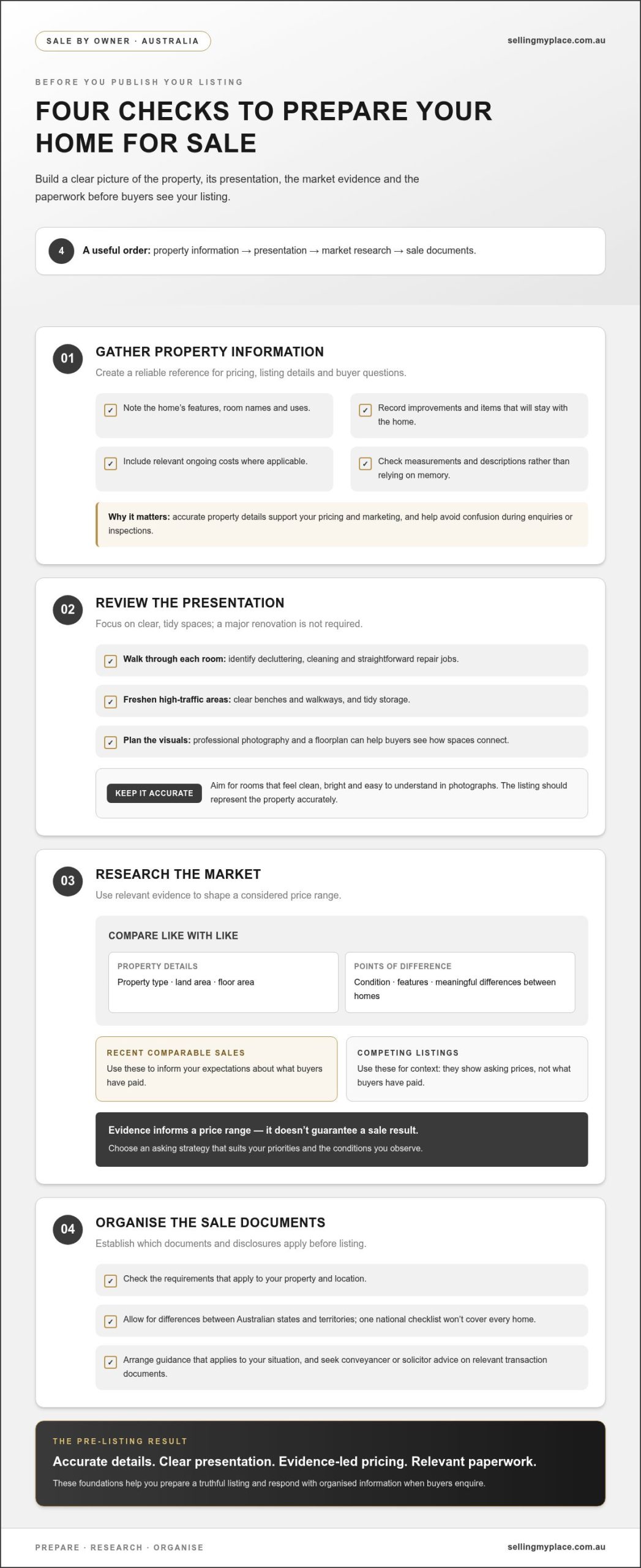
Before publishing a listing, build a clear picture of the property, decide what needs attention and get the relevant sale documents underway. Accurate property information supports pricing and marketing, while organised paperwork helps you respond when a buyer is ready to proceed.
Use this pre-listing sequence:
- Gather property information: note the home’s features, improvements, inclusions and any relevant ongoing costs.
- Review presentation: walk through each room and identify decluttering, cleaning or straightforward repair jobs.
- Research the market: compare relevant sales and competing listings to shape your price expectations.
- Organise documentation: establish which sale documents and disclosures apply to your property and location.
How should you set an asking price?
Start with recent sales of genuinely comparable properties. Consider property type, land and floor area, condition, features and meaningful differences between the homes. Current competing listings provide context, but they show what other owners are asking, not what buyers have paid.
Use the evidence to develop a considered price range, then choose an asking strategy that suits your priorities and the conditions you observe. An asking price is a guide for the market, not a guaranteed sale result. For a closer look at the evidence behind a valuation, see how to determine the market value of a home in Australia in the 2026 valuation guide.
Presentation doesn’t have to mean a major renovation. Clear benches and walkways, tidy storage, freshen high-traffic areas and take care of small visible repairs. Where a home requires substantial remediation or a rapid timeline is required, some owners consider direct sale options through property specialists such as LPS Real Estate Group instead of listing publicly. Otherwise, aim for rooms that feel clean, bright and easy to understand in photographs, using a floorplan and professional photography to show how spaces connect while representing the property accurately.
What should you organise before listing?
Prepare a property fact sheet for your own reference and to keep listing details accurate. Include room names and uses, notable features, improvements, items staying with the home and relevant ongoing costs where applicable. Check measurements and descriptions rather than relying on memory. A mismatch between the listing and the property can create confusion during enquiries or inspections.
Sale documents and disclosure requirements differ across Australian states and territories, so one national checklist won’t cover every home. Arrange guidance that applies to your property and location, and have a conveyancer or solicitor advise on the relevant transaction documents. For a state-level example, the Victorian government guide to selling property outlines information for sellers in Victoria.
Once you’ve gathered the evidence and identified any gaps, pre-sale property advice can help turn your preparation decisions into a practical plan.
Market your own house in Australia: compare exposure, presentation and buyer enquiries
A strong campaign gives prospective buyers clear, accurate information and makes it straightforward to understand the property and arrange an inspection. As you decide how to sell your own house in australia, weigh the reach you want against the time you can commit and the decisions you want to keep in your hands.
With owner-managed promotion, you organise the listing and buyer communication yourself. That gives you direct control, but you’re also responsible for the practical details. Flat-fee marketing support can help with listing presentation, professional photography and floorplans while you retain decisions about the sale. Compare options by identifying what tasks you’ll handle, what support is included and where the listing will be distributed. Exposure varies with distribution, presentation and buyer demand; no listing method can guarantee a particular response.
What makes a property listing clear and compelling?
Lead with accurate details buyers can picture: the layout, natural light, storage, outdoor areas or a useful recent improvement. Avoid sweeping claims such as “perfect for everyone”. Specific, verifiable features give readers a better sense of whether the home suits their needs.
Professional photography and a clear floorplan help buyers understand the home before they inspect it. Check that room descriptions, advertised inclusions and inspection information match the property. If something changes, update the listing promptly so buyers aren’t working from outdated details.
Before publication, compare the listing copy with your fact sheet and walk through the home as if you were seeing it for the first time. Does the description match the photos? Are room uses and inclusions clear? This check can prevent avoidable questions and help set realistic expectations from the first enquiry.
How can you manage inspections and buyer enquiries?
Set up an enquiry log in a spreadsheet or notebook. Record each buyer’s name, contact details, questions, inspection request and follow-up. One reliable record makes conversations easier to track, especially when several people are interested at once.
Respond as promptly as you reasonably can, and keep answers factual. If you’re unsure about a detail, say you’ll clarify it rather than guessing or making a promise. Before inspections, decide how buyers will book, which areas they’ll see and how you’ll record feedback. Consistent communication helps you manage the process and give interested buyers the same information.
With flat-fee marketing support, professional photography and a floorplan can help present the property, while advisory support can assist with the marketing process. You remain responsible for decisions such as how to respond to interest and which offer to consider. This approach suits owners who want practical listing support without handing over control of the sale.
Manage offers and the sale process: practical steps from negotiation to settlement
An offer is more than a number. Before responding, make sure you understand what the buyer is proposing, what they need from you and what happens next if you agree. A consistent process helps you compare offers fairly and keep a clear record of decisions.
For each offer, note the proposed price, any conditions, the requested timing and what the buyer has said about their position. Record counteroffers and changes in writing too. If a point is unclear, ask for it to be set out plainly before you decide. This is a practical part of how to sell your own house in australia while keeping negotiations organised.
How do you compare offers beyond the headline price?
Consider the whole proposal. A higher price may come with conditions or timing that don’t suit your plans, while another offer may appear more straightforward based on the information available. Consider the buyer’s stated position, but don’t treat an expression of interest or assurance as a substitute for written terms.
Keep an offer record with the date received, proposed terms, your response and any agreed changes. Before accepting or signing, have the proposed contract and relevant terms reviewed by a conveyancer or solicitor. For further perspective on weighing proposals and responding thoughtfully, Mastering the Deal: Expert Property Sale Negotiation Tips for Australian Homeowners explores property sale negotiation in more detail.
What happens after you accept an offer?
Acceptance moves the sale into the contract and settlement process. The next steps depend on the contract and the rules and procedures that apply in the state or territory where the property is located. Cooling-off rights, where applicable, and other requirements can differ, so don’t rely on a general national checklist.
A conveyancer or solicitor can advise on the contract, explain its terms and help coordinate the legal steps towards settlement. Track agreed conditions and deadlines, keep communication clear between the relevant parties, and get professional advice on questions before you sign or act on a contractual obligation. This section is general information, not legal advice for a particular transaction.
As you plan how to sell your own house in australia, allow time to understand the paperwork as well as the offer. Your conveyancing professional can guide you on documents and settlement steps relevant to the transaction. Keep copies of correspondence and agreed changes together, and refer to the signed contract for the terms and dates that govern what happens next.
If you’d like support with the sale process while retaining your decisions, explore property sale advisory and marketing support.
Choose the right selling support: keep control without carrying every task yourself
Owner-managed selling gives you direct control over decisions, but it also requires time for the work behind the sale. You don’t have to choose between doing every task alone and handing the whole process to a traditional agent. Selected support can ease particular workloads while you remain responsible for the decisions that matter to you.
Match tasks to your time and confidence. You might be comfortable speaking with buyers but want help preparing marketing materials, or prefer advice on presentation while managing enquiries yourself. Be realistic about the time you can set aside alongside work, family and your next move. That assessment helps you decide how to sell your own house in australia in a way that suits your circumstances.
Which parts of the sale can you manage, and where can support help?
Owners commonly lead decisions such as setting priorities, approving the listing and considering offers. Support can focus on particular areas: pre-sale advice can help you plan preparation, while professional photography and a floorplan can help present the home clearly. Choose which tasks to take on and where guidance or practical help would be useful.
Kincade International Direct Sales provides national flat-fee residential marketing and advisory support, rather than acting as a commission agency. Its services include professional photography, floorplans, global residential listings and an Agent Advisory Service. Listings remain available until sold, with no time limits. This support helps present and promote an owner-led sale while you retain decisions about the property and offers.
For a broader look at listing presentation and seller considerations, Professional Residential Property Listing Services: The Modern Australian Seller’s Guide explores how listing support can fit into a sale plan.
How can you take the next step with confidence?
Before settling on an approach, write down your sale goals, likely timing and preferred level of involvement. Note which jobs you’re happy to manage, where you’d value advice and what you need to understand before committing to a plan. This turns a broad decision into a practical list of support needs.
A flat-fee model suits owners who want marketing and advisory support without agency commission while keeping control of sale decisions. Internationally, similar models are widely established; for example, providers such as Congress Realty offer structured listing packages that let sellers choose between standard listing options and fuller service support. The right arrangement depends on the tasks you want help with and the responsibilities you’re prepared to take on. Start with the parts that feel least clear.
If you’re considering an owner-led sale, discuss your home sale and the support you need to explore an approach that fits your goals.
Set your sale up for a confident next step
Your next move doesn’t need a perfect, fully mapped plan. Start by deciding what matters most: the level of control you want, the time you can give the sale and the support that would make the process manageable. Those priorities give you a practical foundation for choosing how to sell your own house in australia.
For owners who want marketing support while keeping sale decisions in their hands, Kincade International Direct Sales provides national residential property marketing through a flat-fee model with no agency commission. Professional photography, floorplans and Agent Advisory Service support can help with listing presentation and guidance, while you remain in control of decisions about your home.
Before taking the next step, note your preferred timing, the tasks you’d like help with and any questions you want to resolve. Talk through your home sale and explore a flat-fee approach, then decide what fits your priorities.
Frequently Asked Questions
Can I sell my own house in Australia without a real estate agent?
Yes, you can sell your own home without appointing a real estate agent in Australia. If you’re considering how to sell your own house in Australia, plan for the time involved in presenting the property, coordinating enquiries and responding to offers. You can still engage specialist help for legal documents or selected sale tasks. A private sale means you lead the process, not that you have to manage every part without support.
What do I need to do before listing my house for sale?
Before listing, gather records that support what you advertise, such as renovation documents, appliance manuals, warranties and available notices about rates or utilities. Keep digital copies together and note where original documents are held. This makes it easier to answer detailed buyer questions without relying on memory. Confirm the disclosure material required for your state or territory before publishing the listing, as requirements differ across Australia.
How do I work out an asking price for my house in Australia?
Use recent completed sales as your main evidence, then consider current listings as competition rather than proof of value. Compare homes with similar property type, land, layout and condition, and account for differences such as renovations or parking. Your asking price is a marketing decision informed by that evidence, not a promise of the final sale price. If buyer feedback consistently suggests a mismatch, review your approach.
Do I need a solicitor or conveyancer to sell my house?
Plan to use a conveyancer or solicitor to prepare or advise on the sale contract and related legal documents. Documents and processes vary between states and territories, so seek guidance that applies to your property and transaction. A legal professional can explain the terms before you sign and help coordinate the legal steps towards settlement. This FAQ is general information, not legal advice for your circumstances.
Can I sell my house privately and still get professional marketing support?
Yes. Selling privately is compatible with getting help to prepare and promote your listing while you retain decisions about the sale. Kincade International Direct Sales provides flat-fee residential marketing and advisory support nationally in Australia. For major property portals, sellers generally need to use a licensed third-party platform to arrange a listing. Clarify how promotion is handled so you understand where your property will be advertised.
What happens after I accept an offer on my house?
After accepting an offer, have your conveyancer or solicitor confirm the next steps under the proposed contract and the process in your state or territory. They can clarify when the agreement becomes binding, explain relevant conditions and help coordinate settlement communication. Keep a copy of the written terms and note any dates or obligations. Don’t assume an informal conversation settles every contractual detail.
How long does it take to sell a house privately in Australia?
There’s no fixed timeframe for a private sale. The time to find a buyer can depend on buyer demand, your asking strategy, the property, and how it’s presented and promoted. The time from an accepted offer to settlement is a separate part of the process, shaped by the contract, conditions and relevant local procedures. When planning your move, allow flexibility rather than relying on a single expected date.