
What if the easiest way to avoid a settlement-day surprise is to start preparing before the buyer arrives? A final inspection can bring small details into sharp focus, from the property’s condition to the items listed in the contract. This final inspection checklist for sellers helps you get organised without turning the last days of your sale into a scramble.
It’s understandable to wonder what the buyer may check, whether cleaning or a minor repair could lead to disagreement, and which keys, remotes or manuals need to be handed over. The final inspection is generally an opportunity for the buyer to check the property against its condition at the time of sale, allowing for fair wear and tear, and to confirm agreed inclusions and any required work.
Use this practical Australian checklist to prepare the home, review inclusions and plan a clear handover. We’ll cover the rooms and features to check, the small jobs worth completing before inspection, and the details to gather for settlement, so you can approach handover with more confidence and fewer avoidable surprises.
Key Takeaways
- Use a final inspection checklist for sellers to work through the property room by room, rather than relying on a rushed final glance.
- Compare items that will remain with the sale contract and any written agreements so inclusions are clear.
- Separate routine presentation issues from damage, missing items or agreed repairs that may need follow-up.
- Plan access, inspection-day preparation and handover details in advance, including keys, remotes and manuals.
- For questions about contract terms or settlement arrangements, follow your conveyancer’s advice.
Final inspection checklist for sellers: what the buyer is checking
Before settlement, the buyer is generally given an opportunity to revisit the property and check that its condition is consistent with the sale agreement, allowing for fair wear and tear where applicable. For sellers, the contract and any written agreements are the practical starting point: they clarify what stays, what must be completed and what the buyer may reasonably expect to see at handover.
There isn’t one inspection scope that applies to every Australian sale. Timing, access arrangements and expectations can vary according to the contract and the state or territory. Use your sale documents as the guide, and direct questions about contract meaning or settlement arrangements to your conveyancer.
What does a buyer usually look at during a final inspection?
A buyer may look over the property’s visible condition, check agreed fixtures and fittings, and see that the home and relevant areas are accessible. They may compare what they see with the property’s earlier presentation, the contract and any written agreement about inclusions or repairs. For example, if a refrigerator is listed as staying, they may check that it remains at the property. If a repair was agreed, they may look for a visible sign it has been completed.
This visit isn’t automatically a fresh building inspection or a comprehensive assessment of the property’s structure and systems. A general Home inspection can involve a broader evaluation, while the final inspection is usually focused on checking the agreed condition and inclusions before settlement. The exact scope still depends on the relevant sale documents and arrangements.
As you prepare, keep these common areas in mind. The contract determines what applies to your sale:
- Visible changes or damage since the buyer last viewed the property.
- Fixtures, fittings and other items identified as included in the sale.
- Any agreed repair or other specific written commitment.
- Access to the home and any areas the buyer is permitted to inspect.
What is the seller’s role before settlement?
Your role is to prepare the property in line with the agreement and make the handover practical. That can mean checking each room, ensuring agreed inclusions are still in place, arranging completion of any agreed work and gathering keys or access devices. Organise inspection access through the appropriate sale contacts, rather than making assumptions about timing or entry.
A seller’s preparation role is to present the agreed property, preserve its inclusions and organise a clear handover.
Keep practical tasks separate from contractual interpretation. Note what has been completed, retain relevant receipts or messages, and take clear photos if you need a record of an item or repair. Whether a particular condition or item meets the contract is a contractual question, not something to settle by guesswork on inspection day. If there’s uncertainty, pass the details to your conveyancer for advice.
A useful final inspection checklist for sellers isn’t about promising a flawless home. It’s about knowing what the sale documents require, checking the details that matter and making the transition to settlement more orderly for everyone involved.
Before the final inspection: prepare the home and check agreed inclusions
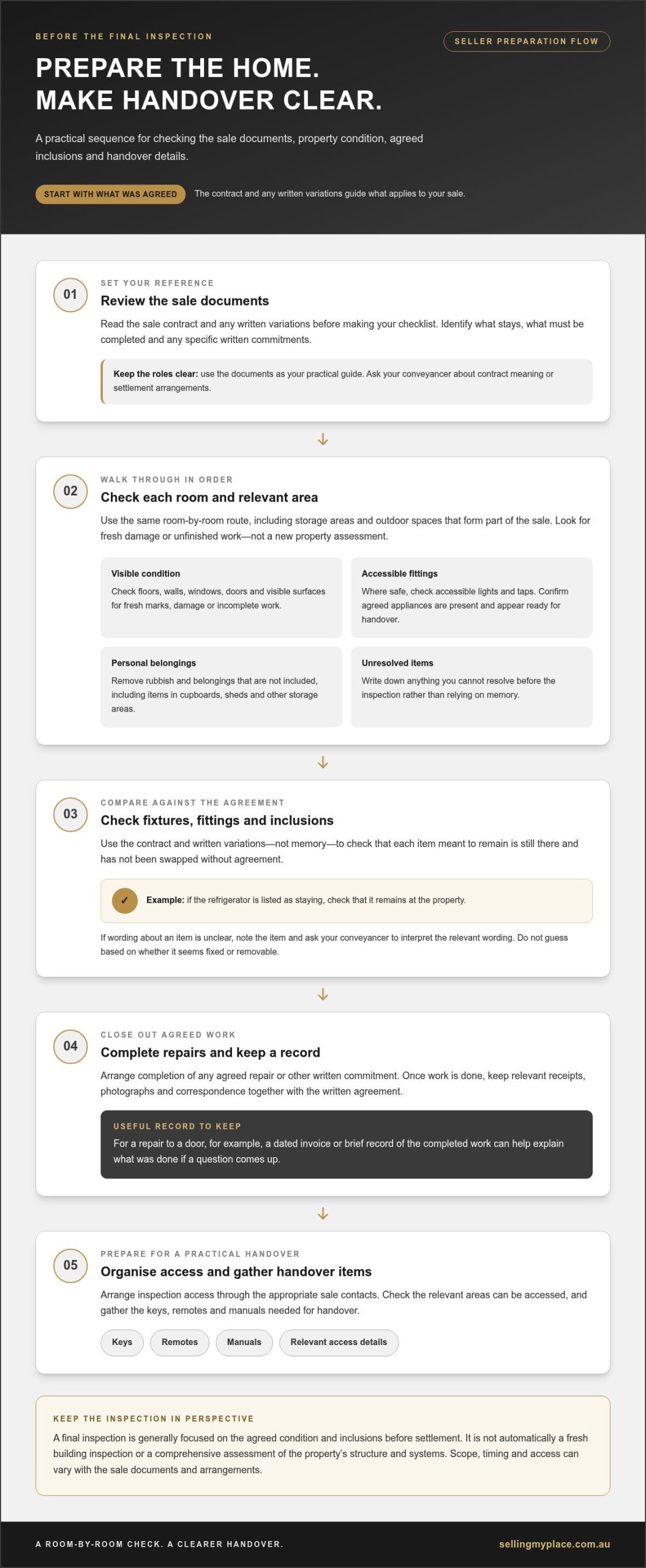
A steady preparation routine beats a rushed lap of the house. Start with the sale contract and any written variations, then make a room-by-room list of what to check, remove or leave behind. This keeps practical jobs tied to what was actually agreed, rather than assumptions about what a buyer might expect. If you’re managing the sale yourself, a clear process such as this guide to selling your own home can help you organise the wider steps, too.
Room-by-room property condition check
Walk through each room in the same order, including storage areas and outdoor spaces that form part of the sale. Look for new damage or unfinished work, and check accessible fittings only where it’s appropriate and safe. The aim is practical: spot anything that needs attention, not to create a new property assessment.
- Check floors, walls, windows, doors and visible surfaces for fresh marks, damage or incomplete work.
- Where safe, check accessible lights and taps, and confirm agreed appliances are present and appear ready for handover.
- Remove rubbish and personal belongings that aren’t included, including items in cupboards, sheds or other storage areas.
- Make a note of anything you can’t resolve before the inspection, rather than relying on memory.
Fixtures, fittings and agreed inclusions
Use the contract and written variations as your reference for items meant to remain. Check each one is still there and hasn’t been swapped for a different item without agreement. A fixture can be easy to overlook during packing, especially if it’s something you use every day, so compare the documents against each room rather than relying on memory.
If wording about an item is unclear, don’t guess based on whether it seems fixed in place or removable. Note the item and ask your conveyancer to interpret the relevant wording. That keeps preparation moving while leaving contractual meaning to the right adviser.
Agreed repairs deserve the same orderly approach. Once work is completed, keep any relevant receipts, photographs and correspondence together with the written agreement. For instance, if you arranged a repair to a door, a dated invoice or a brief record of the completed work can help explain what was done if a question comes up. Keep the records easy to find, but don’t assume they change the terms of the sale.
A useful final inspection checklist for sellers can be as simple as a room-by-room list with three columns: check, remove and leave. Mark off each task as you go, then compare the property against the inclusion list. If you’d value informed guidance as you organise the sale, get property sale advice tailored to your next steps.
Final inspection concerns: condition, repairs and what to document
A buyer raising a concern at the final inspection doesn’t automatically change the sale agreement. First, identify what they’ve noticed and whether it relates to the property’s agreed condition, an item included in the sale or a repair you agreed to complete. A dusty shelf or minor presentation issue is different from new damage, a missing inclusion or work that appears unfinished.
That distinction matters, but don’t decide on the spot that an issue is insignificant or that you must offer a particular remedy. Any obligation or possible response depends on the contract, the facts and the relevant state or territory. Keep communication calm and pass the details to your conveyancer for guidance before agreeing to a change or making a commitment.
How to respond if the buyer raises a concern
Listen first. Ask which room, item or agreed repair they’re referring to, and make a note of the specific concern. Then compare it with the sale documents and any written repair agreement. A clear description, such as “the laundry tap is leaking” or “the listed outdoor table isn’t present”, is more useful than a general comment that something is wrong.
Keep your reply factual and measured. You might acknowledge the concern and say you’ll review the relevant documents and seek advice. Avoid promising to repair, replace or pay for anything until you understand what was agreed and have received appropriate conveyancer guidance. If the issue is unclear, request the details in writing so everyone is responding to the same point.
What evidence should sellers keep?
Make a simple record while the details are fresh. Save dated photos of the relevant area, copies of repair records or receipts, and messages or written agreements about the item. Keep them together in one folder, with filenames or notes that identify the room and date. These records won’t determine what the contract means, but they can help your conveyancer understand the sequence of events.
A compact comparison can help organise the facts before you follow up:
Observed issue: A mark on a wall, a missing agreed item or a repair the buyer says remains outstanding.
Relevant agreement: The contract clause, inclusion list or written repair arrangement that appears relevant.
Follow-up action: Locate supporting photos or correspondence, record what you know and refer the question to your conveyancer.
Use your final inspection checklist for sellers to note the concern without treating it as a settled dispute. If it’s routine presentation, record it accurately. If it involves damage, an inclusion or agreed work, preserve the evidence and seek advice promptly. This keeps the discussion grounded in the documents and leaves any decision about contractual remedies to the appropriate process.
Inspection-day checklist for sellers: access, presentation and handover
A simple run sheet can make inspection day feel far less rushed. Use this final inspection checklist for sellers in order: confirm access, prepare the property, have handover items ready, then record any follow-up. Keep arrangements consistent with the sale documents and coordinate access through the relevant sale contacts. If questions develop into a broader discussion about sale terms, these property sale negotiation tips offer useful context.
The day before: final readiness checks
Confirm the inspection time and access plan with the relevant sale contacts, rather than assuming the buyer can enter independently. Finish any agreed cleaning, remove belongings that aren’t included and leave agreed items where they belong. Gather handover materials in one place so keys, remotes and manuals don’t get packed or misplaced in the final rush.
- Check the agreed time, access method and any instructions for gates, alarms or shared entry points.
- Do a final tidy and remove rubbish or personal items that aren’t part of the sale.
- Keep agreed inclusions in place and collect keys, garage remotes, access devices and appliance manuals.
- Put relevant handover notes together, such as which key opens a particular door.
At inspection time: keep access straightforward
Follow the access plan arranged through the sale contacts. Make sure the buyer can reach the areas they’re entitled to inspect, including any relevant storage or outdoor spaces, and avoid leaving access devices where they could be misplaced. If you’re present, be courteous and allow the inspection to proceed without hovering. If you’re not, make sure the agreed arrangements are clear.
Keep your notes nearby, but let the buyer raise any questions through the established contact. If an issue needs a response, record the specific item and follow up calmly rather than debating the contract at the doorway.
After the inspection: record and follow up
Once the inspection is finished, note any concerns raised, who received them and who will follow up. A short written summary helps keep details clear, especially if several items need attention. Keep communication courteous and timely, and use writing where practical so the request and response are easy to refer back to.
- Record the exact room, item or work mentioned, without adding assumptions.
- Save relevant messages and pass contract questions or proposed changes to your conveyancer promptly.
- Confirm who is handling each follow-up and keep a copy of any response or agreed next step.
Inspection day is one part of the wider handover. For support organising your property sale and the next steps, get advice about your sale.
From final inspection to settlement: get steady support for the next step
The inspection is a milestone, not the finish line. A clear close-out sequence helps you move from any follow-up questions to a practical handover, while keeping settlement decisions with the people responsible for advising on your contract. Your final inspection checklist for sellers can help you keep track of the last details, but it doesn’t replace guidance tailored to your sale documents.
A simple seller close-out sequence
Work through the remaining tasks in order, and keep a written record as you go. This gives you a clear reference if a question arises and helps prevent small handover details from getting lost among settlement arrangements.
- Confirm inspection follow-up. Record any concern raised, the response and any action agreed in writing. If the issue could affect your obligations, refer it to your conveyancer before making a commitment.
- Check the handover plan. Confirm how and when keys, remotes and other access devices will be provided, and make sure agreed items are accounted for.
- Follow settlement advice. Ask your conveyancer about contract interpretation, required steps and timing for your transaction. These details can depend on the contract and the relevant jurisdiction, so avoid relying on general assumptions.
Keep the roles clear. Your conveyancer advises on the contract and settlement arrangements; practical preparation means following that advice, keeping agreed handover details organised and completing any confirmed actions. If something changes or an issue remains unresolved, share the relevant written record promptly rather than trying to settle a contractual question informally.
When broader selling advice can help
Questions at the end of a sale can also highlight where informed support across the wider process is useful. Kincade International Direct Sales offers pre-sale consulting to help owners understand the steps involved in selling and approach decisions with greater clarity. Its conveyance advice can provide guidance through a complex sale, alongside the role of your conveyancer. The residential property listing services guide offers broader context on organising a sale, from preparing the listing to managing the process through to handover.
Take the next step steadily: resolve outstanding questions through the appropriate contacts, confirm the handover plan and follow your conveyancer’s settlement guidance. For owners who are also preparing for their next move, specialist representation from Robert Caicedo Real Estate can help navigate residential transactions with clarity and confidence. With those details in order, the final stretch can feel more manageable and less like a scramble.
Speak with the team about selling support and get informed guidance for the wider sale process.
Move towards settlement with confidence
A well-used final inspection checklist for sellers can do more than help you prepare for one appointment. It gives you a clear starting point for the last stage of your sale, so you can make decisions calmly and keep moving towards the next chapter. If your next move involves financing another property, The Home Loan Partners can provide tailored guidance through the mortgage process. Let your sale documents and conveyancer guide settlement-specific questions, and focus on the practical handover.
Kincade International Direct Sales offers commission-free property marketing and advisory services for residential owners, with professional photography and floorplans as part of its offering. Its flat-fee approach means you can use listing and advisory support without paying a traditional agency commission.
Talk with the team about your property sale to discuss commission-free marketing and advisory support.
Frequently Asked Questions
Is the final inspection the same as a building inspection?
No. A buyer’s final inspection is generally a pre-settlement check of the property against the sale agreement, rather than a new, detailed assessment of its structure or building systems. A building inspection has a different purpose and scope. If the buyer raises a concern about a defect, avoid treating the final inspection as a technical report; note the concern and refer contract-related questions to your conveyancer.
Can a seller attend the buyer’s final inspection?
Possibly, but whether you attend depends on the arrangements made for the sale and any relevant contract terms. Coordinate access through the appropriate sale contacts rather than arriving unexpectedly or assuming you need to be present. If you do attend, give the buyer room to look around and keep any discussion calm and factual. This can help avoid turning a practical visit into a pressured negotiation.
What happens if the buyer finds damage at the final inspection?
Damage may prompt a request for clarification or action, but the outcome depends on when it occurred and what the contract requires. For example, a new crack or a broken fitting may need to be considered differently from a mark that was already visible when the buyer agreed to purchase. Record the location and details, avoid admitting liability or promising a remedy on the spot, and promptly seek your conveyancer’s advice.
Do sellers need to leave appliances and manuals at the property?
Leave appliances that are identified as inclusions in the sale documents, and don’t remove or swap them without agreement. Manuals aren’t automatically an inclusion in every sale, so check the contract and any written arrangements. If you have a manual for an appliance staying behind, placing it with the appliance is a considerate handover touch. Keep personal documents or account details out of manuals and paperwork you leave.
Should utilities remain connected until settlement?
There isn’t one rule that suits every property or transaction. If utilities are disconnected too early, it may affect access to services before settlement; leaving accounts active also has practical and billing implications. Check your contract and discuss timing with your conveyancer, then arrange any provider notifications to match your circumstances. If the property is vacant, clarify who is responsible for access and services during the period before handover.
Can a buyer request repairs after the final inspection?
A buyer can raise a concern or ask for a repair, but a request doesn’t automatically change the contract. Whether you’re required to act depends on the agreement, any relevant written promises and the circumstances of the issue. Don’t agree to a repair, payment or change to settlement arrangements before getting advice. Send the request and supporting details to your conveyancer so you can understand your position and available next steps.
When should sellers complete the final inspection checklist?
Start your final inspection checklist for sellers early enough to deal with agreed work and locate inclusions, then revisit it close to the inspection. The buyer’s visit is commonly arranged in the lead-up to settlement, but the contract and local arrangements determine timing. A practical approach is to do an initial pass while packing, then a final check the day before access, leaving time to follow up any overlooked handover detail.