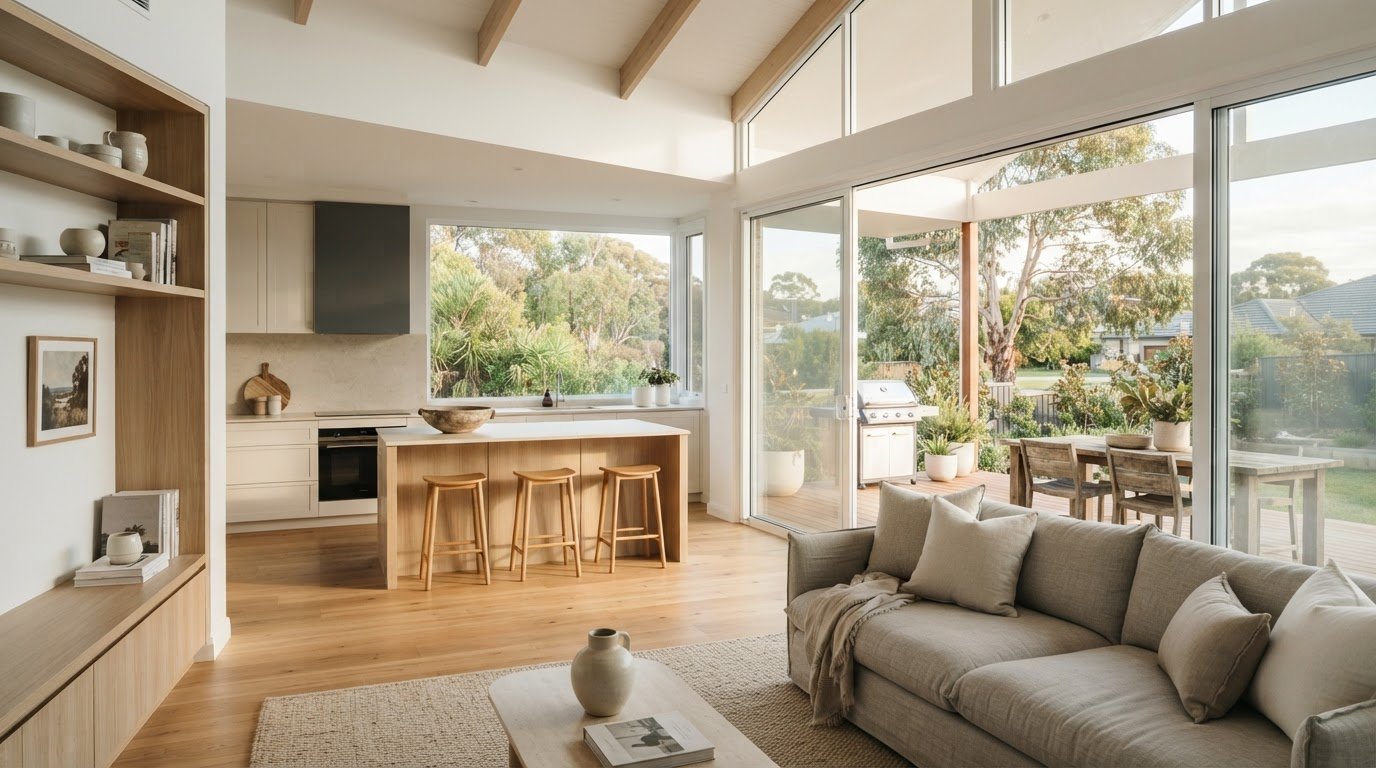
What makes a buyer pause on one listing and scroll past another? Learning how to write a property description that sells isn’t about piling on superlatives. It’s about helping the right buyer picture daily life in the home and giving them a clear, honest sense of what they’ll find at an inspection.
It can be tricky to choose a distinctive angle, decide which details deserve space and keep the language appealing without overpromising. The strongest descriptions make a home’s real advantages easy to understand, whether that’s a practical layout, useful storage or a sunlit living area.
This guide shows you how to turn verified details into a concise, buyer-focused listing that’s easy to scan online. You’ll learn what to prioritise, how to replace tired clichés and why accuracy matters across both words and images. In Australia, property advertising must not create a misleading impression, so compelling copy should also be truthful.
Key Takeaways
- Learn how to write a property description that sells by connecting verified features with the lifestyle they can support.
- Prepare before drafting: consider who the home’s features may suit, gather accurate property facts and choose the details that matter most.
- Use a flexible structure to lead with the home’s strongest appeal, then add useful specifics and a clear inspection invitation.
- Replace clichés and inflated claims with precise, easy-to-scan language.
- Bring the description, professional photography and listing details together so they present a consistent, accurate picture of the property.
Why a well-written property description matters to Australian buyers
A property description connects confirmed features to the lifestyle they may support. It helps buyers understand not just what a home contains, but how its layout and practical details could work for everyday life. The aim is to help suitable buyers decide whether the property deserves a closer look.
Photographs show what rooms and outdoor spaces look like; the description adds context. Explain how living areas connect, where storage is located or what a flexible room could be used for, as long as those details are accurate. Together, words and images help buyers build a fuller picture before arranging an inspection. This is one part of the wider real estate business, where marketing communicates a property’s features to potential buyers.
An effective property description is specific, accurate and centred on benefits that matter to buyers. Relevant detail is more persuasive than hype. Calling a home “perfect” or “unmissable” doesn’t explain what makes it worth seeing. If it’s accurate, saying the kitchen opens onto a covered outdoor area gives buyers something concrete to consider and sets a realistic expectation.
What buyers need from a property listing description
Online readers are deciding whether a home fits their needs before making time for an inspection. Make the essentials easy to understand: the confirmed features, how the rooms are arranged and what practical advantages follow from that layout. A clear description helps buyers assess whether the home offers space for working from home, a separate area for guests or an outdoor setting they’ll use. For investors evaluating rental potential, transparent details about layout and amenities also make it easier to judge suitability for executive or leisure stays through short-term letting specialists like Home Vacay.
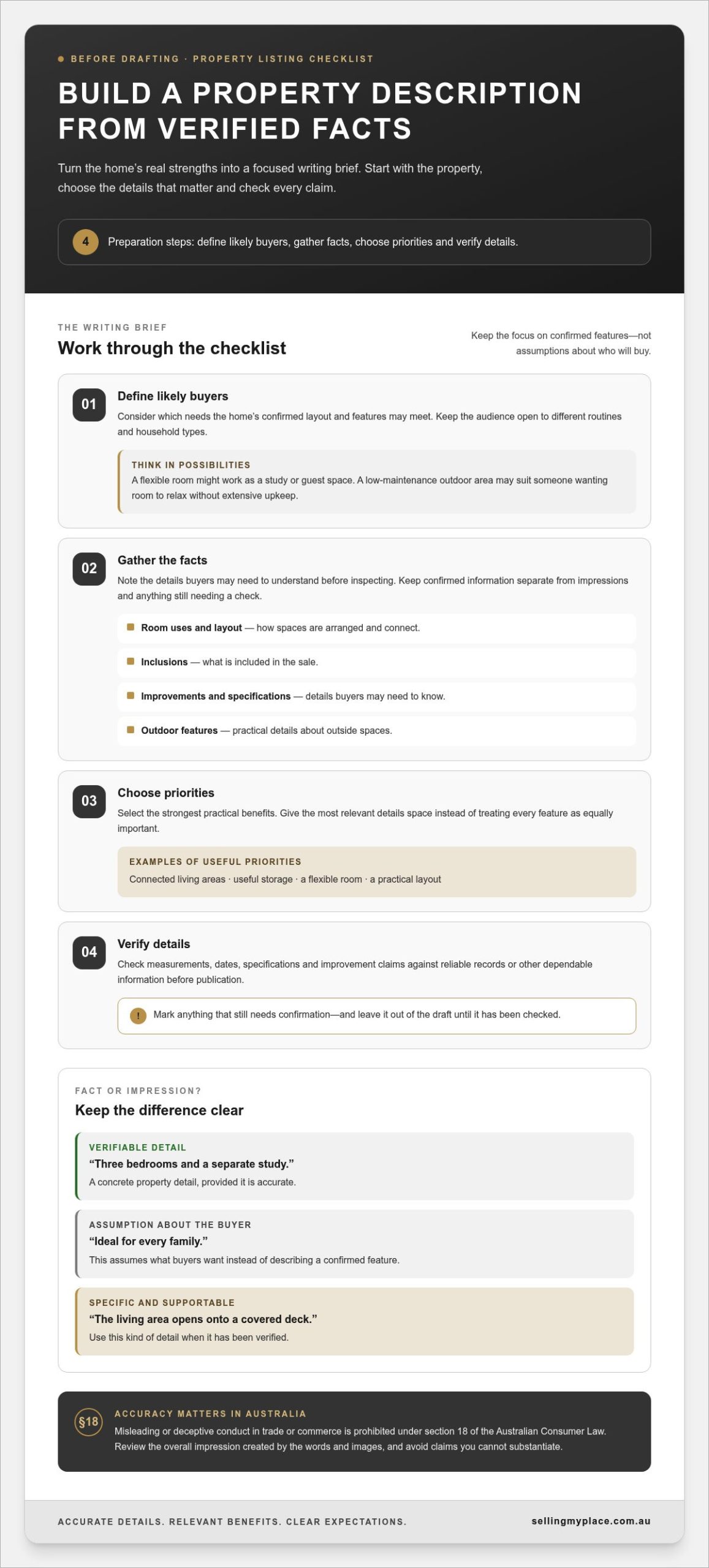
Keep facts distinct from promotional phrasing. “Three bedrooms and a separate study” is verifiable; “ideal for every family” assumes what buyers want. Give readers enough context to decide whether to explore further, without suggesting that one type of buyer will suit every home.
Why accuracy makes persuasive copy more convincing
Specific, supportable details give buyers a sound basis for interest and help avoid a mismatch between the listing and the inspection. If a description promises generous storage, for instance, buyers should be able to identify the storage when they visit. Vague praise can create expectations the property doesn’t meet.
In Australia, misleading or deceptive conduct in trade or commerce is prohibited under section 18 of the Australian Consumer Law. Review the overall impression created by the words and images, not just whether each sentence sounds appealing. Avoid unsupported superlatives, assumptions about how buyers will feel and claims you can’t substantiate. A truthful description won’t promise a sale, but it can help attract interest from people whose needs align with the property.
Before drafting, identify the right buyer and gather the property facts
Preparation makes the writing clearer and the final listing more dependable. Before reaching for a catchy opening, consider who the home’s features may suit, collect relevant details, choose what deserves emphasis and verify every claim. This turns scattered notes into a useful brief, so the description focuses on the property rather than guesswork.
Build a buyer profile from the home’s real strengths
Start with the home, not a stereotype of its future owner. A flexible room might work as a study or guest space; a low-maintenance outdoor area may appeal to someone who wants room to relax without extensive upkeep. These are possibilities, not promises. Prioritise relevant facts over trying to appeal to everyone, and connect each genuine feature to a practical benefit without assuming who will buy.
Use this preparation process to move from broad impressions to a focused writing brief:
- Define likely buyers. Consider which needs the home’s confirmed layout and features may meet. Keep the audience open to different routines and household types.
- Gather the facts. Note room uses, inclusions, improvements and other features buyers may need to understand before inspecting.
- Choose priorities. Select the strongest practical benefits, such as connected living areas or useful storage, rather than giving every detail equal weight.
- Verify details. Check measurements, dates, specifications and improvement claims against reliable records or other dependable information before publication.
Create a verified fact sheet before you write
Keep confirmed information separate from personal impressions and details that still need checking. “The living area opens onto a covered deck” is factual if verified; “the perfect spot for entertaining” is an opinion about how a buyer may use it. For clear, reader-focused wording, the Australian Government Writing Handbook offers a useful reference. This distinction keeps the copy engaging without blurring fact and promotion.
Group details on a fact sheet under headings such as layout, inclusions, improvements and outdoor features. Mark anything that needs confirmation and leave it out of the draft until checked. Prioritise facts that help buyers understand the home and decide whether an inspection makes sense. A room’s actual use, what’s included in the sale and verified specifications are usually more useful than decorative adjectives.
This groundwork is the practical starting point for how to write a property description that sells: choose a relevant audience, build the story from accurate details and edit out assumptions. If you’re preparing your sale, explore pre-sale property support as part of planning your listing.
How to structure a property description buyers can scan
A useful listing guides readers from first impression to practical detail without making them search for the essentials. Try this sequence: opening hook, strongest features, useful specifics, then a simple invitation to inspect or enquire. Treat it as a framework, not a formula. The order depends on the home’s verified strengths, and the aim is to make important information easy to absorb on a phone screen.
Short paragraphs give readers space between ideas. Give each sentence a clear job: introduce a feature, explain why it may matter or clarify a relevant detail. Don’t cram every inclusion into one long paragraph. Buyers have different priorities, so broad Australian housing market statistics may provide context, but the description should stay focused on this particular property.
Write an opening that earns the next few seconds
Lead with a distinctive, verifiable feature or combination of features, rather than a generic claim. If a home has a separate studio and a private courtyard, for example, those confirmed details give readers a reason to continue. The opening should orient them to the property, not repeat the listing headline or rely on phrases such as “something special”. If you use a broad claim, show what supports it in the next sentence.
Turn features into clear, specific benefits
Pair each selected feature with a practical use, while letting buyers decide what suits them. A built-in desk nook may offer a place to work or study; describe it plainly rather than promising a better work-life balance. Use sensory language only when it reflects what buyers can genuinely experience. Follow with useful details and a calm invitation to arrange an inspection or make an enquiry.
Here’s a template, not a description of a real property. Replace each prompt with details you’ve verified:
- Opening: Introduce the home through its most distinctive confirmed feature.
- Key appeal: Describe the strongest practical features and how they may be useful.
- Specifics: Add relevant information about layout, inclusions or other confirmed details.
- Next step: Invite interested buyers to arrange an inspection or enquire.
Keep the structure adaptable. A home with a standout layout might lead with how its rooms connect; another may be better introduced through a confirmed feature that sets it apart. Put the most buyer-relevant information early, then add context rather than repeating the same selling point in different words. That’s the practical heart of how to write a property description that sells: make each line clear, useful and grounded in the home itself.
Edit property description wording for clarity, accuracy and appeal
A first draft captures what you want buyers to notice. Editing helps you decide what they need to know. Read each sentence with a buyer’s questions in mind: does it add a verified detail, explain a practical benefit or help someone understand the home? If it does none of those things, trim it.
Replace clichés and vague adjectives with evidence
Words such as “stunning”, “spacious” and “perfect” can sound positive, but without supporting detail they leave buyers guessing. Replace them with an observable feature: instead of “a spacious kitchen”, describe its confirmed bench space, storage or connection to another room. Use comparisons only when you can explain the basis and support them fairly. Specific wording helps readers picture the home without asking them to take your praise on trust.
Use this paired checklist as you revise:
- Keep: Verifiable details, clear descriptions of layout and inclusions, and benefits that follow naturally from those facts.
- Cut: Repeated points, familiar clichés, strings of similar adjectives and inflated claims the property’s features don’t support.
For example, if two sentences both say the living area is “light-filled” and “bright”, keep the stronger one and use the space for a different useful detail. A precise fact gives buyers more to consider than another layer of praise. Likewise, instead of saying “perfect for entertaining”, explain what supports that impression, such as a confirmed connection between the dining area and an outdoor space, or leave the claim out.
Comparisons need care, too. Say a home is “larger than others nearby” only if you have a sound, like-for-like basis for the claim. Otherwise, focus on the property’s own measurable or observable features. That keeps the description persuasive without stretching what it promises.
If you’re refining your listing alongside a broader sale plan, explore property listing support.
Run a final accuracy and readability check
Before publishing, compare every factual statement with the property information and listing details. Check that room names, inclusions, measurements, dates and specifications are consistent, and that the wording doesn’t imply a feature the home doesn’t have. Then review spelling, punctuation, tense and paragraph breaks. Short blocks of text are easier to follow on a phone.
Read the draft aloud. You’ll often hear repeated ideas, awkward phrases or sentences that try to do too much. A trusted reader can flag anything unclear, but keep your own perspective in the final copy. A useful edit sharpens the message without flattening your voice.
This final pass is central to how to write a property description that sells: retain what’s distinctive and supportable, remove what’s vague, and make sure the finished words match the home buyers will see.
Publish your property description with clear photos and listing details
Before the listing goes live, review the full presentation as a buyer would encounter it. The description, photographs and listing details should tell one consistent story: the words explain what matters, the photos show the home, and the listing information helps buyers understand what’s being offered. A polished description can’t do its job if key details are hard to find or images create a different impression.
Make the description and listing presentation work together
Compare each claim in the copy with what the photographs show. If you describe a room as a study, make sure the wording doesn’t imply it’s a separate bedroom. If the description highlights an outdoor area, check that the images give buyers a clear view of the space. Each element should support an accurate overall picture.
Professional photography is included in every Kincade International Direct Sales package. Use the copy to add context rather than narrate what’s already obvious in a photograph. A photo may show a dining area, for instance, while a concise sentence can explain how it connects to another part of the home, if that layout detail is accurate.
Before publishing, check that essential listing details are complete and consistent with the description. Keep room uses, inclusions and other relevant facts easy to locate. Don’t bury a key qualification in promotional wording or repeat the same feature in the description, headline and listing fields when it’s already clear. Buyers should be able to scan the page and understand the home without piecing together conflicting details.
Manage enquiries after the listing goes live
Good presentation is only one part of publishing. Sellers also need a practical way to follow up on interest once the listing is online. Kincade International Direct Sales (KIDS) is a licensed intermediary for listing purposes, not a real estate agent. Every package includes a listing on major property portals such as Homely and Soho, enquiry forwarding by SMS and email, 24/7 seller dashboard access and a Market Valuation Report.
Use the dashboard and forwarded enquiries to keep track of buyer interest. Note any questions that point to unclear listing details, and make sure your responses align with the information shown in the listing. If a detail needs correcting, update the relevant listing information so the copy and other materials continue to match. KIDS listings remain active until sold or withdrawn, or for two years from the commencement date, whichever occurs first.
The packages are fixed-fee and commission-free: Classic is $799 ex GST, Signature is $999 ex GST, and Prestige is $1,999 ex GST. Signature and Prestige include a dedicated property website and URL; Prestige also includes 15-20 professional photographs, a floorplan redraw, a Facebook and Instagram ad campaign, 50 premium A4 brochures, a dedicated specialist and a James Edition listing. All listed package features are included in the flat fee. KIDS does not guarantee a sale or sale price. Sellers remain in control of their listing and enquiries, while KIDS provides the listing platform and included marketing features.
Taking care with how to write a property description that sells also means checking how it works in the live listing, not just on the page where you drafted it. For support with listing your property and managing buyer enquiries, explore listing support with KIDS.
Take the next step with confidence
Your property description is part of the way you introduce a home and invite the right people to take a closer look. Before publishing, ask whether buyers can understand the home’s appeal, find the details that matter and see a clear path to enquire.
That’s the heart of how to write a property description that sells. It’s not about finding the loudest phrase or promising a particular result. It’s about presenting a home with care, so interested buyers can make an informed choice about whether it could suit them. A thoughtful listing gives you a clear starting point for the conversations that follow.
Ready to prepare your listing? Explore listing support with KIDS and take the next step with a clear picture of what your home has to offer.
Frequently Asked Questions
How long should a property description be?
There’s no single ideal length. Include enough detail to help buyers understand the home without making them sift through unnecessary copy. Remove sentences that repeat a feature or add no new information. Preview the listing in its intended format, as text may appear differently on a phone, and check the platform’s current field limits before you publish.
Should I write a property description in first person or third person?
Either voice can work, provided it stays natural and consistent. First person can add a personal touch, such as explaining why an owner values a particular feature. Third person often keeps attention on the property itself. Avoid turning personal opinion into a claim about buyers: “we love the garden” is clearly an owner’s view, while “every buyer will love the garden” assumes a reaction you can’t guarantee.
Can I use emotional language in a property description?
Yes, as long as the feeling comes from real features rather than replacing useful information. You might describe morning light in a room if that reflects the home’s actual conditions, then give readers a concrete detail about the room or its layout. Keep emotional phrasing measured, and don’t promise buyers will feel at home or enjoy a particular lifestyle. The property’s facts should carry the description.
What words should I avoid in a property description?
Be wary of sweeping superlatives and familiar phrases that could fit almost any listing. “Perfect”, “stunning” and “one of a kind” tell buyers little unless you explain the specific, supportable feature behind the claim. Remove language that implies a room or inclusion has a use or status it doesn’t have. Replacing broad praise with a precise description gives readers something tangible to assess.
Should I include the property’s flaws in the description?
Describe the home honestly and don’t use positive wording to disguise a concern or create a false impression. How to handle a defect or other potentially important information can depend on the circumstances and applicable requirements, so marketing copy isn’t a substitute for legal guidance. For questions about disclosure obligations or sale documents, seek advice from a qualified conveyancer or solicitor. KIDS does not provide legal advice, contracts or conveyancing services.
Can I update a property description after the listing goes live?
Whether and how you can edit a live listing depends on the platform and listing arrangement. If you revise the copy, check that the change matches the property information, photographs and other listing fields, then review the published version to make sure it displays as intended. KIDS sellers can use the 24/7 seller dashboard to manage their listing and buyer enquiries as details or communication needs change.