
What if selling your own property gave you more say over the process without leaving you to work everything out alone? The benefits of selling your own property can include greater control over pricing, inspections and buyer conversations, as well as the opportunity to avoid agency commission. Those advantages need to be weighed against the time and responsibility involved.
It’s understandable to wonder whether potential savings are worth the extra work. Marketing, buyer enquiries, offers and sale paperwork all need attention. Selling independently doesn’t have to mean managing every detail without help: some owners use flat-fee marketing and advisory services while keeping control of key decisions.
This article looks at the financial, practical and personal benefits, alongside the challenges to consider before choosing your approach. You’ll learn where greater control may help, which tasks you may need to take on, and what to ask when deciding whether to sell entirely on your own or seek professional support.
Key Takeaways
- The benefits of selling your own property can include fee flexibility and a more hands-on role, but the right balance depends on your priorities.
- Compare the full cost of each approach, including marketing and professional support, rather than focusing on commission alone.
- Consider how much time you can set aside and where you’d want expert advice, particularly with offers and paperwork.
- Before choosing a service, check its written terms, what’s included and which responsibilities remain yours.
- Use your priorities, confidence and available support to decide whether to sell independently or take a supported approach.
What are the benefits of selling your own property in Australia?
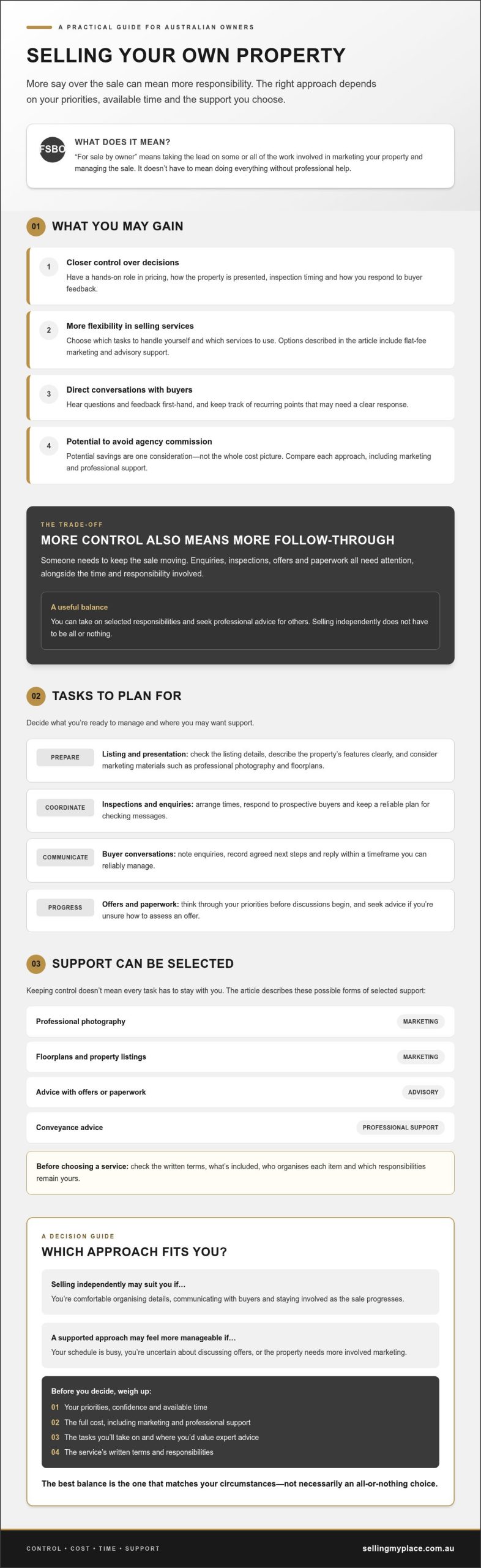
Selling your own property means taking the lead on some or all of the work involved in marketing it and managing the sale. Often described as For sale by owner (FSBO), this approach can give you closer control over decisions, more flexibility in how you pay for selling services and direct conversations with prospective buyers.
The benefits of selling your own property depend on your priorities, the property, market conditions and the support you choose. “Selling yourself” doesn’t have to mean doing everything without professional help. You could manage buyer enquiries yourself while using professional photography, floorplans, property listings or conveyance advice. Kincade International Direct Sales offers flat-fee property marketing and advisory packages, giving owners the option to stay involved while accessing selected services.
How does selling your own property differ from using a traditional agent?
The main difference is who is responsible for coordinating each part of the sale. If you sell independently, you may organise marketing, arrange inspections, respond to enquiries and lead offer discussions yourself. With an agent, some or all of these tasks may be handled on your behalf, depending on the agency’s service and your agreement.
There’s no single standard arrangement. Some owners choose a traditional agency, while others select specific marketing or advisory support and keep more tasks in their own hands. Before deciding, clarify who will prepare listing materials, manage buyer contact and assist with offers or paperwork. The written service agreement matters more than the label.
Who may benefit most from selling independently?
This approach may suit owners who are comfortable organising details, communicating with prospective buyers and staying involved as the sale progresses. If you value direct oversight, you may appreciate deciding how the property is presented, when inspections take place and how to respond to buyer feedback.
Be realistic about your time and confidence, too. A busy schedule, uncertainty about discussing offers or a property that needs more involved marketing may make a supported approach feel more manageable. The choice doesn’t have to be all or nothing. Consider which responsibilities you’re ready to take on and where professional advice could help.
How more control can shape your property sale
A hands-on role lets you stay close to the details that shape how buyers see your home. You can review listing information, decide how the property is presented and communicate directly with prospective buyers. That oversight may help you notice questions or feedback early, then decide whether anything needs clarifying or changing.
Control also comes with practical responsibilities. Someone needs to keep the sale moving. Enquiries may arrive while you’re at work or managing family commitments, and inspections need to suit both your circumstances and prospective buyers. A simple plan for checking messages, recording conversations and following up can make the process easier to manage.
Control over a property sale also means taking responsibility for decisions and following through on them. The right level of involvement is personal. You can take on selected tasks and seek professional support for others rather than assuming you must manage every part alone.
Choosing how and when to present your property
As the owner, you can check that listing details are accurate and that the property’s features are described clearly. You’ll also have input into presentation and the timing of marketing activities, based on your circumstances and readiness. For an overview of what listing support can involve, read this guide to professional residential property listing services.
Professional photography and floorplans are examples of marketing materials you may choose to use, whether you arrange them independently or through a service. Before signing up, check what’s included, who organises each item and which decisions and tasks remain yours.
Communicating directly with prospective buyers
Speaking with buyers yourself gives you first-hand insight into what they want to know, from a feature of the home to the timing of an inspection. Their feedback can help you answer clearly and keep track of recurring questions. It also calls for organisation: note enquiries, record agreed next steps and reply within a timeframe you can reliably manage.
Offer discussions require care and clear judgement. Think about your priorities before negotiations begin, including what matters to you beyond the proposed price. If you’re unsure how to assess an offer, seek advice. Explore these property sale negotiation tips as you prepare.
For guidance on the rules and process that apply to your sale, check the relevant state or territory resources. This consumer guidance on selling property is one reference; requirements and processes can differ across Australia. If you’d like to explore a more supported, hands-on approach, you can ask about property listing and advisory support.
Can selling your own property reduce selling costs?
It can. If you sell without a commission-based agency arrangement, you may avoid that particular selling expense. But commission is only one part of the picture. Owners may still pay for marketing, professional services and transaction-related costs. The benefits of selling your own property are best assessed by comparing the full costs and responsibilities of each approach, not by focusing on one fee.
Which costs should an owner compare?
Depending on your property and chosen approach, your budget may need to account for:
- Agency commission, if charged under your agreement
- Property marketing, photography and floorplans
- Conveyancing or other professional advice
- Mortgage discharge and other transaction-related expenses, where applicable
A commission-based arrangement and flat-fee marketing use different fee structures. With commission, the fee is generally linked to the sale under the agreed terms. A flat fee is set for specified services, so check exactly what it covers. Neither label tells the whole story. Compare inclusions, exclusions, payment terms and the tasks you’ll need to handle yourself.
| Arrangement | What to check | Possible owner responsibilities |
|---|---|---|
| Commission-based agency | How commission is calculated, when it’s payable and which services are included | Reviewing decisions and documents, with some sale tasks handled by the agent as agreed |
| Flat-fee marketing | Which listing and marketing services are covered, and what costs are separate | Depending on the agreement, responding to enquiries, coordinating inspections or discussing offers |
| Fully independent sale | Any separately arranged marketing and professional services | Taking the lead on sale activity and arranging advice or support where needed |
How to think about your potential net proceeds
As a starting point, estimate net proceeds by subtracting relevant selling and transaction expenses from the sale proceeds. Include costs you’ll pay directly as well as any agreed service fees. Selling independently may reduce one expense, but it can also mean taking on tasks that might otherwise be included in another arrangement.
Lower selling costs don’t guarantee a higher net sale outcome. The final result also depends on the sale price achieved and the expenses involved, and no fee structure can guarantee a particular price. To inform your planning, read this guide on how to determine a home’s market value, then compare written service terms before choosing an approach.
What should you weigh against the benefits of selling your own property?
A private sale can give you a closer hand in the process, but that involvement takes time and consistent follow-through. You may need to prepare marketing information, organise inspections, respond to buyer questions, keep track of conversations and manage offer discussions. These tasks can overlap with work and family commitments, so picture how the sale would fit into an ordinary busy week, not just an inspection day.
Paperwork is another consideration. Documents and disclosure requirements can vary between Australian states and territories and may depend on your circumstances. Check current guidance for the relevant jurisdiction and seek appropriately qualified advice if you’re unsure. The benefits of selling your own property don’t remove the need to understand the steps that apply to your sale.
How much time and confidence does a private sale require?
Ask yourself whether you can regularly monitor enquiries, arrange suitable inspection times and follow up with interested buyers. Think, too, about how comfortable you feel discussing the property and responding to questions or offers. You don’t need to be an experienced negotiator, but you should have a plan for handling conversations calmly and keeping clear records.
Make a list of the tasks you’re happy to manage and those you’d rather delegate. This can help you work out whether a fully independent sale is practical or whether selected support would make the process more manageable.
When might professional support make the process easier?
Support may be useful for preparing a property listing, arranging photography or floorplans, getting pre-sale advice or understanding conveyance steps. A service can cover selected parts of the process while you remain involved in decisions and buyer communication. Conveyance advice can help with process questions, but it shouldn’t be treated as a substitute for legal advice from a qualified legal professional.
For a practical overview of the stages to plan for, see this step-by-step guide to selling your own home. It can help you identify which responsibilities you’re prepared to take on and where you may want guidance.
A private sale may offer more direct oversight and flexibility, while asking you to coordinate more of the work. A supported arrangement can share some of that workload, but its scope and terms matter. Neither approach is automatically best for every owner. Weigh your available time, confidence and preferred level of involvement. If you’re considering flat-fee listing or advisory support, ask about property marketing and advisory options, then check the written terms and current inclusions before deciding.
How to decide whether selling your own property suits you
The best approach is the one that fits your priorities and the way you want to manage this major transition. The benefits of selling your own property may matter most if you value direct control. Having some tasks handled by a professional may matter more if time or confidence is limited. You don’t have to choose between doing everything yourself and handing over every decision.
A practical checklist for weighing your options
Before choosing, consider what you want to be responsible for and what you’d prefer to delegate. Be honest about your time, confidence and need for guidance. Then compare the written terms of each service rather than relying on a headline claim.
- Priorities: Which decisions do you want to make directly, such as how your property is presented or how buyer enquiries are handled?
- Time: Can you organise sale activity and follow up with prospective buyers alongside your other commitments?
- Confidence: Are you comfortable communicating with buyers and discussing offers, or would advice help you feel prepared?
- Support: Which tasks can you manage, and where would marketing, pre-sale consulting or conveyance advice be useful?
- Terms: What does each service include, what falls outside its scope and which responsibilities remain yours?
Compare the full service terms, including marketing inclusions and your expected workload. A lower headline fee may not tell you how much you’ll need to organise yourself, while a broader service may include tasks you don’t need. Make sure you understand the arrangement before committing.
Getting support while keeping ownership of your decisions
An owner-led sale can still include professional support. Flat-fee property marketing and advisory packages may suit sellers who want to stay involved without arranging every element alone. Depending on the service and its current inclusions, support may include property photography, floorplans and pre-sale consulting. Confirm the details and terms directly so you know what’s covered and what you’ll manage.
This can offer a middle ground: you remain closely involved in decisions while drawing on selected expertise where it’s useful. The right balance depends on your property, priorities and capacity, not a one-size-fits-all rule. Compare your options and choose the level of responsibility that feels manageable.
If you’d like to talk through what could suit your circumstances, talk through your property-selling options.
Choose a selling approach that feels right for you
The benefits of selling your own property are most meaningful when the approach suits your priorities, available time and confidence. You can keep a close hand on decisions without necessarily managing every part of the sale yourself. The key is to understand what support is available, what it includes and which responsibilities stay with you.
Kincade International Direct Sales offers flat-fee property marketing and advisory packages with no agency commissions, along with professional photography, floorplans and advisory support. Its residential listings remain available until sold, with no time limits. Check the current service details and written terms to decide whether this kind of support fits the way you want to sell.
A property sale is a significant step, and there’s no single approach that suits every owner. Compare your options and choose a path that gives you clarity about the costs, responsibilities and support involved. Talk through your property-selling options and explore what may work for your circumstances.
Frequently Asked Questions
What are the main benefits of selling your own property?
The main benefits can include having more control over sale decisions, communicating directly with prospective buyers and choosing a fee structure that suits your needs. The benefits of selling your own property depend on how much of the process you manage and what support you select. You might take the lead on enquiries while using professional marketing or advice for specific tasks. Weigh those advantages against the time and organisation involved.
Can I sell my property without using a real estate agent?
Yes, Australian owners can choose to sell without engaging a real estate agent. You can take the lead on marketing, buyer enquiries, inspections and offer discussions, or arrange selected professional services to assist. Sale processes and requirements can differ between states and territories, so check the rules that apply to your property. Consider seeking conveyancing or legal advice about contracts, disclosure and the steps needed to complete the sale.
Is selling your own home cheaper than using an agent?
It may cost less in some circumstances, but that isn’t automatic. Selling independently may avoid an agency commission, while costs for marketing, professional services and transaction-related expenses may still apply. A flat-fee marketing service has a different fee structure, so compare its written inclusions and terms with an agency agreement. Consider both the fees you’ll pay and the tasks you’ll manage yourself before deciding which option represents better value for you.
How much work is involved in selling your own property?
The workload depends on what you take on and what you delegate. Tasks may include preparing listing details, organising marketing, responding to enquiries, arranging inspections, keeping records of buyer conversations and following up on offers. You’ll also need to coordinate the sale’s next steps with the relevant professionals. Before committing, consider how these responsibilities will fit around your work and personal commitments, and identify any tasks you’d prefer to hand over.
What happens if I receive an offer I am unsure about?
You don’t need to make a decision on the spot. Ask for the offer and its conditions in writing, clarify anything you don’t understand, and consider how the terms fit your priorities. An offer may involve more than the proposed price, so check details such as conditions and proposed settlement arrangements. If you’re uncertain about the contract or legal implications, seek advice from an appropriately qualified professional before responding.
Do I still need professional help when selling privately?
Not necessarily for every task, but professional help can be useful in areas where you want more confidence or expertise. Depending on your needs, you could consider property marketing, pre-sale consulting, conveyance advice or legal advice. The right support depends on your sale and the requirements in your state or territory. Clarify what each provider does, what their service excludes and whether you need separate legal advice for contracts or other matters.
Can I use professional photography and floorplans when selling my own property?
Yes. Selling independently doesn’t prevent you from using professional photography or floorplans. You can arrange these services separately or check whether they’re included in a property listing service. Confirm the current inclusions, how the materials will be supplied and whether you need to arrange anything else for your listing. Clear images and an accurate floorplan can help prospective buyers understand the home before deciding whether to make an enquiry or arrange an inspection.