What if the first step in how to sell a duplex privately isn’t choosing an asking price, but finding out exactly what you own? A duplex may look like two homes, yet its title could treat it as one property or as separately titled residences. That distinction affects what you can offer buyers and how you should describe the sale.
Selling privately gives you control of the process and can avoid traditional agency commission, but it still calls for careful preparation. You’ll need to understand the title, organise property information, present the duplex clearly and manage buyer enquiries. Professional marketing and advisory support can help with specific tasks while you retain control of the sale.
This guide explains how to clarify your duplex’s title before advertising, prepare a credible listing and approach buyer enquiries with confidence. You’ll also learn how state and territory requirements can affect sale documents, and how photography, floorplans, market information and advisory support can help you choose a private-sale approach that suits your needs.
Key Takeaways
- Before deciding how to sell a duplex privately, establish whether its residences share one title or are separately titled. This affects what you can offer buyers.
- Gather ownership documents, plans, approvals and property records, then confirm which sale and disclosure requirements apply in your state or territory.
- Compare similar properties carefully, considering title structure, condition and layout when setting a price and describing what’s for sale.
- Use a consistent process for buyer enquiries, inspections and offers, and arrange appropriate legal support for contracts and settlement.
- Choose the level of support that suits you, from managing the sale yourself to commission-free, flat-fee marketing and advisory support.
Selling a duplex privately: first confirm what you legally own
In a private sale, you manage the sale yourself, from presenting the property and handling buyer enquiries to considering offers. You can still get professional help with specific tasks such as marketing, pre-sale advice or conveyancing. For a duplex, the first step isn’t setting an asking price. It’s establishing what the title says you can sell.
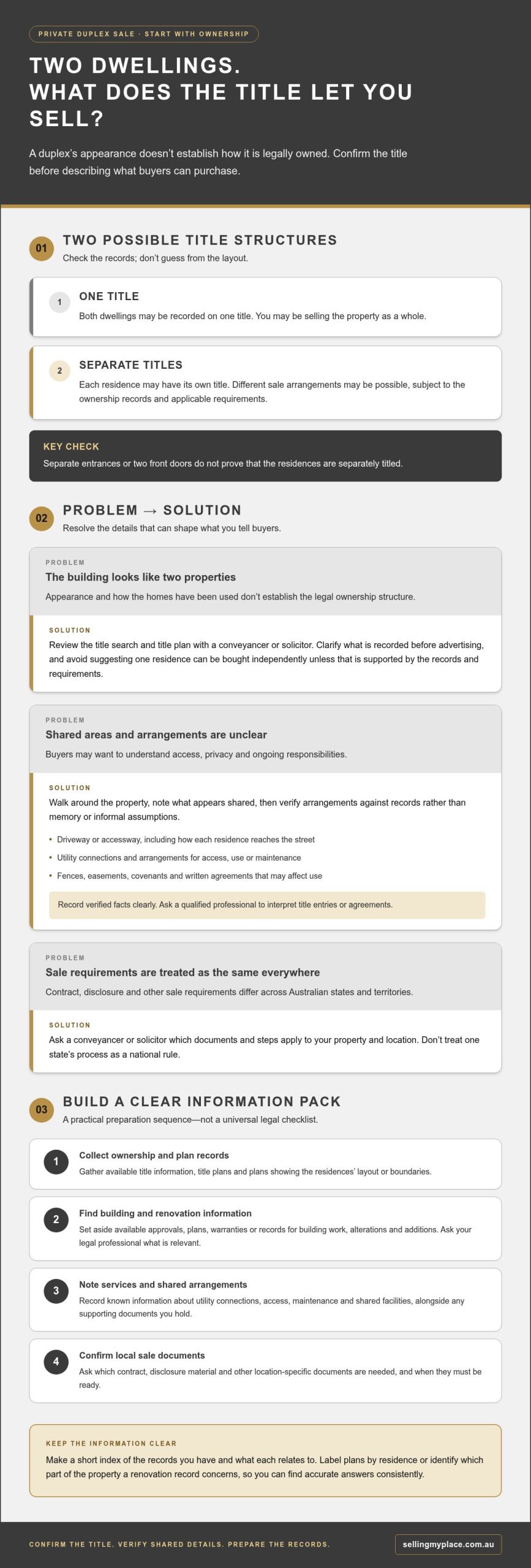
A duplex describes a building or arrangement with two dwellings, but its physical layout doesn’t tell you how the property is legally owned. As general background, What is a duplex? A title configuration is the legal structure recorded for the land and residences. It determines what’s being sold and whether the homes may be marketed separately, subject to applicable requirements. Two front doors don’t necessarily mean two separate properties.
That distinction is central to how to sell a duplex privately with confidence. Requirements for contracts, disclosure and other sale steps differ across Australian states and territories, so don’t treat one state’s process as a national rule. Confirm the property’s structure before describing the offer to buyers.
Is your duplex on one title or separately titled?
A duplex may sit on one title or have separate titles for each residence. Don’t infer the answer from the building’s appearance, separate entrances or the way the homes have been used. Review the title search and title plan with a conveyancer or solicitor. They can help interpret what’s recorded and identify questions to resolve before you advertise.
If both dwellings are on one title, you may be selling the property as a whole. Separate titles may allow different sale arrangements, but separate marketing or sale still depends on the ownership records and applicable requirements. Get clarity before writing a listing that suggests buyers can purchase one residence independently.
What shared features could affect the sale?
Look beyond the title boundaries to the practical details buyers are likely to ask about. Walk around the property, note anything that appears shared, then verify the arrangements against records rather than relying on memory or informal assumptions.
- Check whether the driveway or accessway is shared, and note how each residence reaches the street.
- Identify utility connections and any arrangements for access, use or maintenance.
- Review fences, easements, covenants and written agreements that may affect how parts of the property can be used.
These details can shape a buyer’s understanding of privacy, access and ongoing responsibilities. A shared driveway, for example, may prompt questions about who can use it and how maintenance is handled. Record verified facts clearly, but leave legal interpretation to a qualified professional. A conveyancer or solicitor can explain how relevant title entries or agreements apply to your property and what information should be reflected in the sale documents.
Prepare a duplex for private sale with the right documents and details
Once you’ve established what’s being offered, build a clear information pack before drafting the listing. Duplex details can be easy to blur together: which kitchen belongs to which residence, what parking is included, and whether an outdoor area is shared. Keeping the facts in one place helps you answer buyer questions consistently and spot gaps before they become last-minute concerns.
Use this preparation sequence as a starting point, not a universal legal checklist. Sale and disclosure requirements vary by state and territory, so have a conveyancer or solicitor identify the documents and steps that apply to your property and location.
- Collect ownership and plan records. Gather available title information, title plans and any plans showing the layout or boundaries of the residences.
- Find building and renovation information. Set aside available approvals, plans, warranties or records relating to building work, alterations and additions. Ask your conveyancer or solicitor what’s relevant.
- Note services and shared arrangements. Record known information about utility connections, access, maintenance and shared facilities, along with any supporting documents you hold.
- Confirm local sale documents. Ask your legal professional which contract, disclosure material and other jurisdiction-specific documents are needed, and when they must be ready.
Which duplex records should you gather before listing?
Keep the file practical rather than trying to assemble every record that might exist. Include relevant documents you already hold, such as title and plan records, building or renovation paperwork, and information about services or shared areas. Don’t assume the same documents apply to every Australian duplex. A conveyancer or solicitor can explain what’s required locally and how any available records should be handled.
Make a short index of what you have and what each item relates to. For example, label plans by residence or identify which renovation record concerns a particular part of the property. This makes it easier to find accurate answers during an inspection or follow-up. For a broader overview of the sale-by-owner process, see this guide to how to sell your own home.
How can you make the property straightforward to assess?
Prepare a separate fact sheet for each residence, even if you’re offering the duplex as one property. Note its layout, condition, inclusions and access, then describe shared spaces and services clearly. Check that the written description, floorplans and photographs show the same features and don’t imply exclusive use where an area is shared.
- Describe parking, outdoor areas and entrances accurately for each residence.
- List inclusions clearly, such as fixtures or appliances being offered with the property.
- Keep known property information together so inspection follow-ups are consistent.
Professional photography and floorplans can help buyers understand how the homes relate to each other. A prepared information pack also supports clear, measured answers. If you’d value guidance as you organise the sale, explore private-sale advice and marketing support that can complement the work you want to manage yourself.
Price and market a duplex privately to reach the right buyers
Pricing and presentation work best when they tell the same clear story: exactly what’s for sale, how it’s configured and what a buyer can expect. A whole duplex on one title isn’t automatically comparable with two separately titled residences, even if the buildings look alike. Before choosing comparable sales, establish the title structure and whether your listing is for one residence or both.
How should you assess a duplex’s market value?
Start with properties that genuinely resemble the offering. Compare land, layout, condition and title structure, as well as whether each sale involved one dwelling or the whole duplex. How to determine a home’s market value offers a useful framework for considering comparable sales and factors that can influence an estimate.
An online estimate can help orient your research, but treat it as a starting point, not a promised sale price. A neighbourhood market report or professional advice can add context to the sales you’re reviewing. Note where a comparable differs from yours rather than relying on a headline figure that may reflect a different title, condition or buyer proposition.
| Sale arrangement | What to consider when comparing |
|---|---|
| One title, whole duplex offered | Compare with properties sold as a whole, considering both residences, the land and any shared features. |
| Separately titled residences | Assess each residence against relevant individual sales, including its layout, condition and title details. |
This is a guide to comparison, not a legal determination. Confirm what can be sold and how it should be described against the title and applicable requirements.
What should a duplex listing show buyers?
Make the offer unmistakable from the first lines: is it the whole duplex, or a specific titled residence? Describe each home and its features separately where useful, and use accurate floorplans and professional photography to show the layout, access and shared areas. A clear listing helps interested buyers picture how the property works day to day.
- Identify the residence or residences included in the sale.
- Describe parking, outdoor areas, access and shared features accurately.
- Set out inclusions consistently across the listing, floorplan and inspection information.
Don’t imply that a shared driveway, yard or service is exclusive to one residence unless that’s accurate. Plain, consistent wording helps buyers assess the offer and gives you a reliable reference when answering enquiries. This is a practical part of how to sell a duplex privately: match the pricing evidence to the legal configuration, then make that configuration easy to understand in your marketing.
Professional photography, floorplans and neighbourhood market reports can support a considered presentation while leaving you in control of the sale. Explore private-sale marketing and advisory support if you’d like help shaping your plan.
Manage duplex inspections, offers and contracts without an agent
Selling privately doesn’t mean handling every detail without help. A steady process for inspections and buyer communication, paired with appropriate legal support, can make the work more manageable. Duplexes can prompt extra questions about access, shared services and which spaces are included, so keep your answers consistent and grounded in verified property information.
How can you handle duplex inspections and buyer questions?
Plan each inspection around the property’s layout. If both residences are included, make sure buyers can understand each one and any shared areas. If occupants live in either residence, organise access considerately and explain which areas can be viewed. Before inspections begin, prepare concise answers about title, services, access, inclusions and known shared arrangements.
Keep a simple enquiry record so details don’t get lost between conversations. For each buyer, note:
- their name and preferred contact details
- questions asked and the information you provided
- inspection arrangements and any follow-up requested
- offers received, your response and the next agreed step
This record helps you respond consistently, especially if different buyers ask similar questions about a shared driveway or outdoor space. If you don’t know an answer, note it and verify the information rather than guessing. Clear communication builds confidence without overstating what the title or shared arrangements allow.
What happens when a buyer makes an offer?
Consider the complete offer, not just the headline price. Compare any conditions, proposed timing and the buyer’s stated readiness to proceed. For example, a higher offer may include conditions or timing that differ from a lower offer. Weigh each on its terms and decide whether to accept, negotiate or decline; don’t assume one factor settles the decision.
Before agreeing to terms, have a solicitor or licensed conveyancer explain the contract and requirements that apply in your state or territory. Contract preparation, deposit arrangements, cooling-off rights and settlement processes can vary by jurisdiction and transaction. Don’t describe an offer as binding or the sale as complete until your legal professional has explained the applicable steps and status.
Once discussions progress, keep written records of the offer, any changes and what each party has agreed to do next. Avoid relying on a verbal summary when formal documents need to reflect the arrangement. This helps you stay organised while leaving legal interpretation and contract guidance to the right professional.
If you’d like practical guidance while retaining control of your sale, explore private-sale advisory support for your duplex.
Choose the right support to sell your duplex privately
Private selling doesn’t have to mean doing every task alone. You can decide how much of the marketing and preparation to manage while retaining control of key decisions, such as how to present the property and respond to offers. The right fit depends on your time, confidence and the complexity of the sale.
For owners weighing how to sell a duplex privately, three broad approaches can help clarify the choice:
- Fully self-managed: You organise the marketing, buyer enquiries and inspections, and coordinate the sale process with appropriate legal support.
- Traditional agency representation: An agent manages more of the sales process on your behalf, under the arrangement you agree with them.
- Flat-fee marketing with advisory support: You retain control of the private sale while accessing professional marketing and practical guidance, without agency commission.
What can professional marketing and advice take off your plate?
A well-presented duplex needs to make its layout and offer easy to understand. Professional photography and floorplans can show how the residences relate to one another, while neighbourhood market reports give you information to consider as you shape your marketing plan. Residential listing support can help with exposure while you remain in control of decisions about the sale.
Pre-sale consulting and the Agent Advisory Service can provide guidance as you prepare and work through the process, including conveyance advice. This can suit owners who are comfortable speaking with buyers but would value support with presenting the property or understanding the steps ahead. The flat-fee model is commission-free, and listings remain active until sold, with no time limit.
How can you decide what level of help suits you?
Think honestly about the tasks you’re ready to take on. Do you have time to respond to enquiries, arrange inspections and keep buyer discussions organised? Are you comfortable coordinating marketing and seeking legal guidance when needed? A clear view of your capacity helps you choose support that adds value without taking away the involvement you want.
Then match the support to your duplex and sale plan. A whole-property offering may need different presentation from a plan involving separately titled residences. Consider which tasks you want to manage, where advice would help, and what information buyers will need to understand the property. Support can help organise the process, but no marketing or advice can promise a particular sale price or timeframe.
A private sale can be personal and practical at the same time. If you’d like to talk through an approach that fits your duplex and the role you want to play, Talk through your duplex sale.
Take your next step with a plan that feels right
A duplex sale doesn’t need to follow a one-size-fits-all path. As you decide how to sell a duplex privately, focus on the level of involvement that gives you confidence and keeps your decisions aligned with your goals and circumstances. You can manage the process yourself or draw on professional support where it would make the next step clearer.
A commission-free, flat-fee approach can bring together marketing and guidance while you retain control of the sale. Professional photography, floorplans and neighbourhood market reports can support your presentation, alongside the Agent Advisory Service for pre-sale consulting and conveyance advice. The aim is to help you make informed choices, not to promise a particular sale price or outcome.
Start with a conversation about your duplex, your preferred role and the support that would be useful. A considered plan can make a major property decision feel more manageable, one step at a time. Discuss a private-sale plan with our team, and move forward with confidence.
Frequently Asked Questions
Can I sell a duplex privately in Australia?
Yes, private property sales are legal in every Australian state and territory. You can advertise the duplex, communicate with prospective buyers and consider offers yourself, while arranging professional help for tasks such as marketing or conveyancing. Before you begin, establish who owns the property and how it’s titled, then identify the sale and disclosure requirements that apply in your jurisdiction. These local details can influence the steps and documents involved.
Can I sell one side of a duplex separately from the other?
Possibly, but a building’s two-residence layout alone doesn’t mean each side can be sold independently. The title and any relevant ownership arrangements determine what you own, while local requirements may also affect whether separate sales are possible. For example, if both dwellings form one titled property, you may not be able to offer one residence as a standalone sale without addressing the legal structure. Get advice based on the actual records.
Does every duplex have separate titles?
No. Some duplexes have one title covering the property, while others have separate titles for each residence. You can’t reliably identify the arrangement just by looking at the building, its entrances or its fences. A title search and plan provide a more dependable starting point. If the records are difficult to interpret, a conveyancer or solicitor can explain what they mean for ownership and the proposed sale.
Do I need a conveyancer or solicitor to sell my duplex privately?
Legal support is strongly relevant, particularly because the sale contract and required documents depend on the property’s jurisdiction and title. A solicitor or licensed conveyancer can prepare or advise on the contract, explain obligations and help you understand the formal steps towards settlement. Their guidance is also useful if the title includes easements or other entries you don’t understand. Arrange advice early enough to inform your sale plan and advertising.
What happens if my duplex has shared utilities or access?
Shared services or access don’t automatically prevent a sale, but they can affect how buyers understand the property and its practical arrangements. A common driveway, for example, may raise questions about who can use it or how upkeep is handled. Gather relevant written agreements and service information, and distinguish documented arrangements from assumptions. A conveyancer or solicitor can explain the legal effect of any easement, covenant or agreement affecting the property.
Can I sell a duplex privately if it is tenanted?
A tenant living in one or both residences doesn’t automatically rule out a private sale, but the tenancy can affect access, inspections and what a buyer needs to understand about the property. Review the tenancy documents and get jurisdiction-specific advice about applicable notice, access and disclosure requirements before arranging viewings or advertising vacant possession. Be clear with prospective buyers about the occupancy situation, and don’t promise a move-out date unless it’s properly established.
How do buyers assess the value of a duplex?
Buyers may compare recent sales, land, layout, condition and title structure, as well as what’s included in the offer. Their assessment can differ depending on whether they’re considering the whole duplex or one separately titled residence. Shared access, services and outdoor areas may also shape their view of how the property works. Comparable sales and market information can help frame expectations, but an estimate can’t guarantee the eventual sale price.