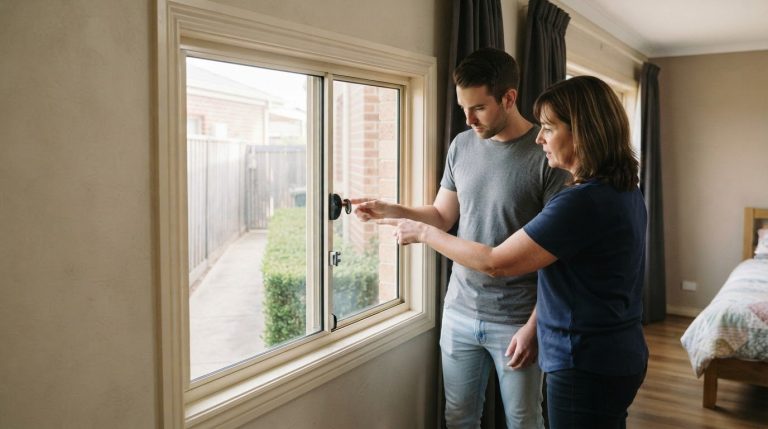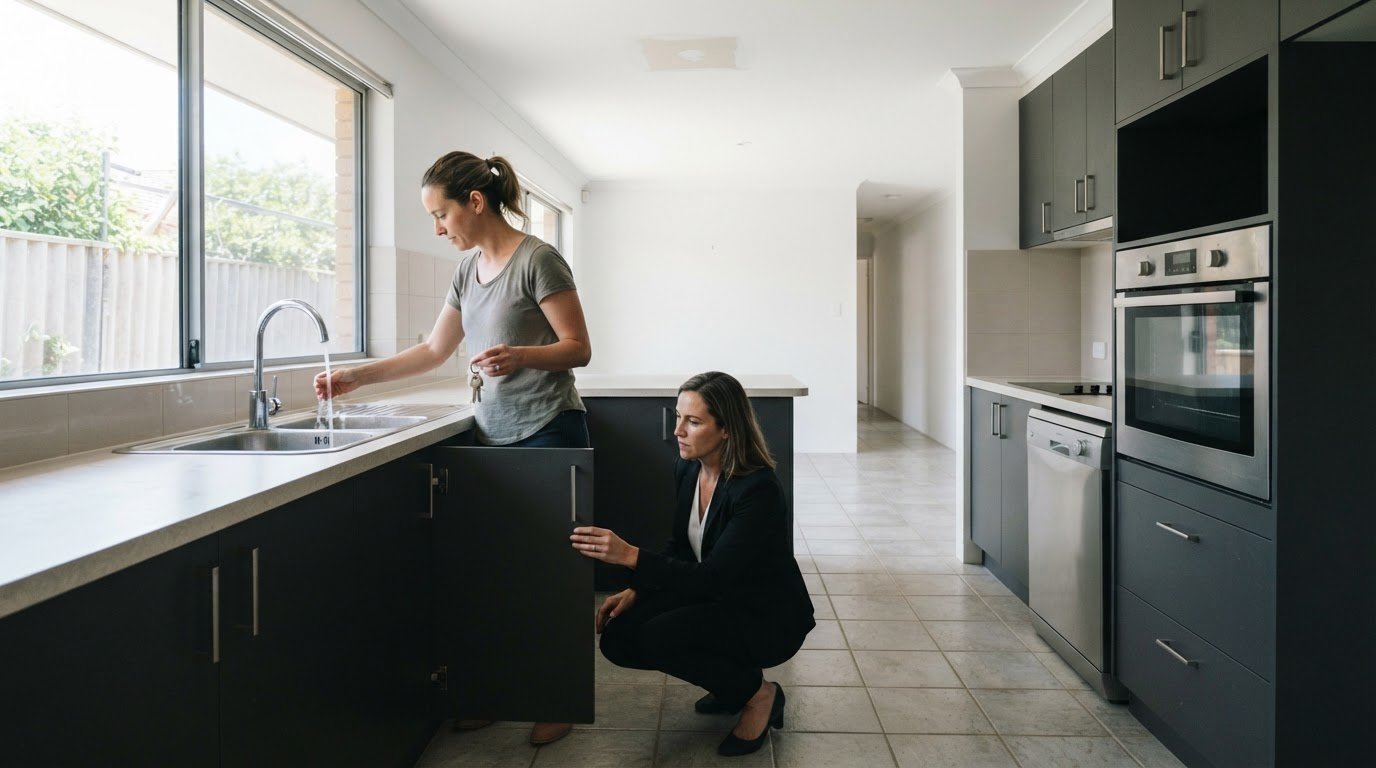
The final inspection is best left close to handover: it is typically completed within the final week before settlement. Using a comprehensive from offer to settlement checklist helps you keep key tasks in view, from arranging that inspection to getting ready for settlement day.
The weeks between signing and settlement can feel like a blur of paperwork and practical decisions. A clear sequence makes the process easier to manage and helps you spot issues while there is still time to raise them.
This guide from Kincade International Direct Sales explains when to inspect the property, how to approach building insurance and contract conditions, and what to check in the home, its inclusions and services. It also outlines what to expect as settlement approaches, so you can prepare for handover with greater clarity.
Key Takeaways
- Use the final inspection to check the home’s condition, vacant possession and any agreed repairs before settlement.
- Read the contract to understand when your building insurance responsibility begins and arrange cover accordingly.
- Compare fixtures and appliances with the contract inclusions, and record any concerns so they can be raised promptly.
- Plan ahead for settlement funds, service connections and the handover of keys.
- Buyer representation and pre-sale property consulting can help you make informed decisions at different stages of a property transaction.
When should you do a pre-settlement inspection?
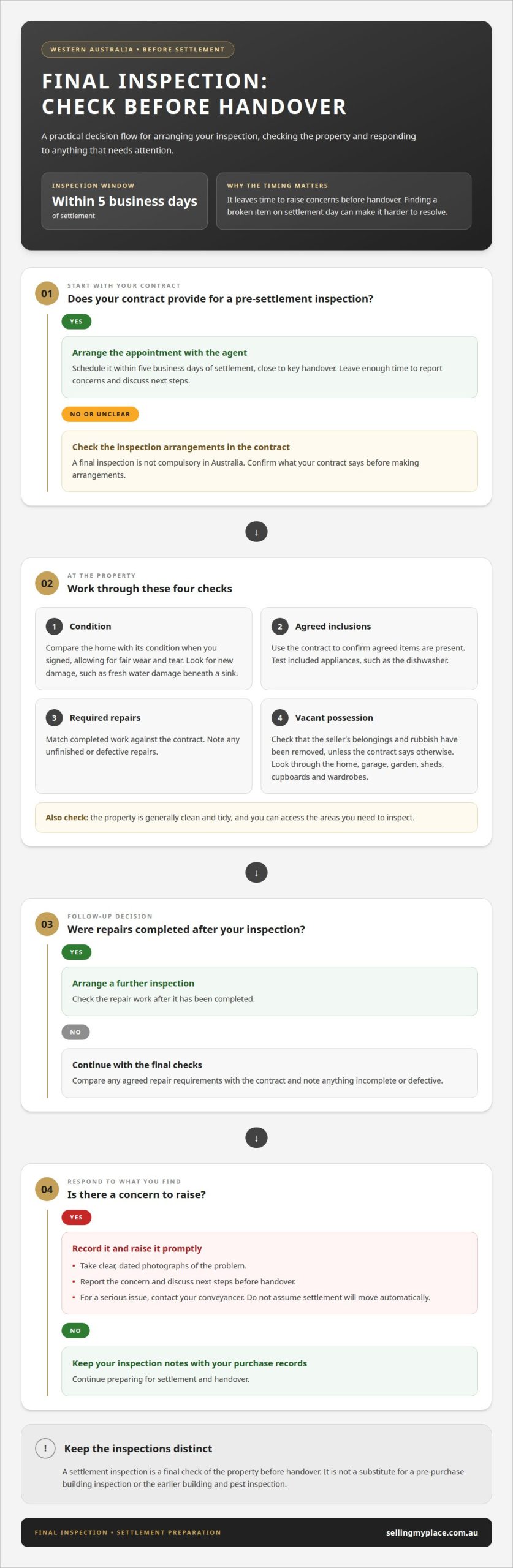
In Western Australia, arrange the final inspection within five business days of settlement. Start organising finance approval and the lender’s valuation as soon as the contract is signed. Check the contract to establish when your building insurance should start, and schedule the inspection close to key handover.
The settlement inspection is a final check, not a substitute for a pre-purchase building inspection. Compare the property’s condition with how it was when you signed the contract. Check agreed inclusions, look for new damage and confirm that contractually required repairs are complete. For example, test an included dishwasher and look for fresh water damage beneath a sink.
Timing matters. An inspection within five business days of settlement gives the parties time to raise issues before handover. Leave enough time to report concerns and discuss next steps. Finding a broken item on settlement day can make it harder to resolve. Arrange the appointment with the agent, and take clear, dated photographs of any problem.
Check your contract of sale for the right to inspect before settlement. A final inspection is not compulsory in Australia, so use the contract to confirm the arrangements. This is separate from a building and pest inspection, which takes place earlier in the purchase process. If the seller completes repairs after your visit, arrange a further inspection to check the work.
Vacant possession means the seller hands over the home without their belongings, unless the contract says otherwise. Check the contract to confirm agreed inclusions remain and excluded items have been removed. Look through the garage, garden, sheds, cupboards and wardrobes for belongings or rubbish. Check that the property is generally clean and tidy, and that you can access the areas you need to inspect.
- Compare condition: Look for new damage or changes since signing, allowing for fair wear and tear.
- Check repairs: Match completed work against the contract and photograph any unfinished or defective repairs.
- Confirm inclusions: Use the contract to check appliances and other agreed items are present.
- Check vacant possession: Look for the seller’s belongings in the home, garage and garden.
Unresolved inspection concerns, incomplete contract conditions, finance issues or unready settlement funds can complicate the planned handover. If you or the seller cannot meet a contractual obligation by its due date, that may amount to default and lead to formal steps or financial consequences under the contract. Contact your conveyancer promptly about a serious issue, and do not assume settlement will move automatically.
Building insurance timing
In Western Australia, check your contract to establish when responsibility for building insurance begins. Depending on the contract, the relevant date may be the contract date or settlement date. Arrange building and contents insurance before settlement, and set the policy start date to match your obligations. Ask your conveyancer to explain how the contract wording affects the timing.
Do not assume the seller’s cover protects your interests until handover. The contract determines the timing that matters for your purchase, so read it early rather than leaving insurance until settlement week. When arranging cover, provide accurate details about the property and its construction, and keep the policy documents with your purchase records. Standard home insurance in Western Australia does not cover termite damage, so a home policy does not protect against every property issue.
For a strata property, distinguish your own building and contents insurance arrangements from the insurance information held for the strata scheme. Ask your conveyancer to clarify what the strata company’s documents say and what cover you need personally. Strata levies usually run quarterly, and the vendor generally pays them to the end of the current levy period at settlement, with charges adjusted between vendor and purchaser. Keep this adjustment separate from your insurance arrangements.
Off-the-plan purchases need another contract check. A defects liability period may provide time after settlement to report defects, commonly ninety (90) days or three (3) months, although some contracts provide six (6) months after the date of property settlement. That period concerns defects; it isn’t a replacement for building or contents insurance. Note the period in your calendar and keep the contract and handover documents together, so you can follow the process set out for reporting defects.
- Read the insurance clause: Identify whether your building insurance obligation starts on the contract date or settlement date.
- Arrange cover before settlement: Set the start date to match the contract and consider both building and contents.
- Prepare for utilities: Contact utility providers at least a week before settlement to arrange services.
- Keep records together: Store policy details, strata information and any off-the-plan defect deadlines with your purchase documents.
For utility connections, contact providers at least a week before settlement, so electricity, gas or water arrangements are in place for move-in. Add each provider’s confirmation to your move plan, alongside your policy start date and settlement date. If the insurance clause or strata documents raise questions, conveyance advice for your purchase can help you understand the paperwork and organise the next steps.
Confirming contract special conditions are fulfilled
A written offer can set out the proposed price, deposit, settlement date, inclusions and special conditions, such as finance or inspections. Submit it to the selling agent for the seller to consider. If accepted, review the contract of sale carefully before signing and returning it.
In Western Australia, many purchase contracts set a building inspection timeframe, often 7 to 14 days. A pre-purchase building inspection takes place after the contract is signed and before settlement, so note the deadline and arrange the inspection within the contract’s timeframe. The pre-settlement inspection is separate: it checks the property’s condition later in the process.
Finance and building and pest inspection conditions can specify what must happen before the sale proceeds. Read each condition for its wording, deadline and notice requirements, then diarise the relevant dates. A lender’s approval process and a building report may involve different steps, so track their requirements separately. The contract determines what happens if a condition is not met or a deadline passes.
Before settlement, compare the property with the contract of sale. Check that agreed inclusions remain, excluded items have been removed and contractually agreed repairs are complete. If the contract lists a dishwasher, confirm it is still there. If it records a repair, check the work and photograph any concern. Raise discrepancies promptly with your conveyancer, using written notes and clear images.
Due diligence depends partly on the property title. Western Australian titles can be green title, survey-strata or strata. For a strata property, a strata search can reveal the strata company’s financial health, outstanding levies, planned works and applicable by-laws. These details help you understand ongoing obligations and whether planned works may affect the property. Ask your conveyancer to explain relevant search results and how they relate to the contract.
- Record the offer terms: Include the proposed price, deposit, settlement date, inclusions and conditions in the written offer.
- Track condition deadlines: Note the contract’s finance and inspection requirements, including the building inspection timeframe.
- Review title-related information: Identify whether the property is green title, survey-strata or strata, then consider the relevant records.
- Keep evidence: Save inspection reports, repair records and dated photographs with your contract documents.
Before the contract is exchanged, make sure you understand its conditions, deadlines and inclusions. Once it is signed, work through each obligation in order and keep your conveyancer informed about outstanding conditions, inspection findings or lender requirements. A clear paper trail makes it easier to address differences before settlement rather than discovering them during handover.
Checking fixtures, appliances and services
Use the contract’s inclusions list as your guide when checking each fixture and appliance. Test items that can be operated instead of relying on their appearance. Switch on lights, run taps, flush toilets, and check that doors and windows open and close. These simple checks can reveal faults that are not obvious during a quick walk-through.
For appliances included in the sale, check that each is present and working. Fixed appliances, such as stoves and dishwashers, are among the items to check during the pre-settlement inspection. Compare each item with the contract description, then test it safely using its normal controls. If an appliance will not start, note what happened and where it is.
Move methodically through each room. In the kitchen, check the oven, cooktop, rangehood and taps. In the bathroom, test the shower, basin and toilet. Open each window to check its operation, and look for visible damage around the frames. In the laundry, check the taps and any included fixed appliance. A room-by-room approach helps prevent overlooked items during a busy inspection.
Check the home’s services too. Turn on lights and test accessible power points with a suitable device, without opening electrical fittings or attempting repairs. Run water briefly at different taps and check that it drains. If heating or cooling systems are included, operate the controls to see if they respond. These checks show whether basic functions appear to work during your visit, not whether hidden components are fault-free.
Smoke alarms are a legal requirement in most Australian states. During the inspection, locate the alarms and check their visible condition. Do not dismantle them or assume a visual check proves they meet every requirement. If an alarm appears damaged or missing, record its location and promptly raise the concern with the real estate agent.
- Match the agreed items: Use the contract to identify which fixtures and appliances are part of the buying agreement.
- Test ordinary functions: Operate taps, lights, windows and included appliances using their usual controls.
- Record faults clearly: Note the room, item and observed problem, then take a clear photo.
- Raise concerns immediately: Tell the agent and conveyancer about a fault before settlement, so it can be addressed through the appropriate process.
If you find a fault during the inspection, you may be able to negotiate for the vendor to fix it before settlement or reduce the sale price to account for repair costs. The contract and the nature of the fault matter. Raise the issue promptly with concise notes and photographs, rather than relying on a verbal mention after handover.
Property settlement timing in Western Australia
In Western Australia, settlement typically occurs 30 to 60 days after the contract is signed. The vendor generally sets the proposed date, but you may negotiate a date that suits your circumstances. A deposit is usually 5-10% of the sale price, held in trust by the real estate agent until settlement; its due date is set by the contract.
Cooling-off rules depend on where you buy and how the sale is conducted. Across Australia, private-treaty cooling-off periods range from two to five business days, depending on the state. Auction purchases have no cooling-off period. Check the contract terms and applicable state rules before relying on a cooling-off period.
Use the agreed settlement date to build a practical timeline. The period between signing and settlement can last weeks or months, so note key dates as soon as the contract is signed. Add lender milestones and contractual deadlines to your from offer to settlement checklist, then confirm your solicitor has the information needed. Settlement is when the property legally changes hands.
In Western Australia, settlement funds are transferred electronically, the title is updated in your name at Landgate, and the real estate agent releases the keys. Purchasers do not usually attend settlement. Your solicitor or conveyancer coordinates the transaction. Prepare for handover and keep your phone available for updates on completion.
- Confirm the settlement date: Check the date in the signed contract and record it in your calendar.
- Prepare settlement funds: Funds may include savings, the deposit, stamp duty, transfer of land fees, conveyancing fees and adjustments.
- Arrange lender cheques: Purchasers usually provide them to their solicitor on the business day before the appointed settlement date.
- Plan for key release: The agent releases the keys after settlement is completed.
Include stamp duty, conveyancing, inspection and settlement costs in your purchase budget. Settlement funds may also cover transfer of land fees and adjustments, such as water charges. Water charges may be adjusted between the vendor and purchaser at settlement. A from offer to settlement checklist keeps payment dates and handover tasks visible. Your settlement statement brings these amounts together, so review it with your solicitor before funds are due.
For help organising the transaction and understanding the paperwork, get conveyance advice for your settlement.
Kincade International Direct Sales
Kincade International Direct Sales offers Buyer Representation and Real Estate Advisory Services for buyers weighing a property purchase. For owners preparing to sell, Pre-Sale Property Consulting and Neighborhood Market Reports can help clarify their plans and view of the market. Your conveyancer manages the legal steps to settlement.
If you are deciding whether to buy or sell, or how to approach your next property move, Kincade International Direct Sales can help you consider your options before committing. Contact the team to discuss your property plans.
Make your next property move with confidence
The period between an accepted offer and settlement is also a useful time to consider what comes next: moving, holding or preparing another property for sale. Leave legal or financial advice to your conveyancer and lender, while giving your broader property plans their own attention. A clear plan helps make the next step deliberate, rather than something squeezed in around handover.
Use the from offer to settlement checklist as a live planning tool, not a document to put away once the keys are released. Note the decisions ahead, the people involved and what you want your property position to look like after this transaction. If you are buying, selling or preparing a home for market, Kincade International Direct Sales offers Buyer Representation, Residential Property Listing Services and Pre-Sale Property Consulting to support different property plans.
When you’re ready to talk through your next move, contact Kincade International Direct Sales. Take it one considered step at a time, and make this home transition work for the life you’re building.
Frequently Asked Questions
What happens at a final inspection?
A final inspection gives you the opportunity to assess the home before settlement and note anything requiring attention. Bring a copy of the signed contract and a phone or camera, then record concerns with clear photos and brief notes. For example, photograph a damaged wall and note which room it is in. Focus on observable condition and agreed items, rather than treating the inspection as a replacement for specialist building advice.
What happens if there’s a problem?
If you find a concern, promptly raise it with your conveyancer or solicitor and provide photographs or notes. They can advise on the contract and communicate with the other party about next steps. Depending on the issue and any agreement reached, the parties may discuss a repair, another inspection or an adjustment. Do not assume settlement changes automatically. Get advice before agreeing to change the scheduled arrangements.
What happens on settlement day?
On settlement day, the buyer’s lender pays the balance of the purchase price, less the deposit, and the transfer and new mortgage are registered with the title office. In Western Australia, the title is updated in the buyer’s name at Landgate, and the real estate agent releases the keys after completion. Purchasers do not usually attend settlement, so wait for confirmation before arranging access or moving belongings in.
What if you find something wrong?
Tell your conveyancer or solicitor immediately if you discover new damage, a broken included item or an agreed repair that has not been completed. Send clear photographs and identify where the problem is. For a serious issue, contact them before settlement proceeds. They can explain the contract process and communicate with the seller’s side. Keep messages and replies together rather than relying on a verbal conversation.
What should you look for?
Look for changes in condition, damage, missing agreed items and any of the seller’s belongings left behind. Check accessible rooms and areas, including the garage, garden and sheds. Test ordinary functions such as taps, lights, windows and included appliances using their usual controls. If you find a concern, note its exact location and take a photo. This gives you a clear record to discuss rather than relying on memory.
Who can inspect the property?
You can arrange a pre-settlement inspection, subject to the contract and access arrangements. In Western Australia, book a suitable appointment through the real estate agent and allow enough time before settlement to raise concerns. You may attend with your agent to help keep the visit organised. The inspection is a visual check, not a substitute for an assessment by a qualified building inspector.
Who should attend?
Ideally, attend with the real estate agent so you can raise questions about access or items during the visit. If the vendor plans to attend, arrange a suitable time with them in advance. A witness, such as the agent, may also attend. Keep the group focused on checking the home and recording concerns, then raise issues through the appropriate conveyancing channel.
What are the steps from making an offer to settlement when buying property in Australia?
A practical from offer to settlement checklist starts with submitting a written offer, then reviewing and signing the contract if it is accepted. Pay the deposit by the date set in the contract, meet any finance or inspection conditions, and organise insurance and settlement funds. Arrange a final inspection before settlement. Your conveyancer or solicitor coordinates the legal transfer, and the agent releases the keys after completion.