
Avoiding seller’s remorse starts with being clear about why you’re selling, where you’ll go next and what price feels realistic before your home goes on the market. Talk the decision through with people you trust, and consider how you might feel when familiar routines and memories are left behind. Preparation can reduce doubt, though it can’t remove every emotion from a major move.
It’s understandable to worry about choosing the wrong time or accepting an offer you’ll later regret. A sale involves more than price: it can mean leaving a place tied to family life, security and belonging. Those feelings deserve consideration alongside the practical decisions.
This guide explains what can trigger buyer’s and seller’s remorse, how to weigh market timing and how to make offer decisions carefully. It also covers the risks of changing your mind after signing, so you can plan your next step with greater confidence.
Key Takeaways
- Use property research, including inspections and checks on title, zoning and local development, to make decisions with fewer unknowns.
- Recognise how attachment to a home, concerns about the neighbourhood and uncertainty over the decision can shape buyer’s and seller’s remorse.
- Understand that changing your mind after signing can carry serious legal consequences, particularly when a contract is unconditional.
- Weigh market direction alongside your own sale plans; a rising market may be more favourable, but timing concerns can still fuel regret.
- Before considering an offer, set your negotiation priorities, walk-away terms and what you would want in return for changing them.
1. Preventing Seller’s Remorse?
Avoiding seller’s remorse starts with identifying why you’re selling before your home goes on the market. Write down your reasons, such as relocating for work, downsizing or responding to changing family needs. Make them specific: “need less upkeep” gives you a clearer decision point than “time for something new”. If your circumstances change, revisit the list before proceeding.
Plan where you’ll live after settlement and how you’ll manage the move. Decide whether you’ll buy, rent or stay with family, and consider the effects on work, schooling and daily routines. For example, if your move depends on finding suitable accommodation, have a practical alternative in mind in case the search takes longer than expected. A clear next step makes the transition easier to picture.
Talk the decision through with family or close friends before listing. Ask them to help you examine practical concerns, rather than simply urging you to sell or stay. A conversation may surface an overlooked detail, such as how moving could affect care responsibilities or access to a familiar community. Hearing those perspectives before committing can help with avoiding seller’s remorse.
Research your home’s likely market position before setting expectations. A real estate agent’s valuation can help you assess a realistic sale price, while a neighbourhood market report offers context about local conditions. Consider the property’s features, available sales information and the area’s appeal together. An attractive figure alone doesn’t show whether a sale supports your plans.
Buyers can reduce uncertainty with targeted checks. Building and pest inspections can identify structural issues, defects and pests. Research the title, zoning regulations, previous sales history and potential risks or liabilities. Also consider the location, market trends and planned development nearby. These checks provide different information, so don’t treat an inspection as a substitute for researching the area.
Prepare a response plan for doubt before it arrives. Keep your reasons for selling, your next-move plan and unresolved questions in one place. If regret surfaces after signing, don’t assume you can withdraw. A qualified conveyancer or solicitor can explain your options in light of the contract and the sale’s current stage. That plan gives you a clear first step instead of a rushed reaction.
Include transaction expenses in your planning. In New South Wales, sellers pay property expenses owing for the period up to settlement, according to the NSW Government. Account for those obligations alongside your expected proceeds and next-home plans. Practical preparation and clear priorities support avoiding seller’s remorse when the move becomes real.
2. Causes of buyer’s and seller’s remorse
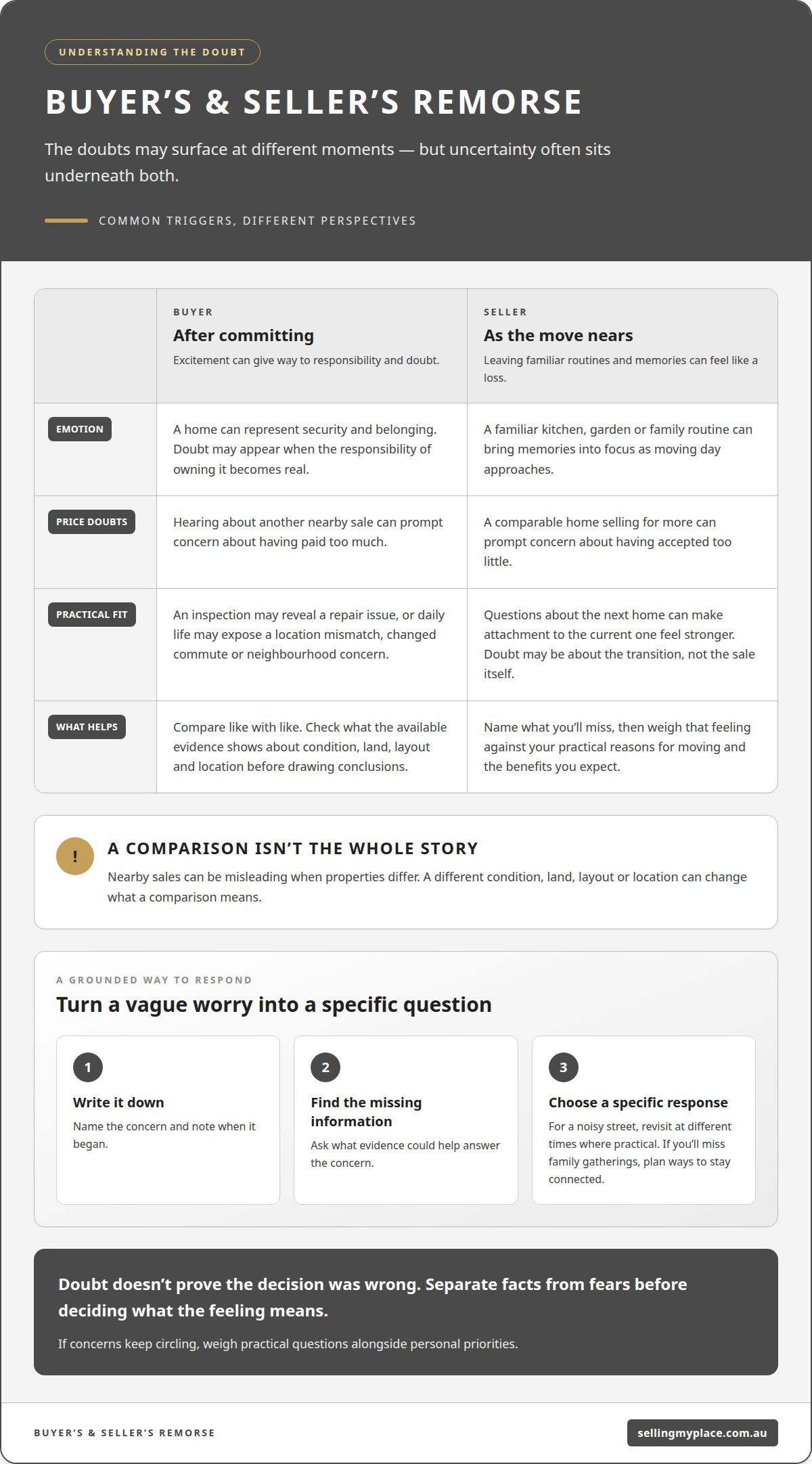
Buyer’s and seller’s remorse can emerge at different moments, but both often involve uncertainty. For a seller, a house may hold birthdays, family routines and a sense of safety. Leaving can feel like losing those connections, even when the move solves practical problems. A buyer may feel regret after signing, when excitement gives way to responsibility and doubt. That shift doesn’t prove the decision was wrong; it shows how much a home can represent.
Memories can make sellers reassess a decision as moving day approaches. A familiar kitchen may recall shared meals, while a garden may hold years of weekend care. Name what you’ll miss, then distinguish that feeling from your reasons for moving. Downsizing, relocating for work or responding to changing family needs can still be sound reasons. Writing down both the emotional loss and practical benefits can help clarify what’s driving the doubt.
Price uncertainty affects buyers and sellers in different ways. Sellers may fear accepting too little, then see a comparable home sell for more. Buyers may wonder whether they paid too much after hearing about another nearby sale. Those comparisons can mislead if properties differ in condition, land, layout or location. Compare like with like, and note what the available evidence actually shows before drawing conclusions.
A buyer’s confidence can also falter when a defect or neighbourhood concern emerges after commitment. An inspection may reveal a repair issue; a changed commute may expose a location mismatch. Nearby construction, traffic or access to schools can feel more consequential once daily life begins. For sellers, questions about the next home can magnify attachment to the current one. If the move plan feels uncertain, regret may be about the transition rather than the sale itself.
Separate facts from fears before treating doubt as a reason to reverse course. Write down the concern, when it began and what information could help answer it. A buyer worried about a noisy street might revisit the area at different times, where practical. A seller missing family gatherings could plan ways to stay connected after moving. Specific responses turn broad regret into concerns that can be discussed and managed.
Doubt may surface after a contract, a price comparison or a family conversation. Notice the trigger before deciding what it means. If concerns keep circling, a structured discussion can help weigh practical questions against personal priorities. You can talk through your sale decision to clarify your reasons, expectations and next steps.
3. Legal consequences of a seller changing their mind
At an Australian auction, the key risk is not simply having second thoughts about the highest bid. Whether you can withdraw after agreeing to sell depends on the contract, its conditions and applicable local laws. Once you’ve signed, a buyer may seek specific performance, or end the contract and claim costs and damages if you change your mind.
That makes the moment after an auction especially important. If you accept an offer and sign the sale contract, regret alone doesn’t automatically release you from the agreement. The contract sets out the obligations both parties have accepted, while any relevant conditions may affect their rights. Read the terms carefully before signing, including provisions that explain what happens if either party doesn’t proceed.
An unconditional contract carries particular risk for a buyer who backs out: the buyer may lose their deposit and face legal action from the seller. Sellers should understand the other side of that risk. A buyer who believes the seller has failed to complete may pursue a legal remedy, with the contract and applicable law shaping what happens next. Don’t assume that a disappointed buyer will simply accept a change of mind.
For example, imagine an auction buyer signs, then hears that a similar home sold for more. That comparison doesn’t, by itself, settle whether the buyer can withdraw. The contract’s terms, any contingencies and relevant local laws matter. The same principle applies to a seller who receives a higher offer later, misses the home or becomes unsure about moving. A new preference doesn’t erase obligations already agreed.
Before signing, pause over the practical details as well as the sale price. Confirm that you understand the parties, property, agreed terms, conditions and settlement arrangements written into the contract. If a clause is unclear, have a qualified conveyancer or solicitor explain its effect before you commit. That is a timely step, not a problem to leave until after a dispute begins.
If doubt arises after signing, act promptly and keep communication measured. Gather the signed contract and any related written communications, then discuss your position with a qualified conveyancer or solicitor. Don’t tell the buyer the sale is cancelled or act as though the contract has ended before understanding your obligations. A prompt, informed response can help clarify the available options and prevent confusion from escalating.
At auction, can a seller change their mind? The answer depends on the contract, any contingencies and applicable local laws. Once a contract is signed, a buyer may seek specific performance or terminate and claim costs and damages if the seller changes their mind.
Keep the contract decision separate from the rush of auction day. Reviewing the terms before signing gives you a clearer view of the commitment you’re making and the consequences of reversing it later.
4. Timing a sale in a rising or declining market
Waiting for a stronger market can seem like a way to protect your sale price, but waiting has trade-offs. Australian sellers may find selling in a rising market more favourable than selling in a declining market. That broad comparison doesn’t settle the right timing for your home. Your plans, the local market and the next step you need to take all shape the decision.
In a rising market, sellers may hope that buyer interest or prices will improve further. Yet delaying can postpone a move that matters for work, family or lifestyle. In a declining market, concern about future prices may encourage a faster sale. Either way, trying to predict the perfect moment can make every new headline feel like a reason to second-guess your decision.
Set your personal timing needs alongside your market view. If a work relocation has a fixed start date, decide how the sale could fit that transition. If your timing is flexible, identify what local evidence would influence your listing plans. Avoid relying on national headlines alone. Activity elsewhere may not reflect the buyers, property types or conditions relevant to your home.
Think about your next purchase as part of the same decision. A seller who plans to buy again needs to consider how conditions might affect both the sale and the next home. For example, a higher sale price may not feel like a win if the home you want also becomes harder to secure. A declining market can affect your sale and buying options differently, so weigh the whole move.
Write a short timing plan that records your preferred window, the reasons behind it and what could prompt a change. A family with a school transition ahead might value a settled move date more than waiting for a possible market shift. Someone with greater flexibility may prefer to observe local activity before choosing a listing period. This written plan gives you a reference point if fresh news creates doubt.
When a neighbour’s sale or a new forecast changes your confidence, ask whether it applies to your property and circumstances. Compare the type, condition and location of homes, rather than treating every sale as a direct benchmark. Local market reports can add context, while real estate advice can help you consider how that context relates to your goals. Avoiding seller’s remorse means making timing decisions from relevant evidence, not pressure.
No market forecast can remove every uncertainty from a sale. Instead, decide what matters most: a particular move date, the likely sale outcome or coordinating a purchase. Avoiding seller’s remorse also means accepting the trade-offs you identified before listing. A reasoned plan helps you hold to your priorities when the market shifts, rather than chasing a perfect moment that may never feel certain.
5. How can sellers avoid accepting an offer they may later regret?
Decide what makes an offer acceptable before negotiations begin. Set a minimum price based on your expectations, local market evidence and what you need for your next move. Price is only one part of the decision. A strong figure may still be a poor fit if its conditions or timing disrupt your plans.
Write down your reasons for negotiating, your walk-away terms and what you’d want in return for changing them. For example, if a buyer seeks a different settlement date, decide whether that flexibility works for you. If you’re considering a lower price, identify what would make the adjustment worthwhile. A clear position helps keep the conversation focused when emotions rise.
Assess each offer as a package rather than reacting to its headline amount. Consider the proposed conditions, settlement arrangements and any requests that affect your plans. Two offers with the same price can create different levels of certainty or inconvenience. Record the trade-offs in plain language, such as “higher offer, less suitable timing” or “lower offer, better-aligned settlement”.
Give yourself space to consider an offer, especially after a fast negotiation or a busy inspection period. Re-read your priorities before responding, and separate the buyer’s proposal from pressure to make an immediate choice. If a detail is unclear, ask for an explanation before deciding. A calm review can reveal whether the offer genuinely supports your objectives.
Before accepting, review the contract carefully and make sure you understand its terms. Check that the written price, conditions and settlement arrangements reflect what you agreed. If a condition or clause doesn’t match the discussion, raise the discrepancy before signing. A verbal understanding and the written contract are not interchangeable.
Use a short decision check before committing: does the offer meet your essential terms, does its timing work, and are you comfortable with the written conditions? If one answer is no, consider whether negotiation could resolve the issue. Decide in advance what you’d request in return, such as a change to a term that matters to your plans.
For instance, a seller who needs time to organise a move might prioritise suitable settlement arrangements over a small difference in price. Another seller may put price first because their next purchase depends on the sale proceeds. Your priorities should come from your circumstances, not a neighbour’s result or the urgency of the moment.
For a considered discussion about your offer priorities and negotiation approach, talk through your sale strategy.
Kincade International Direct Sales
Kincade International Direct Sales helps Australian homeowners bring property decisions into a clearer plan through Pre-Sale Property Consulting, Real Estate Advisory Services and Neighbourhood Market Reports. These offerings can help frame local market context, assess priorities and prepare for a sale before offers arrive. If you’re also considering your next purchase, Buyer Representation can support that part of the transition. Residential Property Listing Services provide a route to market when you’re ready to proceed, while the decision to sell remains grounded in your circumstances, timing and goals. A measured conversation can turn uncertainty into practical questions about your home, an offer and what comes next. If you’d like to discuss your property decision, contact Kincade International Direct Sales.
Make your next move with confidence
A property decision can feel deeply personal because it shapes where you’ll live and what comes next. Give yourself permission to decide deliberately, with your priorities in view rather than chasing perfect certainty. Turn any lingering concern into a clear point for discussion, whether it’s timing, your expectations or how the sale fits your plans.
A considered conversation can help you organise those thoughts and decide what support would be useful as you move forward. For a calm discussion about your property plans, contact Kincade International Direct Sales. Taking time to make a choice that reflects your circumstances is a practical part of avoiding seller’s remorse, and a steadier foundation for the next chapter.
Frequently Asked Questions
Preventing Seller’s Remorse?
Reduce the chance of regret by making your decision against written priorities, not in a stressful moment. Note what is prompting the move, what would need to happen for selling to feel worthwhile and what might make you pause. For example, if your move depends on finding suitable accommodation, include that requirement in your plan. Revisit your priorities when circumstances change, and turn any new concern into a specific question to resolve.
What are the most common reasons Australian home sellers regret selling?
Australian sellers may regret leaving because of treasured memories, a sense of security or doubts about price and timing. Some miss familiar routines or their neighbourhood after moving; others worry they accepted too little or sold just before prices rose. Regret can also reflect uncertainty about the next home rather than the sale itself. Identifying the particular trigger can help distinguish an emotional response from a practical problem that needs attention.
How can sellers decide whether to sell or stay before listing their home?
Compare the likely benefits of moving with the changes you’d need to make to stay. Write down your reasons for leaving, then consider whether options such as changing the home’s layout or daily routines would address them. For instance, if maintenance is the concern, assess which tasks are driving the decision. Discuss the trade-offs with someone you trust, and decide what evidence or change would make you reconsider listing.
Can a seller withdraw from a property sale in Australia after accepting an offer or signing a contract?
Possibly, but the answer depends on the contract, its conditions and applicable local laws. Accepting an offer and signing a contract are not necessarily the same step, so establish what has been agreed and documented. After signing, a buyer may seek specific performance, or terminate the contract and claim costs and damages if the seller changes their mind. Have a qualified conveyancer or solicitor explain your position before assuming the sale can be cancelled.
What should Australian sellers check before signing an agency agreement or contract of sale?
Before signing, read the document’s scope, fees, duration, termination terms and obligations, and ask for unclear wording to be explained. For a contract of sale, check the written price, conditions, settlement arrangements and any agreed changes. Requirements vary across Australia: in New South Wales and the ACT, a contract is required before listing; in Victoria, a Section 32 Vendor Statement must be provided before contracts are signed. Engage a qualified conveyancer or solicitor for legal matters.
How can sellers plan where to live next and avoid regret after settlement?
Choose a realistic next-home plan before settlement, including where you’ll stay, how the move will work and what must be arranged first. For example, coordinate temporary accommodation with access to your belongings if your purchase and sale dates don’t align. Think through daily needs such as commuting, family support and familiar community connections. Keep a written list of arrangements and outstanding decisions, so the period after settlement feels organised rather than like an abrupt break.