
Accepting an offer is an important milestone, but it is only the beginning of the next stage of your sale. If you’re wondering what happens after accepting an offer on a house, you may be asking whether the deal is binding, what the buyer still needs to do and which deadlines matter.
In Australia, the next steps depend on the contract of sale and the rules in your state or territory. An accepted offer is not always the same as an unconditional, legally binding sale. Signing or exchanging the contract, any cooling-off rights and the agreed conditions all matter. The buyer’s finance approval and building or pest inspections may also affect progress, depending on the contract.
This guide covers the steps from acceptance to settlement, including how to prepare, track conditions and manage key dates. It also explains what can vary across Australia, so you can stay organised, follow the agreed terms and prepare for handover.
Key Takeaways
- Follow the contract-led steps from acceptance through to settlement.
- Check the signed contract for conditions, agreed terms and key dates. Requirements can differ between Australian states and territories.
- Track any finance or inspection conditions in the contract, including the deadlines and actions they require.
- Organise documents, confirm agreed property inclusions and access arrangements, and keep communication with your conveyancer or solicitor in one place.
- Plan your move and handover ahead of settlement, including keys, mail redirection and utility arrangements.
What accepting a house offer means for you as the seller
Hearing that a buyer wants your home can bring real relief after all the preparation and decisions involved in selling. Enjoy the milestone, then focus on what comes next: acceptance starts a contract-led process, but it is not settlement and does not automatically mean the sale is complete.
If you’re asking what happens after accepting an offer on a house, first distinguish an informal conversation from the legal paperwork. A buyer might make an offer verbally or in writing, and you might indicate that you agree with the price and terms. But don’t assume that a verbal agreement has the same effect as a properly completed contract of sale. The form of acceptance, signing or exchange process, and legal effect depend on the transaction and the rules in your state or territory.
The contract records the terms that matter, including the agreed price, deposit, settlement date, included items and any conditions. Once it takes legal effect, both parties generally need to follow those terms. Conditions can affect what happens next. For example, a finance or inspection clause may set out steps the buyer must complete before the sale becomes unconditional. The wording of the contract and applicable local rules determine the parties’ rights and obligations, so rely on the actual terms rather than a general rule of thumb.
Does accepting an offer make the house sale final?
Not necessarily. A sale may become legally binding once the required contract process is complete, but an accepted offer alone does not guarantee that the property will reach settlement. If the contract includes conditions, the buyer may need to satisfy them, or the contract may explain what happens if they are not met. Read the signed terms carefully and ask the conveyancer or solicitor handling your transaction to explain anything that is unclear.
What should a seller do straight after acceptance?
Keep the written offer and every version of the signed contract together. Make a clear record of the agreed dates, conditions and next steps, so you have one reliable reference if details are later discussed by phone or email. Contact your conveyancer or solicitor promptly to understand the contract process and coordinate the work they are handling.
- Save the paperwork: Store the written offer, signed contract and related messages together.
- Note the key dates: Record the contract deadlines and settlement date, plus who is responsible for each action.
- Keep communication clear: Share relevant documents with your conveyancer or solicitor. Keep important updates about the contract in writing.
These simple steps can prevent crossed wires as the sale progresses. Treat acceptance as the start of the agreed process, not a signal that every detail is settled. Let the written terms guide what happens next.
The contract, conditions and conveyancing steps after acceptance
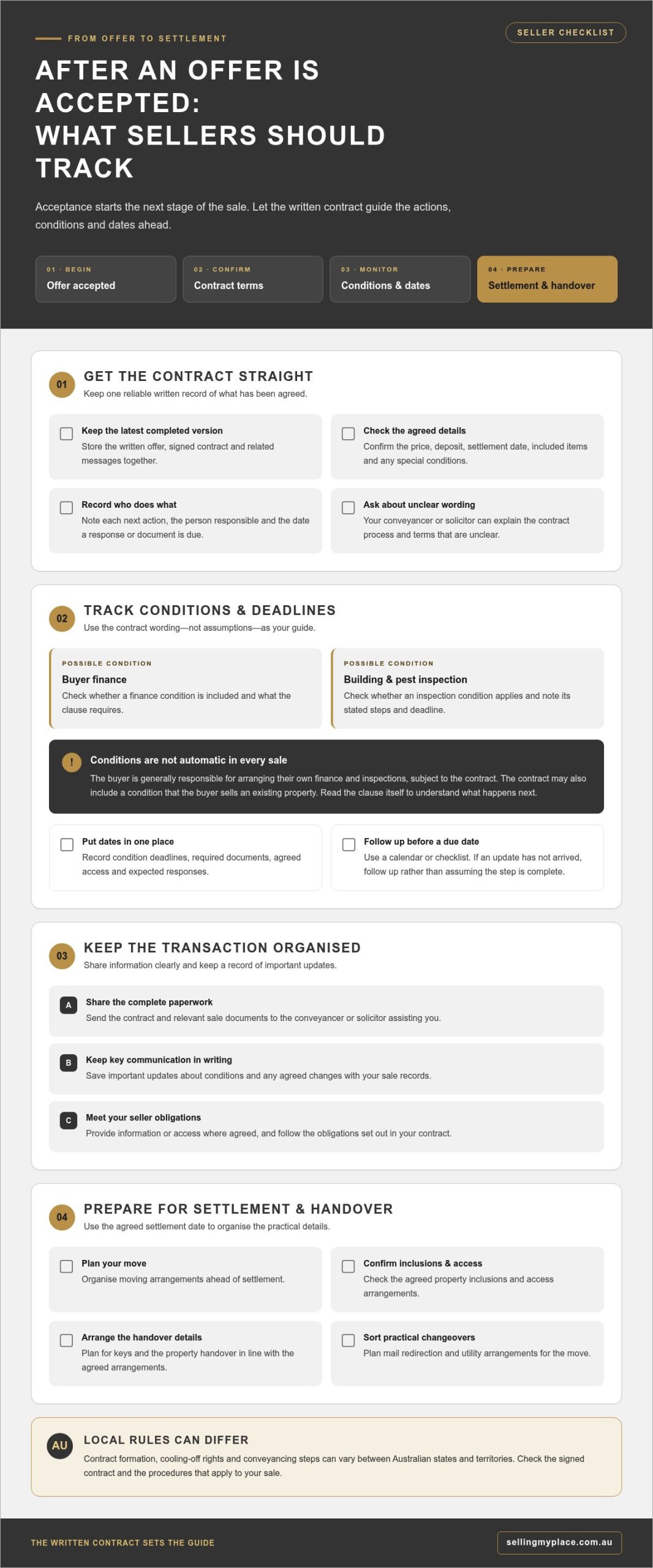
Once the offer is accepted, use the contract as your working guide rather than relying on a handshake or a summary of what was discussed. It sets out the sale terms, conditions and dates that can affect progress. Review the completed contract, identify the next actions, share relevant documents and keep a reliable record of deadlines and communications.
- Check the completed contract. Make sure you have the latest version, signed or otherwise completed through the process that applies to your sale. Confirm that the written price, deposit, settlement date, inclusions and special conditions match the agreed terms.
- Mark each condition and date. Record what needs to happen, who is responsible and when a response or document is due. A finance condition or building and pest inspection condition might be included, but neither is automatic in every sale.
- Share the paperwork. Send the complete contract and relevant sale documents to the conveyancer or solicitor assisting you. Keep copies of important communications, especially updates about a condition or an agreed change.
- Track progress and follow up. Use a calendar or checklist to monitor deadlines. If a due date is approaching and you have not received an update, follow up with the person handling that step rather than assuming it is complete.
The buyer is generally responsible for arranging their own finance and inspections, subject to the contract. As the seller, you need to meet your contractual obligations and provide information or access where agreed. An offer may also depend on the buyer selling an existing property if the contract includes that condition. Read the clause itself, since its wording determines what happens next.
There is no identical process across Australia. Contract formation, cooling-off rights and conveyancing steps can vary between states and territories, and the contract may set out additional requirements for your transaction. For vendors navigating regional markets, local agencies such as Ollie James Real Estate can provide helpful insight into regional sale practices and timing. Always ensure you rely on the terms and procedures that apply to your specific sale.
Which contract dates and conditions should sellers track?
Use the signed contract to confirm exact dates and wording. Record condition deadlines, required documents, agreed access arrangements and responses expected from either party. A shared calendar or written checklist makes responsibilities easier to follow, particularly when several people are coordinating the sale. If a clause is unclear, raise it promptly with your conveyancer or solicitor.
What does a conveyancer or solicitor do after acceptance?
Your conveyancer or solicitor helps progress transaction documents and communicates with the other parties about conveyancing. Give them the full signed contract and relevant sale documents, and keep them informed of any agreed changes. Their support helps coordinate the transaction, but you still need to follow the contract and complete your own tasks.
For practical guidance alongside the paperwork, sale-process advisory support can help you stay organised as the transaction moves forward.
Buyer finance and inspections: what sellers can expect
Some buyers need time after signing to confirm finance or arrange property inspections. Others make an offer without these conditions, or may already have completed some checks. What happens after accepting an offer on a house therefore depends on the terms in your contract, not on a universal checklist that every buyer must follow.
Distinguish between a contract with conditions still to be met and one that has become unconditional. If a finance or inspection condition applies, the buyer’s next steps may affect whether the transaction proceeds under the agreed terms. Once applicable conditions are satisfied or dealt with, the contract may move to an unconditional stage. The timing and legal effect depend on the contract and the rules in your state or territory.
While the buyer completes any agreed steps, keep your own actions practical and measured:
- Provide access for inspections as agreed and keep arrangements in writing.
- Note contract dates and pass relevant updates to your conveyancer or solicitor promptly.
- Keep messages, notices and documents about conditions together, including requests and proposed changes.
- Do not assume a delay or inspection finding means the sale has ended. Check the contract and get guidance on the next step.
What happens if the buyer’s finance is delayed or declined?
First, check whether the contract includes a finance condition and what it says about the buyer’s obligations, timing and any required notice. A lender taking longer than expected does not automatically end the sale, and a declined application does not automatically give you the right to terminate or keep the deposit. Record any notice or update, then discuss the contract steps promptly with your conveyancer or solicitor.
Keep communication calm and factual. If the buyer says their lender has not provided an answer, note when you received the update and share it with the person handling your conveyancing. Do not assume an extension, termination or entitlement to the deposit based on a phone call alone. Handle any change to the agreed process in line with the contract and applicable rules.
How should sellers handle building or pest inspections?
Findings can range from routine maintenance observations to issues the buyer wants clarified. Respond through the agreed communication process and avoid promising repairs or changing terms informally. If a report leads to a proposed variation, ask your conveyancer or solicitor how it relates to the contract before agreeing to anything.
Contract wording and relevant procedures can differ across Australia. Keep the signed terms close, meet your agreed obligations and get advice on a specific notice or request rather than relying on another sale’s experience. A pause in progress may simply mean a condition is still being dealt with.
A practical seller checklist for the weeks before settlement
As settlement approaches, small details can take up more headspace than expected. A clear checklist helps you keep documents, property arrangements and moving plans together, with the contract and your conveyancer or solicitor as your reference points. The weeks before handover can vary between sales, so organise around your confirmed settlement arrangements rather than assuming every transaction follows the same timetable.
For sellers wondering what happens after accepting an offer on a house, preparing early can help avoid last-minute scrambles. Start with the records and commitments connected to your sale:
- Sale documents: Keep the contract, any schedule of inclusions and relevant correspondence together. Add transaction documents requested by your conveyancer or solicitor.
- Written commitments: Save records of agreed repairs, access arrangements or other promises made during the sale. Make sure everyone involved has the same written details.
- Questions and deadlines: Note document requests and dates. Ask your conveyancer or solicitor to clarify anything you do not understand.
- Moving arrangements: Plan removal, mail redirection, address changes and utility arrangements around the settlement date and handover instructions.
Keep the checklist practical and up to date. If an arrangement changes, update your records and tell the people involved rather than relying on memory or an old message thread.
What documents and property details should you organise?
Gather documents relevant to your sale, including the signed contract, inclusion list, correspondence and anything specifically requested for the transaction. Check which items stay with the property, such as fixtures or appliances, and distinguish them from belongings you plan to take. If a document request or deadline is unclear, ask your conveyancer or solicitor what is needed and when.
Keep a brief record of agreed work or access as well. Note what was agreed, who is arranging it and any timing discussed. That gives everyone a shared reference if questions come up before handover.
How can you prepare for the final inspection and move?
The buyer may have a final inspection under the contract or the process used in your state or territory. Check the relevant terms and arrangements rather than assuming an inspection is automatic or has the same scope everywhere. Before handover, review the agreed inclusions and leave the property in the condition required by the contract. If you are unsure what that means for a particular item, raise it with your conveyancer or solicitor.
Coordinate removal and utility changes with the confirmed settlement arrangements. Plan mail redirection, address updates and utility changes around the move and handover. Keep keys and any agreed access items ready for the handover process.
For practical guidance while organising your sale and preparing for settlement, get support with your property sale.
Settlement day and what comes next for the seller
Settlement is the final milestone in the sale, but the arrangements depend on your contract and the process used for the transaction. Your conveyancer or solicitor will generally coordinate the required documents and communicate with the other parties about readiness. If settlement is completed electronically, they will also coordinate through the relevant electronic settlement process.
In plain terms, settlement is when the sale is completed under the contract, the buyer pays the balance and ownership is transferred. Where relevant, the process also includes paying out the seller’s mortgage. The sale proceeds are then distributed according to the transaction arrangements.
What happens on settlement day?
The general sequence is to confirm the parties are ready, complete settlement and follow the agreed handover arrangements. Your conveyancer or solicitor can update you on progress and confirm when settlement has occurred. The precise steps and timing can vary across Australia, so use your contract and transaction updates rather than assuming every sale follows the same procedure.
Hand over keys and possession as set out in the contract and related arrangements. Do not assume the buyer receives the keys at a particular time simply because settlement is scheduled for that day. Follow the instructions from the people coordinating the transaction and have the agreed handover items ready.
If you are unsure whether settlement has been completed, wait for confirmation from your conveyancer or solicitor before treating the property as handed over. If arrangements change or a delay arises, ask how it affects the agreed handover. This can prevent confusion on a day when you may also be managing a move or saying goodbye to your home.
Where can sellers get practical support through the sale?
A well-organised sale involves more than preparing the property for buyers. Owners also need to manage information, communications and transaction steps as the sale progresses. Property advice can help you approach those tasks with a clearer plan, while your conveyancer or solicitor coordinates the legal and settlement documentation.
Kincade International Direct Sales supports residential owners with property marketing and advisory guidance, including professional photography, floorplans and pre-sale consulting. Its flat-fee, commission-free model gives owners an alternative to a traditional agency commission. Advisory guidance can help you stay organised through the process, while legal and conveyancing matters remain with the professionals handling your transaction.
Settlement completes the agreed sale and marks the handover stage, subject to the contract and local process. If you are planning a residential sale and want practical support with property marketing and your next steps, discuss sale support with Kincade International Direct Sales.
Take your next property step with confidence
The offer is one milestone in a bigger transition. As you look ahead, make room to plan what comes next, whether you are coordinating a move, preparing for a new home or checking that the sale is progressing as agreed. A steady plan can make the change feel more manageable.
Understanding what happens after accepting an offer on a house also means knowing when to pause and seek clarity. Use your signed terms as the reference point, and direct questions about your obligations or the conveyancing process to the professional handling your transaction. You can also get practical guidance with the sale planning and property marketing involved.
Kincade International Direct Sales supports residential owners with property marketing and advisory options, including a flat-fee, commission-free model. If you are planning a sale and want support with marketing and your next steps, talk with us about selling your property.
With preparation and the right support, you can move into the next chapter feeling more settled and ready for what is ahead.
Frequently Asked Questions
Can I change my mind after accepting an offer on my house?
Possibly, but it depends on whether a contract has taken legal effect, what it says and the rules that apply where the property is located. Once a contract is binding, withdrawing may have serious consequences. Do not cancel arrangements or tell the buyer the sale is off based only on a conversation. Review the signed documents and speak promptly with your conveyancer or solicitor before taking action.
When does a house offer become legally binding in Australia?
There is no single trigger that applies to every Australian sale. The legal effect depends on how the offer and acceptance are documented, the contract terms and the jurisdiction. A verbal agreement is not a substitute for checking the paperwork. Ask your conveyancer or solicitor to explain when your contract takes effect, which conditions apply and whether any deadlines have started. Do not rely on a process described for another state or territory.
Is there a cooling-off period after accepting an offer on a house?
It depends on the state or territory, the contract and the circumstances of the sale. Cooling-off rights can have exceptions, so do not assume a period applies simply because an offer has been accepted. Check the contract for relevant terms and promptly seek guidance specific to your location. If you are unsure whether the agreement is binding or a deadline is close, raise that with your conveyancer or solicitor.
How long does it take to settle after accepting an offer?
There is no single settlement timeframe for every Australian house sale. If you are wondering what happens after accepting an offer on a house, check the settlement date recorded in the signed contract. The parties may agree to different arrangements, and finance, documents or other contract conditions can affect progress. If circumstances change, ask your conveyancer or solicitor how the agreed date and next steps are affected.
What happens if the buyer cannot get finance approval?
Check whether the contract includes a finance condition, what deadline applies and how the buyer must give notice. The outcome depends on those terms and the relevant rules, so do not assume the contract automatically ends or continues. Keep the buyer’s updates and any formal notices in writing. Before responding or agreeing to a change, ask your conveyancer or solicitor to explain the steps available under your contract.
Can I accept another offer after accepting one?
Do not treat a later offer as replacing an agreement already in place. Your obligations depend on whether the first contract has taken legal effect, its terms and the law that applies. Before making a commitment or telling another buyer their offer is accepted, refer the situation to your conveyancer or solicitor. This helps you understand how the existing agreement affects what you can do next.
What should I do with utilities when selling my house?
Plan utility changes around the contract’s settlement and possession arrangements, rather than cancelling services as soon as an offer is accepted. Essential services may need to remain available for agreed access, inspections or handover. Note meter readings, account responsibility and changeover arrangements as you prepare to move. Your conveyancer or solicitor can clarify transaction dates, and you can arrange account updates or closure with the relevant providers.