Reading Time: 5 minutes
Last Updated: May 2026
Quick Answer
Selling property privately in Australia means selling your home without using a traditional real estate agent. Instead of paying agent commissions, homeowners manage the pricing, marketing, inspections, negotiations, and sale process themselves — often saving thousands of dollars in commission fees. With the right preparation, legal documents, and property exposure, many Australians successfully sell privately using online listing platforms and professional support services.
Introduction
Selling a property is one of the biggest financial transactions most Australians will ever make. Traditionally, homeowners relied on real estate agents to handle the process, but more Australians are now choosing to sell privately to reduce costs and maintain full control over the sale.
Private property sales are completely legal across Australia and can provide substantial savings by eliminating agent commission fees that often range between 1.5% and 3% of the property’s final selling price.
In this guide, we’ll walk you through everything you need to know about selling property privately in Australia — from pricing and marketing your property to handling inspections, negotiations, and legal requirements.
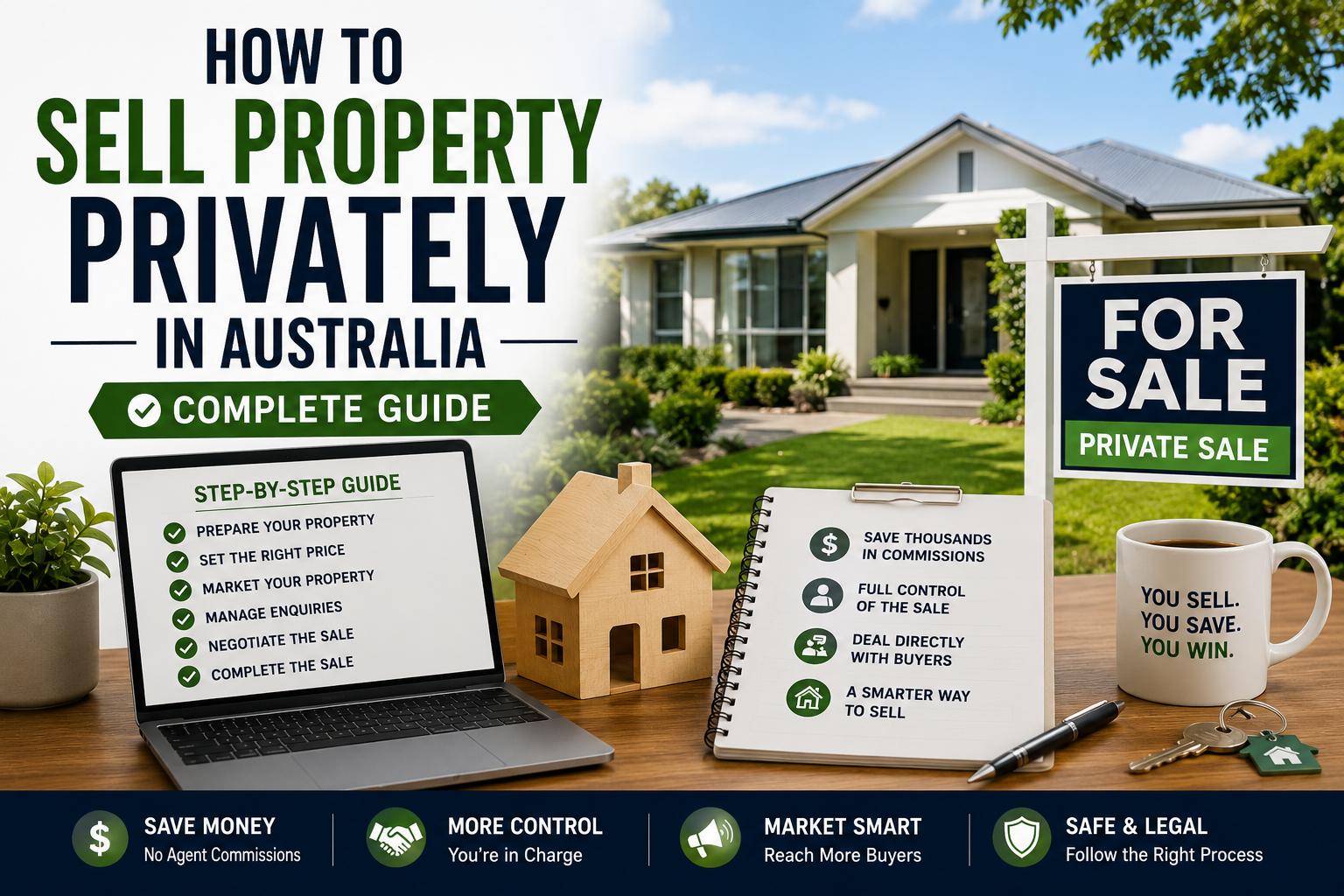
Step-by-Step Guide to Selling Property Privately in Australia
1. Prepare Your Property for Sale
First impressions matter. Before listing your property, take time to improve its presentation.
Important preparation steps:
- Declutter and clean the home
- Complete minor repairs
- Improve street appeal
- Consider professional photography
- Stage key living areas
A well-presented property can attract more buyers and improve your chances of achieving a higher sale price.
2. Research the Market and Set Your Asking Price
Pricing your property correctly is one of the most important parts of a successful private sale.
Ways to estimate your property value:
- Compare recent local sales
- Review current listings in your area
- Use online property valuation tools
- Obtain an independent property appraisal
Avoid overpricing your property, as this can reduce buyer interest and increase time on market.
Learn more in our guide on How to Price Your Property Without an Agent.
3. Create Your Property Listing
Your listing is your main marketing tool.
A strong property listing should include:
- A compelling headline
- Clear property description
- Key features and benefits
- High-quality photos
- Floor plans if available
- Accurate property details
Focus on lifestyle benefits as well as property features.
Example:
Instead of:
“3-bedroom house with backyard”Try:
“Spacious family home with entertaining area and low-maintenance backyard located close to schools and transport.”
Learn more in our guide on How to Create a Property Listing That Sells.
Property photos are often the first thing buyers notice online. Learn how to improve your listing presentation in our guide on How to Take Real Estate Photos (DIY vs Professional Photography)
4. Advertise Your Property
Exposure is critical when selling privately.
Many private sellers choose to advertise on major Australian real estate portals through private sale platforms that provide listing access without requiring a traditional agent.
Common advertising channels:
- Real estate websites
- Social media
- Facebook Marketplace
- Local community groups
- Property signage
- Email marketing
The more qualified buyers who see your property, the greater your chances of receiving competitive offers.
5. Manage Buyer Inquiries
Once your listing is live, potential buyers will begin contacting you.
Be prepared to:
- Respond promptly to inquiries
- Provide property information
- Schedule inspections
- Answer common buyer questions
Fast and professional communication can significantly improve buyer confidence.
Learn more in our guide on How to Handle Buyer Inquiries When Selling Property Privately.
6. Conduct Property Inspections
Private sellers can host:
- Private inspections
- Open homes
- Virtual inspections
Tips for successful inspections:
- Keep the property clean and bright
- Remove distractions and clutter
- Allow buyers to explore comfortably
- Be prepared to answer questions honestly
Buyers often decide emotionally during inspections, so presentation and atmosphere matter.
Learn more in our guide on How to Conduct Open Homes When Selling Privately.
7. Negotiate with Buyers
Negotiation is one of the most important stages of the sale process.
You may negotiate:
- Sale price
- Settlement period
- Deposit amount
- Included fixtures or appliances
Remain professional and avoid emotional decision-making.
Helpful tip:
Know your minimum acceptable price before negotiations begin.
Learn more in our guide on How to Negotiate Property Offers When Selling Privately.
8. Finalise the Legal Process
Once you accept an offer, the legal process begins.
Legal requirements may include:
- Contract of Sale
- Vendor Disclosure Statement
- Conveyancing
- Property certificates and disclosures
Requirements vary between Australian states and territories, so it’s recommended to work with a qualified conveyancer or solicitor.
Learn more in our guide on How to Close a Property Sale Privately in Australia
Costs of Selling Property Privately in Australia
One of the main reasons homeowners choose private selling is the potential cost savings.
Typical selling costs may include:
| Expense | Estimated Cost |
| Marketing package | Varies |
| Professional photography | $150 – $500 |
| Conveyancing / solicitor | $700 – $2,500 |
| Optional staging | Varies |
| Property advertising | Varies |
Real Estate Agent Commission Comparison
Traditional agent commissions in Australia commonly range between:
- 1.5% to 3% of the sale price
Example:
For a $900,000 property:
- 2% commission = $18,000
Selling privately may significantly reduce these costs.
Legal Requirements for Private Property Sales
Private property sales are legal throughout Australia, but legal requirements differ by state.
You may need:
- Contract of Sale
- Vendor disclosures
- Title documents
- Compliance certificates
- Cooling-off documentation
Because regulations vary, sellers should seek professional legal guidance to ensure compliance.
Pros and Cons of Selling Property Privately
Advantages
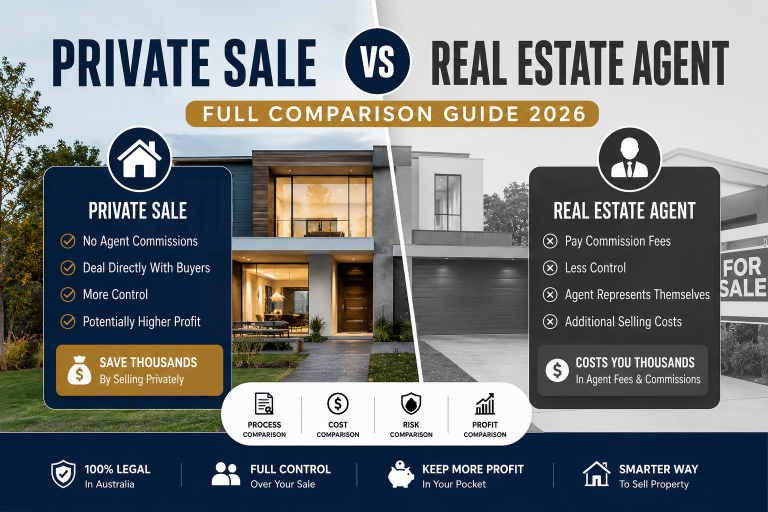
Save on commission fees
Potentially save thousands of dollars in agent commissions.
Full control
Manage pricing, negotiations, inspections, and marketing directly.
Direct communication
Speak directly with buyers without intermediaries.
Flexible selling process
Control schedules, inspections, and negotiations.
Disadvantages
Time commitment
Private selling requires active involvement.
Negotiation pressure
Some sellers may feel uncomfortable negotiating directly.
Marketing responsibility
You are responsible for attracting buyers.
Learning curve
Understanding the legal and sales process takes preparation.
Is Selling Privately Right for You?
Selling privately may suit homeowners who:
- Want to reduce selling costs
- Prefer direct buyer communication
- Are comfortable managing inquiries
- Want greater control over the process
However, sellers who prefer hands-off support may still choose traditional agents.
Final Thoughts
Selling property privately in Australia has become increasingly popular as homeowners look for ways to reduce commission costs while maintaining control over the sale process.
With the right pricing strategy, professional presentation, effective marketing, and proper legal support, many Australians successfully sell their properties without using a traditional real estate agent.
Preparation and knowledge are the keys to a successful private property sale.
Frequently Asked Questions
Can I legally sell my house privately in Australia?
Yes. Private property sales are legal across Australia.
How much can I save by selling privately?
Savings vary depending on the property value and local agent commission rates, but many sellers save thousands of dollars in commission fees.
Do I need a solicitor or conveyancer?
In most cases, yes. Legal professionals help prepare contracts and ensure compliance with state regulations.
Can private sellers advertise on major property websites?
Yes. Many private sale services provide access to major Australian property portals without requiring a traditional agent.
Sell Your Property Privately with Selling My Place
Selling My Place helps Australian homeowners market their properties privately while gaining exposure on major real estate platforms.
Whether you’re selling a house, apartment, or investment property, our platform helps you take control of the selling process while avoiding traditional agent commission fees.
Start your private property sale journey today with Selling My Place.
Private Selling Guides by Location
Selling property privately can vary depending on your state or city. Explore our location-specific guides below: