DIY Open for Inspections: The Ultimate Australian Guide
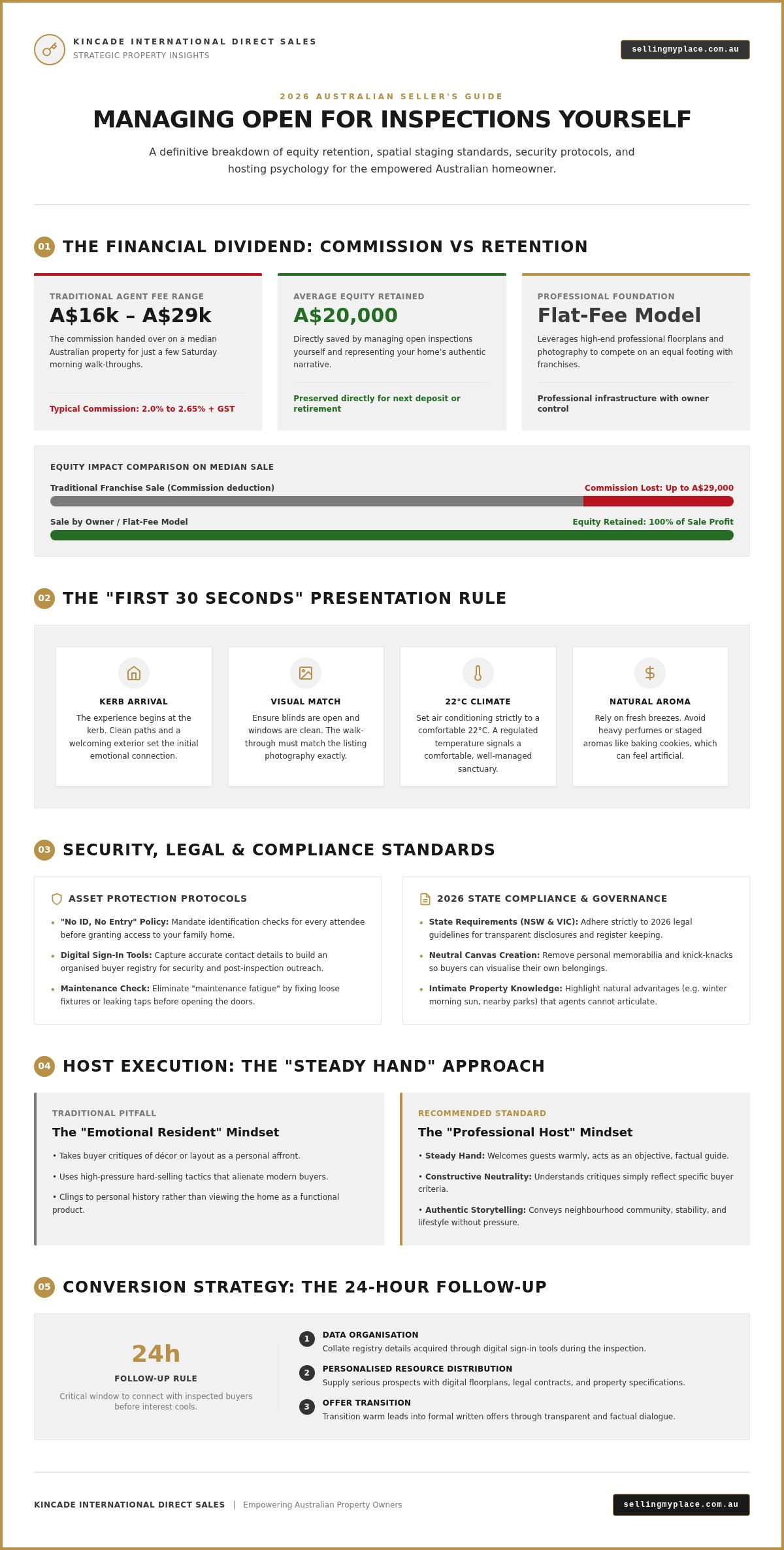
Did you know that the average Australian homeowner could be handing over between A$16,000 and A$29,000 in agent commissions just for the sake of a few Saturday morning walk-throughs? Selling your family home is a deeply emotional milestone, and the idea of strangers wandering through your private sanctuary can feel incredibly daunting. You might worry about coming across as too pushy or feel anxious about the security of your most valuable asset while managing open for inspections yourself. It is a significant transition, and it’s perfectly natural to feel protective of the place where you’ve built your life.
Here at Kincade International Direct Sales, we believe you’re the best person to tell your home’s story. This guide will show you how to host a professional, high-impact inspection that secures top-tier buyers while keeping your hard-earned equity exactly where it belongs. You’ll master the art of “pro in your pocket” hospitality, ensuring every visitor feels welcomed and every detail is handled with care. We’ll walk you through essential safety protocols, the latest 2026 legal requirements for states like Victoria and New South Wales, and the subtle staging secrets that create an immediate emotional connection for every buyer who walks through your front door.
Key Takeaways
- Discover how to retain an average of A$20,000 in sale profit by leveraging your unique property history and genuine passion for your home.
- Master the “First 30 Seconds” rule and learn the essential steps for managing open for inspections yourself to create a professional, neutral canvas that buyers can’t resist.
- Implement robust security protocols, including digital sign-in tools and “No ID, No Entry” policies, to protect your family’s sanctuary while capturing high-quality buyer data.
- Adopt a “steady hand” approach to hosting, allowing you to welcome guests warmly and answer questions with factual confidence without the pressure of a hard sell.
- Convert walk-throughs into genuine offers by using the 24-hour follow-up rule and providing personalised digital resources to your most promising leads.
The Benefits and Mindset of Managing Open for Inspections Yourself
Let’s talk about the elephant in the room: the money. Saving an average of A$20,000 in commissions is a life-changing amount of equity to keep in your pocket. In the current 2026 market, with national commissions sitting between 2.0% and 2.65% plus GST, managing open for inspections yourself is the most direct path to protecting your financial legacy. On a median Australian home, this can represent a saving of up to A$29,000. That is a significant boost to your next deposit or retirement fund (and perhaps a well-earned holiday, too).
But it’s about more than just the bank balance. You possess an intimate knowledge of your home that no agent can replicate in a brief walk-through. You know exactly which window catches the morning light in winter and which local park has the best playground for toddlers. While traditional agencies often claim that owners are “too emotional” to handle buyers, we believe your genuine passion is your greatest asset. When you speak authentically about the lifestyle your home offers, buyers feel a sense of trust that a polished sales pitch can’t replace. You aren’t just selling bricks and mortar; you’re sharing a story of stability and community.
Why the DIY Approach is Gaining Ground in Australia
The 2026 property landscape is more transparent than ever. With digital listing accessibility at our fingertips, the “empowered seller” has moved from the fringes to the mainstream. Modern Sale by owner strategies have evolved alongside technology, giving you the same marketing reach as the big franchises. Many Australians now prefer this direct partnership, valuing the control they have over their own schedules and the quality of buyer interactions. It feels less like a transaction and more like a thoughtful hand-over to the next generation.
Overcoming the “Owner Bias” Hurdle
To succeed, you must master a subtle psychological shift. You’re no longer the resident; you’re the professional property host. This means viewing your home as a “product” designed to meet a buyer’s aspirations. It involves creating a neutral canvas where strangers can visualise their own furniture in the lounge and their own kids in the backyard. When a visitor offers a critique, try not to take it personally. It isn’t a reflection on your memories; it’s simply a buyer trying to see if the house fits their specific needs. Maintaining this “steady hand” ensures you remain a calm, helpful guide throughout the process.
Utilising a flat-fee model provided by Kincade International Direct Sales offers the professional infrastructure, such as high-end floorplans and photography, that allows you to compete on a level playing field. It serves as your professional safety net, ensuring your home is presented with the decorum and authority it deserves while you focus on the heart of the home.
Preparing Your Home and Self for a Successful Inspection
First impressions are everything. The “First 30 Seconds” rule starts from the moment a buyer pulls up at the kerb. You want them to feel a sense of homecoming before they even step through the front door. When managing open for inspections yourself, your goal is to bridge the gap between the professional Photography in your listing and the reality of the walk-through. If the images promised a sun-drenched, airy sanctuary, ensure the blinds are up and the windows are sparkling. A home that looks exactly like its photos builds immediate trust.
Decluttering is your most powerful tool for creating a neutral canvas. It isn’t about erasing your life; it’s about making room for theirs. Removing personal photos or excessive knick-knacks helps prospective buyers imagine their own family heirlooms on your mantelpiece. To facilitate this, you might explore storage units (XS to XL) with JOIN ME self storage to temporarily house your items and maximise your floor space. Think about the sensory experience too. Open the windows to let in a fresh breeze, set the air conditioning to a comfortable 22 degrees, and avoid heavy perfumes or “staged” scents like baking cookies. A clean, fresh-smelling home feels reliable and well-loved. When managing open for inspections yourself, you’re not just opening a door; you’re curating a lifestyle.
The Pre-Inspection Checklist
Before the first visitor arrives, run through a final check to eliminate “maintenance fatigue.” This is the feeling a buyer gets when they see a long list of small jobs, like a dripping tap or a loose door handle, and start mentally deducting thousands from their offer. It’s often helpful to have a partner or friend walk through with fresh eyes to spot things you might have missed.
- Organise a professional clean, paying special attention to windows and high-traffic floor areas.
- Open all internal doors to create a sense of flow and space.
- Turn on every light, even during the day, to highlight the home’s best features.
- Play soft, ambient music at a low volume to settle the “quiet house” nerves.
Professional Marketing Materials on Display
Your hallway table should look like a high-end concierge desk. Providing physical floorplans and brochures allows guests to take a piece of your home with them. It keeps your property top-of-mind when they’re reviewing their options over coffee later that afternoon. Include a “Features List” that points out things they can’t see, like high-grade insulation or recent electrical upgrades. Most importantly, have Neighborhood Market Reports ready to show. This transparency builds immense credibility, proving that your asking price is grounded in local reality. If you’re feeling unsure about how to present these details, reaching out for expert pre-sale advice can help you refine your presentation to a professional standard.
The Logistics of the Day: Safety, Security, and Sign-ins
The morning of your first inspection is often a mix of excitement and nervous energy. While you’ve prepared the house to look its best, it’s equally important to prepare for the logistics of welcoming strangers into your private sanctuary. One of the most effective ways to maintain control is by implementing a strict “No ID, No Entry” policy. It’s a standard professional practice that buyers respect. By positioning yourself at the front door, you act as both a welcoming host and a diligent guardian of your family’s space. We strongly recommend using a “partner system” for every event. One person stays at the entrance to manage sign-ins, while the other floats through the home to answer questions and keep a watchful eye on the rooms. Never host an open house entirely alone; having that extra set of hands and eyes is essential for your confidence and safety.
When managing open for inspections yourself, you must be mindful of the Privacy Act 1988. The old-fashioned paper clipboard sitting on a hallway table is now a significant privacy risk, as it allows every visitor to see the names and phone numbers of those who arrived before them. Instead, use a digital sign-in app or a QR code on a framed stand. This ensures that buyer data remains private and secure, while also giving you a clean, accurate list for your post-inspection follow-ups. Most serious buyers expect this level of digital professionalism in 2026.
Managing the Flow of Visitors
If a group of people arrives at once, don’t feel rushed. Greet everyone warmly but keep them at the entrance until they’ve completed the sign-in process and shown identification. If the house starts to feel crowded, it’s perfectly acceptable to ask the next group to wait a moment in the garden or on the porch. This allows those already inside to experience the rooms without feeling cramped, ensuring every corner of your home gets the attention it deserves. Your role is to guide the rhythm of the day, ensuring a smooth and respectful experience for everyone involved.
Digital Security and Privacy Measures
Before the first guest arrives, take a moment to secure your digital life. Ensure your Wi-Fi network is password-protected and that any sensitive documents, such as bank statements or passports, are stored in a locked safe or moved off-site. Small electronics and prescription medications should also be tucked away. It’s a vital precaution because most Australian home insurance policies explicitly exclude theft or malicious damage caused by invited guests where there is no evidence of forced entry. While your policy likely includes up to A$20 million in public liability coverage for injuries, protecting your portable valuables is entirely up to you. If you have smart home cameras, ensure they are used ethically to monitor high-traffic areas, providing you with that extra layer of peace of mind throughout the day.
Hosting Like a Pro: Engaging Buyers Without the Hard Sell
Managing open for inspections yourself doesn’t mean you have to be a high-pressure salesperson. In fact, most Australian buyers find the presence of a pushy agent quite off-putting. They want to wander through your home at their own pace, imagining where their sofa will go or how the kitchen will work for their family dinners. Master the “soft greet”: a warm smile, a friendly hello, and a simple invitation to look around freely. Once you’ve checked their ID and registered them, step back. Give them space to breathe. You’re there as a resource, not a shadow.
When a buyer does approach you, adopt the “Steady Hand” approach. This means answering questions with calm, factual confidence rather than getting defensive or emotional. It’s helpful to categorise your visitors. Research suggests that up to 30% of attendees in suburban Australia are “looky-loos” or curious neighbours. Be polite to everyone, but save your deeper energy for the serious buyers who are asking about settlement terms or local school zones. By remaining objective, you build a bridge of trust that often leads to more transparent conversations.
Common Buyer Questions and Pro-Level Answers
One of the most common questions you’ll face is “Why are you selling?”. Avoid over-explaining or sounding defensive. Instead, keep it future-focused: “We’ve loved our time here, but we’re looking to downsize now that the kids have moved out.” For technical queries about easements or boundaries, never guess. It is perfectly professional to say, “That’s a great question; I’ll check the contract with my solicitor and get back to you this afternoon.” This accuracy protects you and shows the buyer you’re a serious, reliable vendor.
The Art of the Subtle Close
As guests prepare to leave, use open-ended questions to gauge their interest. Asking “How does this home compare to others you’ve seen today?” provides vital feedback without sounding desperate. If they seem keen, you might mention that you’ve already received a few enquiries or point them toward the property sale negotiation tips you’re following to ensure a fair deal for everyone. Before they walk out, ensure they have a brochure and your direct mobile number. If you’d like a “pro in your pocket” to help rehearse these conversations, you can book an agent advisory session to sharpen your hosting skills before the big day.
Post-Inspection Strategy: Turning Walk-throughs into Offers
Once the last visitor has left and you’ve locked the front door, the real momentum begins. Managing open for inspections yourself doesn’t end when the “Open Home” sign comes down; it simply shifts into a more strategic gear. In the Australian market, your speed and professionalism during the follow-up phase often determine how quickly you move from a walk-through to a signed contract. It’s about maintaining that connection you’ve built throughout the day.
Apply the 24-hour follow-up rule. Reach out to every attendee while the memory of your home is still fresh. It’s helpful to categorise your leads into three groups. “Hot” leads are those who asked for settlement terms or requested a contract. “Warm” leads are visitors who spent significant time in the property and asked lifestyle questions. “Cold” leads are typically those who did a quick circuit and left. Send a personalised SMS or email thanking them for their time and include a link to your digital floorplan. This small gesture provides genuine value and keeps your property top-of-mind without feeling intrusive.
Analysing Your Feedback
Don’t be afraid to ask for honest feedback. Use a simple template to gather market insights, asking what they liked most and if anything didn’t quite meet their expectations. If several buyers mention that the “kitchen feels dark,” it’s a clear signal to adjust your lighting before the next weekend. Consistent feedback is a gift. It tells you exactly how the market perceives your home’s value. If you receive complex or conflicting signals, our Real Estate Advisory Services can help you interpret these patterns and decide if a shift in presentation or price is necessary.
Readying the Contract
In the fast-paced 2026 market, being “offer-ready” is essential. Ensure your Section 32 or Contract of Sale is digital and ready for instant sharing via email or a QR code link. Buyers appreciate the transparency of having the legal details at their fingertips immediately after an inspection. We recommend collaborating closely with your Conveyance Advice provider to ensure you’re prepared to handle incoming offers the moment they arrive. There is an incredible sense of accomplishment in closing a deal with confidence, knowing you’ve navigated the process with heart and kept every cent of the commission for your family’s future.
Your Path to a Successful, Commission-Free Sale
You have the tools, the local knowledge, and the genuine heart to present your home better than any third party ever could. By mastering the shift from resident to professional host and implementing robust security measures, you have laid the groundwork for a smooth inspection day. Remember that managing open for inspections yourself is simply about facilitating an emotional connection while maintaining a steady, objective hand during those vital buyer conversations. It is a significant life transition, but it’s one you are now fully equipped to handle with grace and authority.
You don’t have to navigate this journey alone. With professional marketing tools like high-end photography and floorplans at your disposal, plus expert pre-sale consulting to guide your strategy, you can confidently keep 100% of your sale profit. It’s time to take control of your property’s legacy and ensure your hard-earned equity stays exactly where it belongs. We’re here to act as your “pro in your pocket” whenever you need a steady hand to guide you through the process.
Start your commission-free selling journey with our expert advisory today and move toward your next chapter with total peace of mind. You’ve worked hard for your home; now, let’s make sure it works hard for you.
Frequently Asked Questions
Do I legally need an agent to host an open for inspection in Australia?
You are legally permitted to host your own property inspections in every Australian state and territory. However, compliance is key. In New South Wales, you must have a completed Contract of Sale ready before any advertising or inspection takes place. Similarly, Victorian sellers must provide a Section 32 Vendor’s Statement. Managing open for inspections yourself requires following these statutory standards to ensure your sale remains legally sound and protected from potential rescission.
What is the best time and day to hold an open house for maximum turnout?
Saturday is the undisputed king of the Australian open home circuit, typically between 10:00 am and 2:00 pm. This window captures the highest volume of active buyers. For properties in high-demand metropolitan areas, a 30-minute weeknight “twilight” inspection on a Thursday can also be effective. This caters to busy professionals who want to view a home before the weekend rush, helping you build early momentum for your listing.
How do I handle a buyer who wants to negotiate the price on the spot?
If a buyer attempts to negotiate on the spot, maintain your professional decorum. It’s best to thank them for their interest and ask them to submit their offer in writing via email or your digital platform. This gives you space to consult with your solicitor or advisory service without the pressure of an immediate verbal commitment. A formal process ensures that every offer is documented and treated with the seriousness it deserves.
Is it better to have a “Price on Application” or a clear price guide?
Providing a clear price guide is generally more effective than “Price on Application” (POA). In the current 2026 market, buyers value transparency and often filter out listings that lack a price range. A clear guide attracts qualified leads who are actually in your budget, whereas POA can lead to frustration and missed opportunities. Using a Neighborhood Market Report helps you set a realistic range that justifies your expectations to prospective purchasers.
How do I prevent “tyre kickers” from wasting my time during inspections?
You can minimise time-wasters by asking qualifying questions during the sign-in process. Ask if they have a property to sell first or if they’ve already secured finance pre-approval. While you should be welcoming to everyone, focusing your deeper conversations on those who provide specific feedback or ask about settlement terms is a smart way of managing open for inspections yourself. It keeps your energy high for the most serious prospects.
What should I do if nobody shows up to my first open for inspection?
If your first inspection has no attendees, don’t lose heart. It’s usually a signal to review your marketing visibility or your price guide. Check that your listing is prominent on the major portals and that your photography is doing the heavy lifting. You might consider booking a session with a real estate advisory service to audit your presentation and ensure your digital “shop front” is appealing to the right demographic.
Should I provide food or drinks for people attending the inspection?
Keep it simple and professional. While the scent of fresh coffee is a classic touch, providing actual food can be a distraction and creates a risk of spills on your carpets. A few chilled bottles of water on a hot day are a thoughtful, neighbourly gesture that buyers appreciate. Your focus should remain on the property’s features and the lifestyle it offers rather than running a catering service.
How many open for inspections should I plan before considering a price change?
We generally recommend reviewing your strategy after three to four weeks of active inspections. If you have hosted six to eight opens without receiving a serious offer or consistent “warm” leads, the market is giving you a clear signal. This doesn’t always mean a price drop is necessary; sometimes a fresh set of professional photos or a minor adjustment to your marketing copy can reignite buyer interest and attract a different pool of purchasers.
How to Run an Open House Without an Agent: The 2026 Australian Seller’s Guide
Would you hand over $33,000 of your hard-earned equity just for someone to unlock your front door and hand out a few brochures? With the national median house price sitting at $1.28 million in 2026, that is the reality of traditional commission rates. It is completely natural if the thought of learning how to run an open house without an agent feels a little daunting. You might worry about appearing unprofessional or feel a sense of anxiety about inviting strangers into your sanctuary, especially as the property market cools in our major capital cities. You deserve to feel both protected and prepared during such a significant life transition.
The truth is that a successful open home is not a high-pressure sales pitch; it is a curated lifestyle experience. We will show you how to master the art of the “open for inspection” to build competition and secure a premium price without paying a cent in commission. This guide provides a steady hand through the 2026 landscape. We will cover everything from meeting new state disclosure laws to the subtle presentation touches that make buyers fall in love, ensuring you stay in total control of your sale from the first hello to the final handshake.
Key Takeaways
- Master the “sweet spot” of timing to create social proof and genuine urgency among local buyers during your inspection window.
- Learn the emotional psychology behind the “display home” lifestyle and how strategic decluttering helps buyers visualise their own future in your space.
- Discover exactly how to run an open house without an agent by adopting a “steady hand” persona that feels both professional and welcoming to your neighbours and potential buyers.
- Implement the 24-hour follow-up rule to capture momentum and learn to distinguish polite feedback from serious financial intent.
- Utilise professional visuals and expert advisory support to build a competitive environment that secures a premium result while protecting your family’s equity.
Strategic Planning: Open House vs. Private Inspections
In the Australian property market, the “open for inspection” is more than just a logistical task; it’s a psychological masterstroke. When you’re learning how to run an open house without an agent, you have to appreciate the power of social proof. Seeing a crowd at the front gate or a queue in the hallway signals to potential buyers that your home is a hot commodity. it creates an immediate sense of urgency that a quiet, one-on-one private viewing simply cannot replicate. While a private inspection offers intimacy, the open house builds the competitive tension needed to drive offers toward that premium price point.
Timing is your greatest ally here. You might be tempted to leave the doors open for hours, but the “sweet spot” is actually much shorter. Aim for a 30 to 45-minute window. This condensed timeframe forces all interested parties to arrive at once, creating a visible “buzz” that suggests high demand. To understand the foundational concept of what is an open house and its role in real estate marketing, it’s helpful to view it as a curated event rather than an all-day drop-in centre. Stick to the Saturday morning tradition, usually between 10:00 am and 12:00 pm, to align with the rhythms of local buyers who are already out and about on the “open house trail.”
Setting the Scene for Success
Success starts at least two weeks before you turn the key. Once your listing is live, you need that lead time to build momentum and enquiry. Check the Bureau of Meteorology closer to the date; the Australian sun can be harsh, so have the air conditioning running or fans circulating well before the first guest arrives. If a sudden downpour hits, a bucket for umbrellas and a mat for wet shoes at the entrance shows you’re a thoughtful, organised host. Your “Open House Kit” should be ready to go, including sign-in sheets, professional brochures, and a summary of the contract of sale for those ready to move quickly.
Legal and Safety Foundations
Your safety and peace of mind are paramount. While you’re learning how to run an open house without an agent, remember that you’re the person in charge of your domain. A visitor register isn’t just for follow-up calls; it’s a vital security and insurance requirement. Ensure every guest provides their name and contact number before entering. Since you’re selling privately, check your home insurance policy regarding public liability for visitors. To protect your sanctuary, create a “Safe Zone” by removing small valuables, jewellery, medications, and sensitive documents from sight. This allows you to focus on being a welcoming host without the distraction of worry.
Presentation: Creating the ‘Display Home’ Lifestyle
When you’re mastering how to run an open house without an agent, your primary objective is to facilitate a mental shift in your visitors. You are no longer showing them your home; you are presenting a product that could become theirs. This transition from “lived-in” to “aspirational” relies heavily on the emotional psychology of first impressions. Buyers don’t just look at floorboards and kitchen benches. They look for a lifestyle that feels more organised, peaceful, and elevated than their current one. If they can’t visualise their own morning coffee in your kitchen, they won’t make an offer.
The golden rule of preparation is simple: if an object does not add value to a room’s specific purpose, it belongs in storage. This goes beyond a quick tidy-up. You need to depersonalise with heart. While you want to keep the warmth of a family residence, you must remove the specific “you” from the space. Family photos, trophies, and idiosyncratic collections should be packed away. Replacing them with neutral, high-quality textures like linen throws or local greenery maintains the soul of the house without making guests feel like they are intruding on your private life.
To truly help buyers commit, you must provide the tools for their imagination. Professional floorplans are essential here. They allow a couple to stand in an empty corner and mentally place their favourite armchair or heirlooms. Without a floorplan, many buyers leave feeling uncertain about dimensions, which often leads to a “no” simply because they couldn’t solve the spatial puzzle in their heads. If you’re feeling overwhelmed by the staging process, our team can provide tailored advice to help you prepare.
The Sensory Experience
Light is your most powerful staging tool. Open every blind and curtain to invite the Australian sun inside. You should also “centre” your lighting by turning on every lamp and overhead light, even during a bright afternoon, to highlight architectural features. Fresh air is equally vital. Avoid heavy perfumes or the old “baked cookies” trope, as these can feel like you’re hiding something. Instead, focus on neutral cleanliness and ensure the temperature is a cool sanctuary. Following a comprehensive Ultimate Open House Checklist can help you track these small but vital sensory details before the first guest arrives.
Curb Appeal and the ‘Drive-By’ Test
The “five-second” rule is real. Many buyers will perform a drive-by before they ever commit to an inspection. If the front garden is overgrown or the entrance looks neglected, they might not even step out of the car. Fresh mulch, manicured lawns, and a sparkling front door are non-negotiable. Strategic signage is the final touch. Place “Open House” pointers at the nearest major intersections to capture local traffic and neighbours who might know someone looking to move into the area. This visibility reinforces your status as a professional and prepared seller.
Hosting with Confidence: Managing the Big Day
Stepping into the role of host requires a specific mental shift. When you’re learning how to run an open house without an agent, your most effective tool isn’t a sales pitch; it’s the “steady hand” persona. Buyers often feel pressured by traditional agents who hover and push for immediate feedback. You can stand out by being the calm, authoritative, and welcoming guide. Your goal is to be present enough to answer questions but distant enough to let buyers emotionally “move in” as they walk through your rooms. You aren’t a desperate salesman; you’re a proud homeowner facilitating a major life transition for someone new.
The Greeting Protocol sets the tone for the entire visit. As guests arrive, a warm “Welcome, feel free to take your time looking around” is far more effective than a barrage of questions. If a buyer asks a technical question about the property’s structure or local zoning that you aren’t 100% certain about, don’t guess. A powerful response is: “That’s a great question; I’ll double-check that with my advisor and get back to you this afternoon.” This protects your credibility and ensures you don’t accidentally provide incorrect information that could complicate a later contract.
Once guests are inside, honour the “Quiet Tour.” Allow people the space to whisper to their partners and visualise where their own furniture might sit. If you follow them from room to room, you break the spell. Instead, remain in a central area like the kitchen or living room, ready to assist if they look your way. This approach builds trust and shows you’re confident in the value of your home.
The Professional Sign-In Process
Capturing contact details is vital for both security and follow-up, but it must be handled with care. While many tech-savvy Australian sellers prefer digital registers on a tablet for ease of data entry, a high-quality paper register can feel more personal and less transactional. Whichever you choose, ensure you’re meeting Australian privacy standards by keeping the list out of sight from other guests. As they finish their tour, offer a tangible takeaway. A professional brochure that includes a neighborhood market report provides immense value, giving them the data they need to justify a premium offer later that evening.
Security and Crowd Control
Managing the flow of traffic is where a “Sale by Owner” campaign truly benefits from the “Two-Person” Rule. Having a trusted friend or family member help you is essential, especially if twenty groups arrive at once. One person can manage the front door and sign-in process while the other stays inside to answer questions and keep an eye on the property. If a room becomes too crowded, don’t be afraid to politely ask guests to wait a moment in the garden. Once the 30 to 45-minute window closes, perform a final walkthrough of every room. Check that all windows are locked, small valuables are still secure, and lights are off before you sit down to review your visitor list.
From Foot Traffic to Formal Offers: The Follow-Up
Once the final guest has departed and you have locked the front door, the most critical phase of your campaign begins. While the physical preparation was about aesthetics, the follow-up is about momentum. The “24-hour rule” is your guiding principle here. If you wait several days to contact your visitors, the emotional connection they felt while walking through your sun-drenched living room will have started to fade. By calling every person on your register within one business day, you demonstrate that you are a professional, organised seller who is serious about a result.
Learning how to run an open house without an agent means becoming adept at deciphering buyer feedback. You will quickly find that “it’s a lovely home” is often a polite way of saying the property isn’t for them. You are looking for “genuine intent,” which sounds very different. Serious buyers ask about settlement terms, request copies of the strata report, or inquire about recent council rates. When you identify these “hot” prospects, your role is to move the conversation from verbal interest to a formal “Letter of Offer” as quickly as possible. This written commitment is the only way to truly gauge a buyer’s capacity and desire.
Ethically creating a sense of competition is also part of this process. If you have multiple parties showing interest, it is perfectly acceptable to let them know. A simple, honest statement like, “I’ve had a couple of requests for the contract this morning,” can be enough to encourage a hesitant buyer to put their best foot forward. You aren’t playing games; you are simply providing them with the market context they need to make a decision.
The Art of the Follow-Up Call
Your follow-up script should be gentle and inquisitive rather than pushy. Start with a simple opening: “Hi, it’s [Your Name] from [Address]. I’m just touching base to see what your thoughts were on the home now that you’ve had some time to reflect.” If the feedback is negative, don’t take it personally. Instead, use those insights to determine the market value of your property more accurately. Sometimes, the market is telling you that a small adjustment in strategy or price is needed to find the right match.
Negotiation and Closing
When the offers do start arriving, stay grounded. The first offer you receive is often from the most eager buyer, but it isn’t always the best price the market will give you. This is where mastering property sale negotiation tips becomes invaluable. You are the one holding the phone and making the decisions, so take your time to breathe and consult your notes. Once you have agreed on a price and terms, it’s time to introduce your conveyancer to handle the legal exchange. If you find the negotiation phase daunting, our expert advisors can guide you through the conversation to ensure you secure the best possible outcome for your family.
The Competitive Edge: Selling Smarter with Expert Backing
It’s a common misconception that taking the reins of your own sale means navigating the complex Australian property market in total isolation. It doesn’t have to be that way. While you are the face of your home, having a “steady hand” in the background provides the professional authority needed to secure a premium result. If you’ve been wondering how to run an open house without an agent while still maintaining a professional edge, the answer lies in a collaborative model. You manage the heartfelt, personal connection with buyers; we provide the high-octane marketing and strategic advice that usually costs tens of thousands in commissions.
Your digital “invite” is the first point of contact. Professional Photography and floorplans are not just optional extras; they are the essential tools that get people through your door in the first place. In a cooling 2026 market, buyers are more discerning than ever. High-quality visuals signal that the property is well-maintained and that the seller is serious. When this is paired with an Agent Advisory Service, you gain a secret weapon for those technical moments. Whether it’s a question about a complex clause in the contract or a buyer trying to low-ball based on national trends, you have expert guidance just a phone call away.
The financial impact of this partnership is profound. On a median-priced capital city home of $1.28 million, saving the typical 2.65% commission keeps over $33,000 in your pocket. Think about what that does for your next chapter. It might mean a higher deposit for your next family legacy, a complete renovation of your new kitchen, or a significant boost to your retirement stability. By choosing a flat-fee model, you protect your hard-earned equity and ensure that every cent of the final sale price belongs to your family, not an agency.
The KIDS Advantage
Kincade International Direct Sales (KIDS) offers a global marketing reach that ensures your open house is seen by more than just local neighbours. Our pre-sale consulting acts as a professional review of your presentation, ensuring your “display home” lifestyle is ready for the 2026 buyer. We provide a flat-fee promise with 0% commission, meaning there are no time limits on your campaign and no hidden marketing costs. You get the professional floorplans, photography, and advisory support needed to lead your sale with total confidence.
Empowerment Through Partnership
There is a powerful psychological shift that happens when you move from “I hope it sells” to “I am selling my home.” This empowerment comes from knowing you have the best tools in the industry at your disposal. As you prepare for your first inspection, use this final checklist to ensure you’re ready:
- Are your professional floorplans and brochures displayed prominently?
- Have you secured your “Safe Zone” and organised your visitor register?
- Is the temperature controlled and the lighting “centred” to highlight your home’s best features?
- Do you have your advisor’s number ready for those tricky negotiation questions?
By following this guide, you aren’t just running an inspection; you’re protecting your family’s legacy and taking charge of one of life’s most significant transitions with heart and expertise.
Your Path to a Successful Commission-Free Sale
The journey from listing to a final settlement is one of the most significant transitions your family will ever undertake. By mastering how to run an open house without an agent, you’ve taken back the keys to your financial future and your peace of mind. You’ve seen that a premium result isn’t born from high-pressure sales tactics. Instead, it comes from a curated lifestyle presentation and the calm, steady confidence of a well-prepared host. Whether it’s the strategic timing of your 30-minute inspection or the disciplined follow-up within 24 hours, these professional habits ensure you remain in total control of your sale.
You don’t have to walk this path in isolation. With an average saving of $20,000 in commissions, you can protect your hard-earned equity while still enjoying the security of professional photography, detailed floorplans, and expert Agent Advisory backing at every step. This partnership ensures that while you lead the way, you always have a seasoned expert standing right behind you. Are you ready to take the next step toward a smarter, more rewarding sale? Start your commission-free selling journey with KIDS today. Your home is a vital part of your legacy; we are here to help you move forward with the respect and reward you deserve.
Frequently Asked Questions
Is it legal to run an open house without a real estate agent in Australia?
Yes, it’s completely legal to sell your own home in every Australian state and territory. While you can manage the marketing and inspections yourself, you must engage a solicitor or conveyancer to handle the legal transfer and contract preparation. This ensures you meet all disclosure requirements, like the seller disclosure scheme in Queensland that came into effect in August 2025, providing peace of mind for both you and your buyer.
How do I handle security and prevent theft during an open for inspection?
Protecting your sanctuary starts with a strict visitor register. Ensure every guest provides their name and contact number before they enter your home. By removing small valuables, medications, and sensitive documents, you create a safe environment for everyone. Having a trusted friend or family member present allows you to manage the flow of people effectively, ensuring no room is left unattended while you’re busy answering questions.
What should I do if a buyer wants to make an offer on the spot?
If a buyer makes an offer on the spot, acknowledge their enthusiasm with a warm smile. It’s a wonderful sign of interest, but it’s best to ask them to put their intent in writing through a formal Letter of Offer. This gives you the space to breathe and consult with your advisor before making a decision. Moving from a verbal chat to a written document ensures the process remains professional and grounded.
Do I need to provide a Section 32 or contract of sale at the open house?
You absolutely need to have your legal documents ready before you open your doors. In states like New South Wales and Victoria, a Contract of Sale or Section 32 must be available to prospective buyers before the property is even advertised. Having these documents prepared by your conveyancer shows buyers that you are an organised seller who is ready to facilitate a smooth, transparent transition for the next family.
How many open houses should I run before considering a price adjustment?
Typically, you should run your campaign for three to four weeks, covering six to eight inspections, before reviewing your price. With capital city house prices falling by 1.4% in the June quarter of 2026, it’s vital to stay responsive to market feedback. If you’ve mastered how to run an open house without an agent but aren’t seeing offers, your advisor can help you determine if a strategic adjustment is necessary.
What are the most important things to mention to buyers during the tour?
Focus on the aspects of the home that a brochure can’t capture, such as the way the morning sun hits the breakfast nook or the quietness of the street at night. Mentioning local community highlights, like the best nearby coffee shop or school zones, helps buyers visualise their new lifestyle. Your role as a host is to provide that local insider knowledge that makes the house feel like a future home.
Should I have my pets at home during the open house?
It is best to have your pets away from the home during an inspection. While your furry family members are a joy to you, some buyers may have allergies or feel uneasy around animals they don’t know. Taking your dog for a long walk or dropping your cat at a sitter’s house ensures the environment remains neutral and calm, allowing buyers to focus entirely on the property’s features without any distractions.
How do I follow up with buyers without sounding desperate?
Following up doesn’t have to feel pushy if you focus on gathering feedback. When you’re learning how to run an open house without an agent, use the 24-hour rule to check in and ask what they liked most about the home. This approach feels like a helpful consultation rather than a sales pitch. It allows you to build a relationship with genuine prospects while staying in total control of the narrative throughout the sale.
