What is a Vendor’s Statement? The Essential Australian Guide to Property Disclosure
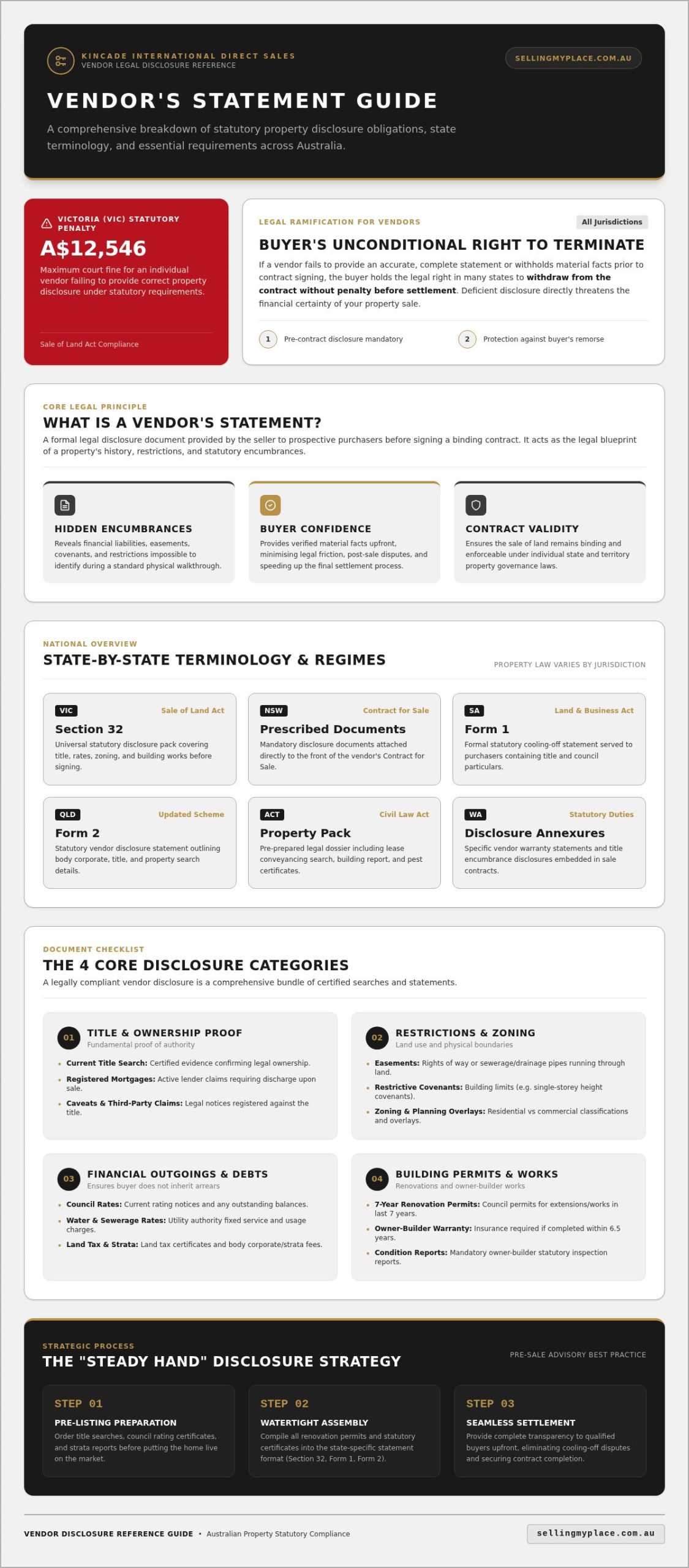
Did you know that in Victoria, an individual vendor can face a court fine of up to A$12,546 for failing to provide the correct property disclosure? It’s a sobering figure that highlights just how serious the legal side of selling can be. Selling your home is a major life transition, and it’s completely normal to feel a bit overwhelmed by the mountain of paperwork landing on your kitchen table. You’re likely asking yourself, what is a vendor’s statement, and why does every state seem to have a different name for it?
We understand the weight of this responsibility and the fear of getting it wrong. This guide will demystify exactly what this document entails, why it’s the most critical piece of your property sale, and how to navigate the legal requirements across Australia with absolute confidence. You don’t have to face this alone or worry about high conveyancing costs eating into your hard-earned equity. We’ll walk you through the specific rules for your state, from Section 32s to Form 1s, and provide a clear checklist to ensure your disclosure is watertight so you can focus on your next chapter.
Key Takeaways
- Gain a clear understanding of what is a vendor’s statement and how this essential disclosure document protects your interests throughout the sale.
- Identify the specific documents required in your state, from title searches to easement details, to ensure your contract remains legally sound.
- Learn why having your paperwork organised before your property goes live on the market fosters buyer confidence and speeds up the settlement process.
- Discover how to navigate complex disclosure laws without the stress of high commissions by using expert pre-sale property consulting.
- Empower yourself with a practical checklist of information you must share to avoid common legal pitfalls and secure a successful, commission-free sale.
What is a Vendor’s Statement in the Australian Property Market?
If you’re preparing to sell your home, you’ve likely come across a pile of paperwork that feels a bit daunting. At its heart, what is a vendor’s statement? It’s a formal legal disclosure document that you, as the seller, must provide to a potential purchaser before they sign a contract. The vendor’s statement is the legal blueprint of a property’s history and restrictions. It serves as the primary way to inform a buyer about encumbrances, financial obligations, or land use issues that aren’t easily spotted during a physical inspection or a Saturday morning walkthrough.
Transparency is the cornerstone of a successful sale. If you fail to provide an accurate or complete statement, the consequences are significant. In many states, a buyer has the legal right to withdraw from the contract without penalty before settlement if the disclosure is found to be deficient. This can be a devastating outcome after you’ve already started packing your boxes and planning your move. Getting this document right isn’t just about ticking a box; it’s about protecting your financial future and ensuring your sale remains “sold”. Professional Victorian agencies like Fateh Real Estate emphasize that this level of disclosure is what builds the necessary trust between a vendor and a prospective buyer.
Why Transparency Protects Your Sale
Choosing to be completely open about your property’s history is a strategic move that builds immediate credibility. When a serious buyer sees a thorough disclosure, they feel a sense of security. It reduces the likelihood of “buyer’s remorse” or legal disputes that can flare up long after the keys have changed hands. We often talk about the “steady hand” approach to selling. By being honest and proactive now, you save yourself a world of stress and potential litigation later. A complete statement shows you’re an organised, professional seller who respects the process and the people involved.
Common Names for the Statement Across Australia
Because property law is managed by state and territory governments, the name of this document changes depending on where your home is located. In Victoria, it’s almost universally called a “Section 32”, which refers to the specific part of the Sale of Land Act. If you’re selling in New South Wales, these disclosures are typically bundled as prescribed documents within the Contract for Sale. South Australians will know it as a “Form 1”, while Queenslanders now use a “Form 2” under their updated disclosure scheme.
While the names differ, the statutory vendor disclosure requirements in Australia all share the same underlying spirit. Whether you’re providing a property pack in the ACT or navigating the specific requirements in Western Australia, the goal is to ensure the buyer has all the material facts before making a life-changing decision. Understanding these local variations is the first step toward a confident, commission-free sale.
The Core Ingredients: What Must Be Disclosed?
Understanding what is a vendor’s statement requires looking closely at the legal bones of your property. It isn’t just a single document. Instead, it’s a comprehensive folder of certificates that ensures the buyer knows exactly what they’re stepping into. At the very top of your list is a current Title Search. This proves you’re the legal owner and reveals any mortgages or caveats that need to be cleared before the property changes hands.
Beyond ownership, you must disclose easements and covenants. Easements, such as sewerage pipes running through your backyard, or restrictive covenants that stop you from building a second storey, can significantly impact a buyer’s plans. Zoning information is equally vital. It confirms if the land is residential or commercial and identifies any specific overlays. You’ll also need to include financial details to ensure the buyer isn’t inheriting your debts. These typically include:
- Current council rates and any outstanding amounts.
- Water and sewerage charges.
- Land tax certificates, where applicable.
- Body corporate or strata fees if the property is on a shared title.
For a reliable benchmark on these requirements, Consumer Affairs Victoria’s guide to Section 32 statements offers a clear look at these statutory duties.
Building Permits and Warranty Insurance
Transparency about building works is non-negotiable. If you’ve renovated or extended in the last seven years, those permits must be included in your disclosure. Owner-builders have additional responsibilities. They often need a condition report and warranty insurance if the works were completed within the last six years and six months. Leaving out unapproved structures, like a “DIY” deck or shed, is a gamble that rarely pays off. It often leads to collapsed sales or messy legal claims after the settlement date.
Environmental and Neighbourhood Factors
Your disclosure must also cover the environment around your fence line. This includes whether the property is in a bushfire-prone area or has a flood-plain overlay. You’re also required to share any formal notices from authorities about future local developments, such as a planned road widening or new infrastructure nearby. These details are critical when you look at how to determine market value of a home in australia, as they affect long-term desirability. If you’re feeling unsure about which specific certificates apply to your street, a quick chat for conveyance advice can provide the steady hand you need.
State-by-State Breakdown: Navigating Regional Rules
Property law in Australia isn’t a “one size fits all” affair. Each state and territory operates under its own specific legislation, which means the answer to what is a vendor’s statement depends largely on where your fence line sits. This regional variation can feel like a hurdle, but it shouldn’t deter you. Whether you’re in a high-disclosure state like Victoria or a “buyer beware” region, the commission-free sale process is absolutely viable. It simply requires a steady hand and the right local knowledge. Securing professional conveyance advice early on is the smartest way to ensure you meet your specific local obligations without the stress of hidden legal traps.
Victoria, NSW, and Queensland Requirements
In Victoria, the rules are particularly clear. A Section 32 is mandatory and must be ready before your property is even “offered” for sale. You cannot legally market the home to the public without this document in place. Moving across the border to NSW, the focus shifts to the Contract of Sale. Specific prescribed documents, such as a Section 10.7 zoning certificate and a drainage diagram, must be attached before you start showing buyers through the front door. Queensland recently updated its framework with the Property Law Act 2023. As of 1 August 2025, sellers must provide a formal Form 2 Seller Disclosure Statement. If you’re selling a unit or townhouse, providing body corporate certificates and sinking fund details is now a critical part of the process. These eastern states place a significant burden of disclosure on the seller to ensure the buyer is fully informed before signing.
Western Australia, SA, and the Territories
South Australia uses a rigorous disclosure document known as a Form 1. This must be served to the purchaser at least 10 clear days before the settlement date. In many cases, the service of this form is what actually triggers the buyer’s statutory two-day cooling-off period. In Western Australia, the approach is slightly different. While WA doesn’t have a single “vendor’s statement” for general land, disclosure is managed through specific warranties within the Contract for Sale of Land. It remains a more traditional “buyer beware” environment, yet material facts about the property’s structural integrity or illegal drug contamination must still be shared to avoid future litigation.
The Territories and Tasmania have their own unique disclosure packets. In the ACT, the seller must commission and provide building, pest, and energy efficiency reports upfront. This is a significant shift from other states where the buyer typically covers these costs. While the names and timelines change across the country, the spirit of disclosure remains the same. Being organised with your paperwork shows you are a professional seller who values transparency and a smooth transition for the next family to call your house a home.
Preparing Your Statement: Timing and Professional Support
Timing is everything. Many homeowners only start asking what is a vendor’s statement after they’ve found a keen buyer, but that’s a risky strategy. You should ideally have your disclosure document finalised before your property ever goes live on the market. In a “Sale by Owner” context, having your paperwork ready is a significant advantage. It signals to every person walking through your open home that you are a professional, organised seller. This transparency builds immediate rapport and gives buyers the confidence to make an offer on the spot.
The process of gathering information starts with contacting your local council, water authorities, and state land registries. You’ll need to collect various certificates regarding zoning, rates, and any notices issued against the land. While you can certainly take the lead in collecting these raw documents to speed things up, the final assembly requires a qualified eye. A legal professional should always draft the final version to ensure every statutory requirement is met.
The Risk of the ‘DIY’ Legal Document
It might be tempting to use a generic template you’ve found online to save a few dollars. However, this is one area where “doing it yourself” can backfire. A minor omission or a misinterpretation of a planning overlay can grant the buyer a legal “right to rescind”. This allows them to walk away from the contract at the 11th hour without penalty. It’s a heartbreaking situation that is easily avoided. Our expert real estate advisory service is designed to help you spot these potential red flags early, keeping your sale on track.
Working with a Conveyancer or Solicitor
A professional conveyancer typically requires about 7 to 14 days to produce a complete statement. This timeframe depends on how quickly local authorities respond to certificate requests. When looking at the costs, you’ll encounter professional fees for the expert’s time and “disbursement” fees, which are the third-party costs for the certificates themselves. We understand that managing these details can feel stressful. That’s why SellingMyPlace integrates expert conveyance advice directly into our partnership approach. We provide the steady hand you need to navigate the legalities of disclosure without the burden of high commissions.
Ready to ensure your paperwork is watertight? Contact our advisory team for a pre-sale consultation.
Selling Smarter: How Expert Advisory Simplifies Disclosure
Taking control of your property sale doesn’t mean you have to walk the path alone. By now, you’ve gained a deep understanding of what is a vendor’s statement and why it serves as the foundation of a secure transaction. At SellingMyPlace, through the Kincade International Direct Sales (KIDS) approach, we’ve reimagined the selling journey. We pair professional authority with heartfelt support. Our Agent Advisory Service acts as the steady hand you need to navigate these complex disclosure requirements. We ensure you’re never just a number in a database, but a partner in a shared mission to protect your family’s legacy.
Success in the modern Australian market requires a two-pronged strategy. First, you need professional marketing, including high-end photography and detailed floorplans, to capture the buyer’s imagination. Second, you need total legal readiness. When these elements work together, you create a sense of trust that naturally leads to higher offers. By having your disclosure documents prepared and vetted early, you eliminate the friction that often kills deals at the last minute. You’re not just listing a house; you’re presenting a transparent, high-value opportunity to the market.
The Partnership Advantage
The traditional DIY route can feel isolating and fraught with legal anxiety. In contrast, the KIDS partnership model provides a safety net. We offer the expertise of a seasoned advisor who understands the emotional significance of your transition. This backing significantly reduces the stress of managing paperwork. If you’re curious about how this fits into the broader process, our guide on how to sell your own home provides the full context you need to move forward with confidence.
Your Next Steps to a Successful Sale
Your journey toward a successful, commission-free sale starts with a single, informed step. We encourage you to reach out for a comprehensive neighbourhood market report to ground your expectations in current data. Remember, the average seller saves around A$20,000 in commissions by choosing this path. That’s a significant amount of equity that stays in your pocket for your next adventure. Getting the foundations right, starting with a watertight vendor’s statement, is the key to unlocking these savings. Contact our expert team today to discuss your commission-free sale and let’s start this chapter together.
Your Path to a Confident, Commission-Free Sale
Selling your family home is more than a transaction; it’s the start of a new chapter. By understanding exactly what is a vendor’s statement and how it functions as the legal backbone of your sale, you’ve already taken a massive step toward a successful outcome. Whether you’re navigating Victoria’s Section 32 or South Australia’s Form 1, being prepared with the right title searches and certificates ensures you stay in the driver’s seat. You don’t have to tackle the legal complexities alone or worry about high costs. Our partnership model means you have a steady hand guiding you through every disclosure requirement.
With expert pre-sale consulting and comprehensive conveyance advice included, you can move forward with total peace of mind. Remember, the average seller saves around A$20,000 in commissions by choosing this transparent, direct path. It’s about keeping your equity where it belongs while ensuring your sale is watertight and professional. Ready to sell smarter and keep 100% of your profit? Contact our expert advisory team today. We’re here to help you protect your legacy and celebrate this significant life transition with confidence.
Frequently Asked Questions
Can I sell my house without a vendor’s statement in Australia?
In most Australian states, including Victoria, New South Wales, and Queensland, you cannot legally sell your residential property without a formal disclosure document. Failing to provide one usually grants the buyer a statutory right to rescind the contract at any time before settlement. While Western Australia operates under a different framework, sellers are still bound by strict warranties. We always recommend having your paperwork finalised before listing to ensure your sale is legally robust and professional from day one.
How long is a vendor’s statement valid for?
There isn’t a single expiry date for the entire document, but the individual certificates within it must be current to be legally valid. Most legal professionals recommend that documents like title searches and council rate certificates be no more than three to six months old. If your property remains on the market for an extended period, you may need to refresh certain reports to ensure the information remains accurate for a new purchaser. This keeps your disclosure “live” and protects you from claims of outdated data.
What happens if I forget to disclose something in the Section 32?
Forgetting a material fact in your Section 32 or vendor’s statement can be a costly mistake that jeopardises your transaction. If the omission is significant, such as a hidden easement or an unapproved renovation, the buyer may have the legal right to walk away from the sale and receive their full deposit back. In some jurisdictions, you could also face statutory fines. Our Agent Advisory Service acts as a steady hand to help you identify these details early, reducing the risk of a collapsed sale.
Do I need a lawyer to prepare my vendor’s statement?
While you can technically gather the certificates yourself, it is highly recommended to have a qualified conveyancer or solicitor prepare the final document. The legal requirements for what is a vendor’s statement are strict, and even a small clerical error can lead to a rescinded contract. At SellingMyPlace, we integrate expert conveyance advice into our partnership approach. This ensures your disclosure is professionally drafted while you still enjoy the benefits of a commission-free, flat-fee sale that protects your hard-earned equity.
Is a vendor’s statement the same as a contract of sale?
No, they are two distinct documents that serve different purposes in the selling process. The vendor’s statement is a disclosure document that provides the buyer with essential facts about the property’s history, zoning, and restrictions. The Contract of Sale is the legal agreement that outlines the purchase price, settlement date, and commercial terms. In many states, these two documents are bundled together, but the statement focuses on “what” is being sold, while the contract focuses on the “how” of the transaction.
How much does it cost to get a vendor’s statement drafted?
The cost typically consists of two parts: the professional fee for the conveyancer’s time and the disbursement costs for the required certificates. Disbursement costs vary depending on your local council and water authority, as they charge different rates for their reports. Since we operate on a flat-fee model, we focus on providing expert pre-sale consulting to help you manage these foundations efficiently. This approach ensures you save an average of A$20,000 in commissions compared to traditional agencies while still receiving professional support.
Does the vendor’s statement show if there is a mortgage on the property?
Yes, a vendor’s statement must include a current title search, which will show any registered mortgages or caveats currently on the land. This transparency allows the buyer’s legal team to confirm that any existing mortgage will be discharged at the time of settlement. It is a standard part of every property transaction and doesn’t affect your ability to sell, provided there is enough equity to cover the debt. Being open about these details from the start builds a foundation of trust with your potential purchaser.
What is the difference between a Section 32 and a Section 10.7 certificate?
A Section 32 is the term used in Victoria to describe the entire vendor’s statement package. In contrast, a Section 10.7 certificate is a specific planning document required in New South Wales that details how a property can be used, including zoning and development restrictions. While a Victorian Section 32 includes many different certificates, a Section 10.7 is just one of the prescribed documents that must be attached to an NSW Contract of Sale before a property can be marketed to the public.
Legal Requirements for Selling a House Privately in Australia: The 2026 Seller’s Guide
What if the only thing standing between you and an extra $20,000 in your pocket was a stack of paperwork? It’s a common misconception that you need a traditional agent to manage the law, but in reality, you have every right to take the lead yourself. We understand that the thought of handling the legal requirements for selling a house privately in australia can feel a bit daunting. You’re likely worried about making a mistake with the Contract of Sale or getting tripped up by the new 2026 AML/CTF identity checks; it’s a lot to take in when you’re also trying to plan a major life transition.
It’s okay to feel that weight. After all, your home is your biggest asset and your family’s sanctuary. We’re here to act as your steady hand through this process. In this guide, you’ll discover exactly which documents you need to stay fully compliant with Australian law while skipping the high commission fees. We’ll walk you through state-specific rules, like the Victorian Section 32 and the latest Queensland disclosure regime, so you can reach settlement with a clear head and a genuine sense of pride.
Key Takeaways
- Confirm your right to sell without an agent, as Australian law treats agents as marketing intermediaries rather than a legal necessity for property transfers.
- Identify the specific legal requirements for selling a house privately in australia, including the crucial 2026 AML/CTF identity verification and ATO clearance protocols.
- Navigate the maze of state-specific disclosure documents, such as the Section 32 in Victoria or the Form 1 in South Australia, to ensure your contract is bulletproof.
- Avoid common compliance traps related to underquoting and consumer law by learning how to set honest price guides and accurate marketing materials.
- Understand the path to a successful settlement, including the exchange of contracts and the role of digital platforms like PEXA in finalising your sale.
Can You Legally Sell Your Own House in Australia?
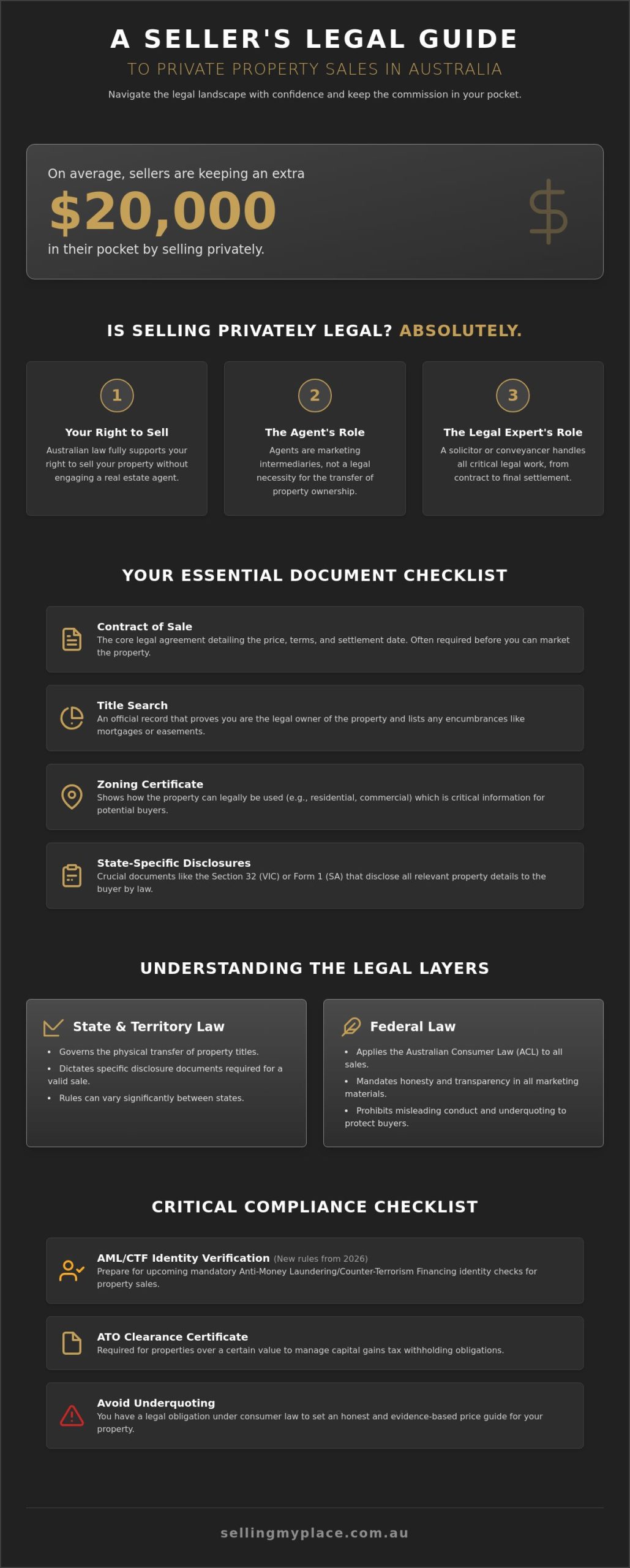
The short answer is a resounding yes. There is absolutely no law in Australia that requires you to hire a real estate agent to sell your property. It’s your home, your equity, and ultimately, your choice. Many homeowners feel a bit of “legal jitters” when they first consider going it alone, but once you peel back the curtain, the process becomes much clearer. Real estate agents are effectively marketing and negotiation intermediaries; they aren’t legal necessities. While they might handle the “for sale” signs and the open homes, they don’t actually perform the legal transfer of land. That critical step is handled by a solicitor or a licensed conveyancer who ensures all the legal requirements for selling a house privately in australia are met with precision.
It’s helpful to remember that the “real” legal work happens during the conveyancing phase. This is the formal process of transferring the title from your name to the buyer’s. While an agent might facilitate the handshake, the solicitor handles the heavy lifting of the contract and settlement. You also need to be aware that the Australian Consumer Law (ACL) applies to you as a private seller just as it does to a large agency. This means you have a legal obligation to be honest and transparent in your dealings. If you keep things “above board” and follow the right protocols, selling your own home is a perfectly legal and highly rewarding path.
The Role of State vs. Federal Law
Property law in our country is a bit of a patchwork. Most of the rules regarding how land is transferred and what documents you need are governed by individual States and Territories. This is why the Australian property law landscape can feel a bit confusing if you’re looking for a single national rulebook. However, Federal law still plays a part through the ACL, which ensures that all property marketing is honest and covers things like misleading conduct. Even though you’re managing the sale yourself, you’ll still need a professional to handle the technical technicalities of conveyancing. This partnership ensures you remain compliant with state disclosure laws while the Federal rules keep the marketplace fair for everyone involved.
Why More Australians are Choosing Private Sales in 2026
The shift towards selling your own home has gained massive momentum lately. By mid-2026, we’ve seen a huge move towards digital transparency and flat-fee models that put the power back in the hands of the homeowner. Why pay a massive commission when you can access the same listing platforms and professional advisory services for a fraction of the cost? On average, sellers are saving around $20,000 per sale. That’s a significant amount of equity to keep in your pocket for your next chapter. It’s about having a “steady hand” to guide you through the compliance while you handle the personal touches. People want a partnership, not just a transaction. With the right support, managing the legal requirements for selling a house privately in australia becomes a manageable, empowering experience rather than a source of stress.
The Essential Legal Documents for a Private Sale
Once you’ve decided to take the reins, the next step is gathering your paperwork. Think of these documents as the structural integrity of your deal. The legal requirements for selling a house privately in australia aren’t meant to be hurdles; they’re safeguards for both you and your buyer. The most critical piece is the Contract of Sale. It’s often called the ‘holy grail’ of the transaction because it outlines everything from the price to the settlement date. Alongside this, you’ll need a Title Search. This proves you actually own what you’re selling and highlights any encumbrances, such as mortgages or easements, that might affect the transfer. Zoning certificates are also vital, as they show exactly what the land can and cannot be used for, which is a major factor for any buyer looking to renovate or develop.
In states like Victoria and South Australia, disclosure is king. You’ll need either a Section 32 or a Form 1. These statements are your way of telling the buyer, “Here is everything you need to know about this property.” Providing these documents isn’t just a courtesy; it’s a legal obligation. If you’re feeling a bit overwhelmed by the volume of paperwork, you might want to reach out for a chat with an advisor who can help you organise these essentials without the stress.
Preparing the Contract of Sale
In many parts of Australia, particularly New South Wales, you must have a contract ready before you even list the property online. It’s a common trap to wait for a buyer before starting the paperwork, but being prepared shows you’re a serious, reliable seller. Your contract should include all necessary certificates, such as pest and building reports or pool safety certificates if applicable. Accurate floorplans are also a legal necessity for the property description. They ensure the buyer knows exactly what they are purchasing, which reduces the risk of disputes later on. By having everything ready to go, you create a sense of calm and confidence that buyers find incredibly reassuring.
Vendor Disclosure Requirements
Honesty is your best policy when it comes to disclosure. You’re legally obligated to inform the buyer about certain things, like structural issues or illegal building works. If you stay silent on these “defects,” a buyer might have the legal right to pull out of the sale even after the contracts are signed. To help set a fair price and stay transparent, using professional Neighborhood Market Reports can be a game changer. These reports help you justify your price legally by showing comparable sales in your area. If you want to dive deeper into the specifics, the official guide on the private sale process in Victoria offers a great breakdown of how these disclosure statements protect both parties during the journey.
State-by-State Legal Nuances Across Australia
While the right to sell your own home is a national one, the specific “how-to” changes as soon as you cross a state border. It can feel like you’re learning a new language for every territory, but we’re here to help you translate. In New South Wales, the law is quite firm: you cannot even put a “for sale” sign in your front garden or list the property online until a full Contract of Sale is ready. Victoria, on the other hand, is famous for the Section 32 Vendor Statement. It’s a comprehensive disclosure that can feel like a mountain of paperwork, but it’s there to protect your legacy and the buyer’s future. Getting these details right is a core part of the legal requirements for selling a house privately in australia, ensuring you don’t face any hiccups later on.
Queensland has traditionally been a “buyer beware” state, but the new 2025 disclosure regime has shifted more responsibility onto the seller to be upfront about the property’s history. Meanwhile, over in Western Australia, they skip the standard contract for an “Offer and Acceptance” system. This process is unique but follows the same underlying principles of fairness and transparency. Each state has its own rhythm; once you understand the local beat, you can move forward with total confidence.
Cooling-Off Periods: A National Overview
The cooling-off period is your buyer’s “safety net,” and the length of this net depends on where you live. For example, Victoria offers three business days, while New South Wales and Queensland provide five. South Australians have a shorter two-day window. It’s important to know that in Western Australia, there is no mandatory cooling-off period unless you specifically write it into the contract. You can sometimes legally waive or shorten this period, such as through a Section 66W certificate in NSW, which is often used to speed up a sale when both parties are ready to commit without the extra wait.
Trust Accounts and Deposits
One question we often hear is, “Where does the deposit go if I don’t have an agent’s trust account?” It’s a fair concern. Usually, the 10% deposit is held in your solicitor’s or conveyancer’s trust account. This keeps the funds safe and independent until settlement day. Even “holding deposits” must be handled with care; your legal advisor will ensure these small initial sums are documented correctly to avoid any misunderstandings. By using a professional trust account, you ensure the legal requirements for selling a house privately in australia are met while providing peace of mind for everyone involved.
Compliance in Marketing: Underquoting and Consumer Law
Marketing your home is where your personal story meets the open market. It’s a joyful stage, but it’s also where Australian Consumer Law (ACL) watches most closely. When you are capturing the essence of your home, your Photography must be a true reflection of the property as it stands today. While we all want our homes to look their best, digitally removing a neighbouring power pole or hiding structural cracks crosses the line from “best foot forward” into deceptive conduct. There’s a subtle legal difference between “puffery”, those enthusiastic, subjective claims like “the most charming garden in the street”, and factual misrepresentation. If you state a home has a “newly renovated kitchen” when the cupboards were merely repainted, you risk breaching the legal requirements for selling a house privately in australia. Honesty isn’t just the best policy; it’s the law.
Avoiding the Underquoting Trap
The “Price Guide” trap is another area where private sellers often feel a bit of pressure. In the 2026 market, transparency isn’t just a buzzword; it’s a legal necessity. Underquoting occurs when a property is advertised at a price lower than your true estimated selling price or lower than a price you’ve already rejected. To stay on the right side of the law, you must document how you arrived at your price. Using professional market value guides ensures your range is grounded in recent, comparable sales data. If you receive a written offer that is higher than your current advertised price, you’re generally required to update your marketing to reflect this new market reality. It’s about keeping the process fair for every family looking for their next home.
Privacy and Data Laws
Beyond the price tag, you also have a duty to protect the people who walk through your front door. When you host an “Open for Inspection”, you’ll likely collect contact details for follow-ups. Handling this buyer data requires compliance with privacy laws and the Spam Act. You can’t just add every visitor to a generic marketing list without their consent. It’s best to have a simple sign-in sheet that clearly states how their information will be used. Ensuring your digital listing follows the specific terms of service of the platforms you use is equally important. If you’re feeling unsure about the fine print of marketing compliance, get in touch with our team for a pre-sale consultation to ensure your campaign is as safe as it is beautiful.
From Handshake to Settlement: The Legal Final Line
The journey from a simple handshake to the final settlement is often the most rewarding yet technically demanding phase of your sale. This is where the legal requirements for selling a house privately in australia reach their formal conclusion. It all begins with the exchange of contracts. Once both parties have signed and the deposit is safely held, the deal becomes legally binding. In our modern 2026 market, almost all of this happens through PEXA (Property Exchange Australia). This digital platform has revolutionised the way we settle, allowing for the instantaneous transfer of funds and title without the old school paper shuffle. It’s faster, more secure, and gives you that immediate peace of mind that the sale is truly complete.
Before the big day arrives, your buyer has the legal right to a final inspection. This usually happens in the few days leading up to settlement. It’s their chance to ensure the property is in the same condition as when they signed the contract. You’ll also need to work with your solicitor to calculate “adjustments”. These are the final tallies for council rates, water charges, and land tax, ensuring you only pay for the exact days you owned the home. It’s a precise process, but it ensures everyone walks away with a fair and transparent result.
Navigating the Settlement Period
The time between exchange and settlement is usually 30, 60, or 90 days, depending on what you’ve negotiated. While these dates are fixed in the contract, life can sometimes throw a curveball. A buyer might ask for a short extension due to bank delays, or in very rare cases, they might face a default. Knowing your rights and obligations during these weeks is vital for a smooth transition. Having professional Conveyance Advice on hand can turn a high-stress situation into a manageable one. It’s about having a “steady hand” ready so your settlement stays on track and your plans for the future remain secure.
The Kincade Advisory Advantage
We believe that selling your home yourself shouldn’t mean doing it alone. Our Sale by Owner support is designed to bridge the gap between your personal touch and the complex legal requirements for selling a house privately in australia. You get the expert backing of a seasoned advisor without the commission-driven pressure of a traditional agency. By following our final checklist, you can move toward settlement with total confidence. You’ve worked hard for your home’s equity, and we’re here to help you protect every cent as you move toward your next adventure.
Step Into Your Next Chapter with Confidence
Taking the lead on your own sale is an empowering way to protect your family’s future and your hard-earned equity. By now, you can see that the legal requirements for selling a house privately in australia are simply a matter of following the right protocols with a trusted partner by your side. From preparing the initial Contract of Sale to navigating the digital finality of a PEXA settlement, you have the roadmap to manage each step with total clarity. You aren’t just avoiding a transaction; you’re ensuring that the legacy of your home remains firmly in your hands.
We believe every homeowner deserves professional backing without the commission-driven pressure. Through our dedicated Agent Advisory Service, you’ll have a seasoned expert to guide you, ensuring your property is listed until it’s sold with absolutely no time limits. Our sellers save an average of $20,000 per sale, a significant sum that belongs in your pocket for your next adventure. You have the tools, the right, and a steady hand ready to support you.
Ready to sell smarter? Explore our commission-free listing packages today.
Your path to a successful, legally sound settlement is clear. We look forward to helping you achieve the result your home deserves.
Frequently Asked Questions
Do I need a solicitor for the final settlement?
Yes, you certainly do. While you have the right to manage your own marketing and negotiations, the actual transfer of the title must be handled by a legal professional. They use digital platforms to ensure the transaction meets all the legal requirements for selling a house privately in australia, protecting your interests during the final exchange of funds.
What special conditions should I consider for my contract?
Common conditions include “subject to finance,” “pest and building inspections,” or even a specific settlement date that suits your family’s move. These clauses provide a safety net for both parties. Your solicitor will help you draft these accurately to ensure they are legally enforceable and reflect the specific agreement you’ve reached with your buyer.
How do I list on Australia’s major property portals as a private seller?
While the leading property search websites generally only accept listings from licensed entities, you can gain access through a flat-fee advisory service. This allows your home to appear alongside every other listing in the country. It’s a clever way to ensure you get maximum exposure without the burden of traditional agency commissions.
Can a buyer pull out if they find a defect after signing?
If a significant defect was not disclosed in the contract or vendor statement, a buyer may have the legal right to rescind the contract. This is why thorough disclosure is so important. By being upfront about the property’s history, you reduce the risk of the deal falling through during the cooling-off period or leading to a dispute later on.
What is the difference between a holding deposit and a full deposit?
A holding deposit is a small sum often paid to show “good faith” while the contract is being finalised. However, it doesn’t legally secure the property. The full deposit, usually 10 per cent, is paid upon the exchange of contracts and is held in a solicitor’s trust account. This is the point where the deal becomes much more certain for everyone involved.
Can I sell my home privately if I still have an active mortgage?
Absolutely. Most Australian sellers have a mortgage when they decide to move. Your solicitor will simply coordinate a “discharge of mortgage” with your bank. On the day of settlement, the buyer’s funds are used to pay off your loan balance, and the remaining equity is transferred directly to you. It’s a routine part of the process.
How often should I update my price guide to stay compliant?
You should review your price guide whenever you receive new market information, such as a formal written offer that exceeds your current range. Staying compliant with the legal requirements for selling a house privately in australia means your advertised price must always reflect your genuine “estimated selling price.” Regular updates keep your marketing honest and your sale safe from underquoting claims.
Is a verbal offer legally binding in Australia?
No, a verbal offer is not legally binding in any Australian state or territory. For a property sale to be enforceable, the agreement must be in writing and signed by both the seller and the buyer. This protects you from buyers changing their minds at the last minute before the ink is dry on the contract.
