Buyer Representation in Australia: The 2026 Guide to Smarter Property Purchasing
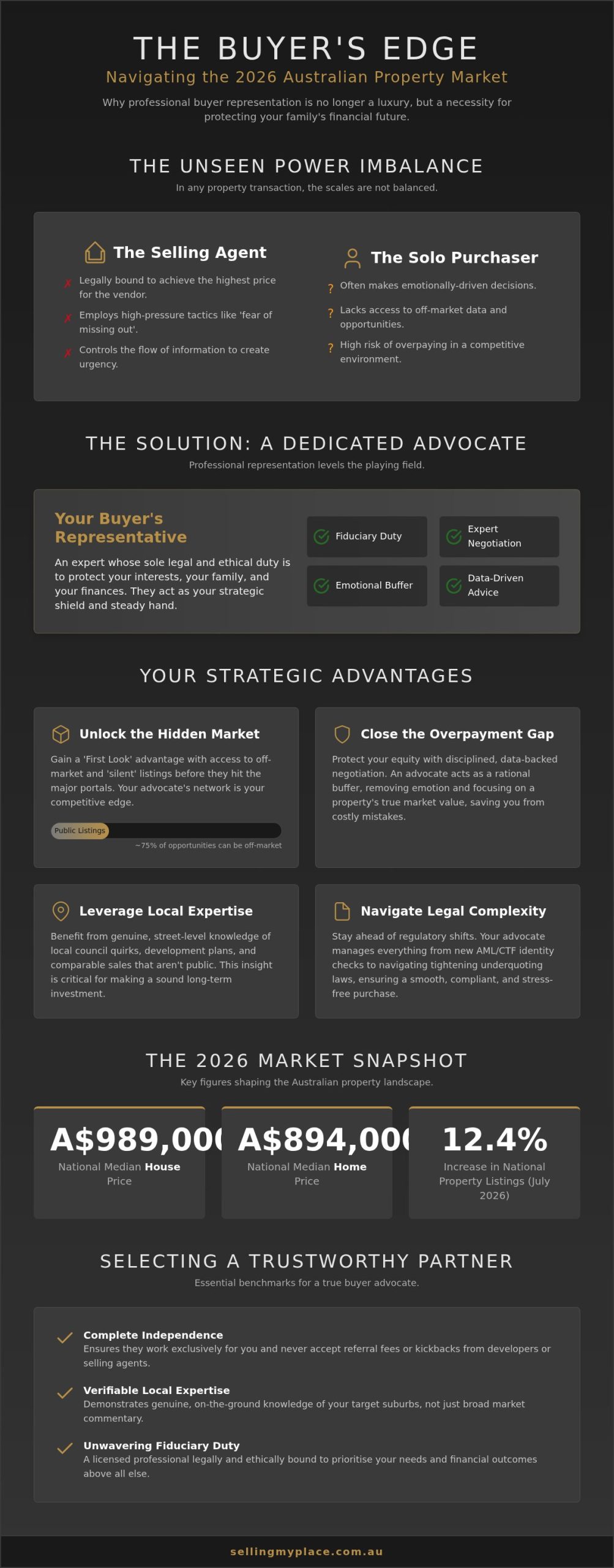
In the high-stakes theatre of Australian real estate, the selling agent isn’t your friend; they’re a legally bound advocate for the person on the other side of the contract. It’s a tough reality to face when you’re searching for a family home or a stable investment. Most of us wouldn’t walk into a courtroom without a lawyer, yet many Australians still front up to aggressive auctions alone. Professional buyer representation has evolved from a luxury service into a strategic shield for your family’s financial legacy. It’s about more than just finding a house; it’s about ensuring you don’t overpay in a market where the national median home price now sits at A$894,000.
We understand the frustration of missing out on “silent listings” or feeling that pang of FOMO as prices shift. You want a fair go and a professional who prioritises your interests above a quick sale. In this 2026 guide, we’ll show you how to gain an edge with expert advocacy and handle the stress of complex negotiations. We’ll also break down the latest regulatory shifts, including the new AML/CTF identity checks and the tightening of underquoting laws, so you can secure your piece of Australia with absolute peace of mind.
Key Takeaways
- Understand the fundamental shift from being a solo purchaser to having a dedicated advocate who prioritises your family’s interests over the vendor’s bottom line.
- Gain the inside track on “silent listings” and off-market opportunities that provide a significant advantage in Australia’s competitive 2026 property landscape.
- Learn how professional buyer representation protects your equity by closing the “overpayment gap” through disciplined, expert negotiation.
- Identify the essential benchmarks for a trustworthy partner, from ensuring total independence to verifying their genuine, street-level local market expertise.
- Discover how a comprehensive advisory approach creates a seamless transition when you are balancing the sale of one home with the purchase of your next.
Understanding Buyer Representation: Why Every Australian Purchaser Needs an Advocate
Most people walk into a property transaction thinking they’re on equal footing with the agent at the door. They aren’t. The selling agent has a single mission: to extract the highest possible price for the vendor. Professional buyer representation flips this script. It ensures that you, the purchaser, have a licensed expert whose sole legal and ethical duty is to protect your interests and your bank balance. This isn’t just about finding a house; it’s about redressing a structural imbalance that has favoured sellers for decades.
While many people ask what is a buying agent, the core of the role is fiduciary duty. This means your representative must put your needs above all else, including their own. This level of advocacy used to be reserved for the “top end of town” or high-flying investors. Today, with the national median house price reaching A$989,000, professional representation has become a vital tool for families and first-home buyers who simply cannot afford a costly mistake. You wouldn’t go to court without a lawyer, so why walk into a million-dollar negotiation without an expert in your corner?
Selling agents are masters of psychology. They use “social proof” through crowded open homes and “scarcity” via looming auction dates to create a sense of urgency. Without a professional buffer, it’s incredibly easy to succumb to emotional overspending at the final hurdle. A representative acts as your “steady hand,” filtering out the noise and focusing on the cold, hard data of a property’s true value. They see the cracks in the cornices when you only see the beautiful garden. This grounded perspective is what saves your equity before you even sign the contract.
The Power Imbalance in Modern Real Estate
Selling agents are highly trained in negotiation tactics designed to push your financial limits. They aren’t being “mean”; they’re doing their job for the vendor. By hiring your own advocate, you remove the emotional target from your back. Your representative handles the aggressive follow-up calls and the high-pressure auction environment, allowing you to make decisions based on logic rather than the fear of missing out. It’s about protecting your emotional well-being as much as your wallet.
Buyer’s Agent vs. Buyer Representative: What’s in a Name?
Whether they’re called a buyer’s agent in New South Wales or a buyer representative in other states, the most important factor is independence. A true advocate never accepts “referral fees” or kickbacks from developers or selling agencies. They work only for you. This transparency is what builds a lasting partnership, ensuring the advice you receive is grounded in your long-term family goals. Having buyer representation means you have a partner who knows the streets, the local council quirks, and the real market value, not just the glossy brochure price.
The Strategic Advantage: How Professional Representation Unlocks Off-Market Opportunities
Accessing the “hidden market” is perhaps the most celebrated perk of engaging professional buyer representation. While the average purchaser is glued to real estate portals, a seasoned advocate is working their network of local selling agents to find properties before they’re even photographed. These industry relationships turn your representative into a hub of real-time information. It isn’t just about what’s for sale today; it’s about what’s coming onto the market next month. This “First Look” advantage allows you to secure a deal in a quiet lounge room rather than a crowded auction yard.
The Real Estate Buyers Agents Association of Australia notes that these off-market transactions are increasingly common in tightly held suburbs where privacy is paramount. By the time a property hits a major portal, it has already been “shopped” to the top-tier advocates. If you’re only looking at what’s public, you’re essentially looking at the leftovers. In a cooling market where national property listings increased by 12.4% in July 2026, the sheer volume of choices can be overwhelming. Having an expert to curate this “hidden” stock ensures you only see the gems that match your legacy goals.
The Anatomy of a Silent Listing
Vendors often choose a silent sale to avoid the stress of public open homes or to save on significant marketing costs. For you, this means less competition and a more rational negotiation process. Your representative acts as a filter, only bringing you listings that actually meet your brief, which saves you from wasting your Saturdays on properties that don’t fit. Pre-market listings, where a vendor is testing the waters before a full campaign, provide a unique window to strike a deal while the seller is still flexible and motivated to avoid a long campaign.
Data Over Hype: The Due Diligence Phase
Access is only half the battle. Once a property is identified, the focus shifts to rigorous due diligence. It’s easy to be swayed by professional styling and soft lighting, but your advocate looks at the bones of the deal. They use data-driven Neighborhood Market Reports to validate off-market pricing and ensure you aren’t paying a “convenience premium” just because a property isn’t public. In a market where the national median home price is A$894,000, guessing the value of an off-market gem is a risk you don’t need to take.
A critical part of this process involves analysing comparable sales to determine fair value. For example, a comparable sale would be a four-bedroom home on a 550-square-metre block that sold in your target suburb within the last ninety days. This objective approach removes the selling agent’s bias from the equation. If you’d like to see how this level of insight could change your search, reach out for a quiet chat about your lifestyle aspirations.
Evaluating the Investment: Does Hiring a Buyer’s Representative Actually Save You Money?
It’s a common question for many Australian families: if I’m already spending hundreds of thousands on a home, why add another fee to the pile? It’s a fair concern. However, viewing buyer representation as a transactional cost misses the bigger picture of equity protection. In a market where the national median house price has reached A$989,000, even a 2% or 3% error in valuation can cost you tens of thousands of dollars. Professional advocacy isn’t just about finding a house; it’s about ensuring the price you pay aligns with the actual market value, not an emotionally charged asking price.
Most advocates operate on either a fixed fee or a percentage-based model. While the upfront cost is visible, the “Overpayment Gap” is often hidden. Selling agents are experts at anchoring your expectations high. A representative closes this gap by using objective data to challenge the agent’s narrative. Beyond the purchase price, they protect you from the “lemon” property. By coordinating rigorous building, pest, and strata inspections, they save you from structural or legal nightmares that could surface years down the track. When you factor in the hundreds of hours saved on searching and inspections, the investment often pays for itself before you even move in.
Negotiation as an Art Form
There’s a massive difference between “haggling” and strategic real estate negotiation. One is a battle of wills; the other is a calculated chess match. Auction representation is where a “steady hand” truly shines. When the adrenaline is pumping and the auctioneer is calling for “just one more thousand,” it’s easy to lose sight of your limit. Having a professional hold the paddle removes the emotional target from your back. They handle the “Best and Final Offer” pressure with poise, ensuring you don’t blink first or overextend your family’s financial future.
The Long-Term ROI of an Expert Purchase
Buying in the right pocket of a neighbourhood can significantly impact your future capital growth. An expert knows which streets are rising and which have reached their peak. Securing your equity is about more than just the day of the sale; it’s about Mastering the Deal to ensure your purchase aligns with long-term stability. This “no-regrets” purchase provides a sense of calm confidence. You aren’t just buying a house; you’re securing a legacy for your family in a community where you can actually see yourselves growing old. That peace of mind is perhaps the greatest return on investment of all.
Selecting Your Partner: Key Criteria for a Trustworthy Buyer Advocate
Selecting the right partner for buyer representation is a decision that shapes your family’s future stability. It’s about finding a “steady hand” who prioritises your legacy over a quick transaction. Because a property purchase is often the largest financial commitment you’ll ever make, the person standing beside you must be more than just a negotiator; they must be a protector of your interests. To ensure you find the right fit, consider these five essential criteria during your selection process:
- Verify Independence: In 2026, with stricter agent conduct laws across Australia, you must ensure your advocate isn’t receiving hidden “spotter’s fees” or commissions from developers. A trustworthy advocate has a single source of income: you.
- Assess Local Depth: Do they know which streets in your target suburb are prone to traffic noise or which side of the hill gets the best winter sun? This granular, street-level knowledge separates a genuine expert from someone who just knows the postcodes.
- Evaluate Communication Style: You want a partner who projects calm confidence. If they feel like a salesperson pushing a quick result, they aren’t the right advocate for a major life transition.
- Check Their Track Record: Ensure they have specific experience with your property type. Someone specialising in high-yield investment units might not have the same eye for the structural nuances of a multi-generational family home.
- Review Their Secondary Network: A great advocate brings a team of reliable building inspectors, trades, and legal experts to the table, ensuring your due diligence is watertight.
Questions to Ask During Your Initial Consultation
When you sit down for that first meeting, it’s your chance to see behind the professional veneer. Don’t be afraid to ask direct questions that test their transparency and local roots:
- “How do you source your off-market properties, and can you describe your relationship with local selling agents?”
- “Can you show me a recent case study where you negotiated a price significantly below the vendor’s expectation?”
- “What is your specific process for due diligence and risk assessment before I sign a contract?”
The Importance of Conveyance and Legal Advice
Your representative must work hand-in-hand with legal professionals to protect your equity. Understanding every clause in the contract of sale before you sign the dotted line is vital for a “no-regrets” purchase. Using a service like Kincade’s Conveyance Advice ensures a smooth settlement process, bridging the gap between that final handshake and the day you finally get the keys. If you’re ready to secure your next home with a professional partner by your side, reach out to our advisory team for a quiet conversation about your aspirations.
Beyond the Listing: How Kincade’s Advisory Service Secures Your Next Home
Kincade International Direct Sales operates on a mission to empower property owners and purchasers alike. By integrating professional buyer representation into our broader advisory framework, we ensure that your transition between homes is managed with a “steady hand.” Most agencies treat the sale of one property and the purchase of another as isolated events, often leaving families in a state of limbo or financial stress. We bridge this gap by aligning your selling strategy with your buying goals, ensuring that every move you make is a calculated step toward long-term stability.
Our global network and digital infrastructure provide a distinct advantage that reaches far beyond the local suburb. While we are deeply rooted in Australian communities, our reach allows us to tap into resources and buyer pools that traditional local agencies simply cannot access. This partnership is built on more than just data; it is built on a sense of duty to your family’s future. We understand that a home is more than a set of coordinates; it is the foundation of your community life and personal legacy.
A Holistic Approach to Property Transitions
We treat the property journey as a unified cycle rather than a series of disconnected hurdles. A major component of our “Sell Smarter” philosophy involves maximising the capital you have available for your next purchase. By utilising a Commission-Free Sale for your current residence, you retain a significantly larger portion of your equity. This isn’t just about saving money; it’s about increasing your buying power in a competitive market. When you aren’t paying away tens of thousands in traditional agency commissions, you have more flexibility to secure the specific features or location that your family deserves.
Taking the First Step Toward Your New Chapter
Embarking on a new property chapter should be a time of celebration, not exhaustion. When you engage with our buyer representation service, the process starts with a methodical, confidential consultation. We don’t rush you into inspections; we take the time to understand the emotional significance of your move. We’ll discuss how our advisory services can mitigate the stress of the “middle period” between settlement dates, ensuring you feel protected and informed at every turn.
Visualise your future state: a home secured through expert negotiation, a sale handled with zero commission, and a transition managed by a trusted advisor who values your long-term roots. If you are ready to experience a more sophisticated way to move, we invite you to take the direct call to action and reach out to our team today. Let’s work together to secure your family’s next great milestone.
Your Next Chapter Starts with a Steady Hand
Securing a home in Australia’s current climate shouldn’t feel like a battle you’re destined to lose alone. By choosing professional buyer representation, you transition from a solitary purchaser to a protected partner. Throughout this guide, we’ve explored how expert advocacy unlocks silent listings and ensures you never overpay in the heat of an auction. It’s about securing a legacy for your family while keeping your hard-earned equity exactly where it belongs. At Kincade, we bring over 25 years of seasoned industry expertise to every consultation, offering a calm perspective in a fast-moving market.
Our flat-fee model is designed specifically to protect your family’s financial future, while our comprehensive Agent Advisory Service supports you from the very first listing through to a successful settlement. You deserve a transparent, stress-free path to your new front door. Secure your next home with Kincade’s expert buyer representation; contact us today. We look forward to helping you plant roots in a community you’ll love for years to come. Your future home is waiting, and we’re ready to help you find it.
Frequently Asked Questions
What exactly is the difference between a real estate agent and a buyer’s representative?
A traditional real estate agent is legally and ethically bound to achieve the highest possible price for the vendor. In contrast, buyer representation means you have a licensed professional working exclusively for you to secure the lowest price and best terms. They act as your advocate, providing an objective counterweight to the selling agent’s tactics. It’s a partnership where your financial security and lifestyle goals are the only priorities on the table.
How much does buyer representation typically cost in Australia?
Fees across Australia generally follow two structures: a fixed fee or a percentage of the final purchase price. While specific costs vary depending on the level of service and the complexity of your search, most advocates offer a transparent breakdown during your initial consultation. Investing in professional advocacy often pays for itself by closing the “overpayment gap” and protecting you from costly structural mistakes that aren’t immediately visible to the untrained eye.
Can a buyer’s representative help me at an auction?
Yes, acting as a “steady hand” during the heat of an auction is a core part of the service. Your representative will handle the bidding strategy, keep a calm head when prices rise, and ensure you never exceed your pre-determined limit. Removing the emotional target from your back allows you to walk away from a bad deal or secure a win without the stress of holding the paddle yourself.
Will I still have the final say on which property I buy?
Absolutely, you maintain total control over the final decision throughout the entire journey. Your representative provides the data, the due diligence, and the expert negotiation, but the choice to sign the contract remains yours. Think of them as a seasoned guide who maps out the best path; you’re still the one driving the car. Their role is to empower you with confidence, not to make the choice for you.
Do buyer’s representatives have access to properties that aren’t on the internet?
Yes, advocates have deep networks that provide access to “silent listings” and pre-market opportunities. These properties never hit major portals, meaning you face significantly less competition. In a market where national property listings rose by 12.4% in July 2026, having someone to filter both public and private stock ensures you only spend time on gems that truly match your family’s long-term legacy and lifestyle needs.
Is it worth hiring a representative if I am only buying a small unit?
Definitely, because even a small unit represents a significant portion of your equity. Overpaying by just 5% on a unit can wipe out years of capital growth. A representative ensures you aren’t buying into a building with hidden strata issues or poor historical resale value. Whether it’s a first home or a compact investment, professional buyer representation provides the same level of protection and strategic advantage as it does for a large family estate.
How does the process of working with a buyer representative actually start?
The process begins with a thoughtful, confidential consultation to define your specific needs and aspirations. We’ll discuss your budget, preferred neighbourhoods, and the lifestyle features that matter most to your family. This initial brief becomes the foundation of our search. Under the new AML/CTF laws effective July 2026, we’ll also guide you through the necessary identity verification steps to ensure your purchase is compliant and ready to move forward without delay.
Can a representative help me with the legal paperwork and conveyancing?
While a representative isn’t a lawyer, they coordinate closely with legal experts to review the contract of sale. They ensure that building, pest, and strata reports are thoroughly analysed before you commit. By working alongside professional conveyancers, your advocate provides a seamless link between the negotiation and the final settlement. This holistic approach ensures that every legal and structural detail is checked, keeping your family’s interests safe from listing to keys.
How to Sell a Duplex in Australia: The 2026 Commission-Free Guide
What if the most expensive mistake you make this year isn’t a bad investment, but simply paying for a service you’ve already outgrown? If you’re looking at how to sell a duplex in australia in 2026, you likely know that this isn’t just a simple property transaction. It’s the culmination of a strategic development or a long-term family legacy. You’ve done the hard work of maintaining or building a high-value dual-occupancy asset, so it’s only natural to feel a bit protective of the equity you’ve built. We understand that the thought of losing $20,000 or more in agent commissions can feel like a step backward, especially when the market is shifting under new tax and gearing regulations.
You deserve a sale process that respects your bottom line while providing the professional polish your property demands. This guide is designed to help you master the nuances of Torrens versus Strata titles and create a marketing strategy that captures both savvy investors and growing families. We’ll walk through the legal essentials and the practical steps to listing your property yourself, ensuring you stay in the driver’s seat from the first open home to the final settlement. By the end of this article, you’ll have a clear, confident roadmap to securing a premium price without the heavy weight of traditional commission fees.
Key Takeaways
- Recognise why your duplex is a premium asset and how to tailor your message for investors, downsizers, and multi-generational families.
- Determine if your property is Torrens or Strata titled to ensure you’re providing the legal clarity buyers need to make a confident offer.
- Evaluate the best exit strategy for your goals, whether that’s selling the entire development or offloading one side while keeping the other as a nest egg.
- Master how to sell a duplex in australia using a commission-free approach that protects your equity and keeps your hard-earned profits where they belong.
- Leverage high-quality photography and floorplans to highlight the unique scale of your property, capturing the attention of local and out-of-area buyers.
Understanding the Australian Duplex Market and the ‘Commission Trap’
In the local property market, a duplex is far more than just a building; it’s a clever use of space that provides two separate dwellings under a single roofline. These homes typically share a common wall, offering a lifestyle that balances privacy with proximity. If you’ve been researching What is a Duplex in Australia?, you’ll know they are often the “missing middle” of our housing landscape. They provide the outdoor space families crave without the maintenance of a sprawling quarter-acre block. This unique structure makes them highly sought after, but it also introduces specific complexities when it’s time to move on to your next chapter.
Why Duplexes are Unique Assets
Duplexes are high-value assets because they appeal to a broad spectrum of buyers. For investors, the dual-income potential is a massive drawcard, especially with the 2027 tax changes making established dual-occupancy more attractive for consistent cash flow. Multi-generational families often see them as the perfect solution for keeping aging parents close while maintaining independence. Others find the “live in one, sell the other” strategy is a brilliant way to slash a mortgage. Because they sit comfortably between high-density apartments and expensive detached houses, they are often the most resilient asset in a cooling market. This versatility is exactly why you need a tailored approach when considering how to sell a duplex in australia.
The Financial Impact of Traditional Commissions
The traditional agency model often feels like a partnership until the final settlement statement arrives. When you’re dealing with a high-value asset, a percentage-based commission can feel less like a fee for service and more like a tax on your hard work. Beyond the base rate, you’re often asked to cover GST and significant marketing levies that can stretch into the thousands. It’s a structure that can quickly erode the development profit you’ve spent years building. With the national median commission sitting at 2.65% in 2026, selling a $1.5 million duplex through a traditional agent could cost you upwards of $43,000 once GST and marketing expenses are added to the tally.
The landscape is shifting. In 2026, savvy owners are moving away from these traditional models in favour of professional residential property listing services that offer a flat-fee structure. This isn’t just about saving money; it’s about retaining the profit from the strategic decisions you’ve already made. By using a flat-fee model, you protect your margin and ensure that the value added through your property’s unique title structure stays in your pocket. This transition to a more transparent, service-based approach reflects a growing desire for control and equity protection among Australian property owners.
Navigating Title Types: Torrens, Strata, and Single Title Explained
Before you can effectively market your property, you need to understand the legal framework that defines it. When considering how to sell a duplex in australia, the first question a savvy buyer or their solicitor will ask is: “What type of title is it?” This isn’t just legal jargon. It fundamentally changes who can buy the property and how much they’re willing to pay. Identifying your title type is the vital first step in your selling journey, as it dictates the level of autonomy a future owner will have over their new home.
Torrens Title is widely considered the gold standard in the Australian property market. It means you own the land and the building outright, with no shared ownership of the block. There’s no body corporate and no strata levies to worry about. For a buyer, this represents the ultimate freedom. Conversely, Strata Title is quite common for duplexes that share a driveway or have common property like a shared roof or garden. This creates a “body corporate of two,” where both owners must agree on insurance and maintenance for shared areas. While common, it does require a bit more administrative coordination between neighbours.
Torrens vs. Strata: What Buyers Prefer
Most families and individual buyers prefer Torrens Title because it offers more autonomy. You don’t need to ask a neighbour for permission to paint your front door or install solar panels. Because of this flexibility, Torrens titled duplexes often fetch a higher price in the open market. If you’re unsure how this affects your specific property, you should learn How to determine the market value of a home in Australia: The 2026 Seller’s Guide to see how title types impact local comparisons. Knowing your title’s worth helps you set a realistic and competitive asking price.
Can You Subdivide Before Selling?
If your duplex is currently on a Single Title, where one deed covers both dwellings, you might be wondering if you should subdivide before listing. Selling both units as a single package often appeals to investors looking for a dual-occupancy yield. However, subdividing into two separate Torrens or Strata titles usually unlocks more equity. It opens the door to the much larger pool of owner-occupiers who only want to buy one side.
While the subdivision process can take anywhere from six to twelve months depending on your local council, the increase in the final sale price can be substantial. It’s a strategic move that requires patience but often pays dividends when you finally settle. If the legal side of things feels a bit overwhelming, it’s always helpful to chat with a professional advisor to ensure you’re on the right track before you commit to a marketing plan. Understanding these complexities now will ensure a much smoother transaction later.
Strategic Selling: One Side, Both Sides, or the Whole Development?
Choosing your exit strategy is a bit like a chess match. Every move you make should be calculated to protect your equity while meeting your personal goals. When you’re looking at how to sell a duplex in australia, you aren’t just selling a house; you’re offering a specific financial or lifestyle opportunity. The path you choose depends heavily on your local market’s current appetite, which is why a neighbourhood market report is your most valuable scouting tool. It tells you whether your street is currently a magnet for growing families or a hotspot for yield-hungry investors.
There are three primary ways to approach your sale:
- Selling the ‘Whole’: This involves selling both units together on a single title or as a packaged pair. It’s a dream for investors who want a high-yield asset with total control over the site.
- Selling ‘Part’: You might choose to list one unit while retaining the other as a rental property or your own residence. This is a popular way to “de-risk” a portfolio while keeping a foot in the property market.
- Selling ‘Individual’: Listing both units separately often yields the highest total return. By targeting two different owner-occupiers, you tap into the emotional premium that families are willing to pay for a place to call home.
Targeting the Investor vs. the Owner-Occupier
Your marketing needs to speak the language of your most likely buyer. Investors are cold, hard numbers people. They want to see depreciation schedules, rental appraisals, and clear evidence of low maintenance costs. Families, on the other hand, are looking for a sanctuary. They want to know where the sun hits the breakfast nook and if the backyard is safe for the kids. Despite these differences, one tool remains non-negotiable for both: professional floorplans. Without a clear 2D or 3D layout, an out-of-area investor can’t visualise the income potential, and a local family can’t see how their furniture will fit. It’s the silent salesperson that bridges the gap between a click and an inspection.
Timing the Sale for Maximum ROI
Should you list both sides at once or stagger them? If you’re in a high-demand area, listing both can create a sense of urgency and competition. However, if the market is quiet, you might find that two identical properties sitting on the portal at the same time compete against each other, potentially softening your price. A steady hand is required here. You need to watch the local auction clearance rates and days-on-market data closely. If you’re ready to take the lead on this journey, our resource on How to sell your own home: A step-by-step guide to sale by owner in Australia provides a practical framework for managing these moving parts yourself. By taking control, you ensure your timing is based on your needs, not an agent’s monthly quota.
Preparing Your Duplex for a Premium Result: Marketing Essentials
Once you’ve settled on a title strategy and identified your target buyer, the focus shifts to the art of presentation. When you’re looking at how to sell a duplex in australia, the visual narrative is what separates a standard listing from a premium result. Because a duplex is a unique architectural form, your marketing needs to highlight its greatest strength: the balance of scale and privacy. You aren’t just selling rooms; you’re selling a lifestyle that offers the benefits of a house with the efficiency of a modern build. This requires a narrative that positions the property correctly, whether it’s a “luxury residence” for a family or a “smart investment” for a portfolio builder.
Professional photography is your most powerful tool in this process. A skilled photographer knows how to capture the symmetry of the building, using a wide “hero shot” to showcase the impressive street appeal. For a duplex, this means highlighting the separate entrances and distinct outdoor spaces. If a buyer can’t see the privacy from the first photo, they might mistake it for a standard townhouse. We often suggest pre-sale property consulting to identify small, high-impact cosmetic changes. A fresh coat of paint on the render or some strategic native landscaping can add five-figure value for a relatively modest outlay.
Visual Storytelling for Dual Dwellings
Investors and families alike rely on floorplans to make their first “mental move” into a property. For out-of-area investors, accurate 2D or 3D floorplans are the number one tool for assessing a property’s viability without a physical flight. They need to see the flow between the living areas and the private backyards to understand the rental potential. By using neighbourhood data in your listing, you can also paint a picture of the local life. Mentioning the walkability to local cafes or the proximity to schools grounds the property in its community and adds emotional weight to the bricks and mortar.
The Legal Prep: Conveyancing and Section 32s
The technical side of a duplex sale involves more than just a standard contract. Because these properties often share services like water meters or electricity lines, your conveyance advice needs to be spot-on from the start. Organising your contract of sale and Section 32 early ensures you don’t lose a keen buyer to administrative delays. Having these documents ready shows you’re a prepared and professional seller, which builds trust during the negotiation phase. If you’re feeling nervous about the “final handshake,” our guide on Mastering the deal: Expert property sale negotiation tips for Australian homeowners offers the reassurance you need to close with confidence.
Getting the marketing and legal essentials right is about more than just a quick sale; it’s about honouring the legacy of the property you’ve built or maintained. If you’d like a second pair of eyes on your pre-sale strategy, reach out for a professional consultation to ensure your duplex stands out for all the right reasons.
Taking Control: How to Sell Your Duplex and Keep Your Equity
By now, you’ve seen that the path to a successful sale is paved with strategic decisions, from choosing the right title structure to crafting a narrative that speaks to the right buyer. However, the most significant decision you’ll make is how you choose to go to market. Many owners feel pressured into traditional agency models, fearing that the complexities of a dual-occupancy asset are too much to handle alone. This is where the Kincade International Direct Sales (KIDS) model changes the game. It’s designed for the savvy owner who has already done the hard work of developing or maintaining a high-value property and simply needs the right tools to finish the job.
Our flat-fee property marketing and advisory packages provide a professional alternative to the “commission trap” we discussed earlier. You don’t have to choose between saving money and having expert support. With our Agent Advisory Service, you have a seasoned partner to help navigate those tricky title questions or conveyance hurdles. It’s a safety net that provides calm confidence throughout the process. Perhaps the most liberating feature for a unique asset like a duplex is our “list until sold” policy. Unlike traditional agents who might rush you into a price drop as their 90 day exclusive period ends, we provide active listings with no time limits. You can wait for the right buyer who truly appreciates the value of your dual-living design.
The KIDS Advantage for Duplex Sellers
In 2026, residential property listing services have evolved to be more intuitive and powerful than ever. When you use the KIDS model, you aren’t just putting a sign in the ground; you’re tapping into global marketing networks that reach international investors looking for stable Australian yields. Because you’re avoiding a percentage-based commission, you’re effectively keeping an average of $20,000 or more of your own equity. That’s money that can go toward your next development, a well-deserved holiday, or your family’s future. It’s about ensuring the reward for your property’s growth stays exactly where it belongs.
Your Next Steps to a Successful Sale
Taking the first step is often the hardest part of any major transition, but we’ve made the process methodical and inviting. If you’re ready to see how to sell a duplex in australia on your own terms, start by requesting a neighbourhood market report. This data will be your compass, helping you set a price that reflects the true local demand. From there, you can book your professional photography and floorplan session to ensure your property’s symmetry and scale are captured with the polish they deserve. Once your contract is drafted and your marketing is live, you’re ready to lead your own “Sale by Owner” journey with the backing of a multi-generational expert team.
Ready to sell your duplex and keep your profit? Explore our commission-free packages today.
Your Future, Secured and Profitable
Selling a duplex is a major life transition that marks the end of one chapter and the start of another. We’ve explored how mastering your title type and choosing a targeted marketing strategy can transform your result. You now have the knowledge to navigate the legal landscape and present your property with the polish of a professional developer. By taking the lead, you ensure that the value you’ve cultivated over the years stays with your family. After all, why should a significant portion of your hard-earned equity go toward a commission for work you’re more than capable of overseeing?
When you decide how to sell a duplex in australia, you don’t have to walk the path alone. Our flat-fee model is designed to be your steady hand, offering an Expert Agent Advisory Service to guide you through every complex detail. You can save an average of $20,000 in commissions while enjoying the peace of mind that comes with being listed until sold with no time limits or hidden fees. It’s about having the right tools and the right partner to protect your legacy. Maximise your duplex sale profit with our flat-fee marketing and advisory packages. You’ve done the hard work of building your asset; now it’s time to claim the full reward you deserve.
Frequently Asked Questions
Do I need a different contract of sale for each side of the duplex?
Yes, you definitely need individual contracts if the dwellings are on separate titles. This ensures each buyer has a clear legal claim to their specific portion of the land and building. If you are selling the entire development on a single title to one buyer, a single contract is sufficient. It’s always best to have your solicitor prepare these early to avoid any hiccups when an offer comes in.
Can I sell one side of my duplex if it’s currently on a single title?
No, you cannot legally sell just one side if the property is held on a single deed. You must first complete a subdivision into Torrens or Strata titles before you can transfer ownership of a single unit. This process requires council approval and can take several months. It’s a vital part of planning how to sell a duplex in australia if you intend to split the asset for individual buyers.
Is it better to sell a duplex to an investor or an owner-occupier?
Both groups have their merits. Investors are often more transactional and focus on yield, which is perfect if you’re selling both units at once. Owner-occupiers, however, often pay a premium for the lifestyle and extra space a duplex provides compared to an apartment. We recommend looking at your neighbourhood market report to see which group is currently most active in your specific street before you list.
How much can I actually save by selling my duplex without a commission-based agent?
Most of our clients save an average of $20,000 in commissions per sale. When you consider that traditional agents in 2026 charge a median of 2.65% plus GST and separate marketing fees, the total cost for a high-value duplex can be eye-watering. By choosing a flat-fee model, you keep that equity in your pocket to put toward your next project or your family’s future instead of an agency’s bottom line.
What are the specific disclosure requirements for selling a duplex in Australia?
You are legally required to disclose shared services, easements, and any body corporate obligations. This includes details like shared water meters, common walls, or joint insurance policies. These facts are usually found in your Section 32 or contract of sale. Being transparent from the start builds trust with buyers and prevents the sale from falling through during the cooling-off period because of hidden shared costs.
How do I handle shared insurance and maintenance costs during the sale process?
It’s important to keep these payments current and have all records organised for potential buyers to review. If you have a strata title, the body corporate will have formal records of these costs. For Torrens titles with informal shared maintenance, providing a clear history of past expenses helps the buyer feel confident about the ongoing costs of their new home and prevents any settlement delays.
Do buyers find ‘Sale by Owner’ listings for duplexes less trustworthy?
Quite the opposite. In 2026, buyers appreciate the direct line of communication with the person who knows the property best. When your listing features professional photography and accurate floorplans, it carries the same authority as any traditional agency. Using a professional residential property listing service ensures your property looks premium while you maintain that personal, trustworthy connection that helps close a deal with confidence.
What happens if my duplex doesn’t sell within the first 90 days?
Unlike traditional agency agreements that often expire after 90 days, our listings remain active until sold. This is a massive advantage for unique duplex assets that might take a little longer to find the perfect buyer. You won’t face extra fees or the pressure to drop your price just because a calendar date has passed. You can stay the course and wait for the right offer without any stress.
