Legal Requirements for Selling a House Privately in Australia: The 2026 Seller’s Guide
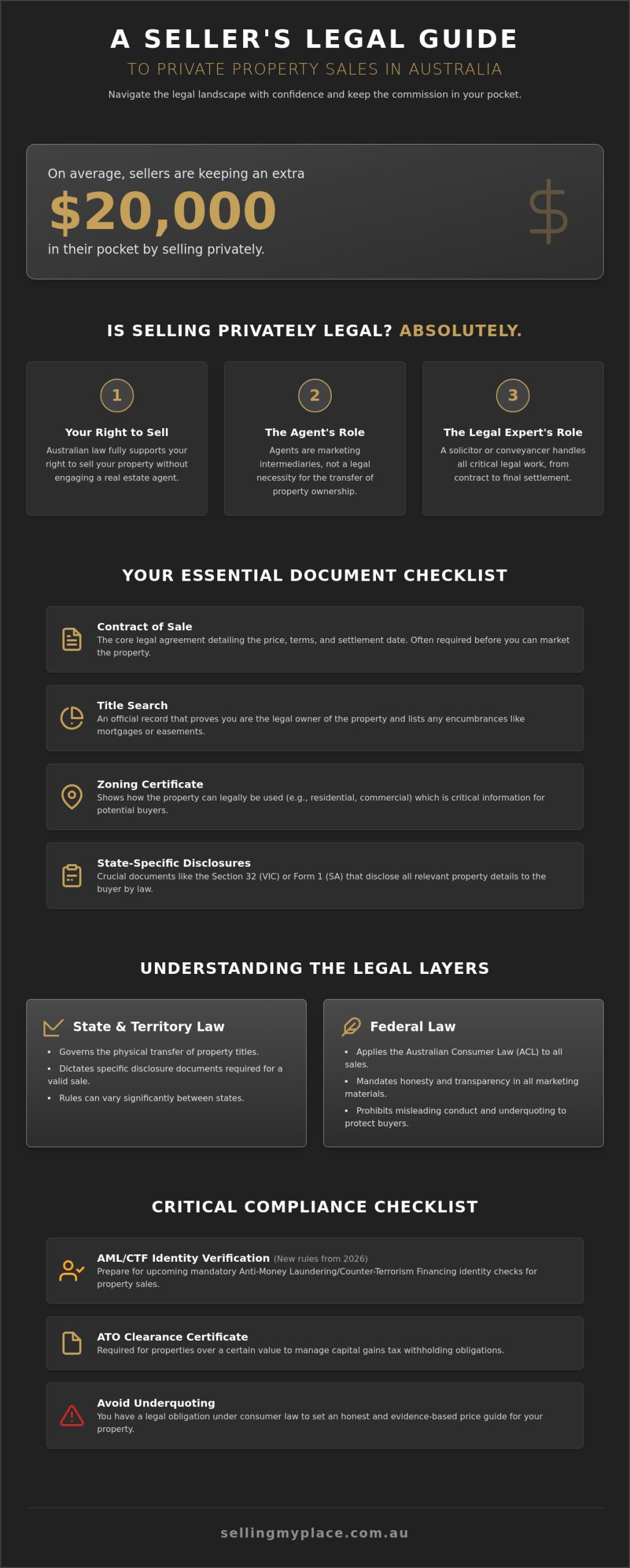
What if the only thing standing between you and an extra $20,000 in your pocket was a stack of paperwork? It’s a common misconception that you need a traditional agent to manage the law, but in reality, you have every right to take the lead yourself. We understand that the thought of handling the legal requirements for selling a house privately in australia can feel a bit daunting. You’re likely worried about making a mistake with the Contract of Sale or getting tripped up by the new 2026 AML/CTF identity checks; it’s a lot to take in when you’re also trying to plan a major life transition.
It’s okay to feel that weight. After all, your home is your biggest asset and your family’s sanctuary. We’re here to act as your steady hand through this process. In this guide, you’ll discover exactly which documents you need to stay fully compliant with Australian law while skipping the high commission fees. We’ll walk you through state-specific rules, like the Victorian Section 32 and the latest Queensland disclosure regime, so you can reach settlement with a clear head and a genuine sense of pride.
Key Takeaways
- Confirm your right to sell without an agent, as Australian law treats agents as marketing intermediaries rather than a legal necessity for property transfers.
- Identify the specific legal requirements for selling a house privately in australia, including the crucial 2026 AML/CTF identity verification and ATO clearance protocols.
- Navigate the maze of state-specific disclosure documents, such as the Section 32 in Victoria or the Form 1 in South Australia, to ensure your contract is bulletproof.
- Avoid common compliance traps related to underquoting and consumer law by learning how to set honest price guides and accurate marketing materials.
- Understand the path to a successful settlement, including the exchange of contracts and the role of digital platforms like PEXA in finalising your sale.
Can You Legally Sell Your Own House in Australia?
The short answer is a resounding yes. There is absolutely no law in Australia that requires you to hire a real estate agent to sell your property. It’s your home, your equity, and ultimately, your choice. Many homeowners feel a bit of “legal jitters” when they first consider going it alone, but once you peel back the curtain, the process becomes much clearer. Real estate agents are effectively marketing and negotiation intermediaries; they aren’t legal necessities. While they might handle the “for sale” signs and the open homes, they don’t actually perform the legal transfer of land. That critical step is handled by a solicitor or a licensed conveyancer who ensures all the legal requirements for selling a house privately in australia are met with precision.
It’s helpful to remember that the “real” legal work happens during the conveyancing phase. This is the formal process of transferring the title from your name to the buyer’s. While an agent might facilitate the handshake, the solicitor handles the heavy lifting of the contract and settlement. You also need to be aware that the Australian Consumer Law (ACL) applies to you as a private seller just as it does to a large agency. This means you have a legal obligation to be honest and transparent in your dealings. If you keep things “above board” and follow the right protocols, selling your own home is a perfectly legal and highly rewarding path.
The Role of State vs. Federal Law
Property law in our country is a bit of a patchwork. Most of the rules regarding how land is transferred and what documents you need are governed by individual States and Territories. This is why the Australian property law landscape can feel a bit confusing if you’re looking for a single national rulebook. However, Federal law still plays a part through the ACL, which ensures that all property marketing is honest and covers things like misleading conduct. Even though you’re managing the sale yourself, you’ll still need a professional to handle the technical technicalities of conveyancing. This partnership ensures you remain compliant with state disclosure laws while the Federal rules keep the marketplace fair for everyone involved.
Why More Australians are Choosing Private Sales in 2026
The shift towards selling your own home has gained massive momentum lately. By mid-2026, we’ve seen a huge move towards digital transparency and flat-fee models that put the power back in the hands of the homeowner. Why pay a massive commission when you can access the same listing platforms and professional advisory services for a fraction of the cost? On average, sellers are saving around $20,000 per sale. That’s a significant amount of equity to keep in your pocket for your next chapter. It’s about having a “steady hand” to guide you through the compliance while you handle the personal touches. People want a partnership, not just a transaction. With the right support, managing the legal requirements for selling a house privately in australia becomes a manageable, empowering experience rather than a source of stress.
The Essential Legal Documents for a Private Sale
Once you’ve decided to take the reins, the next step is gathering your paperwork. Think of these documents as the structural integrity of your deal. The legal requirements for selling a house privately in australia aren’t meant to be hurdles; they’re safeguards for both you and your buyer. The most critical piece is the Contract of Sale. It’s often called the ‘holy grail’ of the transaction because it outlines everything from the price to the settlement date. Alongside this, you’ll need a Title Search. This proves you actually own what you’re selling and highlights any encumbrances, such as mortgages or easements, that might affect the transfer. Zoning certificates are also vital, as they show exactly what the land can and cannot be used for, which is a major factor for any buyer looking to renovate or develop.
In states like Victoria and South Australia, disclosure is king. You’ll need either a Section 32 or a Form 1. These statements are your way of telling the buyer, “Here is everything you need to know about this property.” Providing these documents isn’t just a courtesy; it’s a legal obligation. If you’re feeling a bit overwhelmed by the volume of paperwork, you might want to reach out for a chat with an advisor who can help you organise these essentials without the stress.
Preparing the Contract of Sale
In many parts of Australia, particularly New South Wales, you must have a contract ready before you even list the property online. It’s a common trap to wait for a buyer before starting the paperwork, but being prepared shows you’re a serious, reliable seller. Your contract should include all necessary certificates, such as pest and building reports or pool safety certificates if applicable. Accurate floorplans are also a legal necessity for the property description. They ensure the buyer knows exactly what they are purchasing, which reduces the risk of disputes later on. By having everything ready to go, you create a sense of calm and confidence that buyers find incredibly reassuring.
Vendor Disclosure Requirements
Honesty is your best policy when it comes to disclosure. You’re legally obligated to inform the buyer about certain things, like structural issues or illegal building works. If you stay silent on these “defects,” a buyer might have the legal right to pull out of the sale even after the contracts are signed. To help set a fair price and stay transparent, using professional Neighborhood Market Reports can be a game changer. These reports help you justify your price legally by showing comparable sales in your area. If you want to dive deeper into the specifics, the official guide on the private sale process in Victoria offers a great breakdown of how these disclosure statements protect both parties during the journey.
State-by-State Legal Nuances Across Australia
While the right to sell your own home is a national one, the specific “how-to” changes as soon as you cross a state border. It can feel like you’re learning a new language for every territory, but we’re here to help you translate. In New South Wales, the law is quite firm: you cannot even put a “for sale” sign in your front garden or list the property online until a full Contract of Sale is ready. Victoria, on the other hand, is famous for the Section 32 Vendor Statement. It’s a comprehensive disclosure that can feel like a mountain of paperwork, but it’s there to protect your legacy and the buyer’s future. Getting these details right is a core part of the legal requirements for selling a house privately in australia, ensuring you don’t face any hiccups later on.
Queensland has traditionally been a “buyer beware” state, but the new 2025 disclosure regime has shifted more responsibility onto the seller to be upfront about the property’s history. Meanwhile, over in Western Australia, they skip the standard contract for an “Offer and Acceptance” system. This process is unique but follows the same underlying principles of fairness and transparency. Each state has its own rhythm; once you understand the local beat, you can move forward with total confidence.
Cooling-Off Periods: A National Overview
The cooling-off period is your buyer’s “safety net,” and the length of this net depends on where you live. For example, Victoria offers three business days, while New South Wales and Queensland provide five. South Australians have a shorter two-day window. It’s important to know that in Western Australia, there is no mandatory cooling-off period unless you specifically write it into the contract. You can sometimes legally waive or shorten this period, such as through a Section 66W certificate in NSW, which is often used to speed up a sale when both parties are ready to commit without the extra wait.
Trust Accounts and Deposits
One question we often hear is, “Where does the deposit go if I don’t have an agent’s trust account?” It’s a fair concern. Usually, the 10% deposit is held in your solicitor’s or conveyancer’s trust account. This keeps the funds safe and independent until settlement day. Even “holding deposits” must be handled with care; your legal advisor will ensure these small initial sums are documented correctly to avoid any misunderstandings. By using a professional trust account, you ensure the legal requirements for selling a house privately in australia are met while providing peace of mind for everyone involved.
Compliance in Marketing: Underquoting and Consumer Law
Marketing your home is where your personal story meets the open market. It’s a joyful stage, but it’s also where Australian Consumer Law (ACL) watches most closely. When you are capturing the essence of your home, your Photography must be a true reflection of the property as it stands today. While we all want our homes to look their best, digitally removing a neighbouring power pole or hiding structural cracks crosses the line from “best foot forward” into deceptive conduct. There’s a subtle legal difference between “puffery”, those enthusiastic, subjective claims like “the most charming garden in the street”, and factual misrepresentation. If you state a home has a “newly renovated kitchen” when the cupboards were merely repainted, you risk breaching the legal requirements for selling a house privately in australia. Honesty isn’t just the best policy; it’s the law.
Avoiding the Underquoting Trap
The “Price Guide” trap is another area where private sellers often feel a bit of pressure. In the 2026 market, transparency isn’t just a buzzword; it’s a legal necessity. Underquoting occurs when a property is advertised at a price lower than your true estimated selling price or lower than a price you’ve already rejected. To stay on the right side of the law, you must document how you arrived at your price. Using professional market value guides ensures your range is grounded in recent, comparable sales data. If you receive a written offer that is higher than your current advertised price, you’re generally required to update your marketing to reflect this new market reality. It’s about keeping the process fair for every family looking for their next home.
Privacy and Data Laws
Beyond the price tag, you also have a duty to protect the people who walk through your front door. When you host an “Open for Inspection”, you’ll likely collect contact details for follow-ups. Handling this buyer data requires compliance with privacy laws and the Spam Act. You can’t just add every visitor to a generic marketing list without their consent. It’s best to have a simple sign-in sheet that clearly states how their information will be used. Ensuring your digital listing follows the specific terms of service of the platforms you use is equally important. If you’re feeling unsure about the fine print of marketing compliance, get in touch with our team for a pre-sale consultation to ensure your campaign is as safe as it is beautiful.
From Handshake to Settlement: The Legal Final Line
The journey from a simple handshake to the final settlement is often the most rewarding yet technically demanding phase of your sale. This is where the legal requirements for selling a house privately in australia reach their formal conclusion. It all begins with the exchange of contracts. Once both parties have signed and the deposit is safely held, the deal becomes legally binding. In our modern 2026 market, almost all of this happens through PEXA (Property Exchange Australia). This digital platform has revolutionised the way we settle, allowing for the instantaneous transfer of funds and title without the old school paper shuffle. It’s faster, more secure, and gives you that immediate peace of mind that the sale is truly complete.
Before the big day arrives, your buyer has the legal right to a final inspection. This usually happens in the few days leading up to settlement. It’s their chance to ensure the property is in the same condition as when they signed the contract. You’ll also need to work with your solicitor to calculate “adjustments”. These are the final tallies for council rates, water charges, and land tax, ensuring you only pay for the exact days you owned the home. It’s a precise process, but it ensures everyone walks away with a fair and transparent result.
Navigating the Settlement Period
The time between exchange and settlement is usually 30, 60, or 90 days, depending on what you’ve negotiated. While these dates are fixed in the contract, life can sometimes throw a curveball. A buyer might ask for a short extension due to bank delays, or in very rare cases, they might face a default. Knowing your rights and obligations during these weeks is vital for a smooth transition. Having professional Conveyance Advice on hand can turn a high-stress situation into a manageable one. It’s about having a “steady hand” ready so your settlement stays on track and your plans for the future remain secure.
The Kincade Advisory Advantage
We believe that selling your home yourself shouldn’t mean doing it alone. Our Sale by Owner support is designed to bridge the gap between your personal touch and the complex legal requirements for selling a house privately in australia. You get the expert backing of a seasoned advisor without the commission-driven pressure of a traditional agency. By following our final checklist, you can move toward settlement with total confidence. You’ve worked hard for your home’s equity, and we’re here to help you protect every cent as you move toward your next adventure.
Step Into Your Next Chapter with Confidence
Taking the lead on your own sale is an empowering way to protect your family’s future and your hard-earned equity. By now, you can see that the legal requirements for selling a house privately in australia are simply a matter of following the right protocols with a trusted partner by your side. From preparing the initial Contract of Sale to navigating the digital finality of a PEXA settlement, you have the roadmap to manage each step with total clarity. You aren’t just avoiding a transaction; you’re ensuring that the legacy of your home remains firmly in your hands.
We believe every homeowner deserves professional backing without the commission-driven pressure. Through our dedicated Agent Advisory Service, you’ll have a seasoned expert to guide you, ensuring your property is listed until it’s sold with absolutely no time limits. Our sellers save an average of $20,000 per sale, a significant sum that belongs in your pocket for your next adventure. You have the tools, the right, and a steady hand ready to support you.
Ready to sell smarter? Explore our commission-free listing packages today.
Your path to a successful, legally sound settlement is clear. We look forward to helping you achieve the result your home deserves.
Frequently Asked Questions
Do I need a solicitor for the final settlement?
Yes, you certainly do. While you have the right to manage your own marketing and negotiations, the actual transfer of the title must be handled by a legal professional. They use digital platforms to ensure the transaction meets all the legal requirements for selling a house privately in australia, protecting your interests during the final exchange of funds.
What special conditions should I consider for my contract?
Common conditions include “subject to finance,” “pest and building inspections,” or even a specific settlement date that suits your family’s move. These clauses provide a safety net for both parties. Your solicitor will help you draft these accurately to ensure they are legally enforceable and reflect the specific agreement you’ve reached with your buyer.
How do I list on Australia’s major property portals as a private seller?
While the leading property search websites generally only accept listings from licensed entities, you can gain access through a flat-fee advisory service. This allows your home to appear alongside every other listing in the country. It’s a clever way to ensure you get maximum exposure without the burden of traditional agency commissions.
Can a buyer pull out if they find a defect after signing?
If a significant defect was not disclosed in the contract or vendor statement, a buyer may have the legal right to rescind the contract. This is why thorough disclosure is so important. By being upfront about the property’s history, you reduce the risk of the deal falling through during the cooling-off period or leading to a dispute later on.
What is the difference between a holding deposit and a full deposit?
A holding deposit is a small sum often paid to show “good faith” while the contract is being finalised. However, it doesn’t legally secure the property. The full deposit, usually 10 per cent, is paid upon the exchange of contracts and is held in a solicitor’s trust account. This is the point where the deal becomes much more certain for everyone involved.
Can I sell my home privately if I still have an active mortgage?
Absolutely. Most Australian sellers have a mortgage when they decide to move. Your solicitor will simply coordinate a “discharge of mortgage” with your bank. On the day of settlement, the buyer’s funds are used to pay off your loan balance, and the remaining equity is transferred directly to you. It’s a routine part of the process.
How often should I update my price guide to stay compliant?
You should review your price guide whenever you receive new market information, such as a formal written offer that exceeds your current range. Staying compliant with the legal requirements for selling a house privately in australia means your advertised price must always reflect your genuine “estimated selling price.” Regular updates keep your marketing honest and your sale safe from underquoting claims.
Is a verbal offer legally binding in Australia?
No, a verbal offer is not legally binding in any Australian state or territory. For a property sale to be enforceable, the agreement must be in writing and signed by both the seller and the buyer. This protects you from buyers changing their minds at the last minute before the ink is dry on the contract.
Private Property Sale Contract Australia: A Guide for Independent Sellers
What if the only thing standing between you and a successful, commission-free sale isn’t a lack of expertise, but a simple stack of paperwork? Selling your family home is a deeply personal milestone, and it’s completely natural to feel a flutter of nerves when navigating a private property sale contract australia for the first time. You might worry that without a traditional agent, you’re leaving yourself open to legal pitfalls or that the state-specific terminology is just too dense to untangle. We understand that this isn’t just a transaction; it’s the start of your next chapter, and you want to ensure every detail is handled with care and precision.
The good news is that you don’t need to pay a premium for professional protection. You can take full control of your journey while staying firmly on the right side of the law. This guide will walk you through the essential components of a valid agreement, from the latest 2026 NSW cooling-off notices to the mandatory Queensland disclosure statements. We’ll preview exactly how to organise your documentation and understand your local obligations, so you can move forward with the calm confidence of a seasoned pro and keep your hard-earned equity where it belongs.
Key Takeaways
- Learn why the timing of your paperwork is vital, particularly in states like NSW where you must have your contract ready before you even list the property for sale.
- Master the essential components of a private property sale contract australia to ensure your legal names and Title References are documented correctly from the start.
- Navigate complex state-specific disclosure rules, such as Victoria’s Section 32, to protect your interests and provide complete transparency to your buyer.
- Gain the confidence to manage initial offers and holding deposits independently, allowing you to negotiate special conditions without a middleman.
- Discover how expert advisory support can bridge the gap between signing the contract and reaching a successful settlement day.
What is a Private Property Sale Contract in Australia?
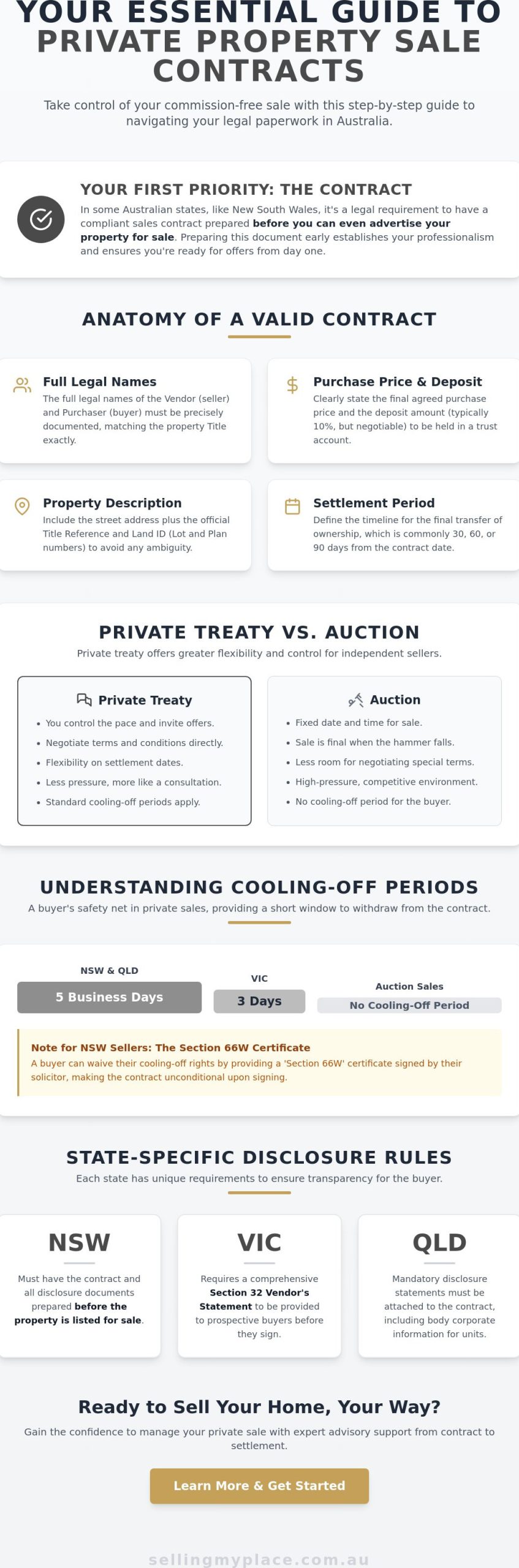
Think of your sales contract as the legal roadmap for your entire selling journey. It is far more than just a formal piece of paper; it is the foundation of your legacy and the document that ensures your home’s transition is handled with the respect it deserves. In the Australian property market, this agreement establishes the ground rules between the Vendor (that’s you, the seller) and the Purchaser (the buyer). While it might feel like a final step, a private property sale contract australia is actually your very first priority. In states like New South Wales, it’s a legal requirement to have this document prepared before you even put your home on the market. Having it ready to go gives you a “steady hand” during negotiations, projecting a sense of professional authority that puts buyers at ease and reduces your own stress levels.
This document initiates the formal conveyancing process, which is the legal transfer of land title from one person to another. By preparing early, you aren’t just ticking a box; you’re taking control of the narrative. You’ll know exactly what you’re offering, what stays with the property, and what the timeline looks like, long before the first viewer walks through your front door.
Private Treaty vs. Auction Contracts
Most independent sellers choose a Private Treaty sale because it offers a more personal, measured pace. Unlike an auction where the hammer falls and the deal is final, a private treaty allows you to invite offers and negotiate on your own terms. This method provides a wonderful emotional benefit: you maintain control over who buys your home and under what conditions. It’s a partnership-based approach that feels less like a high-stakes gamble and more like a thoughtful consultation. You have the flexibility to adjust settlement dates or include specific clauses that an auction simply wouldn’t permit.
The Cooling-Off Period Explained
The cooling-off period is a standard feature of most private sales across Australia, acting as a short safety net for the buyer. Typically, this lasts between 3 and 5 business days, depending on your state. For instance, buyers in New South Wales and Queensland generally enjoy 5 business days, while those in Victoria have 3. It’s vital to remember that these rights don’t apply at auctions or if a property is passed in but sold on the same day. In some cases, particularly in NSW, a buyer might provide a “Section 66W” certificate. This document, signed by their solicitor, waives the cooling-off period entirely, making the contract unconditional from the moment it’s signed. Understanding these nuances helps you manage your expectations and stay grounded during the final stages of the deal.
Essential Components of a Valid Sales Contract
Precision is your best friend when drafting a private property sale contract australia. While the document marks the financial end of your time in a home, it’s also the legal shield that protects your interests until the keys change hands. To ensure the agreement is binding and robust, you must start with the basics: the full legal names of all parties. It sounds simple, but ensuring these match the Title exactly is crucial. If you’re selling as a couple or through a trust, every detail must be mirrored in the contract. You’ll also need to clearly state the agreed purchase price and the deposit requirements, which is typically 10% of the sale price held in a trust account, though this can be negotiated to suit both you and your buyer.
The property itself needs a flawless description. This goes beyond the street address. You must include the Title Reference and Land ID (Lot and Plan numbers) to ensure there’s no ambiguity about what’s being sold. Finally, the settlement timeframe, whether it’s 30, 60, or 90 days, provides the heartbeat of the transaction, giving both parties a clear date to work toward. Gaining a deep understanding of the nuances of the private sale process ensures you don’t miss these critical details, allowing the transition to feel like a shared success rather than a legal hurdle.
Mandatory Disclosure Documents
Transparency is the cornerstone of a stress-free sale. In Australia, you’re legally required to provide specific documents that prove you have the right to sell and inform the buyer about the land’s status. A current Title Search is non-negotiable; it’s the proof of your ownership. You’ll also need Zoning Certificates, such as a Section 10.7 in NSW, which tells the buyer what the land can actually be used for. Don’t forget to highlight any easements or covenants. If there’s a shared driveway or a restriction on building heights, disclosing this early prevents a buyer from pulling out later. These documents aren’t just red tape. They’re tools that build trust and protect you from future claims of non-disclosure.
Chattels and Fixtures: What Stays and What Goes?
The backbone of a solid private property sale contract australia is accuracy, especially regarding the physical items in the home. Disputes often arise over “grey area” items like dishwashers, custom-made curtains, or that heirloom light fitting in the dining room. As a rule of thumb, fixtures are items “fixed” to the property (like a built-in oven), while chattels are moveable (like a fridge). To avoid settlement day surprises, be explicit. If you plan to take the designer pendant lights with you, list them as exclusions. If the garden shed stays, list it as an inclusion. If you’re feeling unsure about how to categorise your belongings, you can always reach out for a guiding hand to clarify these final details.
State-Specific Requirements and Disclosure Rules
Navigating a private property sale contract australia requires an understanding that our states don’t always play by the same rules. It’s like a neighbourly chat where the dialect changes just slightly as you cross the border. While the heart of the transaction remains the same, the legal requirements for disclosure vary significantly depending on where your property is located. In New South Wales, the law is quite firm: you must have a draft contract prepared before you even put up a “For Sale” sign or share a photo online. This isn’t just about red tape; it’s about ensuring every potential buyer has the full story from the very first minute, protecting you from claims that you’ve withheld vital information.
Down in Victoria, the Section 32 Vendor Statement is your most important companion. This document discloses everything from land tax and rates to building permits and encumbrances. Failure to include a complete and accurate Section 32 can be a deal-breaker. Checking the latest private sale contract requirements will help you stay on top of these local nuances and ensure your paperwork is beyond reproach. Queensland sellers typically use standard REIQ contracts, but these must include a specific “Warning Statement” to be valid. Meanwhile, in Western Australia, the process revolves around the “Offer and Acceptance” (O&A) system, where the contract is formed when you formally accept a buyer’s written offer on a prescribed form.
The Consequences of Non-Disclosure
What happens if a document is missing or a detail is incorrect? It’s not just a minor hiccup. A missing disclosure can give a buyer the legal right to rescind the contract, meaning they can walk away and take their deposit with them, often right up until the day of settlement. You could also face legal penalties for providing misleading information, even if it was an honest mistake. Essentially, vendor disclosure serves as a vital legal safeguard that protects the seller from future disputes by ensuring total transparency from the outset.
Navigating Regional Variations
Because these rules are so specific to each state, hiring a local expert is a wise move even if you are managing the marketing yourself. State laws even impact how you can handle an “off-market” listing or a pre-sale consultation. Seeking professional Conveyance Advice is the best way to ensure your specific sale is compliant with local regulations. This regional expertise provides the steady hand you need to manage the complexities of the private property sale contract australia, giving you the freedom to focus on finding the right buyer for your home’s next chapter.
Managing the Contract Process Without a Traditional Agent
Taking the reins of your home sale is an empowering choice. You don’t need a middleman to facilitate a genuine conversation between two parties who both want the same thing: a fair and transparent transition. When an offer comes in, it is often accompanied by a small holding deposit. This isn’t a legal requirement, but it is a lovely way for a buyer to say, “We are serious about your home.” Because you have already prepared your private property sale contract australia, you can respond with speed and clarity. This is particularly effective for off-market property buyers who appreciate a streamlined, professional approach without the usual fanfare. It shows you’re ready to do business.
Today, the process is smoother than ever thanks to eConveyancing platforms and digital signature tools. You can exchange documents in minutes, keeping the momentum high while you and the buyer are still in that “celebratory” mindset. If the technical side feels like a lot to juggle, you can always book a consultation with a property advisor to ensure your digital exchange is as secure as a traditional handshake. This modern approach doesn’t just save time; it provides a clear, digital audit trail that protects everyone involved.
Common Special Conditions to Consider
Negotiation is really just a series of “what ifs” that help both parties feel secure. Most buyers will request a “Subject to Finance” clause, giving them a window; typically 14 days; to finalise their mortgage approval. You will also frequently see “Subject to Building and Pest Inspection.” These aren’t hurdles to be feared. They are simply steps that give the buyer the peace of mind they need to commit. For your own protection, you might consider a sunset clause. This ensures that if the buyer doesn’t meet their conditions by a specific date, you are free to return the property to the market without delay.
The Exchange of Contracts
The term “exchange” is exactly what it sounds like. Two identical copies of the private property sale contract australia are signed; one by you and one by the purchaser; and then physically or digitally swapped. This is the pivotal moment when your home moves from being “Under Offer” to “Sold.” It is also when the full deposit, usually 10%, is paid. This money isn’t paid directly to your bank account just yet. Instead, it is held safely in a regulated trust account by a solicitor or conveyancer, acting as a stakeholder until the final settlement day arrives.
Moving from Contract to Settlement with Expert Support
Once the ink is dry on your private property sale contract australia, you enter the home stretch. This period, typically spanning 30 to 90 days, is a time of transition and preparation. You’ll likely host a building and pest inspector; remember, they are simply doing their job to ensure the buyer feels as secure in their decision as you do. Then comes the final pre-settlement walkthrough, usually occurring 24 to 48 hours before the keys change hands. It’s a final chance for the buyer to see that the home is in the same condition as when they signed. Approach this with a spirit of hospitality; it’s the final handover of your property’s legacy to its new keepers.
You don’t have to walk this path entirely alone. While you’ve chosen the independent route, our Real Estate Advisory Services act as a vital bridge, providing the expertise of a seasoned guide without the intrusive pressure of traditional commissions. This “steady hand” approach ensures that if a minor hiccup arises during the settlement period, you have a professional partner to consult. It’s about having the best of both worlds: the freedom of a private sale and the security of expert backing. This Agent Advisory Service ensures you stay grounded and confident until the final cent is transferred.
The financial benefit of a commission-free sale is often the difference between a good result and a life-changing one. By managing your own private property sale contract australia, you retain tens of thousands of dollars that would otherwise disappear into high marketing costs and agency fees. It’s a celebratory moment when you realise that your personal effort has directly contributed to your family’s next chapter. There is a deep sense of pride in navigating this process yourself, knowing you’ve protected your equity through a successful, self-managed outcome.
Professional Advisory vs. High Commissions
Why pay 2% or 3% of your home’s value when a flat-fee model offers a much better return on investment? By opting for Pre-Sale Property Consulting and professional Floorplans, you present your home in its best light while keeping your hard-earned equity. It’s a strategic choice that values your financial future over an agent’s overheads. Our philosophy is simple: we provide the professional backing you need without the hefty price tag, ensuring you feel supported but always in the driver’s seat.
Your Next Steps to a Successful Sale
Preparation is the key to a calm and efficient settlement. Start by organising your paperwork early to avoid last-minute dashes to the solicitor. Combining savvy Sale by owner strategies with high-quality photography and professional listing services ensures you attract the right buyers from the start. You’ve got the tools, the knowledge, and the heart to make this happen. Ready to take the lead? Start your commission-free journey today and see how rewarding a self-managed sale can truly be.
Your Path to a Confident and Profitable Sale
Taking the lead on your home sale is a powerful way to honour the life you’ve built within its walls. You’ve now gained a clear understanding of how to navigate state-specific disclosure rules, identify the essential components of a valid agreement, and manage the transition from offer to settlement. Successfully handling a private property sale contract australia is the final piece of the puzzle that allows you to step into your next chapter with your equity fully intact. It’s about more than just paperwork; it’s about the pride that comes from a job well done.
You don’t have to navigate the final steps alone. With average seller savings of $20,000 and our Expert Agent Advisory Service included in every package, you can bypass hidden commissions and restrictive time limits entirely. We’re here to provide the steady hand and professional support you need to ensure your journey is as smooth and rewarding as possible. Sell your home smarter and keep 100% of your profit with our flat-fee packages. You have the knowledge and the heart to make this a success, and we’re excited to see you flourish in your next adventure.
Frequently Asked Questions
Can I write my own property sale contract in Australia?
You can technically draft your own agreement, but it’s a bit like performing surgery on yourself. A private property sale contract australia must adhere to strict state legislation, such as the 2026 Law Society edition in NSW, to be legally binding. Most independent sellers use a solicitor or conveyancer to ensure all prescribed documents are included. This professional touch protects you from a buyer rescinding the deal later due to a technicality.
How much does it cost to have a contract of sale prepared?
The cost of preparing your documentation depends on the complexity of your land and the required disbursements. Disbursements are the fees paid to government agencies for title searches, zoning certificates, and drainage diagrams. While we don’t quote specific legal fees, you’ll find that investing in professional contract preparation is a small fraction of the cost you’d save by avoiding traditional agent commissions. It’s an investment in your peace of mind.
What is the difference between a contract of sale and a vendor statement?
Think of the contract as the “how” and the vendor statement as the “what.” The contract outlines the agreed price, names, and the timeline for the transition. The vendor statement, known as a Section 32 in Victoria, discloses the property’s history; things like rates, building permits, and any easements. Both documents are essential for a transparent transaction, ensuring the buyer has all the facts before they commit to the purchase.
Does a private sale contract need to be witnessed by a lawyer?
A lawyer doesn’t need to witness your signature, but an independent adult usually must. This person should be someone who isn’t a party to the sale. With the recent shift toward digital platforms, many contracts are now signed electronically using secure verification methods. This modern approach makes the process much more accessible for families managing their own sale, allowing you to sign from the comfort of your own living room.
What happens if a buyer pulls out of a private sale contract?
If a buyer pulls out during the cooling-off period, they’ll typically forfeit a small penalty, such as 0.25% of the purchase price in NSW or Queensland. However, once the contract becomes unconditional, the consequences are much more serious. They would likely lose their entire 10% deposit. You may also have the legal right to seek further compensation if the property eventually sells for a lower price than the original agreed amount.
Can I sell my house privately if I still have a mortgage?
Yes, selling with an existing mortgage is a very common part of the Australian property landscape. Your conveyancer or solicitor will coordinate a “discharge of mortgage” with your bank. On settlement day, the bank is paid the outstanding balance directly from the sale proceeds. The remaining equity is then transferred to your account. It’s a seamless process that your legal team manages behind the scenes while you focus on your move.
Is a verbal offer legally binding in Australian real estate?
No, a verbal offer is never legally binding in any Australian state or territory. Even if you’ve agreed on a price and shaken hands, nothing is final until a written private property sale contract australia is signed by both parties and formally exchanged. This requirement for a written agreement is a vital protection for you, ensuring there’s no confusion about the terms or conditions before the deal becomes official.
What is the standard settlement period for a private property sale?
There is no single “standard” timeframe, but 30, 60, or 90 days are the most frequent choices. In New South Wales, a 42-day settlement is quite traditional, but the beauty of a private sale is the flexibility it offers. You can choose a date that aligns with your family’s needs, whether you want a quick 21-day turnaround or a longer period to organise your next home. It’s all about what works best for your transition.
