How to Sell a Townhouse Privately in Australia: The 2026 Seller’s Guide
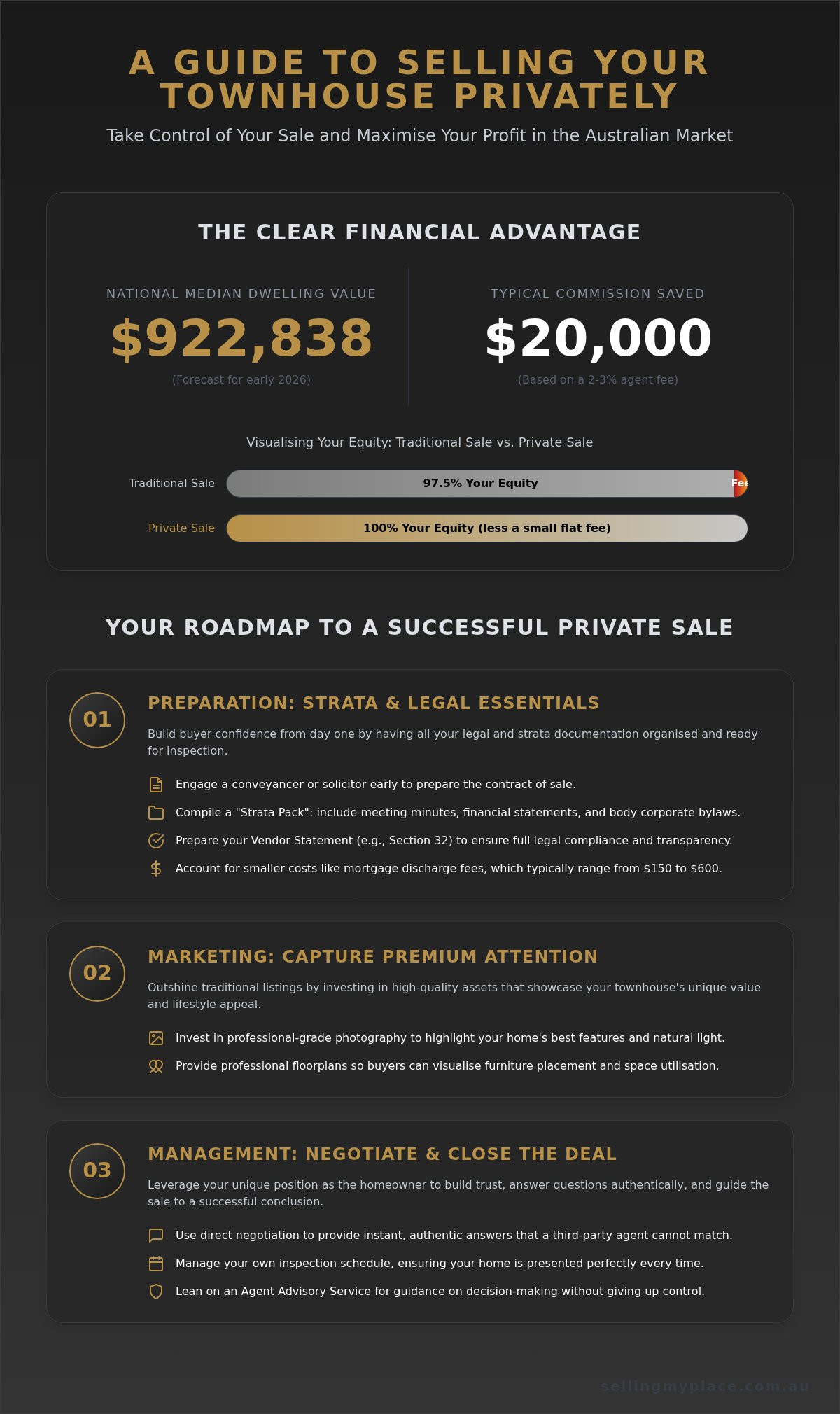
With the national median dwelling value reaching $922,838 in early 2026, handing over a significant slice of your equity to an agent can feel more like a sacrifice than a service. You’ve worked hard to maintain your home and navigate the unique quirks of strata life, so it’s only natural to want to protect your profit. We understand that the thought of managing contracts and marketing might feel daunting, but you don’t have to do it alone. Learning how to sell a townhouse privately is about more than just saving $20,000 in commissions; it’s about taking control of your property’s legacy with confidence and professional support.
This guide provides a clear, step-by-step roadmap to mastering the private sale process in the current Australian market. We’ll show you how to outshine traditional listings by using professional-grade visuals and transparent strata reporting to attract premium buyers. From organising your vendor statements to positioning your home in a shifting market, you’ll discover how to achieve a legally compliant, high-value result. It’s time to trade the stress of high fees for a sophisticated, partnership-based approach that puts your family’s future first.
Key Takeaways
- Retain more of your home’s equity by eliminating traditional agent commissions in favour of a transparent flat-fee model.
- Simplify the legal side of the sale by organising strata records and vendor statements well before your first inspection.
- Capture premium attention with professional-grade photography and floorplans that showcase your townhouse’s unique lifestyle appeal.
- Master how to sell a townhouse privately with the support of a dedicated Agent Advisory Service to guide your decision-making.
- Learn to manage inspections like a pro, ensuring your home feels like a welcoming display suite for every potential buyer.
The Benefits of Selling Your Townhouse Privately
Selling a home is often the culmination of years of memories, hard work, and careful planning. When you choose to explore For Sale By Owner (FSBO) methods, you’re stepping into a role that allows you to honour that history personally. By understanding how to sell a townhouse privately, you remove the barriers between your property and the right buyer, creating a transaction built on genuine connection rather than just a signature on a contract. It’s a path that offers both financial liberation and a sense of empowerment that traditional agency models often overlook. You aren’t just selling a building; you’re handing over a lifestyle you’ve nurtured to someone who will truly appreciate it.
Retaining Your Home Equity
The most immediate advantage is the preservation of your hard-earned wealth. In Australia, traditional real estate commissions often hover between 2% and 3%, which can take a massive bite out of your final sale price. On a property valued at the national median, this equates to an average saving of $20,000 kept in your pocket. Instead of watching that equity disappear into agency overheads, a flat-fee model provides the certainty of a fixed cost. This allows you to plan your next chapter with precision. Whether that means a more comfortable retirement or a larger deposit on your next family home, you deserve to keep the rewards of your property’s growth.
The Power of Direct Negotiation
Think about who truly knows the best spot for a morning coffee in your street or the way the afternoon sun hits the courtyard. It’s you. No agent, regardless of their experience, can match your intimate knowledge of the townhouse complex or the local community. When you speak directly with buyers, you provide an authentic perspective that builds trust instantly. This transparency often accelerates the process. Without a middleman filtering every question, you can provide immediate answers that help a buyer feel secure in their decision. You also gain full control over your inspection schedule, ensuring your home is shown only when it looks its absolute best, without the pressure of an agency’s rigid timeline. This level of transparency leads to a more respectful and efficient sale for everyone involved.
Preparing Your Townhouse for Sale: Strata and Legal Essentials
Selling a townhouse involves more than just tidying the courtyard and polishing the floorboards. Because your home is part of a shared community, there are extra layers of transparency required to make a buyer feel secure. Engaging a conveyancer or solicitor early in the piece is one of the smartest moves you can make. They’ll help you prepare the contract of sale and ensure all the necessary legal disclosures are in place before your first visitor arrives. This proactive approach shows potential buyers that you’re a prepared and serious seller, which naturally builds the trust needed to close a deal privately.
Navigating Strata and Body Corporate
Buyers in the 2026 market are savvier than ever, especially regarding shared costs. They’ll be hyper-focused on the health of the sinking fund and whether any special levies are planned for major capital works. To get ahead of these questions, organise a comprehensive strata inspection report and prepare a “strata pack” for interested parties. This pack should include recent meeting minutes and financial statements. It’s also vital to review your body corporate bylaws. Some complexes have strict rules about where you can place “For Sale” signage or where visitors can park during inspections. By documenting these details and addressing any communal maintenance issues early, you remove the “strata anxiety” that often holds buyers back.
Legal Compliance and Documentation
Transparency is the cornerstone of how to sell a townhouse privately with success. In most Australian states, you’re legally required to provide a vendor statement, often known as a Section 32. This document discloses essential information about the building’s history, safety compliance, and any easements. It’s your opportunity to show that the property is as solid as it looks. Your legal representative will guide you through the exchange of contracts, ensuring every “i” is dotted and every “t” is crossed. If you’re feeling a little overwhelmed by the paperwork, seeking expert conveyance advice can provide the steady hand you need to ensure a smooth, legally compliant transition for your family. Don’t forget to account for mortgage discharge fees, which typically range from $150 to $600, so there are no surprises at settlement.
Marketing Your Townhouse to a Global Audience
Presentation is everything. When you decide to learn how to sell a townhouse privately, you’re competing with thousands of other listings for a buyer’s attention. To stand out, your home needs to tell a story that resonates with a buyer’s aspirations. It isn’t just about listing a property; it’s about showcasing a lifestyle that feels both modern and attainable. We believe that every home has a unique soul, and our goal is to help you share that narrative with the world through sophisticated, professional marketing.
Visual Storytelling: Photography and Floorplans
In a digital-first market, the first “viewing” happens on a smartphone screen. DIY smartphone photos often fail to capture the depth and light that make a townhouse special, which can inadvertently devalue your property before a buyer even steps inside. Professional visuals highlight essential features like dedicated work-from-home nooks and private outdoor courtyards, both of which are high on the priority list for 2026 buyers. Accurate floorplans are equally critical. They help buyers visualise the flow and layout of the space, allowing them to place their own furniture in the rooms before they’ve even visited. For a deeper look at this, explore our guide on Visual Marketing: Photography and Floorplans That Sell to see how the right imagery can transform your listing’s performance.
Expanding Your Reach Beyond Local Portals
While local portals are a great start, your ideal buyer might be an expat returning home or an international investor looking for stability in the Australian market. By leveraging a global marketing network, you place your townhouse in front of a much wider pool of qualified buyers than a standard local listing ever could. This broader exposure is particularly valuable given that unit prices are expected to rise by 2.2% in 2026. Understanding how to sell a townhouse privately with a global reach means you aren’t limited by geography. Another advantage of this approach is the “until sold” listing feature. It removes the ticking clock often used by agencies to pressure sellers into lowering their price. To back your asking price with data, utilise neighbourhood market reports that provide concrete evidence of recent sales in your area. This combination of global visibility and local data ensures you’re selling from a position of strength.
Managing Inspections and Closing the Deal
Once your marketing has sparked interest, it’s time to open your doors. Managing this stage of how to sell a townhouse privately is about creating a sensory experience that helps a buyer feel “at home” the moment they cross the threshold. Unlike a standard agency viewing, you have the freedom to schedule inspections that highlight your property’s best features, like the way the morning light hits the kitchen or the quietness of the street after work. You’re the best person to tell the story of the home, so embrace the opportunity to connect with potential buyers on a personal level.
The Art of the Private Inspection
Transforming your home into a “display suite” doesn’t require a total renovation. It’s often the small, thoughtful touches that make the difference. Ensure the temperature is perfect, the lighting is warm, and every surface is decluttered. We often recommend pre-sale property consulting to help you identify those high-impact tweaks that attract premium offers. During the tour, provide “take-home” brochures and the strata summaries we discussed earlier. This gives buyers something tangible to review over coffee later. When following up, a quick, professional-casual message to gauge interest is all that’s needed. You’re acting as a neighborly guide, not a high-pressure salesperson, which buyers find incredibly refreshing.
Negotiation and Settlement
Negotiation is where many sellers feel the most pressure, but data is your best ally. Before you enter any discussion, set a firm “walk-away” price. You can justify this figure by referencing current Neighborhood Market Reports, which provide a clear picture of what similar townhouses are actually achieving in the 2026 market. When an offer arrives, pay close attention to the conditions. Whether it’s “subject to finance” or a building inspection clause, your legal representative will help you navigate these nuances. Once the price is agreed and the contract is signed, you’ll move toward the exchange and settlement. It’s a methodical process, but with a steady hand and the right information, it’s one you can navigate with total confidence.
If you’re ready to start showing your home to qualified buyers, our team can help you prepare every detail for a successful open home. Feel free to reach out for professional pre-sale consulting to ensure your townhouse is presented at its absolute best.
Selling Smarter with Kincade International Direct Sales
Choosing to manage your own home sale shouldn’t mean sacrificing the professional standards that attract premium buyers. At Kincade, we’ve developed a model that bridges the gap between traditional agency services and independent selling. Our flat-fee approach ensures you retain your equity while still benefiting from the sophisticated tools usually reserved for high-commission firms. It’s a partnership where you’re the decision-maker, but you’re never without a steady hand to guide you through the complexities of the 2026 property market. We’ve seen first-hand how this balance of independence and expert backing can reduce the stress of a high-stakes transition while delivering a result that feels both fair and rewarding.
The Kincade Advantage: More Than Just a Listing
With over 25 years of industry experience, we understand that selling a home is as much an emotional transition as it is a financial one. We don’t just upload your property to a portal and leave you to it. Our Professional Residential Property Listing Services are designed to empower you with the same resources used by the country’s top agents. This includes access to our dedicated Agent Advisory Service, providing you with a seasoned expert to discuss strategy, review offers, or simply offer reassurance when things feel intense. We believe this collaborative model is the future of real estate, offering a more respectful and transparent way to move from one chapter of your life to the next.
Your Next Steps to a Commission-Free Sale
Ready to see what’s possible? The journey of how to sell a townhouse privately begins with clarity. Your first step is to request a comprehensive neighbourhood market report. This data provides the grounded confidence you need to set a competitive price that reflects your home’s true value in the current climate. From there, we’ll help you organise your professional photography and floorplan preparation, ensuring your townhouse makes a stunning first impression on a global stage. Taking that initial step toward a smarter, more profitable Sale by owner is about more than just saving money. It’s about taking ownership of your future and ensuring your hard-earned equity stays where it belongs: with you and your family.
Secure Your Future with a Smarter Sale
You’ve spent years building equity in your home, and now it’s time to reap the rewards. By focusing on strata transparency and professional-grade visuals, you can attract the premium buyers your property deserves. Mastering how to sell a townhouse privately isn’t just about avoiding fees; it’s about taking charge of your own story with the right support behind you. You can save an average of $20,000 in commissions while still accessing a global marketing network that reaches far beyond your local street. It’s a sophisticated way to sell that respects both your time and your bank balance.
Our Agent Advisory Service ensures you have an expert partner for every negotiation and legal hurdle, providing the calm confidence you need during this major life transition. Don’t let high agency costs eat into your hard-earned profit. It’s your home, your legacy, and your choice. Start your commission-free townhouse sale with Kincade today. We’re here to help you move forward with a sense of pride and a significantly healthier bank balance. You’ve got this.
Frequently Asked Questions
Is it legal to sell a townhouse privately in Australia?
Yes, it’s entirely legal in every Australian state and territory. No special licence is required for a homeowner to manage their own sale. While the legality is national, the specific paperwork and disclosure rules do vary by state. This is why we advocate for a partnership approach. It ensures you meet all local requirements while retaining your hard-earned equity and staying in total control of the process.
How do I handle strata documents when selling without an agent?
You should contact your strata manager or body corporate secretary to request a current strata information certificate and the last two years of meeting minutes. These documents are essential for your legal disclosures. Providing a clear strata pack to potential buyers helps build trust and transparency from the start. Having a professional review these records ensures everything is in order before you welcome your first visitor.
Do I need a solicitor if I am selling my own home privately?
Yes, engaging a solicitor or licensed conveyancer is a vital step in the process. They’ll handle the legal transfer of the property, prepare the contract of sale, and ensure the necessary vendor statements are accurate. While you manage the marketing and inspections, your legal representative ensures the transaction is compliant. They also handle the final exchange of contracts and the complexities of settlement day to protect your interests. This move toward personal empowerment is part of a global trend; for instance, those in the UK navigating legal proceedings without a solicitor often use Find a McKenzie Friend to access vetted support and guidance in court.
No, the country’s major property portals generally don’t allow private individuals to list properties directly. You typically need to go through a licensed service provider like Kincade that offers professional residential property listing services. Our model allows you to bypass traditional commissions while still gaining the massive exposure these high-traffic platforms provide. This ensures your townhouse is seen by the widest possible audience of qualified buyers in the 2026 market.
What happens if I can’t find a buyer for my townhouse?
If a buyer isn’t found immediately, we’ll work with you to review your marketing strategy and asking price based on live market feedback. Because our listings have no time limit, you won’t feel pressured to rush into a lower-than-fair offer. We can refresh your professional photography or adjust the listing description to highlight different lifestyle features. This ensures your property remains competitive and appealing in a shifting property landscape.
How do I determine the right asking price for my townhouse?
The most reliable method is to use a neighbourhood market report. This provides concrete data on recent comparable sales in your specific complex and street. Avoid relying solely on automated online estimates, as they often miss townhouse-specific nuances. Instead, look at properties with similar floorplans and strata fees that sold recently. This data-driven approach gives you the grounded confidence to stand firm during any price negotiations.
What are the common mistakes to avoid when selling privately?
One common pitfall is using low-quality DIY photography, which can devalue your home’s online presence. Another mistake is failing to disclose strata issues early, which can cause deals to fall through during the cooling-off period. When learning how to sell a townhouse privately, it’s also vital to avoid being overly emotional. Keeping a professional-casual tone helps maintain a positive rapport with potential buyers and leads to smoother results.
How does Kincade support me during the negotiation process?
We provide a dedicated Agent Advisory Service that acts as your professional sounding board. When an offer arrives, you can discuss the terms and conditions with a seasoned expert who understands the nuances of how to sell a townhouse privately. We help you evaluate the strength of the buyer’s position and suggest strategies to achieve your target price. This ensures you feel supported and empowered until the contract is signed and the sale is finalised.
How to Sell a Duplex in Australia: The 2026 Commission-Free Guide
What if the most expensive mistake you make this year isn’t a bad investment, but simply paying for a service you’ve already outgrown? If you’re looking at how to sell a duplex in australia in 2026, you likely know that this isn’t just a simple property transaction. It’s the culmination of a strategic development or a long-term family legacy. You’ve done the hard work of maintaining or building a high-value dual-occupancy asset, so it’s only natural to feel a bit protective of the equity you’ve built. We understand that the thought of losing $20,000 or more in agent commissions can feel like a step backward, especially when the market is shifting under new tax and gearing regulations.
You deserve a sale process that respects your bottom line while providing the professional polish your property demands. This guide is designed to help you master the nuances of Torrens versus Strata titles and create a marketing strategy that captures both savvy investors and growing families. We’ll walk through the legal essentials and the practical steps to listing your property yourself, ensuring you stay in the driver’s seat from the first open home to the final settlement. By the end of this article, you’ll have a clear, confident roadmap to securing a premium price without the heavy weight of traditional commission fees.
Key Takeaways
- Recognise why your duplex is a premium asset and how to tailor your message for investors, downsizers, and multi-generational families.
- Determine if your property is Torrens or Strata titled to ensure you’re providing the legal clarity buyers need to make a confident offer.
- Evaluate the best exit strategy for your goals, whether that’s selling the entire development or offloading one side while keeping the other as a nest egg.
- Master how to sell a duplex in australia using a commission-free approach that protects your equity and keeps your hard-earned profits where they belong.
- Leverage high-quality photography and floorplans to highlight the unique scale of your property, capturing the attention of local and out-of-area buyers.
Understanding the Australian Duplex Market and the ‘Commission Trap’
In the local property market, a duplex is far more than just a building; it’s a clever use of space that provides two separate dwellings under a single roofline. These homes typically share a common wall, offering a lifestyle that balances privacy with proximity. If you’ve been researching What is a Duplex in Australia?, you’ll know they are often the “missing middle” of our housing landscape. They provide the outdoor space families crave without the maintenance of a sprawling quarter-acre block. This unique structure makes them highly sought after, but it also introduces specific complexities when it’s time to move on to your next chapter.
Why Duplexes are Unique Assets
Duplexes are high-value assets because they appeal to a broad spectrum of buyers. For investors, the dual-income potential is a massive drawcard, especially with the 2027 tax changes making established dual-occupancy more attractive for consistent cash flow. Multi-generational families often see them as the perfect solution for keeping aging parents close while maintaining independence. Others find the “live in one, sell the other” strategy is a brilliant way to slash a mortgage. Because they sit comfortably between high-density apartments and expensive detached houses, they are often the most resilient asset in a cooling market. This versatility is exactly why you need a tailored approach when considering how to sell a duplex in australia.
The Financial Impact of Traditional Commissions
The traditional agency model often feels like a partnership until the final settlement statement arrives. When you’re dealing with a high-value asset, a percentage-based commission can feel less like a fee for service and more like a tax on your hard work. Beyond the base rate, you’re often asked to cover GST and significant marketing levies that can stretch into the thousands. It’s a structure that can quickly erode the development profit you’ve spent years building. With the national median commission sitting at 2.65% in 2026, selling a $1.5 million duplex through a traditional agent could cost you upwards of $43,000 once GST and marketing expenses are added to the tally.
The landscape is shifting. In 2026, savvy owners are moving away from these traditional models in favour of professional residential property listing services that offer a flat-fee structure. This isn’t just about saving money; it’s about retaining the profit from the strategic decisions you’ve already made. By using a flat-fee model, you protect your margin and ensure that the value added through your property’s unique title structure stays in your pocket. This transition to a more transparent, service-based approach reflects a growing desire for control and equity protection among Australian property owners.
Navigating Title Types: Torrens, Strata, and Single Title Explained
Before you can effectively market your property, you need to understand the legal framework that defines it. When considering how to sell a duplex in australia, the first question a savvy buyer or their solicitor will ask is: “What type of title is it?” This isn’t just legal jargon. It fundamentally changes who can buy the property and how much they’re willing to pay. Identifying your title type is the vital first step in your selling journey, as it dictates the level of autonomy a future owner will have over their new home.
Torrens Title is widely considered the gold standard in the Australian property market. It means you own the land and the building outright, with no shared ownership of the block. There’s no body corporate and no strata levies to worry about. For a buyer, this represents the ultimate freedom. Conversely, Strata Title is quite common for duplexes that share a driveway or have common property like a shared roof or garden. This creates a “body corporate of two,” where both owners must agree on insurance and maintenance for shared areas. While common, it does require a bit more administrative coordination between neighbours.
Torrens vs. Strata: What Buyers Prefer
Most families and individual buyers prefer Torrens Title because it offers more autonomy. You don’t need to ask a neighbour for permission to paint your front door or install solar panels. Because of this flexibility, Torrens titled duplexes often fetch a higher price in the open market. If you’re unsure how this affects your specific property, you should learn How to determine the market value of a home in Australia: The 2026 Seller’s Guide to see how title types impact local comparisons. Knowing your title’s worth helps you set a realistic and competitive asking price.
Can You Subdivide Before Selling?
If your duplex is currently on a Single Title, where one deed covers both dwellings, you might be wondering if you should subdivide before listing. Selling both units as a single package often appeals to investors looking for a dual-occupancy yield. However, subdividing into two separate Torrens or Strata titles usually unlocks more equity. It opens the door to the much larger pool of owner-occupiers who only want to buy one side.
While the subdivision process can take anywhere from six to twelve months depending on your local council, the increase in the final sale price can be substantial. It’s a strategic move that requires patience but often pays dividends when you finally settle. If the legal side of things feels a bit overwhelming, it’s always helpful to chat with a professional advisor to ensure you’re on the right track before you commit to a marketing plan. Understanding these complexities now will ensure a much smoother transaction later.
Strategic Selling: One Side, Both Sides, or the Whole Development?
Choosing your exit strategy is a bit like a chess match. Every move you make should be calculated to protect your equity while meeting your personal goals. When you’re looking at how to sell a duplex in australia, you aren’t just selling a house; you’re offering a specific financial or lifestyle opportunity. The path you choose depends heavily on your local market’s current appetite, which is why a neighbourhood market report is your most valuable scouting tool. It tells you whether your street is currently a magnet for growing families or a hotspot for yield-hungry investors.
There are three primary ways to approach your sale:
- Selling the ‘Whole’: This involves selling both units together on a single title or as a packaged pair. It’s a dream for investors who want a high-yield asset with total control over the site.
- Selling ‘Part’: You might choose to list one unit while retaining the other as a rental property or your own residence. This is a popular way to “de-risk” a portfolio while keeping a foot in the property market.
- Selling ‘Individual’: Listing both units separately often yields the highest total return. By targeting two different owner-occupiers, you tap into the emotional premium that families are willing to pay for a place to call home.
Targeting the Investor vs. the Owner-Occupier
Your marketing needs to speak the language of your most likely buyer. Investors are cold, hard numbers people. They want to see depreciation schedules, rental appraisals, and clear evidence of low maintenance costs. Families, on the other hand, are looking for a sanctuary. They want to know where the sun hits the breakfast nook and if the backyard is safe for the kids. Despite these differences, one tool remains non-negotiable for both: professional floorplans. Without a clear 2D or 3D layout, an out-of-area investor can’t visualise the income potential, and a local family can’t see how their furniture will fit. It’s the silent salesperson that bridges the gap between a click and an inspection.
Timing the Sale for Maximum ROI
Should you list both sides at once or stagger them? If you’re in a high-demand area, listing both can create a sense of urgency and competition. However, if the market is quiet, you might find that two identical properties sitting on the portal at the same time compete against each other, potentially softening your price. A steady hand is required here. You need to watch the local auction clearance rates and days-on-market data closely. If you’re ready to take the lead on this journey, our resource on How to sell your own home: A step-by-step guide to sale by owner in Australia provides a practical framework for managing these moving parts yourself. By taking control, you ensure your timing is based on your needs, not an agent’s monthly quota.
Preparing Your Duplex for a Premium Result: Marketing Essentials
Once you’ve settled on a title strategy and identified your target buyer, the focus shifts to the art of presentation. When you’re looking at how to sell a duplex in australia, the visual narrative is what separates a standard listing from a premium result. Because a duplex is a unique architectural form, your marketing needs to highlight its greatest strength: the balance of scale and privacy. You aren’t just selling rooms; you’re selling a lifestyle that offers the benefits of a house with the efficiency of a modern build. This requires a narrative that positions the property correctly, whether it’s a “luxury residence” for a family or a “smart investment” for a portfolio builder.
Professional photography is your most powerful tool in this process. A skilled photographer knows how to capture the symmetry of the building, using a wide “hero shot” to showcase the impressive street appeal. For a duplex, this means highlighting the separate entrances and distinct outdoor spaces. If a buyer can’t see the privacy from the first photo, they might mistake it for a standard townhouse. We often suggest pre-sale property consulting to identify small, high-impact cosmetic changes. A fresh coat of paint on the render or some strategic native landscaping can add five-figure value for a relatively modest outlay.
Visual Storytelling for Dual Dwellings
Investors and families alike rely on floorplans to make their first “mental move” into a property. For out-of-area investors, accurate 2D or 3D floorplans are the number one tool for assessing a property’s viability without a physical flight. They need to see the flow between the living areas and the private backyards to understand the rental potential. By using neighbourhood data in your listing, you can also paint a picture of the local life. Mentioning the walkability to local cafes or the proximity to schools grounds the property in its community and adds emotional weight to the bricks and mortar.
The Legal Prep: Conveyancing and Section 32s
The technical side of a duplex sale involves more than just a standard contract. Because these properties often share services like water meters or electricity lines, your conveyance advice needs to be spot-on from the start. Organising your contract of sale and Section 32 early ensures you don’t lose a keen buyer to administrative delays. Having these documents ready shows you’re a prepared and professional seller, which builds trust during the negotiation phase. If you’re feeling nervous about the “final handshake,” our guide on Mastering the deal: Expert property sale negotiation tips for Australian homeowners offers the reassurance you need to close with confidence.
Getting the marketing and legal essentials right is about more than just a quick sale; it’s about honouring the legacy of the property you’ve built or maintained. If you’d like a second pair of eyes on your pre-sale strategy, reach out for a professional consultation to ensure your duplex stands out for all the right reasons.
Taking Control: How to Sell Your Duplex and Keep Your Equity
By now, you’ve seen that the path to a successful sale is paved with strategic decisions, from choosing the right title structure to crafting a narrative that speaks to the right buyer. However, the most significant decision you’ll make is how you choose to go to market. Many owners feel pressured into traditional agency models, fearing that the complexities of a dual-occupancy asset are too much to handle alone. This is where the Kincade International Direct Sales (KIDS) model changes the game. It’s designed for the savvy owner who has already done the hard work of developing or maintaining a high-value property and simply needs the right tools to finish the job.
Our flat-fee property marketing and advisory packages provide a professional alternative to the “commission trap” we discussed earlier. You don’t have to choose between saving money and having expert support. With our Agent Advisory Service, you have a seasoned partner to help navigate those tricky title questions or conveyance hurdles. It’s a safety net that provides calm confidence throughout the process. Perhaps the most liberating feature for a unique asset like a duplex is our “list until sold” policy. Unlike traditional agents who might rush you into a price drop as their 90 day exclusive period ends, we provide active listings with no time limits. You can wait for the right buyer who truly appreciates the value of your dual-living design.
The KIDS Advantage for Duplex Sellers
In 2026, residential property listing services have evolved to be more intuitive and powerful than ever. When you use the KIDS model, you aren’t just putting a sign in the ground; you’re tapping into global marketing networks that reach international investors looking for stable Australian yields. Because you’re avoiding a percentage-based commission, you’re effectively keeping an average of $20,000 or more of your own equity. That’s money that can go toward your next development, a well-deserved holiday, or your family’s future. It’s about ensuring the reward for your property’s growth stays exactly where it belongs.
Your Next Steps to a Successful Sale
Taking the first step is often the hardest part of any major transition, but we’ve made the process methodical and inviting. If you’re ready to see how to sell a duplex in australia on your own terms, start by requesting a neighbourhood market report. This data will be your compass, helping you set a price that reflects the true local demand. From there, you can book your professional photography and floorplan session to ensure your property’s symmetry and scale are captured with the polish they deserve. Once your contract is drafted and your marketing is live, you’re ready to lead your own “Sale by Owner” journey with the backing of a multi-generational expert team.
Ready to sell your duplex and keep your profit? Explore our commission-free packages today.
Your Future, Secured and Profitable
Selling a duplex is a major life transition that marks the end of one chapter and the start of another. We’ve explored how mastering your title type and choosing a targeted marketing strategy can transform your result. You now have the knowledge to navigate the legal landscape and present your property with the polish of a professional developer. By taking the lead, you ensure that the value you’ve cultivated over the years stays with your family. After all, why should a significant portion of your hard-earned equity go toward a commission for work you’re more than capable of overseeing?
When you decide how to sell a duplex in australia, you don’t have to walk the path alone. Our flat-fee model is designed to be your steady hand, offering an Expert Agent Advisory Service to guide you through every complex detail. You can save an average of $20,000 in commissions while enjoying the peace of mind that comes with being listed until sold with no time limits or hidden fees. It’s about having the right tools and the right partner to protect your legacy. Maximise your duplex sale profit with our flat-fee marketing and advisory packages. You’ve done the hard work of building your asset; now it’s time to claim the full reward you deserve.
Frequently Asked Questions
Do I need a different contract of sale for each side of the duplex?
Yes, you definitely need individual contracts if the dwellings are on separate titles. This ensures each buyer has a clear legal claim to their specific portion of the land and building. If you are selling the entire development on a single title to one buyer, a single contract is sufficient. It’s always best to have your solicitor prepare these early to avoid any hiccups when an offer comes in.
Can I sell one side of my duplex if it’s currently on a single title?
No, you cannot legally sell just one side if the property is held on a single deed. You must first complete a subdivision into Torrens or Strata titles before you can transfer ownership of a single unit. This process requires council approval and can take several months. It’s a vital part of planning how to sell a duplex in australia if you intend to split the asset for individual buyers.
Is it better to sell a duplex to an investor or an owner-occupier?
Both groups have their merits. Investors are often more transactional and focus on yield, which is perfect if you’re selling both units at once. Owner-occupiers, however, often pay a premium for the lifestyle and extra space a duplex provides compared to an apartment. We recommend looking at your neighbourhood market report to see which group is currently most active in your specific street before you list.
How much can I actually save by selling my duplex without a commission-based agent?
Most of our clients save an average of $20,000 in commissions per sale. When you consider that traditional agents in 2026 charge a median of 2.65% plus GST and separate marketing fees, the total cost for a high-value duplex can be eye-watering. By choosing a flat-fee model, you keep that equity in your pocket to put toward your next project or your family’s future instead of an agency’s bottom line.
What are the specific disclosure requirements for selling a duplex in Australia?
You are legally required to disclose shared services, easements, and any body corporate obligations. This includes details like shared water meters, common walls, or joint insurance policies. These facts are usually found in your Section 32 or contract of sale. Being transparent from the start builds trust with buyers and prevents the sale from falling through during the cooling-off period because of hidden shared costs.
How do I handle shared insurance and maintenance costs during the sale process?
It’s important to keep these payments current and have all records organised for potential buyers to review. If you have a strata title, the body corporate will have formal records of these costs. For Torrens titles with informal shared maintenance, providing a clear history of past expenses helps the buyer feel confident about the ongoing costs of their new home and prevents any settlement delays.
Do buyers find ‘Sale by Owner’ listings for duplexes less trustworthy?
Quite the opposite. In 2026, buyers appreciate the direct line of communication with the person who knows the property best. When your listing features professional photography and accurate floorplans, it carries the same authority as any traditional agency. Using a professional residential property listing service ensures your property looks premium while you maintain that personal, trustworthy connection that helps close a deal with confidence.
What happens if my duplex doesn’t sell within the first 90 days?
Unlike traditional agency agreements that often expire after 90 days, our listings remain active until sold. This is a massive advantage for unique duplex assets that might take a little longer to find the perfect buyer. You won’t face extra fees or the pressure to drop your price just because a calendar date has passed. You can stay the course and wait for the right offer without any stress.
