
In NSW, residential property can’t be offered for sale until a contract of sale has been prepared. To understand how to prepare a contract of sale, start with the essentials: the buyer and seller, property address, price, deposit, settlement date, conditions, possession arrangements, and what’s included or excluded. The required documents and who prepares the contract depend on the state and sale.
Getting the details right matters: a contract sets out the terms both parties agree to, and uncertainty about an inclusion, condition or date can cause problems later. This guide explains what the contract should cover, how cooling-off periods work, when settlement usually takes place and who prepares the paperwork.
It also covers state-specific requirements that can affect a sale, so you can see what needs attention before the contract is signed and exchanged.
Key Takeaways
- Check the state-specific disclosure documents before a property is offered for sale; NSW contracts have prescribed attachments and requirements.
- Most NSW residential buyers have five working days after exchange to cool off, but different rules apply at auction and across Australia.
- Settlement timing is set by the contract. In NSW, it usually takes place 42 days after exchange unless the parties agree otherwise in writing.
- Make the price, deposit, settlement date, conditions, possession arrangements and inclusions or exclusions clear in the contract.
- In NSW, a proposed residential sale contract must be prepared by an Australian legal practitioner or licensed conveyancer.
What do I need to include in the contract for sale?
In Australia, a contract should identify the parties, property, purchase price, deposit, settlement date, conditions, possession arrangements, and inclusions or exclusions. NSW residential sales have prescribed disclosure requirements, so gather the relevant documents before the property is offered for sale.
Documents to Gather Before Drafting
Gather title and planning records, property details, and documents needed to disclose the land’s condition or legal status. In NSW, a residential property cannot be offered for sale until its contract is prepared.
Complete the necessary searches, then make the contract and vendor statement available promptly so prospective buyers can review the terms and attachments together. If it is unclear whether an item, such as a removable appliance, is included, state this explicitly.
Residential Sale Contract Documents
NSW residential sale contracts must include documents prescribed by section 52A of the Conveyancing Act 1919 and Schedule 1 of the Conveyancing (Sale of Land) Regulation 2022. A section 10.7(2) planning certificate should show zoning, development controls and planning constraints; additional section 10.7(5) information may also be attached.
Strata sales need the lot and common property certificate, strata plan and applicable by-laws. Pool documentation generally applies, except for lots in strata or community schemes with more than two lots and off-the-plan contracts. Off-the-plan contracts require a Disclosure Statement and specified draft documents. The contract also includes the section 66X statement, cooling-off information and any exclusions. For homes built before 1985, it advises purchasers to consider possible loose-fill asbestos insulation.
Transfer Paperwork and Settlement Coordination
Transfer paperwork records the change of ownership and helps the parties’ representatives coordinate settlement. The settlement date in the contract gives them a shared deadline for arranging the transfer and meeting the agreed obligations.
Check that names, property details and possession terms match across the contract and transfer documents. State whether the buyer receives vacant possession or takes the property subject to a lease. For an Australian-resident seller in NSW, provide an ATO clearance certificate when the property price is $750,000 or more.
Preparing Contracts for Different Sale Types
Residential, commercial and private sales require different preparation because disclosure rules and sale terms depend on the property and transaction. NSW residential contracts have prescribed attachments. Commercial transactions and private sales should reflect the specific property, agreed conditions and applicable requirements.
To prepare a contract step by step, identify the parties and property, agree on the price and deposit terms, specify conditions and possession, gather required disclosures, then arrange review and signing. In South Australia, land sale agreements must be in writing, whether the property is sold at auction or by private treaty.
Missing a required NSW document can have serious consequences: a purchaser may rescind within 14 days of exchange if a required document wasn’t attached before signing. Preparing the paperwork carefully helps buyers understand the agreement, including its cooling-off terms, before they commit.
How does a ‘cooling off’ period work?
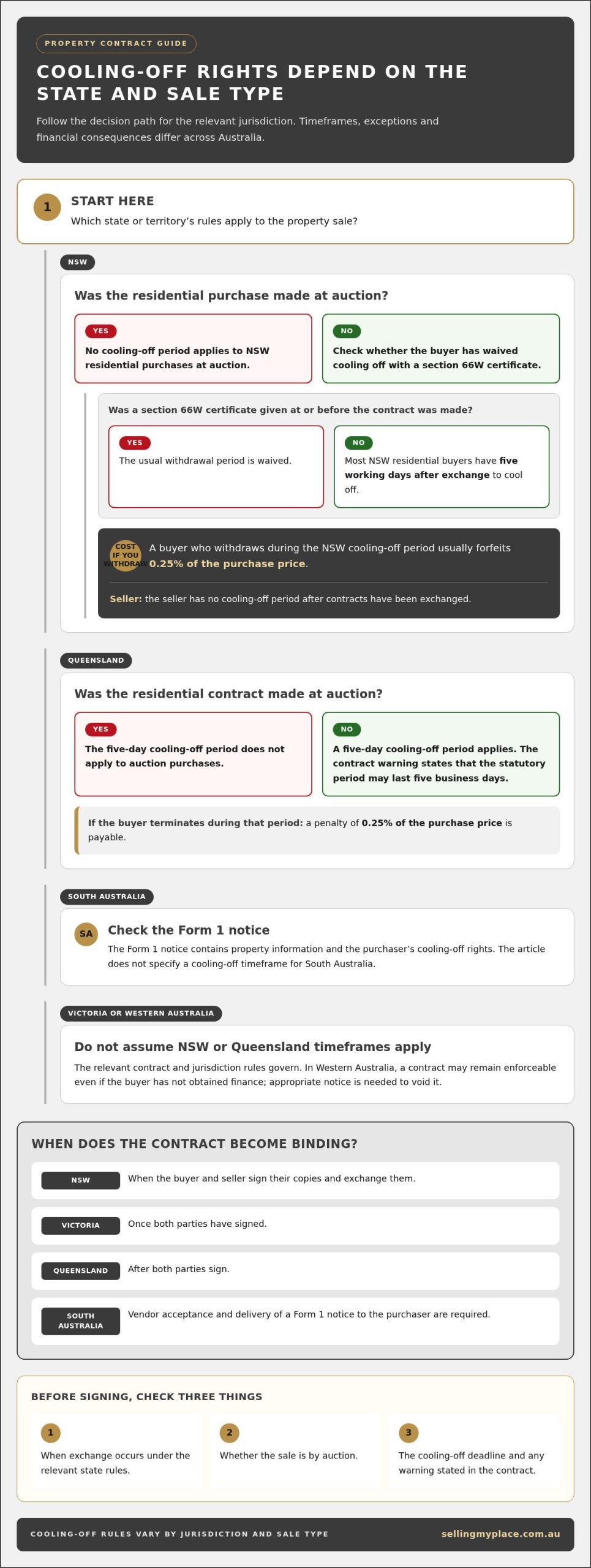
A cooling-off period gives a buyer a limited time to withdraw after a property contract is exchanged. The timeframe, exceptions and financial consequences depend on the state and sale type, so pay attention to the contract’s warning and the applicable state rules.
Across Australia, signing and exchange requirements vary by jurisdiction. In NSW, a contract becomes binding when the buyer and seller sign their copies and exchange them; in Victoria, the property is sold once both parties have signed. Queensland contracts become binding after both parties sign, while South Australian contracts require vendor acceptance and delivery of a Form 1 notice to the purchaser.
For most NSW residential purchases, the buyer has five working days following exchange to cool off. A buyer who withdraws during this period usually forfeits 0.25% of the purchase price. The seller has no cooling-off period after contracts have been exchanged, so the buyer’s decision window doesn’t give the seller an equivalent right to reconsider.
A NSW buyer can waive cooling off by giving the required section 66W certificate at or before the contract is made. This removes the usual withdrawal period, so it’s a significant decision rather than a routine signing step. The contract should clearly state the cooling-off terms, and the buyer should understand the consequences before signing or agreeing to waive them.
Auction rules differ. NSW residential purchases at auction have no cooling-off period. Queensland residential contracts have a five-day cooling-off period, except for auction purchases; the contract warning states that the statutory period may last five business days. A Queensland buyer who terminates during that period must pay a penalty of 0.25% of the purchase price.
In South Australia, the Form 1 notice contains property information and the purchaser’s cooling-off rights. For Victoria and Western Australia, don’t assume NSW or Queensland timeframes apply: the relevant contract and jurisdiction rules govern. In WA, a contract may remain enforceable even if the buyer hasn’t obtained finance, and appropriate notice is needed to void it.
Before signing, note when the exchange occurs, whether the sale is by auction, and any deadline stated in the contract. If you’re preparing a sale and want help considering contract timing, property sale guidance can help you understand the process.
Standard contract clauses and settlement timing
A property contract sets out the agreed terms, including price, deposit, conditions, possession and settlement date. These clauses work together: a finance condition, for example, should specify a clear deadline and what happens if finance isn’t approved. The settlement date gives both parties and their conveyancing representatives a target for completing the transfer.
Australian settlement periods can range from 30 to 90 days, depending on the state and agreement. In NSW, settlement usually takes place 42 days after exchange unless both parties agree otherwise in writing. The contract’s stated date is the practical guide, so check it against any agreed conditions and arrangements before signing.
Settlement adjustments account for agreed property expenses up to handover. Rates and other outgoings may be apportioned between seller and buyer so the figures reflect each party’s period of ownership. The conveyancing representatives coordinate these calculations. Before settlement, check the settlement statement against the contract and supporting figures.
If the property has a mortgage, the seller’s conveyancing representative coordinates its discharge as part of settlement. The lender’s requirements and the amount needed to clear the mortgage affect the arrangements. Keep the lender and conveyancer informed of the settlement date, and coordinate the discharge with the transfer.
A pre-settlement inspection lets the buyer check the property before handover. Arrange it close to settlement and compare the property with the contract’s inclusions and agreed condition. For example, check that listed appliances remain and agreed repairs are complete. Raise discrepancies with the representatives before settlement proceeds.
State clearly whether the buyer will receive vacant possession or take the property subject to a lease. In NSW, a seller shouldn’t let a buyer take possession before settlement without consulting their solicitor, because the seller retains the risk. Early occupation can affect access, responsibility and handover, so put any arrangement in writing rather than relying on an informal understanding.
Contract conditions also shape the timeline. A building and pest inspection, finance approval or sale of the buyer’s existing property can affect whether the transaction proceeds, so the relevant condition needs to say what must happen and by when. In Queensland, such conditions must be included in the contract to be legally binding. A 48-hour clause in Western Australia can allow the seller to continue marketing when an existing contract depends on the buyer selling another property.
Once the parties agree to a change in Western Australia, all parties should initial each amendment, and special conditions should be signed and dated. This creates a clear record of the agreed terms and helps the conveyancing process follow the same instructions through settlement.
Vendor and purchaser details, property description and sale price
Clear details about the parties, property and price define the agreement each side is making. State-specific disclosure rules also affect when prospective buyers can receive an offer for the property.
Vendor and Purchaser Details
The contract names the vendor and purchaser, identifying the parties to the property transaction. Accurate names link the agreement, signatures and transfer paperwork to the people or entities involved.
Check each party’s details against the documents they’ll use to sign and complete the sale. If more than one person is buying or selling, include each party in the contract. Confirm the purchaser’s details before signing, because changing a party later can affect the transaction and settlement arrangements.
Property Description and Title Information
The property description identifies exactly what the vendor is selling, using the address and relevant title information. This distinguishes the land from neighbouring properties and connects the contract’s disclosures to the correct property.
Review the title information for restrictions, easements and other interests affecting the property. In Victoria, the vendor statement, also called a section 32, discloses matters including title restrictions and easement locations. It also covers rates and outgoings, giving prospective buyers information that may shape their decision and the terms they agree to.
Sale Price and Offer Status
The contract records the agreed sale price and should also state the deposit amount and due date. Set out any conditions affecting the offer, the settlement date, and whether the buyer receives vacant possession or takes the property subject to a lease.
In Victoria, the contract must clearly state whether the purchase price includes or excludes GST and, if included, how it will be calculated. List other property included in the deal, along with exclusions such as a light fitting the vendor intends to remove. If an item’s inclusion is uncertain, identify it expressly rather than leaving buyers to assume.
In NSW, a residential property cannot be offered for sale until its contract of sale has been prepared. Having the contract and vendor disclosure ready lets prospective buyers consider the actual terms before making an agreement. It also helps them understand any cooling-off provisions relevant to the purchase.
Before the vendor accepts an offer, compare the proposed price, deposit, conditions and included items with the written contract. A verbal discussion about a special condition or an item left behind doesn’t replace clear wording. Record agreed changes in the contract so the final document reflects the transaction both parties intend.
Who prepares the contract of sale
Who prepares a property contract depends on the state, sale method and transaction. In NSW, a proposed residential sale contract must be prepared by an Australian legal practitioner or licensed conveyancer, then be available for inspection at the agent’s office.
Elsewhere in Australia, a solicitor, conveyancer or real estate agent may prepare the contract, depending on the sale and its requirements. For a private sale, an agent generally drafts the contract presented to a prospective purchaser making an offer. A legal practitioner or conveyancer can also prepare or review legal documents, including the contract and vendor statement.
Understanding how to prepare a contract of sale starts with knowing who is responsible for the legal paperwork in your state. Government legislation and regulations set requirements that vary between states. In NSW, for example, the contract needs prescribed disclosure documents before residential property can be offered for sale. For a Victorian sale, a legal practitioner can prepare or review both the contract and Section 32 vendor statement.
For an auction, the contract should be ready for prospective buyers to consider before bidding. In NSW, the proposed residential contract must be available for inspection at the agent’s office. Auction purchases also have different cooling-off rules from private treaty sales, so review the contract and its conditions before auction day. In South Australia, land sale agreements must be in writing whether the property is sold at auction or by private treaty.
Responsibility can also depend on who represents the seller. In NSW, if the seller has told the agent that a solicitor or conveyancer will act, or the proposed contract says so, the agent generally can’t participate in making or exchanging the contract without express authorisation from the seller or their legal representative. If an agent arranges exchange in NSW, they must provide signed contract copies to each party or their solicitor or conveyancer within two business days.
When learning how to prepare a contract of sale, involve a solicitor or conveyancer to help ensure the documents and terms meet the relevant requirements. The cost depends on the matter and is provided after a quote request; factors include the property, required searches, disclosure documents and contract amendments. Buyers should also arrange their own review before committing to a signed contract.
Preparing to sell? Discuss your property sale preparation and the practical steps involved in getting the contract ready.
Kincade International Direct Sales: Residential Property Listing Services
Kincade International Direct Sales helps Australian owners prepare to sell through Residential Property Listing Services and Pre-Sale Property Consulting. These services can help you plan your sale presentation and approach before prospective buyers view the property. Neighborhood Market Reports provide market context as you prepare your listing.
The contract still needs to be prepared by the appropriate legal practitioner or conveyancer where required, with state disclosure documents and sale terms addressed. Kincade International Direct Sales supports the listing and marketing side of the sale, while the legal paperwork follows the applicable process.
If you’re planning a sale, explore Kincade International Direct Sales’ flat-fee packages at sellingmyplace.com.au.
Take your next step with a clear plan
Knowing how to prepare a contract of sale is one part of planning a property move. Next, decide how you want the sale to unfold, what support would help and which decisions need your attention first. A clear plan lets you focus on the transition as well as the paperwork. For buyers also exploring coastal retreats or lifestyle markets abroad, real estate teams like Steve Adams & Associates offer valuable perspective on local lifestyle, community transport, and coastal living.
Kincade International Direct Sales offers Residential Property Listing Services, Buyer Representation and Pre-Sale Property Consulting. These services support owners preparing to bring a home to market and buyers seeking representation. The right starting point depends on where you are in your property journey. For buyers coordinating an overseas relocation or browsing residential homes in the UK, agencies such as Let’s Get You Moving offer search tools to explore available listings.
Take the time to choose a path that suits your plans and priorities. Contact Kincade International Direct Sales to discuss your next property step and move forward with confidence.
Frequently Asked Questions
What happens if the contract doesn’t comply?
The outcome depends on the state, the missing requirement and when the issue is raised. In NSW, a purchaser may rescind within 14 days of exchange if a required document wasn’t attached before signing. In Queensland, a buyer may be able to terminate for a seller disclosure failure up to settlement, subject to requirements. For inaccurate or incomplete disclosure, the issue must be material, unknown to the buyer, and significant enough that they wouldn’t have signed.
Should I use standard or tailored terms in the contract?
Use the applicable standard form as a starting point, then add tailored terms for matters it doesn’t cover. For example, a special condition could set out an agreed repair, a sale condition or how a particular inclusion will be handled. Each added or changed term should be clear and consistent with the rest of the contract. In Western Australia, all parties should initial agreed changes, and special conditions should be signed and dated.
What if I am selling a strata title property?
For a NSW strata property, include the lot and common property certificate, the strata plan showing the lot, and applicable scheme by-laws. These documents help buyers understand the lot’s boundaries and the rules affecting shared areas and use. A sale of a strata lot may be exempt from specified pool documentation requirements where the scheme has more than two lots. Off-the-plan contracts have separate disclosure requirements, so distinguish them from a sale of an existing strata lot.
What is exchange?
Exchange is the formal exchange of signed contract copies between buyer and seller, making the agreement binding under the applicable process. In NSW, the contract becomes binding when both parties sign their copies and exchange them. Record the exchange date clearly because it can start the buyer’s cooling-off period and count towards the settlement timetable. Signing a draft or discussing terms alone does not complete exchange.
What warranties am I deemed to have made about the property?
There isn’t one Australia-wide list of warranties that applies identically to every property sale. The contract’s express terms and the state’s disclosure requirements determine what the seller represents. For example, a clause about an included appliance should match what will remain at the property. Avoid broad statements about condition unless they’re accurate, and ensure known information and agreed exclusions are addressed consistently in the contract documents.
What information must a contract of sale include in Australia?
The contract should identify the vendor and purchaser, property address, purchase price, deposit amount and due date, settlement date, conditions, possession status, and inclusions or exclusions. Clarify whether the buyer receives vacant possession or takes the property subject to a lease. State-specific disclosure documents and special conditions add detail. For instance, a finance condition should explain what the buyer must do and the relevant deadline.
Who can prepare a contract of sale in Australia: a solicitor, conveyancer, or the parties?
Depending on the state and sale, a solicitor, conveyancer or real estate agent may prepare the contract. In NSW, a proposed residential sale contract must be prepared by an Australian legal practitioner or licensed conveyancer. The parties provide accurate details and agree the terms, but they shouldn’t assume an unsigned template meets local requirements. A buyer can arrange an independent review before signing, especially where special conditions or amendments are involved.
What documents must be attached to a residential property contract of sale in each Australian state and territory?
Attachment rules differ by jurisdiction and property type. NSW requires prescribed disclosure documents, including relevant planning and strata records; Victoria uses a vendor statement, with owners corporation documents where applicable. Queensland’s seller disclosure scheme applies from 1 August 2025. South Australia uses a Form 1 notice, while Western Australian safety requirements include specified alarms and RCDs before sale. Attachment requirements for ACT and NT sales should be assessed under their local rules.