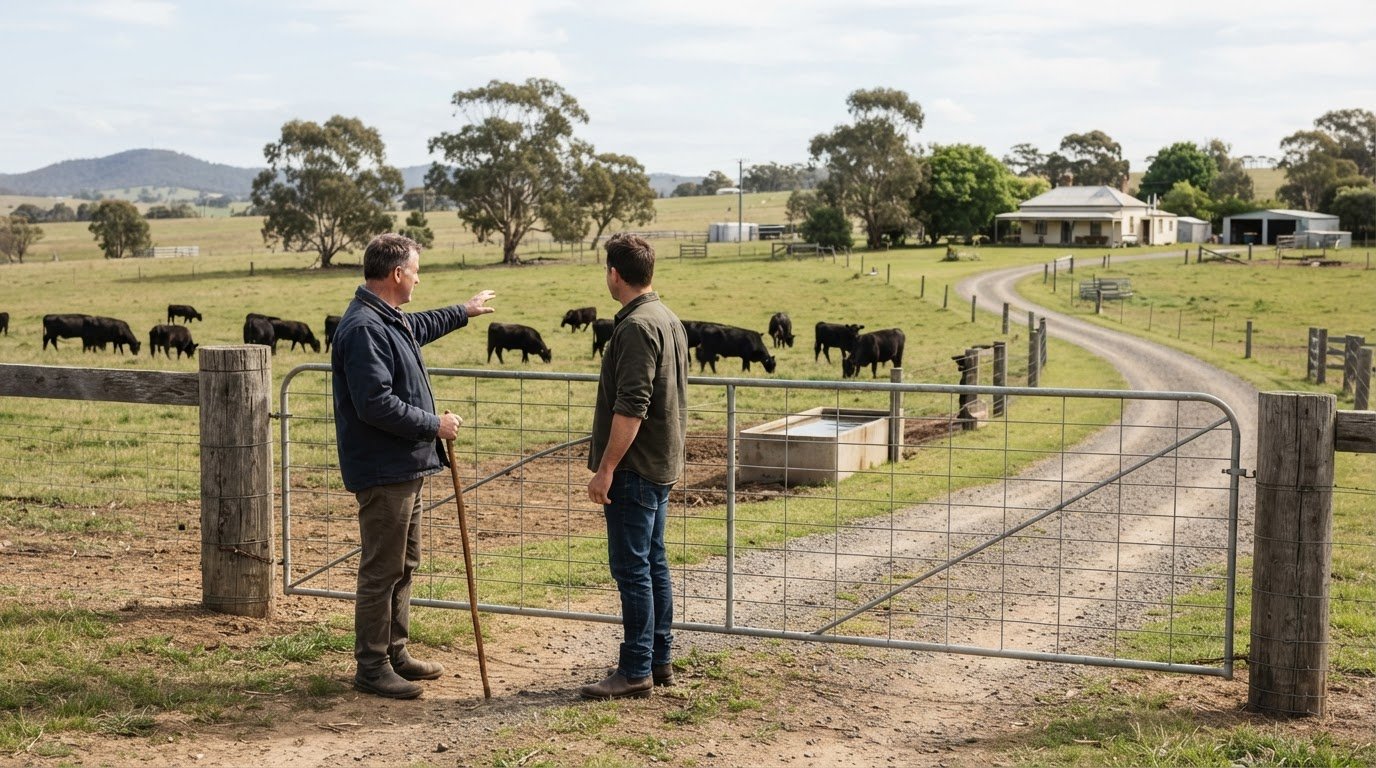
A lease doesn’t automatically prevent a rural property sale. In New South Wales, selling a rural property privately can proceed subject to an existing lease or agistment agreement. The purchaser generally takes on the landlord’s rights and obligations from settlement. The contract should state that the sale is subject to the lease and explain how rent and outgoings will be adjusted.
It’s understandable to want a clear path through the paperwork while protecting the value and future of your land. The details matter: buyers need to know whether they’ll receive vacant possession or take over an ongoing arrangement, while sellers need to understand the tax and disclosure issues that may affect the sale.
This guide explains how leases can shape a rural sale, what may affect capital gains tax, and how private land sales work in Victoria. It also covers floor plans, water and land-use details, and environmental restrictions such as clearing controls, so you can see what needs attention at each step.
Key Takeaways
- A rural sale can proceed subject to an existing lease or agistment arrangement, but the contract should clarify what continues after settlement and how rent and outgoings are adjusted.
- Capital gains tax may apply, with the outcome shaped by factors such as the property’s use, ownership period and eligibility for relevant concessions.
- Victorian landowners can generally sell without an agent; clear property information and well-prepared sale documents help buyers understand what is being offered.
- Accurate floor plans and clear responses to buyer enquiries can make the property’s layout and practical details easier to assess.
- Environmental restrictions, conservation agreements, water entitlements and clearing approvals can affect how rural land is used and what must be disclosed.
Do you pay capital gains tax on rural property sales?
Capital gains tax may apply when you sell a rural property, particularly if it isn’t your principal place of residence. The amount depends on factors such as the ownership period, business use and your individual tax circumstances. Primary production concessions or small business CGT concessions may apply in some cases. Include tax planning in your sale preparation rather than leaving the calculation until settlement.
A private treaty sale lets the seller and buyer negotiate the price and terms directly. This can make it easier to discuss a working farm’s particular features, such as equipment, water entitlements or an existing grazing arrangement. The trade-off is that the seller manages buyer enquiries, offers and sale coordination. Assess each offer against its conditions and proposed settlement date, not price alone.
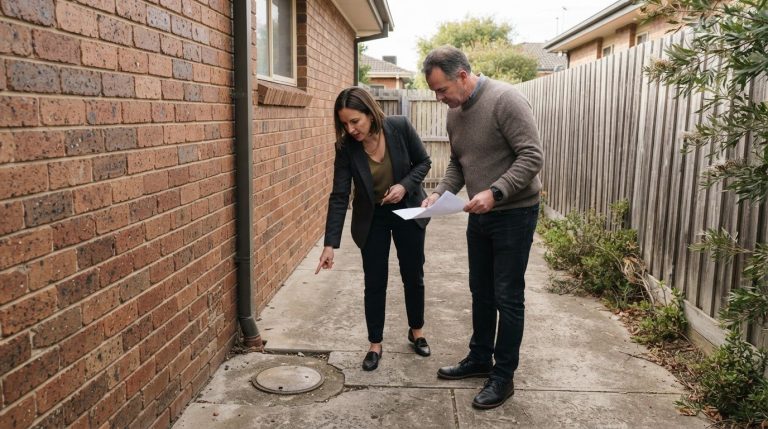
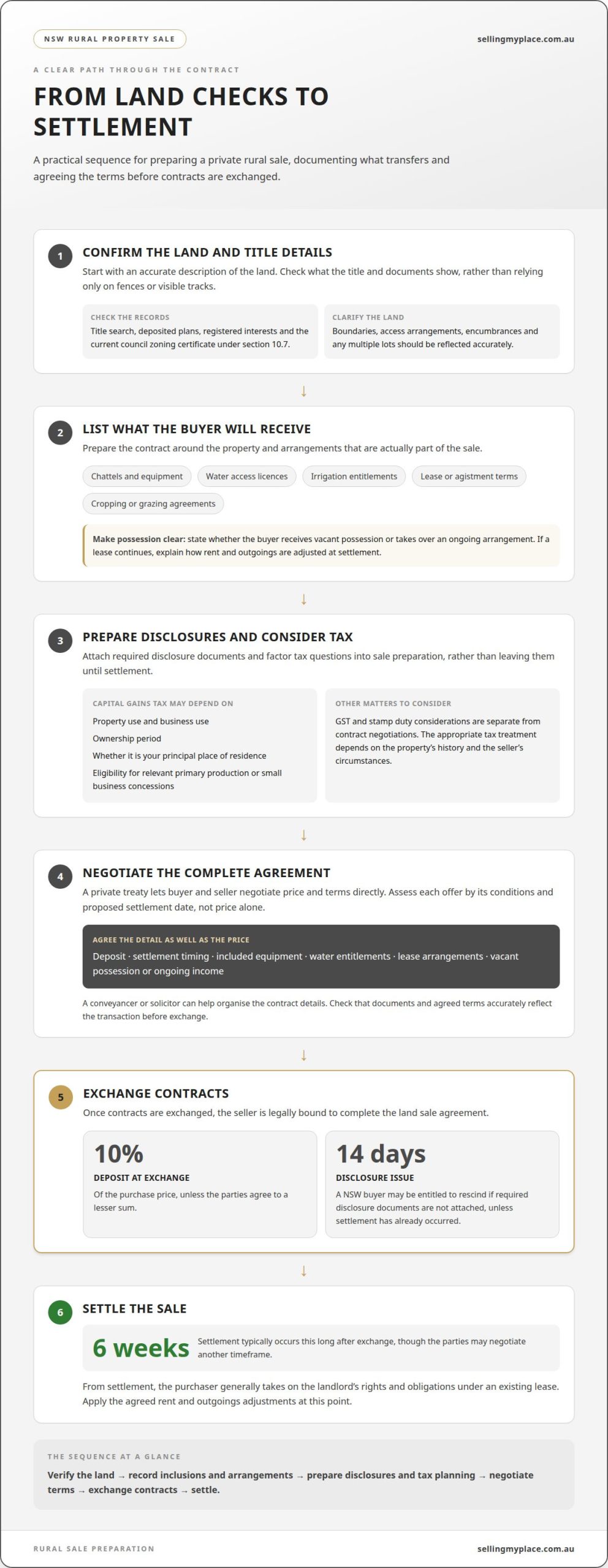
For a NSW rural property, the contract should describe the land accurately and disclose prescribed documents. These may include a title search and a current zoning certificate issued under section 10.7 by the local council. A conveyancer may review the certificate of title, deposited plans and registered interests. This helps ensure the contract reflects boundaries, access arrangements and encumbrances, especially where the property includes multiple lots.
Prepare the contract around what the buyer will actually receive. Include an accurate inventory of chattels and equipment, and address water access licences or irrigation entitlements if they form part of the transaction. If a lease, cropping agreement, grazing lease or agistment arrangement continues, state whether the buyer receives vacant possession or ongoing income. For a sale subject to a lease, explain how rent and outgoings will be adjusted at settlement.
These details matter because a NSW buyer may be entitled to rescind within 14 days if required disclosure documents aren’t attached, unless settlement has already occurred. Once contracts are exchanged, the seller is legally bound to complete the land sale agreement. The deposit due at exchange is 10% of the purchase price unless the parties agree to a lesser sum. Settlement typically occurs 6 weeks after exchange, though the parties may negotiate another timeframe.
Negotiation should settle more than the headline price. Agree on the deposit, settlement timing, included equipment, lease arrangements and any relevant water entitlements before exchange. For example, if the buyer takes over an agistment agreement, the contract should explain whether income continues after settlement. Clear terms give both parties a shared understanding of what the agreed price covers.
Tax treatment can involve more than the land’s sale price. Business use, ownership period and eligibility for concessions can affect the capital gain calculation. Rural land transfers also raise GST and stamp duty considerations. These tax questions are separate from contract negotiations, so include them in your financial planning before exchange. The appropriate treatment depends on the property’s history and the seller’s circumstances.
A careful sequence can reduce avoidable uncertainty: establish the correct title and zoning details, record inclusions, disclose existing arrangements, then negotiate the contract terms. For a NSW rural sale, engage a qualified conveyancer or solicitor to help organise the contract details. A signed and exchanged contract is binding, so make sure the documents and agreed terms accurately reflect the transaction before exchange.
Selling Victorian land privately without an agent
Victorian landowners can generally sell without an agent. A private sale puts owners in charge of advertising, buyer enquiries, inspections and offer discussions.
Advertising rural land
Present the land with enough detail for buyers to understand its location, use and practical features. A clear listing can describe the area, access, available services and any existing lease or water arrangement. Use photographs and a floor plan to explain buildings and the property layout. Buyers need a sound basis for deciding whether to enquire.
Private sellers also organise promotions and respond to enquiries themselves. Keep listing details consistent with the title and sale documents; an incorrect land area or access claim can create confusion during negotiations. A page-one listing on real estate sites has been reported as providing features similar to an agent’s marketing, but presentation and buyer follow-up remain the seller’s responsibility.
Land area, title and easements
Describe the land by reference to its title, not just fences or visible tracks. Rural fences may not follow legal boundaries, and apparent road access does not necessarily establish legal access. The deposited plan can show roads designated within a property, including roads that were never constructed. These distinctions can affect usable area and a buyer’s expectations.
Title details should also reveal easements, covenants and land-use restrictions. Disputed boundaries or access arrangements can affect the proposed sale terms. If the property includes Crown licences or leases, disclose them because they may not be transferable. A private water scheme also has its own agreement, users group constitution and allocation; any associated group shares should transfer to the purchaser on completion.
Selling costs and inspections
Allow for conveyancing, advertising and any costs associated with arranging inspections. The amount depends on the work and advertising selected. Buyers should investigate title, boundaries, legal access, water arrangements, contamination, services and land-use restrictions. Livestock dips, septic systems and chemical residues, for example, can raise contamination concerns, while mining exploration licences may affect a property.
Due diligence also includes checking whether electricity, telephone and other services can be connected to the land. Where a private water scheme applies, buyers need to understand its agreement and allocation. These checks help buyers assess the land beyond its photographs and advertised area, and may prompt specific questions before they make an offer.
Land tax and water usage also need attention before settlement. In NSW, land tax is an annual tax based on the value of land an owner holds. NSW rural sales may require land tax adjustments and water usage reconciliation before settlement. Those NSW arrangements are distinct from a Victorian sale, so avoid treating them as automatic Victorian requirements. For tailored private sale advice, consider the land’s title, advertising and buyer due diligence together.
Floor plans and buyer enquiries
A clear floor plan gives buyers a practical view of the home and how it relates to the land. For a rural property, show the dwelling’s layout separately from sheds, garages or other buildings. Label spaces accurately, and make sure the plan doesn’t imply that a separate structure forms part of the home. Match the plan to the sale details so buyers can compare what they see with what’s offered.
Buyer enquiries often show which details need clearer explanation. Keep a consistent record of questions about access, boundaries, water arrangements, equipment and existing leases. If a buyer asks whether a shed is included, answer directly and ensure the contract reflects the agreed inclusions. Clear responses help interested buyers assess the property and make a written offer with relevant conditions.
Assess each offer on its full terms, not just its proposed price. Compare the deposit, settlement timing, any conditions and whether the buyer expects vacant possession. An offer involving an ongoing grazing arrangement, for example, needs to align with the lease details and contract. A lower offer with straightforward terms may differ materially from a higher offer subject to unresolved conditions.
Cooling-off rights vary by state and property type. In Victoria, buyers of residential and small rural properties sold privately generally have three business days to change their mind. That period doesn’t apply if the property is more than 20 hectares and used mainly for farming. It also doesn’t apply when the purchase occurs within three clear business days before or after a public auction.
A Victorian buyer who cools off from a private property sale is entitled to a refund, less A$100 or 0.2 per cent of the purchase price, whichever is greater. A private Victorian sale commonly has a deposit of 10 per cent of the purchase price. Confirm the agreed deposit and how the contract handles payment, because deposit terms form part of the offer, not a detail to settle after acceptance.
NSW has different rules for residential property bought by private treaty. Buyers usually have 5 working days after exchange to withdraw. They may pay 0.25% of the purchase price to exchange during that cooling-off period, with the balance payable before it ends. A buyer who withdraws during the period forfeits 0.25% of the purchase price. Residential buyers purchasing at auction have no cooling-off period.
When responding to an offer, record the agreed price and terms in writing, then make sure the contract reflects them before exchange. A floor plan, accurate inclusions and consistent answers help prevent avoidable misunderstandings as buyers move from enquiry to contract.
Environmental restrictions and conservation agreements
Environmental controls can shape how a rural property may be used after settlement. A buyer planning to expand cropping, remove vegetation or change grazing areas needs to understand any restrictions attached to the land. Include relevant environmental restrictions and conservation agreements in the sale information so the buyer can assess the property against their intended use.
Don’t assume ownership gives a buyer unrestricted permission to clear land. Clearing may require approval, and rural land clearing is limited by the amount that can be cleared in any one year. Permitted work can depend on the land and applicable controls. For example, a buyer planning to clear vegetation for a new paddock needs to account for approval requirements before treating that work as part of their plans.
A conservation agreement can place ongoing conditions on land use. Its terms may affect activities such as vegetation removal or development in the area it covers. Read the agreement alongside the property details and identify the land it applies to. If it covers only part of a farm, make that distinction clear. Buyers can then consider how the agreement relates to the remaining land and their intended use.
Some rural land transfers require Ministerial consent. This can involve extra fees and take considerable time, affecting the transaction’s timing and conditions. Establish whether consent applies before setting expectations for settlement. If it is required, the sale documents should account for that step rather than imply ownership transfers without it.
Consider environmental details alongside other arrangements affecting the property. In NSW, sale disclosures may need to cover environmental restrictions, conservation agreements, water access licences and existing lease arrangements. These are distinct matters: a conservation agreement concerns land-use conditions, while a water access licence or lease may have its own transfer requirements. Clear disclosure helps buyers understand which arrangements continue and what the transaction includes.
Before marketing the property, gather details of relevant agreements and restrictions, identify the land they affect, and describe them accurately in the sale information. If a conservation agreement covers a particular area, for example, don’t describe the whole property as unrestricted. Buyers can then ask informed questions about the agreement’s terms, proposed land use and any approval steps. This gives both parties a clearer basis for discussing conditions before settlement.
For a private sale, environmental information belongs in the wider picture of the land, alongside its boundaries, access and existing arrangements. A buyer considering new clearing, for instance, needs to distinguish between land they can use as it stands and work that may require approval. Accurate information helps prevent expectations about future use from being mistaken for permission to proceed.
How private property sales work
Private sale rules depend on the state or territory where the land sits. Victoria, New South Wales and South Australia each have distinct contract, disclosure and settlement steps.
Private sale process
A private sale places the seller in charge of presenting the property, responding to enquiries and considering written offers. In South Australia, sellers also arrange advertising and promotions, conduct open inspections, make the buyer’s information notice available and ask for offers in writing.
Once the buyer and seller sign a South Australian sale contract, it’s legally binding. The Form 1 vendor’s statement must be given to the buyer at least 10 clear days before settlement for a private treaty sale. Its information includes title details, mortgages, easements, zoning and outgoings.
The order of work matters: prepare property information and sale documents, manage inspections, then consider written offers and agreed terms. In South Australia, a signed offer is not binding until all parties have signed the sale contract.
State and territory sale rules
For Victorian sales, settlement is usually set for 30, 60 or 90 days, although the buyer and seller can negotiate another period. The agreed date affects when the ownership transfer is completed, so it should be recorded clearly in the contract.
New South Wales uses a different settlement process: property settlements are completed electronically through eConveyancing. Each party must be represented by a solicitor or conveyancer who subscribes to that system. Electronic settlement is therefore a practical part of completing the transfer, not an optional paper-based step.
South Australia has its own disclosure sequence. For a private treaty sale, the Form 1 must reach the buyer at least 10 clear days before settlement. That timing sits alongside the signed contract, which binds both parties once signed. Sellers should organise these documents to match the agreed transaction timetable.
Across these examples, location affects the required paperwork, timing and settlement arrangements. Don’t assume that a process used for a Victorian property applies in NSW or South Australia. Confirm the property’s state, then prepare the contract and disclosure documents for that jurisdiction. If a date or condition changes during negotiations, update the written terms before signing.
For support organising the practical steps of a private sale, get guidance on your sale process before committing to contract terms.
Kincade International Direct Sales
Kincade International Direct Sales supports owners with the practical parts of a private property sale. Its residential property listings, pre-sale property consulting, real estate advisory services and neighbourhood market reports can help you prepare the property, present it to buyers and consider your sale strategy. Flat-fee packages include portal listings, professional photography and access to the seller dashboard.
Use this support when shaping the listing or deciding how to communicate the property’s features, existing arrangements and intended use. Kincade International Direct Sales offers a fixed-fee approach with zero commission, while you manage the property’s legal and tax considerations with the relevant professionals.
Contact Kincade International Direct Sales to discuss support for your property sale.
Set your next steps with confidence
A rural property sale is also a transition: the land may hold years of work, family memories and plans for what comes next. Before moving forward, decide what matters most in the sale, whether that’s timing, the buyer’s intended use or a smooth handover of existing arrangements. Keeping those priorities in view can help you make considered decisions as discussions progress.
For owners selling a rural property privately, Kincade International Direct Sales can support the preparation and marketing process through Residential Property Listing Services and Pre-Sale Property Consulting. Buyer Representation is also available for people seeking support on the purchasing side. This gives you a practical place to begin shaping the next steps around your circumstances, without losing sight of the choices that remain yours.
When you’re ready to discuss the sale, contact Kincade International Direct Sales. A thoughtful plan can help you move towards the next chapter with greater clarity.
Frequently Asked Questions
Can rural property be sold subject to a lease?
Yes. Before agreeing to the sale, establish whether each included lease or licence can transfer to the purchaser. Some Crown licences or leases may not be transferable, so the buyer may need to apply for a replacement. The contract can address that process. This is particularly relevant when the land’s use depends on a grazing arrangement or another Crown permission.
Is it easy to list my property?
It can be manageable if you’re ready to prepare the listing, respond to enquiries and coordinate inspections. The work often involves answering practical questions about the land, not just publishing photographs. Buyers may want to understand how access works during a viewing or which buildings they can inspect. Prompt follow-up helps keep interested buyers informed.
What disclosures are required when selling rural land in NSW?
NSW disclosure involves prescribed sale documents and information relevant to the particular land. For properties with multiple lots or boundary variations, title descriptions need to match the contract to reduce registration delays. Registered interests and access arrangements can also affect what the sale documents describe. Missing material information may lead to a contractual dispute or possible rescission by the purchaser.
When is the property sold in a private sale?
A buyer’s offer alone doesn’t necessarily complete a private sale. The sale proceeds according to the contract’s agreed milestones, with settlement marking completion of the transfer. For example, a contract may set a settlement date that differs from the date the parties sign or exchange contracts. Keep those dates distinct when discussing the buyer’s proposed timeline.
What are the steps to sell a rural property privately in Australia?
First decide how to present the property and arrange inspections. Prepare consistent information for enquiries, record written offers, and compare their conditions as well as their prices. Once the parties agree, have the contract reflect the negotiated terms before signing. Then follow the contract’s milestones through to settlement, documenting communications and agreed changes.
What legal disclosures are required when selling rural land privately in Australia?
Requirements depend on the state or territory and the land’s circumstances. Rural property may involve details beyond the dwelling, such as Crown permissions, water arrangements or restrictions affecting use. Gather the documents relating to the specific land and make sure the sale information describes what applies. The relevant state’s contract and disclosure process determines the required form and timing.
Where can I advertise a rural property for private sale in Australia?
Options include online property listings, a dedicated property website, a signboard and direct promotion to prospective buyers. Choose a mix that presents the land clearly and makes it easy to arrange an inspection. For a working property, include images of the house, outbuildings and wider setting rather than relying on a single view. Keep advertised details consistent across every channel.
What documents should I prepare for a private rural property sale?
Alongside the sale documents, gather records that explain how the land operates. A private water scheme, for example, may involve an agreement, a users group constitution and details of the water allocation. If related shares form part of the transaction, include them in the completion arrangements. A clear equipment inventory can also distinguish included chattels from items the seller will retain.