A conveyancing kit can make a property sale look like a matter of filling in forms, but the risks of DIY conveyancing go beyond a typo. You’re responsible for getting the documents, disclosures and deadlines right, and a mistake can create financial or legal problems, even after settlement.
It’s understandable to want a simpler way through a process that already involves plenty of decisions. But the paperwork must reflect the actual agreement and the property’s circumstances, not just look complete.
This article explains how document errors and unrecorded agreements can affect a transaction, and why a Section 32 mistake matters in Victoria. You’ll also learn where DIY conveyancing kits have limits and how professional guidance can help you understand the property sale process before key decisions are made.
Key Takeaways
- Small document omissions can create legal or financial problems later, so the property details and sale terms need to be accurate.
- Verbal arrangements may not protect either party if they aren’t recorded in the contract.
- In Victoria, an incomplete or inaccurate Section 32 Vendor Statement may give a purchaser the right to withdraw from the contract.
- A DIY kit provides documents, but it doesn’t remove the work of researching the property, preparing the contract and managing deadlines.
- Professional conveyancing support can help manage searches, paperwork and the moving parts of a transaction.
Errors in property documents and their future consequences
A property transaction depends on accurate documents, clear communication and funds arriving by the settlement deadline. A mistake may surface after the keys change hands, when it can be harder to correct. As residential property specialists such as Citacle Realtors emphasise, structured documentation and professional oversight are essential to safeguarding real estate interests both during a transfer and throughout ongoing ownership.
Property document errors
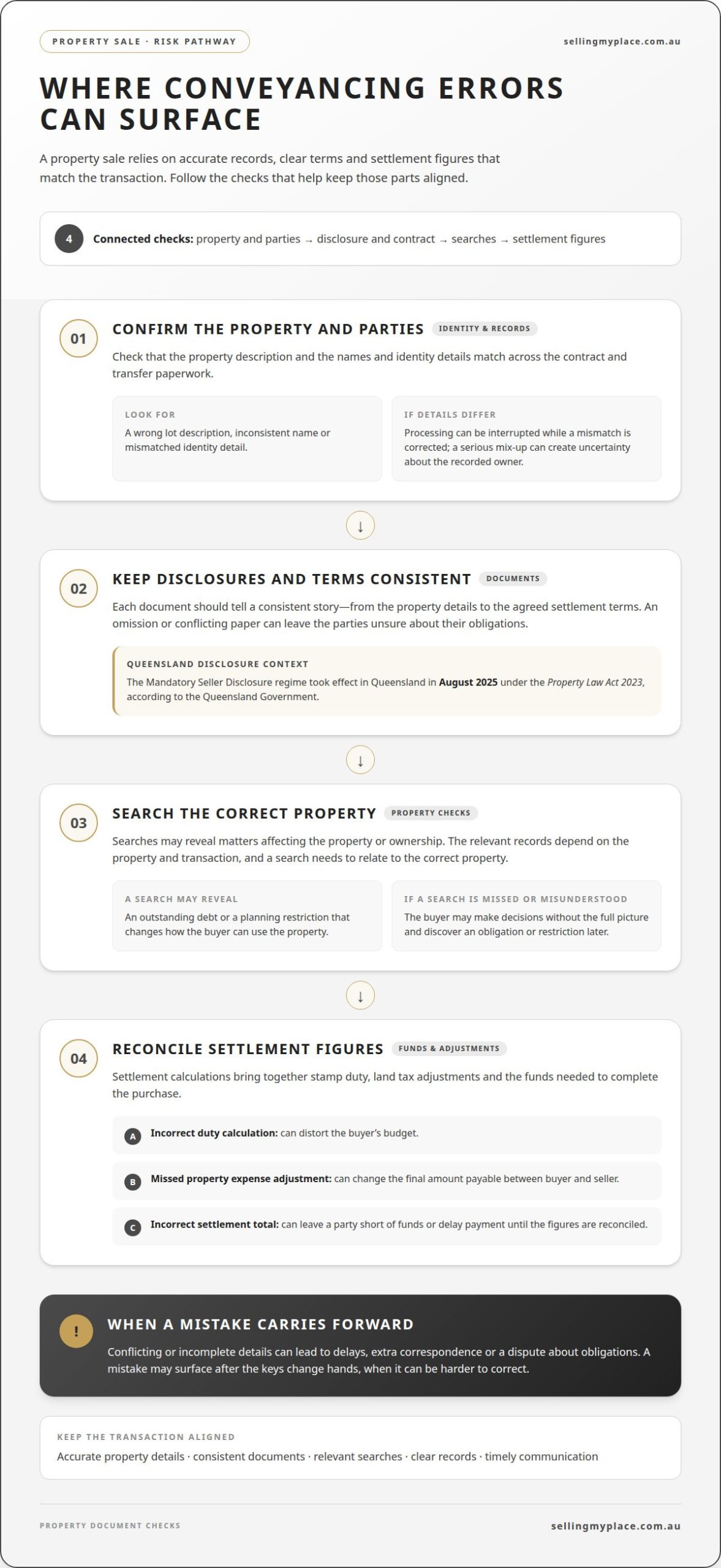
Property document errors include incorrect or missing details in records used to sell, buy or transfer a home. A wrong lot description, omitted disclosure or inconsistent name can create confusion about what the parties agreed to and what the transaction covers.
In Queensland, the Mandatory Seller Disclosure regime took effect in August 2025 under the Property Law Act 2023, according to Queensland Government. This makes accurate disclosure documents especially relevant to Queensland sellers. Across a sale, each document should tell a consistent story, from the property details to the agreed settlement terms. If papers conflict, the parties may face delay, extra correspondence or a dispute about their obligations. Those unresolved details can add pressure while moving dates and finances are already being coordinated.
Property transfers to the wrong person
A transfer to the wrong person occurs when the transfer documents name someone other than the intended buyer or the person entitled to receive the property. A spelling error or mismatched identity detail may seem minor, but transfer documents must accurately identify everyone involved.
For example, if a buyer’s name differs between the contract and transfer paperwork, the inconsistency can interrupt processing and need correction before completion. A more serious mix-up could affect who is recorded as the new owner, creating uncertainty for both parties, especially if they need to prove ownership or meet another property deadline. Carefully checking names and identity details helps protect the intended outcome, rather than simply tidying the paperwork.
Property searches and undiscovered liabilities
Property searches gather records that may reveal matters affecting a property or its ownership. If an important search is missed or its result misunderstood, a buyer may discover an obligation or restriction only after the transaction.
For instance, a search may reveal an outstanding debt or planning restriction that changes how the buyer can use the property. Missing that information can lead to financial or legal issues later. Searches must also relate to the correct property, so an address or title mismatch can undermine otherwise careful research. The relevant records depend on the property and transaction; incomplete results leave the buyer making decisions without the full picture.
Calculating duties, adjustments and settlement funds
Settlement calculations bring together amounts such as stamp duty, land tax adjustments and the funds needed to complete a purchase. An incorrect figure can leave a party short of the money required or lead to disagreement over how shared property expenses are divided.
For example, overlooking an adjustment for a property expense may change the final amount payable between buyer and seller. A mistaken duty calculation can distort the buyer’s budget, while an incorrect settlement total may delay payment until the figures are reconciled. Calculations depend on the transaction details and applicable property law. Clear records, accurate inputs and timely communication help keep the funds aligned with the contract and settlement date.
Verbal agreements not recorded in the contract
A verbal promise can seem clear during a property sale, but it may be difficult to rely on if the written contract says something different. The Contract of Sale sets out the seller’s obligations and payment terms, so leaving an important arrangement out can become a source of disagreement after settlement.
Why the written contract matters
Imagine a vendor agrees verbally to lease the home back from the new owners for six months after settlement. If the arrangement isn’t included in the contract, the buyers may not get the occupancy arrangement they expected if the vendor changes their mind. The same risk applies to included appliances, repairs, access dates or other terms that affect buying or moving into the property. A conversation may explain what the parties intended, but the contract is the practical record they rely on to understand their obligations.
Easements and contract deadlines
An easement can affect how a property may be used, so its details matter alongside any special conditions in the contract. For example, a buyer who assumes an area is unrestricted may make plans that conflict with an easement affecting that land. Consider the contract and relevant property information together, rather than treating a verbal explanation as a substitute for written terms.
Deadlines need the same attention. Conveyancing involves time-sensitive dates for steps such as meeting contract conditions and preparing for settlement. Missing a deadline may incur penalties and delay both parties. Being even one minute late on a property contract deadline could result in losing the entire deposit and breaching the contract. This illustrates why dates, required actions and communication between the parties need close coordination.
Reviewing the contract before signing
Before signing, buyers are advised to send the property contract for professional review. A review can help identify whether important verbal promises appear in the written terms, whether special conditions are clear, and whether dates or property details need attention. It can also highlight questions about easements or other conditions while the parties are still discussing the contract.
Failing to meet contractual obligations may have financial consequences for a seller. The consequences depend on the terms and circumstances, but an unrecorded agreement can make it harder to establish what was promised. A clear written contract helps prevent a later dispute from depending on competing recollections.
If a proposed property deal includes unusual terms or a tight deadline, discuss the sale arrangements before signing, while there’s still time to clarify them.
Benefits of using a professional conveyancer
Professional support can help organise searches, paperwork, contract requirements and settlement arrangements. DIY access to PEXA isn’t automatic: in Victoria, access may be limited by accreditation and technical requirements, while Queensland conveyancing work must be performed or overseen by a qualified solicitor.
Professional advice and transaction guidance
A professional conveyancer provides guidance on the moving parts of a property transaction, from searches and contract conditions to settlement preparation. That support matters when a search raises an issue or a deadline depends on another party’s action. For example, if a search result prompts questions about a property, a conveyancer can explain its relevance to the transaction and help coordinate the next steps.
Specialist databases and resources can support conveyancing searches. A professional can also help keep paperwork and communication connected, so a question raised in one document isn’t overlooked as the transaction progresses. This is especially useful when several conditions, parties and dates need to be managed together.
Conveyancers and solicitors
Licensed conveyancers and solicitors handle property transaction work and can guide clients through conveyancing issues. Their experience can make complex terms and requirements easier to understand, and their role includes coordinating practical steps towards settlement.
In Queensland, conveyancing work must be performed or overseen by a qualified solicitor. In Victoria, electronic settlements are completed online, and accessing PEXA can require specific accreditation and technical knowledge. The practical answer depends on the state and the person’s access: a DIY conveyancer may face limits using the platform. Professional conveyancers commonly have professional indemnity insurance, which may provide protection if an error occurs during their work. This cover is associated with the professional service, not DIY work undertaken by the property owner.
DIY costs and professional fees
A DIY approach can seem less costly because it avoids paying a professional to manage the conveyancing. But the comparison should include more than the initial outlay. The owner still needs to spend time learning legal terminology, gathering documents, arranging searches, processing paperwork and communicating with the other parties.
A transaction may take more than ten hours of DIY work, with extra time needed if a document requires correction or a search raises an issue. Professional fees, by contrast, pay for guidance and coordination throughout the process. The value lies not only in preparing paperwork, but also in managing related requirements and identifying problems before they complicate settlement. The more involved the transaction, the more important it is to weigh that support against the time and responsibility of doing the work alone.
Section 32 Vendor Statement errors
In Victoria, a seller must provide a compliant Section 32 Vendor Statement before the sale contract is made. The statement gives the buyer important property details and required disclosures. For a vendor selling without conveyancing support, missing information or inaccurate documents can affect the buyer’s decision and the transaction itself.
Completeness and accuracy both matter. A statement is incomplete if required information is missing, or inaccurate if a detail doesn’t match the property records. For example, a discrepancy in the property description may prompt questions about what land the sale covers. A buyer may also query a disclosure that conflicts with another document. These issues can take time to resolve, especially once the contract process is underway.
The consequences can be serious. A purchaser may have the right to withdraw from a Victorian property contract if the Section 32 is incomplete, inaccurate or lacks required disclosures. That possibility can unsettle a sale the vendor expected to proceed, requiring further communication and potentially affecting settlement plans. The result depends on the statement and the circumstances, so a vendor shouldn’t treat a document that looks finished as proof that every required detail is there.
Consider a buyer who receives a statement with an error and discovers it before proceeding. The buyer may raise the issue, seek clarification or consider withdrawing under the applicable rules. If the vendor then needs to correct or gather documents, the transaction may be delayed and come under added pressure. For the buyer, a gap can also mean deciding without important property information. Clear, consistent documents help both parties understand what is being sold.
DIY conveyancing may appeal to a vendor hoping to save money, but preparing a Section 32 involves more than filling in a template. The person handling the sale must identify relevant information, assemble supporting documents and ensure the statement is complete and accurate. A licensed conveyancer’s experience can help with this work. Professional indemnity insurance may also provide a route to protection if an error occurs during professional conveyancing, while DIY work doesn’t carry that cover through a conveyancer.
Before the contract is signed, the Section 32 and related documents need to be considered together. A mismatch between the statement and another record can prompt questions even when each document appears clear on its own. For example, a buyer may request an explanation of a property detail that differs across the paperwork. Addressing such points early helps the parties understand the information before proceeding, rather than leaving an avoidable issue to emerge later.
DIY conveyancing kits and their limitations
A DIY conveyancing kit supplies forms and guidance, but it doesn’t complete the transaction for you. The owner still needs to research the property, prepare or manage contract documents, arrange searches and meet each deadline. A kit can help organise paperwork, but it can’t take responsibility for decisions or identify every issue affecting a particular property.
Templates don’t replace property-specific work
A standard form may not address the details of a particular sale. For example, a property with an Owners Corporation may involve records and obligations that need careful attention. A mortgage lender can also impose requirements that change the settlement process. If a kit user misses a relevant document or misunderstands a condition, that gap can cause delays or disputes. The key limitation is the difference between having a template and understanding how it applies to the property and transaction.
Searches and specialist access
Searches are a practical example. Licensed conveyancers and solicitors have access to specialist databases and resources, while a DIY user may have more limited access to property information. A search result also needs interpretation: finding a record is useful only if its implications for the sale or purchase are understood. Missing an issue can leave a buyer unaware of a liability or restriction affecting the property.
Settlement technology has its own requirements. In Victoria, DIY conveyancers may have limited access to PEXA because the platform requires specific accreditation and technical knowledge. A kit doesn’t provide that accreditation or complete the electronic settlement steps. The owner must understand the process requirements and arrange a suitable way to complete them.
Responsibility, time and protection
DIY conveyancing can involve substantial research, paperwork and communication with other parties. If a deadline is missed or a document contains an error, the owner remains responsible for handling the consequences. A kit doesn’t provide the professional indemnity insurance associated with a conveyancer’s professional work. That difference matters if an error leads to financial loss or a legal dispute.
The rules also differ by state. In Queensland, conveyancing work must be performed or overseen by a qualified solicitor. In Victoria, owners generally aren’t required to use a professional, although some vendor contracts require it. A kit’s usefulness therefore depends on the state, property and transaction, not just the forms it includes.
Before relying on a template for a complex sale or purchase, get conveyance advice about the paperwork, searches and settlement requirements involved.
Kincade International Direct Sales
Kincade International Direct Sales can help with property decisions around a sale or purchase, including preparation, market context and representation. Its Pre-Sale Property Consulting can support owners planning a sale, while Neighborhood Market Reports provide local context for weighing property choices. These services complement conveyancing guidance but don’t replace the legal work of preparing documents or completing a transfer.
If you’re considering selling, buying or preparing your property for market, Kincade International Direct Sales can help you understand the available support and choose a practical next step.
Contact Kincade International Direct Sales to discuss your property plans.
Take your next property step with clarity
The risks of DIY conveyancing are easier to manage when you understand which parts of a transaction need professional legal support and which decisions shape your sale or purchase. Before moving ahead, map out the support you need, from preparing a property for market to considering how you’ll approach a purchase. Keeping these roles clear helps you make deliberate decisions without expecting a property service to replace legal conveyancing.
Kincade International Direct Sales can assist with the property journey through Residential Property Listing Services, Buyer Representation and Pre-Sale Property Consulting. These services support different decisions around selling or buying, while conveyancing remains a separate part of the transaction.
If you’re weighing up your next move, contact Kincade International Direct Sales to discuss your property plans and the support that fits. A considered next step can help you move forward with greater confidence.
Frequently Asked Questions
What are the risks of DIY conveyancing?
DIY conveyancing puts responsibility for transaction paperwork, searches and deadlines on the person handling it. An omitted property detail, missed contract condition or incorrect transfer information can cause delays, disputes or financial loss. For example, an overlooked requirement may only become apparent close to settlement, leaving less time to resolve it. The risks increase when a transaction involves complex documents, lender requirements or several parties.
Is DIY conveyancing legal in Queensland?
In Queensland, conveyancing work must be performed by or overseen by a qualified solicitor, so a seller can’t independently manage every legal conveyancing task. Sellers must also provide a Form 2 Disclosure Statement before the contract is signed. These requirements shape what a DIY approach can involve: an owner may handle some practical tasks, but the legal work needs the required solicitor involvement.
Can I DIY conveyancing in Victoria?
Yes. Victorian property owners can generally handle their own conveyancing, although some vendor contracts require professional involvement. Property settlements are completed online, and accessing PEXA can require specific accreditation and technical knowledge. Legal permission to manage your own transaction doesn’t automatically give you access to every settlement platform. Consider the contract requirements and electronic settlement arrangements before deciding how to manage the transfer.
Is DIY conveyancing ever worth the risk?
DIY conveyancing may be considered for straightforward transactions, such as a vacant-land purchase, a cash purchase without a lender, or a transfer between family members. These examples can involve fewer moving parts than a financed home purchase, but the documents and transfer still need careful handling. A mortgage lender or Owners Corporation can make the process more involved, so these situations are poor candidates for a do-it-yourself approach.
Is professional assistance the safer choice?
Professional assistance may be a safer choice when a transaction has complex terms, several parties or tight deadlines. A conveyancer or solicitor can manage searches and coordinate the required paperwork, while explaining issues that affect the transfer. For instance, a search result or contract condition may need action before settlement. Professional conveyancers may also have professional indemnity insurance, which can provide a route to compensation if an error occurs.
What is the biggest risk of using a “cheap” DIY conveyancing kit?
The main risk is mistaking standard forms for a complete, property-specific solution. A kit can’t ensure the right searches have been obtained, every relevant disclosure has been addressed or a special condition suits the transaction. For example, a template may not account for an unusual contract term. If that gap leads to a missed obligation or dispute, the apparent saving may be outweighed by the resulting loss or delay.
What happens if you begin DIY conveyancing but need help part way through?
Seek conveyancing assistance promptly and provide the professional with the contract, searches, correspondence and a clear record of completed tasks. Include every upcoming deadline and any issue already raised by the other party. This gives them a starting point to identify outstanding work and coordinate next steps. Don’t assume that changing who handles the transaction automatically changes contract dates or obligations.
What legal and financial risks arise from DIY conveyancing in Australia?
Across Australia, errors or omissions in DIY conveyancing can lead to legal disputes or financial loss. A missed deadline may trigger penalties, while incomplete searches can leave a buyer unaware of an issue affecting the property. If a transaction fails, the seller may remain responsible for the property until another buyer is found or an arrangement is reached with the bank. DIY work also lacks the indemnity insurance associated with a conveyancer’s professional service.