The biggest risk in selling a duplex privately in Australia is underestimating the work involved. You manage marketing, buyer enquiries, inspections and offer negotiations, while a qualified solicitor or conveyancer supports the contract and settlement. Requirements vary by state, so consider the legal steps alongside your campaign.
Wanting more control over the sale and its costs is understandable. Marketing spend depends on the campaign, including photography, floorplans, signage and online advertising. The work also goes beyond arranging viewings.
This guide covers the practical risks, campaign costs, handling enquiries and offers, and the role of legal support. It will help you understand what to expect before deciding how to market your duplex.
Key Takeaways
- Arrange legal support early: in NSW, a contract of sale must be prepared before the property is advertised.
- You can sell directly to buyers in Victoria without a real estate agent, but you’ll take on marketing, inspections, enquiries and negotiations.
- Plan a clear process for buyer questions, inspections and offers, and allow for state-specific cooling-off rules.
- Choose a solicitor or licensed conveyancer who can guide the contract and settlement, with clear communication throughout the sale.
- Budget for the marketing elements your campaign needs, such as photography, floorplans, signage and online advertising.
What Are the Risks of Selling Your Home Privately in Australia?
A private sale gives you direct control, but you also coordinate the listing, buyer discussions and sale documents. Preparation matters in Australia because legal requirements and buyer rights differ between states.
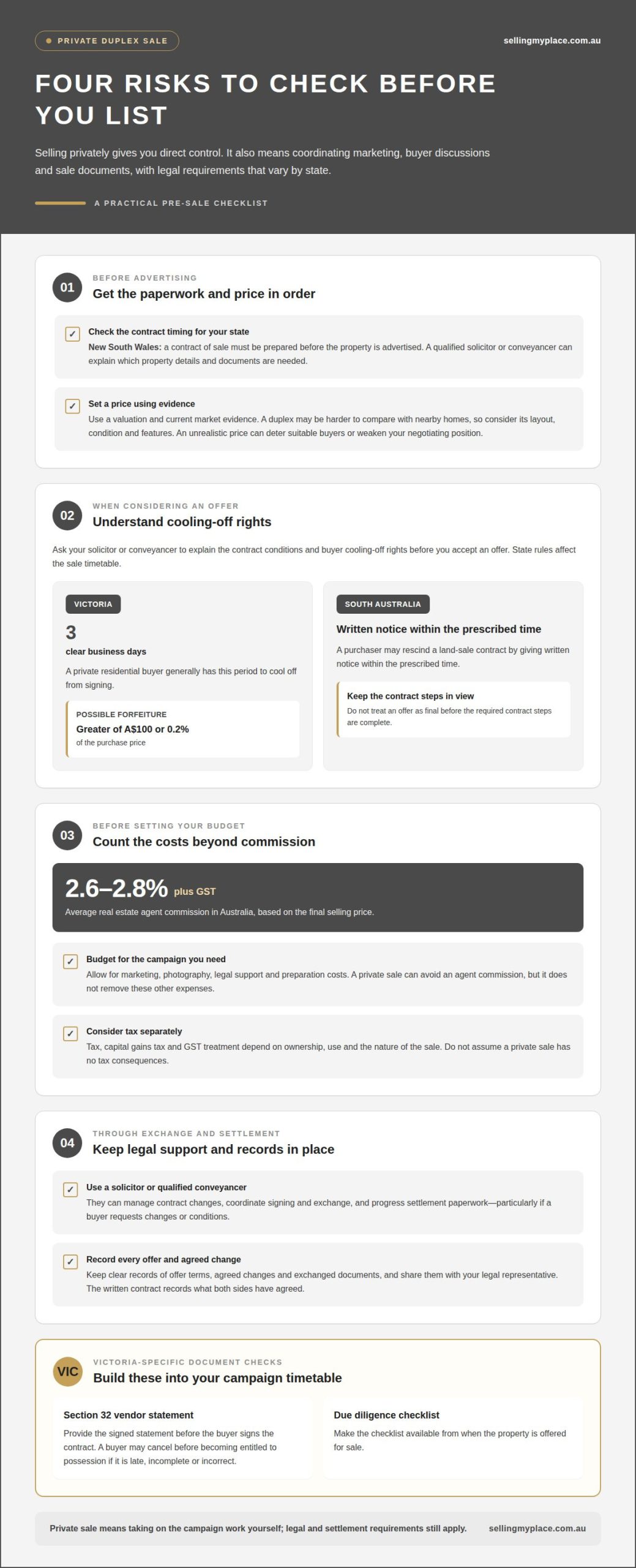
- Get legal support and a realistic price before advertising. In New South Wales, a contract of sale must be prepared before you advertise. A qualified solicitor or conveyancer can prepare it and explain which property details and documents are needed. This helps you avoid marketing the duplex before the paperwork is ready.
Set the asking price using a valuation and current market evidence. A duplex may be harder to compare with nearby homes, so professional advice can help you weigh its layout, condition and features. An unrealistic price can deter suitable buyers or leave you negotiating from a weak starting point.
-
Understand buyer cooling-off rights
Ask your solicitor or conveyancer to explain the contract conditions and the buyer’s cooling-off rights before you accept an offer. In Victoria, a private residential buyer generally has three clear business days to cool off from signing, and may forfeit the greater of A$100 or 0.2 per cent of the purchase price.
In South Australia, a purchaser may rescind a land-sale contract by giving written notice within the prescribed time, according to the Government of South Australia. State rules shape the timetable, so don’t treat an offer as final before the required contract steps are complete.
-
Account for costs and tax rules
Map out advertising, photography, legal and preparation costs before choosing how to sell your house. Selling directly can avoid an agent commission, but it doesn’t remove those other expenses. Real estate agent commission in Australia averages around 2.6% to 2.8% of the final selling price, plus GST.
Tax, capital gains tax and GST treatment depend on ownership, use and the nature of the sale. Consider these separately when planning your proceeds instead of assuming a private sale has no tax consequences.
- Use conveyancing support through exchange and settlement. A qualified conveyancer or solicitor can manage contract changes, coordinate signing and exchange, and progress settlement paperwork. This is important if buyers request changes or conditions, as the written contract records what both sides have agreed.
Before selling privately, decide how you’ll record offers and share them with your legal representative. Keep a clear record of offer terms, agreed changes and exchanged documents. This gives your conveyancer a reliable basis for progressing the sale from acceptance to settlement.
Can you sell a house without an agent in Victoria?
Yes. In Victoria, you can sell directly to buyers without a real estate agent. You’ll manage the sale campaign, while legal and settlement requirements still apply.
-
Sell directly to buyers
If you choose a private sale, plan how you’ll reach buyers and manage enquiries. Victoria doesn’t require you to use an estate agent, so you can set the asking price and communicate directly with interested buyers. You’ll also coordinate inspections, discuss offers and negotiate terms. This takes time, especially when several buyers request information or viewings close together.
Keep a consistent record of buyer conversations and offers. Clear, timely replies help buyers understand what’s included and how to make an offer. Direct contact gives you control, but you’ll organise each part of the campaign yourself.
-
Compare private and agent sale timelines
Allow for preparation, marketing and negotiation when estimating how long your sale may take. A private campaign’s pace depends on when the property is ready, how buyers respond and how quickly you can arrange inspections. An agent-managed campaign also involves these stages, with the agent handling marketing and buyer discussions.
In Victoria, settlement commonly takes 30, 60 or 90 days, although the parties can agree to another period. That timeframe follows the sale contract, not the time needed to find a buyer. Keep the marketing period and settlement period separate when planning your next move.
-
Compare commission savings and listing fees
Compare the full campaign costs with the commission you may avoid. Real estate agent commission in Australia averages around 2.6% to 2.8% of the final selling price, plus GST.
Flat-fee listing services charge a set fee rather than a commission based on the sale price. Compare what each package includes, such as photography, floorplans, listing placement and support. Look at the included services and any separate marketing costs, not just the headline fee.
-
Check state and territory rules
Check the rules for the state or territory where the duplex is located. Private-sale requirements differ across Australia; Victoria’s rules include providing a signed Section 32 vendor statement before the buyer signs the contract. Under the Sale of Land Act 1962 (Vic), a buyer may cancel before becoming entitled to possession if that statement is late, incomplete or incorrect.
Victoria also requires a due diligence checklist to be available from when a property is offered for sale. Build these documents into your campaign timetable so buyers can access the required information. For a considered private-sale campaign, explore tailored property sale support.
Buyer enquiries, inspections and offer negotiation
Set a clear process for enquiries, inspections and written offers before your campaign begins. A consistent approach helps buyers understand the duplex and gives you a sound basis for comparing proposals.
-
Have a professional manage listings and buyer enquiries
Arrange listing support to present the duplex clearly and manage incoming buyer questions. A well-organised listing describes the property accurately, provides useful details and makes it easy for buyers to enquire. Keep answers consistent, particularly about inclusions, condition and inspection arrangements.
Record each enquiry and response, and refer legal or contractual questions to the appropriate adviser. A prompt, considered reply can keep an interested buyer engaged without committing you to terms before an offer is made.
-
Get support arranging buyer inspections
Coordinate inspection times so buyers can view the property and ask questions in an orderly setting. Professional support can schedule appointments, communicate access arrangements and follow up with attendees. For a duplex, make sure the listing and inspection information accurately distinguish the property being sold from any shared or separate features.
Buyers may arrange their own building and pest inspections during negotiations. In Queensland, a combined building and pest inspector should hold a current licence from the Queensland Building and Construction Commission.
-
Get support negotiating buyer offers
Assess each written offer by its price, proposed settlement timing and conditions. An adviser can help you compare terms and communicate a counteroffer. Don’t judge competing offers by price alone: conditions and timing can affect how well each proposal fits your plans.
A seller may have a few days to respond to an official offer. Set a process for recording and considering each proposal promptly. Before agreeing, make sure any changes are documented in the sale contract rather than relying on informal messages or verbal assurances.
-
Allow for the buyer cooling-off period
Factor the relevant state’s cooling-off rules into your expectations after a buyer signs. In Queensland, most residential sales include a five-day cooling-off period, and the contract must display the warning statement clearly above the buyer’s signature area. A buyer who terminates during that period incurs a penalty of 0.25% of the purchase price.
Victoria generally gives private residential buyers three clear business days to cool off, while South Australian private-treaty buyers have two clear business days after receiving the signed contract and Form 1. South Australia’s cooling-off period doesn’t apply to an auction purchase. Professional support can help keep the offer process organised as you move towards contract and settlement.
Hiring a solicitor or licensed conveyancer
Arrange legal support early so the sale contract and settlement can progress alongside your marketing. A qualified solicitor or conveyancer can explain the documents, timing and decisions involved in your state.
- Decide which legal tasks you need covered. In New South Wales, a real estate agent can manage marketing and negotiations, while a solicitor or conveyancer handles the contract and settlement. In a private sale, you coordinate the campaign, so establish who will prepare the contract, manage signing and progress settlement.
Ask the legal professional to explain the scope of their work, including how they’ll communicate changes and coordinate with the buyer’s representative. If a buyer proposes a different settlement date, for example, have the change considered and documented before agreeing.
- Choose someone with relevant local knowledge. Property sale processes vary by state, and local knowledge can help your solicitor or conveyancer identify the documents and steps relevant to your duplex. In South Australia, for example, the seller must provide a Form 1 Vendor Disclosure Statement under Section 7 of the Land and Business (Sale and Conveyancing) Act 1994.
A South Australian conveyancer normally prepares the Form 1, which must be served on the purchaser with or before the contract in a private-treaty sale. Discuss how the professional will manage state-specific requirements and explain them in plain language.
- Assess communication before instructing them. Consider whether the solicitor communicates openly and clearly throughout the sale. Ask how they’ll update you about contract changes, outstanding documents and settlement progress. Clear communication matters when a buyer’s request needs a timely decision.
Also establish who your main contact will be and how you’ll receive important updates. If several people are involved, such as a solicitor and a licensed conveyancer, clarify which person is responsible for each task. That avoids confusion over who is arranging signatures or responding to the buyer’s legal representative.
- Keep legal review separate from sales negotiations. A solicitor or conveyancer can advise on contract terms and the steps to settlement, while you decide whether the buyer’s proposed price and conditions suit your plans. In Queensland, a private seller should have a solicitor check the house sale contract before signing.
Send the agreed offer details and proposed changes to your legal representative before signing. They can explain the written terms, including settlement arrangements, so the contract reflects the agreement you intend to make.
Real estate advertising and marketing costs
To advertise a duplex for private sale in Australia, build a campaign around accurate property information, strong presentation and suitable listing channels. Plan the budget by campaign component, as costs depend on the materials and promotion you choose.
-
Set advertising and marketing costs
List campaign expenses before deciding how to sell your home. Separate photography, floorplans, signage, brochures, online promotion and property preparation. This shows how the budget is allocated and helps reveal when a low headline figure excludes extra charges.
Ask for an itemised breakdown of what each package includes, what is optional and whether promotion costs extra. Photography and a floorplan might be included, for example, while signage or brochure printing could be separate. Compare actual inclusions, not just the package name or the phrase “sell my home”.
Check how long the listing remains active and what happens if the campaign needs refreshing. Costs depend on the channels, presentation materials, photography requirements and promotion period. Prioritise the materials that show the duplex’s layout and features clearly.
-
Get professional support to advertise and market a duplex for private sale in Australia
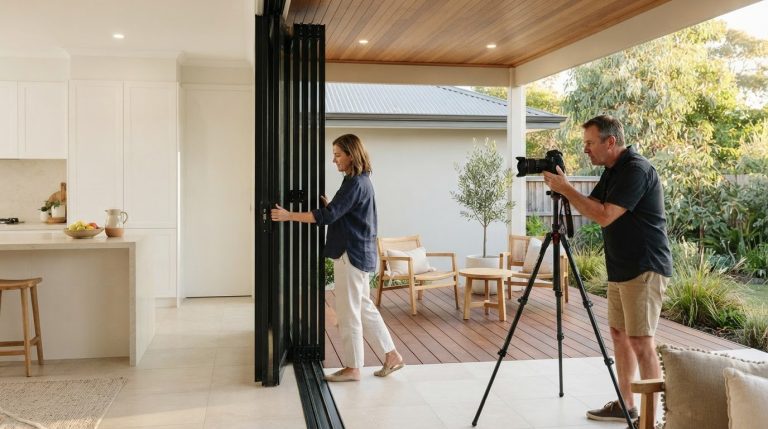
Use listing support to organise marketing materials and present the duplex consistently across your chosen channels. Describe the layout and each space accurately, and include a floorplan that helps buyers understand how the home works. Clear photographs help prospective buyers assess the property before arranging an inspection.
Choose promotion to suit likely buyers and the property’s features rather than paying for every available option. Useful images and a clear floorplan can make a stronger first impression than a long description that leaves the layout unclear. Keep the asking price and property details consistent across advertisements.
Before choosing a listing channel, confirm that its submission and publishing arrangements suit your sale method. Some platforms have different requirements. Listing support can help organise and present the campaign, while you choose the channels and materials that fit your priorities.
Before approving promotional materials, review the property description, photographs and floorplan together. Check that they represent the duplex accurately and distinguish included features from shared areas. A coordinated presentation helps buyers assess the property and make informed enquiries.
Plan your duplex marketing campaign with clear priorities for presentation, listing channels and spend.
Kincade International Direct Sales
Kincade International Direct Sales helps Australian owners plan and market a private residential sale, including a duplex. Its support can include property listings, pre-sale consulting and neighbourhood market reports, helping you prepare a campaign and understand the local market. Buyer representation is also available when you need support in the buyer’s role.
For owners seeking professional marketing without an agency commission, its flat-fee model includes photography, floorplans and neighbourhood market reports. Listings remain active until sold, with no time limit. This can suit sellers who want help presenting their property while staying involved in sale decisions.
If you’d like to discuss your duplex sale, contact Kincade International Direct Sales.
Choose the support that fits your next move
Selling a duplex privately is not only a campaign decision; it’s also a choice about how involved you want to be in buyer conversations and sale decisions. Consider what matters most: taking an active role, shaping the campaign or getting support as the sale progresses.
A thoughtful plan can help you move from preparing the property to considering offers while keeping your priorities in view. You can ask Kincade International Direct Sales about its fixed-fee packages and advisory support to decide whether they suit your sale.
Kincade International Direct Sales can discuss your property and the kind of assistance that may fit your plans. Contact Kincade International Direct Sales to talk through your next step, at your own pace.
Frequently Asked Questions
What does it cost to sell a house privately in SA?
These are typical cost ranges, and the final spend depends on the campaign materials and professional services you choose.
Can you legally sell your own home in SA?
Yes. Australian owners can legally sell their homes privately, including in South Australia, without using an estate agent. A private sale still involves legal disclosure and contract requirements. For example, South Australian sellers must provide a Form 1 Vendor Disclosure Statement under Section 7 of the Land and Business (Sale and Conveyancing) Act 1994. A conveyancer or solicitor can help prepare the required documents and explain the sale steps.
Do you need a conveyancer or a solicitor?
You can engage a conveyancer or a solicitor to support the legal and settlement parts of a private sale. A conveyancer commonly handles property transfer paperwork and coordinates settlement; a solicitor can also provide legal advice on contract terms. In South Australia, the seller’s conveyancer normally prepares the Form 1 Vendor Disclosure Statement. Choose support that explains documents clearly and keeps you informed as the sale progresses.
How do I determine the price of my property?
Use a valuation and current market evidence to set a realistic asking price. The NSW Government advises sellers to understand their property’s market value and consider current market trends. In Queensland, sellers can also review similar properties’ asking prices, listings and open homes. For a duplex, compare its layout and condition with those used as pricing references rather than relying on a single asking price.
What does selling a duplex privately in Australia involve?
It involves preparing the property information, arranging advertising, responding to buyer enquiries, coordinating inspections and negotiating offers. Once you accept an offer, the sale proceeds through the contract, any applicable cooling-off period and settlement. The precise documents and timing depend on the state or territory. For example, a South Australian private-treaty sale includes a Form 1 disclosure statement served with or before the contract.
What legal documents and disclosures are required to sell a duplex privately in Australia?
Requirements vary by state or territory. South Australian sellers must provide a Form 1 Vendor Disclosure Statement under Section 7 of the Land and Business (Sale and Conveyancing) Act 1994. In Victoria, the buyer must receive the seller’s signed Section 32 vendor statement before signing the contract. In NSW, a contract of sale must be prepared before advertising. A local conveyancer or solicitor can manage the documents that apply.
How do you determine the market value and asking price of a duplex in Australia?
Start with a valuation, then compare the duplex with relevant properties and current listings. In Queensland, asking prices, online listings and open homes can help inform a realistic sale price. Compare like with like by considering the duplex’s layout, condition and features. Asking prices show what sellers are seeking, while a valuation offers an independent assessment to help shape your price.
What does it cost to sell a duplex privately compared with using a real estate agent?
A private sale avoids an agent’s commission but still involves marketing, legal and conveyancing expenses. Real estate agent commission in Australia averages around 2.6% to 2.8% of the final selling price, plus GST. To compare options, estimate the commission against the private campaign costs you expect to incur, then consider which marketing tasks and buyer support you’ll need. Your net proceeds depend on the final sale price and costs.