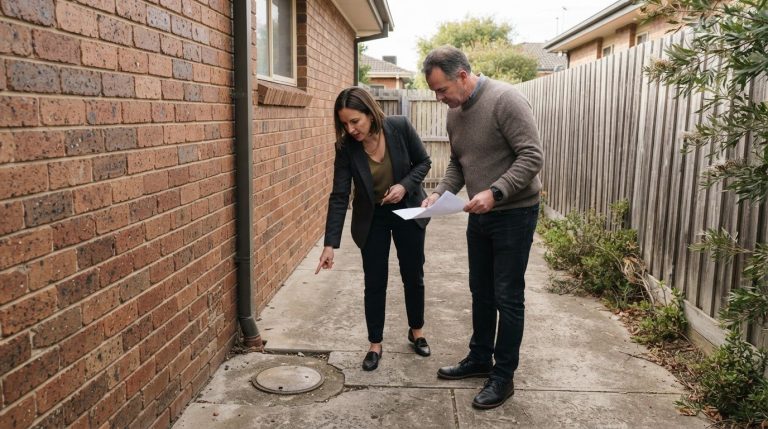
A buyer’s agent negotiates for the buyer, not for you. Knowing how to deal with buyer’s agents when selling privately starts with understanding their role: they help a buyer find a property, assess its value and negotiate price and terms. Their involvement may bring a serious offer, but assess it on its merits.
It’s natural to want a fair result without giving away your negotiating position. This guide explains how buyer’s agents approach negotiations, how to handle competing offers and what fees may apply when selling privately in Australia. You’ll also learn what to share, how to treat buyers consistently and when an agent’s involvement may affect how an offer is presented.
Key Takeaways
- A buyer’s agent represents the buyer, helping them assess a property and negotiate its price and terms.
- Keep your negotiating position private and give every interested buyer consistent, evidence-based information.
- A clear offer process can help you assess competing proposals on more than price alone.
- Separate the buyer’s agent’s role from your own selling costs, and understand any fees before agreeing to an arrangement.
- In NSW, NSW Fair Trading lets sellers check an agent’s current licence online or by calling 13 32 20.
1. Buyer’s agent roles and negotiation
A buyer’s agent represents the purchaser, not the homeowner. Their work can include finding suitable properties, assessing value and negotiating price and terms. For example, an agent may present an offer with conditions and a preferred settlement timeframe. Treat it as the buyer’s position, not independent advice about your property’s value.
Agency and disclosure requirements differ across Australia’s states and territories, so don’t assume one jurisdiction’s rules apply everywhere. Before discussing an offer, ask which buyer the agent represents, whether they’re licensed or registered where required, and for written confirmation of their authority. Ask them to disclose any relevant relationship or benefit connected with the transaction. These practical questions don’t replace the rules that apply in your state or territory.
In NSW, sellers can check whether a real estate agent has a current licence using an online licence check or by calling 13 32 20, according to NSW Fair Trading. Ask the agent for their full name and agency details so you can match the person contacting you with the licence record. Keep the written authority and offer correspondence together.
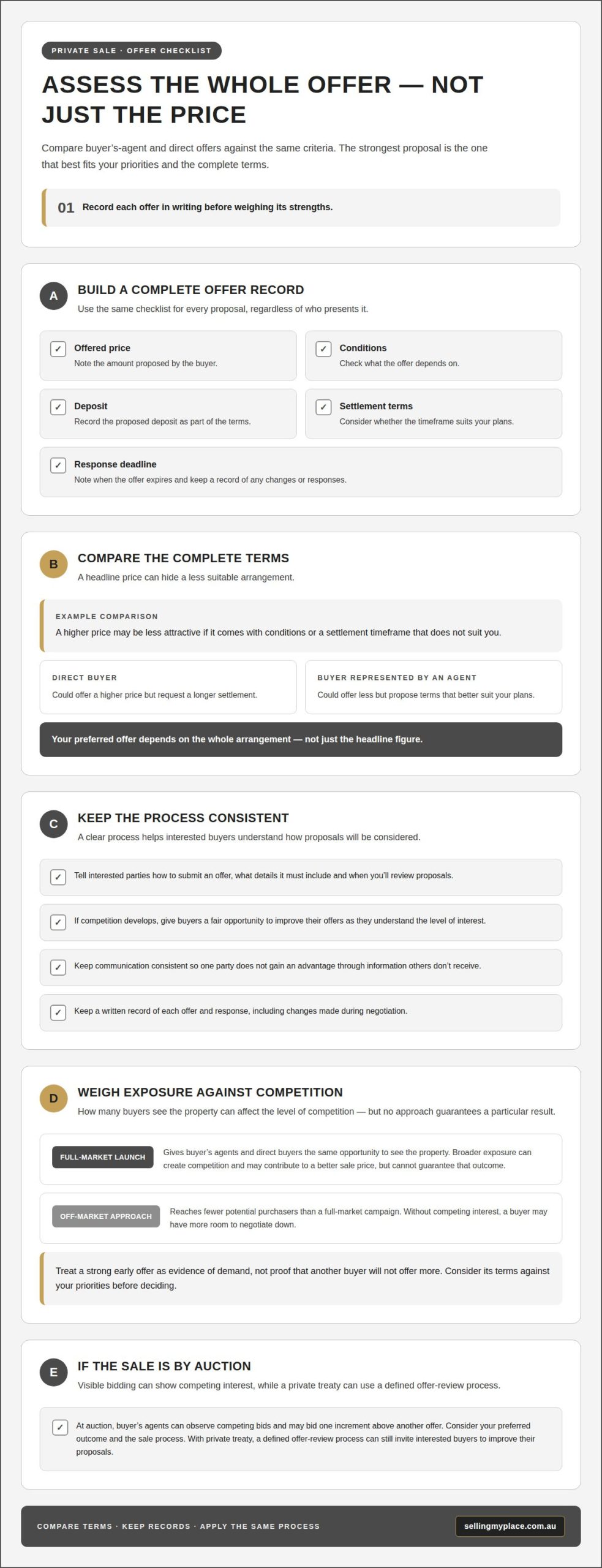
Before discussing figures, clarify the buyer’s position. Ask whether they’ve inspected the property, what terms they propose and whether their offer depends on conditions. Ask when the offer expires and how they’ll confirm any changes in writing. For clarity, request the proposed price, deposit, conditions and settlement terms in one written offer.
Allow access by arrangement. Set an inspection time, confirm who will attend and keep a record of the appointment. The buyer’s agent can coordinate an inspection for their client, but you control access to your privately sold property. Secure personal documents and valuables before the visit, and don’t leave keys with an attendee unless you’ve agreed on a clear handover arrangement.
Direct negotiation can make it harder to separate the buyer’s interests from your own. An agent may ask about your minimum price, urgency or next purchase to understand your position. Don’t volunteer those details; share only what’s relevant to the property and offer. Keep price guidance consistent for interested buyers, and put counteroffers and agreed changes in writing. A clear record helps prevent confusion about what was proposed, accepted or still under discussion.
A buyer represented by an agent may have arranged finance, clear property criteria and be ready to act. That can make a written offer worth considering promptly, while still checking its conditions. Don’t disclose your bottom line, timing pressures or next purchase to the buyer’s agent. This helps preserve your negotiating position.
2. Competition and multiple offers
Compare an agent-presented offer with a direct offer using the same criteria: price, conditions, deposit, settlement terms and expiry. A higher price, for example, may be less attractive if it comes with conditions or a less suitable settlement timeframe. Record each offer in writing before weighing its strengths.
A full-market launch gives buyer’s agents and direct buyers the same opportunity to see the property. Releasing it to the whole market can broaden exposure and create competition. By contrast, approaching only a handful of buyer’s agents reaches fewer potential purchasers than a full-market campaign.
An off-market approach can seem appealing when a buyer’s agent brings a ready buyer. But without competing interest, that buyer has more room to negotiate down. Treat a strong early offer as evidence of demand, not proof that another buyer won’t offer more. Decide whether to accept by weighing the offer’s terms against your priorities.
Set a clear process for receiving and considering offers. Tell interested parties how to submit an offer, what details it must include and when you’ll review proposals. If competition develops, give buyers a fair opportunity to improve their offers as they understand the level of interest. Consistent communication helps prevent one party gaining an advantage through information others don’t receive.
For each proposal, note the buyer, whether an agent represents them, the offered price, conditions, deposit, settlement terms and response deadline. Then compare the complete terms side by side. A direct buyer may offer a higher price but request a longer settlement; an agent’s buyer may offer less but propose terms that better suit your plans. Your preferred offer depends on the whole arrangement, not just the headline figure.
At auction, buyer’s agents can observe competing bids and may bid one increment above another offer. This can make an auction useful for visible competition, but you still need to consider your preferred outcome and the sale process. If you choose private treaty instead, a defined offer-review process can still invite interested buyers to improve their proposals.
Keep a written record of each offer and response, including changes made during negotiation. If you’re preparing a private sale, private-sale planning can help organise the steps and keep offers easier to assess.
Keep the process open to interested buyers rather than letting an early approach determine the field. Launch the property to the whole market so a buyer’s agent sees the same competition as other buyers. A full-market campaign can expose your property to more buyers, potentially creating more competition and a better sale price. It can’t guarantee that outcome, so assess each proposal against its complete terms and your priorities.
Use a clear offer process that lets buyers and their agents improve offers as competition becomes clear. Participants can respond to the interest shown while negotiations remain consistent. Selling off-market to a buyer’s agent means proceeding without competition, which can give the buyer more room to negotiate down. Consider that trade-off before limiting your property’s exposure.
3. Using a buyer’s agent as an advocate and buffer
A buyer’s agent can act as a buffer between a buyer and the seller. They can communicate the buyer’s questions, present an offer and relay your response. For example, you can respond to the agent’s written summary instead of managing several separate messages. Remember, though, the agent advocates for the buyer, not you. Their role is to advance their client’s interests, including negotiating price and terms.
That buffer can make discussions more measured. A buyer may feel strongly about a home, while you’re managing the practical and emotional work of selling it. The agent can convey concerns about a property feature or offer condition without requiring a face-to-face disagreement. Respond to the substance: clarify what the buyer wants, decide what you can accept and communicate your position calmly.
Keep the exchange focused on the proposed transaction. If the agent says their buyer needs a particular settlement date, ask them to include it in the written offer. If they raise a repair concern, ask which issue the buyer means and what response they’re seeking. Specific requests give you something concrete to consider; broad statements such as “the buyer has concerns” don’t explain what change could resolve them.
Set a simple communication routine before negotiations get busy. Choose one email address or phone number for offer discussions, and ask the agent to put important changes in writing. If a buyer changes their price after an inspection, for example, keep the revised amount and any changed conditions together. This reduces the risk of treating an earlier proposal as the current one.
A buyer’s agent may help their client understand the steps involved, such as arranging an inspection or discussing an offer condition. Make those conversations easier by providing clear property information and answering relevant questions consistently. If a request is unclear, ask the agent to restate it in practical terms. Then respond to the request itself, rather than negotiating against pressure or assumptions.
Use the agent as a communication channel, not as a substitute for your own judgement. An agent may describe an offer as the buyer’s “best” or say their client is ready to proceed, but those statements don’t determine whether the terms suit you. Compare the written proposal with your priorities, ask for clarification where needed, and make your acceptance or counteroffer explicit. A calm, documented exchange gives both sides a clearer path forward.
4. Agent fees and charges
Separate the buyer’s agent’s fee from the costs of selling your property. The buyer pays their agent to find, assess and negotiate for them. As a private seller, don’t treat that fee as one of your costs unless you’ve agreed to pay it. Read any proposed agreement carefully, including who pays, what work it covers and when payment is due.
If you appoint a selling agent, their commission is a separate arrangement. Selling agents in Australia are paid only if the property sells. The rate and basis should be clear in the written agreement, so check whether it’s calculated as a percentage of the sale price or by another agreed method.
These are illustrations, not a quote for any particular property or agent. A higher sale price can increase percentage-based commission, so compare the total cost with the agreed service.
In NSW, request a complete list of an agent’s charges, including advertising, promotion and administration costs. Check the amount, payment timing and whether each charge applies if the property doesn’t sell. In NSW, it’s illegal for a licensed agent selling a property to share sales commission with an unlicensed person, including a referral service or vendor advocate. Keep the fee schedule and agency agreement together rather than relying on a verbal explanation.
For a private sale, make a written record of any cost you agree to pay in connection with an offer or negotiation. If a buyer’s agent suggests a payment arrangement, for example, ask for the proposed amount, service and payment conditions in writing before agreeing. Don’t confuse the buyer’s agent’s fee with the buyer’s offer, or assume the agent’s involvement automatically creates a charge for you.
Before accepting a selling arrangement, set out the costs in a simple comparison: commission, marketing, promotion and administration. Consider the services attached to each cost and how the total changes with the final sale price. A clear breakdown helps you understand the financial effect before signing and gives you a record if an invoice or deduction later differs from what you agreed. For homeowners interested in how other markets minimise these overheads, examining overseas models like Pay It Forward Realty LLC, which offers flat-fee listing options in the US, illustrates practical alternatives to traditional commission structures.
5. Can sellers refuse buyer’s agents in private sales?
In a private sale, distinguish refusing an agent’s proposed involvement from declining a buyer’s offer. A buyer may choose to have an agent communicate on their behalf. You can set practical arrangements for communication and access, but don’t assume that refusing to speak with the agent ends the buyer’s interest. A clear process keeps the focus on the property and proposed terms.
For example, ask the buyer’s agent to put questions and offers in writing, identify the buyer they represent and arrange inspection times in advance. You can also say you’ll respond to property-related enquiries through one nominated channel. These arrangements help you manage contact without treating the agent as your adviser or agreeing to pay their fee.
If you’re uncomfortable with a particular request, respond to it rather than rejecting the buyer outright. If an agent asks for a private preview before launch, for instance, explain that inspections will follow your stated sale process. If an inspection time doesn’t suit, offer another appointment. Consistent arrangements help ensure interested buyers receive the same access and information.
You can negotiate with a buyer represented by an agent just as you would with a direct buyer. Consider the written offer, its conditions, deposit and proposed settlement, then accept, reject or counter the terms. Make your decision clear in writing. If the agent asks for a change, such as a different settlement date, respond to that point without disclosing your minimum price or personal timing pressures.
There’s a practical difference between declining an agent’s proposed arrangement and excluding every buyer who uses representation. The first lets you manage how an inspection or negotiation proceeds. The second could narrow the pool of interested purchasers, including someone whose agent is simply their communication channel. Keep your process focused on fair access, clear offers and suitable terms.
If the agent’s authority, identity or requested arrangement raises concerns, pause the discussion and seek appropriate advice for your circumstances. Keep records of messages, appointments and decisions. For example, save the agent’s written authority, inspection confirmation and offer correspondence together. A tidy record helps you follow the same process if another buyer’s agent approaches you.
When a buyer’s agent is involved, a firm process can still leave room for constructive negotiation. Discuss your private-sale approach to shape a clear plan for agent enquiries, inspections and offers.
Kincade International Direct Sales: Buyer Representation
Kincade International Direct Sales can support you in planning your private sale. Its Residential Property Listing Services and Pre-Sale Property Consulting help owners prepare to sell, while Buyer Representation relates to the purchaser’s side of a transaction. Neighbourhood market reports can also help you consider market conditions as you shape your sale strategy.
If you’re weighing how to manage buyer’s-agent enquiries alongside preparing your property for sale, practical advice can help you set a clear process. The right support depends on whether you need guidance for a purchase, preparation for a sale, or both. To discuss your property plans, contact Kincade International Direct Sales.
Set your sale up for a confident next step
Before your property goes to market, decide what a successful sale looks like for you. That might mean a particular settlement timeframe, a straightforward offer process or control over how buyers access your home. Knowing how to deal with buyer’s agents when selling privately starts with making these decisions before negotiations begin, not under pressure. Your plan can guide your responses if a buyer’s proposal asks you to change course.
If you’d like guidance shaping your approach, discuss your plans with Kincade International Direct Sales. A conversation can help you identify the support that fits your sale and the decisions you want to keep in your hands. Take the next step at your own pace, with a clearer sense of how you want the sale to unfold.
Frequently Asked Questions
What does a buyer’s agent do?
A buyer’s agent helps a purchaser find and assess properties, then negotiates on their behalf. For example, they might shortlist homes to match a buyer’s preferences, arrange an inspection and communicate an offer. Their advice and negotiation represent the buyer’s interests. As a seller, treat their comments as part of the buyer’s position, not an independent assessment of your sale strategy.
What is a buyer’s agent and whom do they represent in Australia?
A buyer’s agent is a property professional engaged to act for a purchaser. In Australia, their client is the buyer, even when they contact you directly about your privately marketed home. For instance, an agent may relay the buyer’s questions or seek changes to an offer. Keep that relationship clear: the agent communicates for the purchaser, not for you as the seller.
Who pays a buyer’s agent’s fee when selling privately in Australia?
The buyer pays their buyer’s agent. That fee is separate from the sale price and isn’t automatically a charge for you as a private seller. If anyone proposes that you contribute, don’t rely on an informal conversation; get the proposed payment and terms in writing before agreeing. This helps distinguish the buyer’s arrangement with their agent from any costs you’ve agreed to bear.
How should sellers handle offers and negotiations made through a buyer’s agent?
Ask for the offer in writing, then respond to its actual terms. If an agent says an offer expires that day, note the stated deadline and send any acceptance or counteroffer clearly before it passes. Keep a copy of the proposal and your response. If the buyer changes a condition or settlement request, consider that change explicitly rather than relying on earlier offer details.