A property settlement can move online without removing the legal and administrative work involved. Understanding how electronic conveyancing works means knowing how the buyer’s and seller’s representatives and participating financial institutions prepare and sign transaction documents, coordinate funds and lodge eligible dealings through a digital workspace. The familiar conveyancing steps remain, but they are handled electronically rather than on paper.
The shift can feel less tangible, especially when buying or selling a home is already a major life change. The key stages are unchanged: documents are prepared and checked, settlement figures are coordinated, and funds and ownership are dealt with at settlement.
This guide explains how property documents and funds are handled, when electronic lodgment rules do not apply, and how the move away from paper titles is changing property transfers in Australia. It also covers what buyers and sellers typically need to prepare, so the digital process is easier to follow.
Key Takeaways
- Electronic settlement replaces much of the paper handling, while the legal steps behind a property transfer still matter.
- In Western Australia, electronic conveyancing is the standard settlement process; requirements and eligible transactions can differ across Australia.
- Digital platforms prepare and validate documents before lodgement, helping the parties coordinate transfer, mortgage and settlement details.
- Paper lodgement remains possible in limited circumstances, so the applicable rules depend on the jurisdiction and transaction.
- Learn how digital transfers are changing the role of paper titles and where property advice can support your next move.
What Is Electronic Conveyancing?
Electronic conveyancing prepares, signs and settles property transactions digitally rather than through paper documents. In Western Australia, it is the standard settlement process, bringing representatives and participating financial institutions together in an electronic workspace.
The electronic settlement process
Electronic conveyancing is the digital preparation, signing and settlement of a property transaction. In Western Australia, it replaced a paper-based process used for more than a century. Understanding how electronic conveyancing works makes clear that the method has changed, but settlement still transfers ownership and deals with financial interests in the property.
Before settlement, representatives prepare transaction documents and coordinate the figures used to distribute funds. Depending on the contract, adjustments may include council rates, water charges and other property expenses. At settlement, funds go to nominated recipients, which may include the seller’s bank and the seller. The agreed settlement date matters to everyone involved.
Responsibilities of each participant
Each participant has a distinct role in preparing for settlement. Buyers arrange finance, make required funds available and review settlement figures. Sellers provide requested documents, answer transaction questions and progress arrangements to discharge any existing mortgage. Completing these tasks helps resolve outstanding details before the planned settlement date.
The buyer’s and seller’s representatives coordinate documents and settlement arrangements in the electronic workspace. A conveyancer or settlement agent may represent a party, while participating lenders manage their financial arrangements and mortgage interests. Understanding how electronic conveyancing works also clarifies these roles: representatives coordinate the transaction, lenders manage their part, and buyers and sellers provide the information and decisions required from them.
On settlement day, representatives and financial institutions work together to complete the agreed transaction. The buyer needs finance and required funds ready; the seller needs to provide requested information and progress mortgage arrangements. Each party’s conveyancer or settlement agent coordinates their steps. Clear responsibilities help prevent unresolved payment details or missing documents from disrupting the planned date.
The electronic workspace
An electronic lodgment network is the digital workspace where property representatives and participating financial institutions prepare and coordinate settlement. PEXA, short for Property Exchange Australia, is an electronic settlement and lodgment platform used by property professionals and financial institutions. Participants prepare transaction documents and coordinate settlement details there instead of passing paper between offices.
The workspace brings key information together, including documents, nominated recipients and the settlement date. Representatives coordinate the required steps, while financial institutions take part in the funds process. This shared view helps participants track what is progressing and what remains outstanding before settlement.
The digital process does not remove legal or administrative requirements. It changes how participants prepare and handle them, connecting document preparation, settlement and the associated update to the property register.
Preparing and checking transfer and mortgage documents
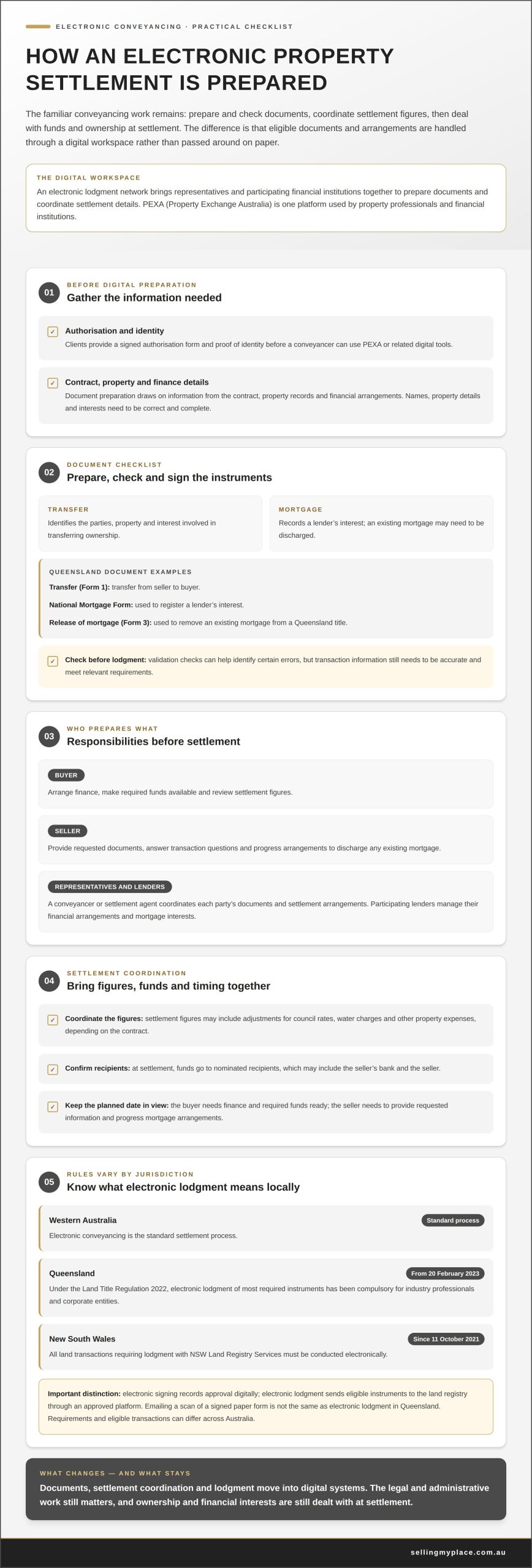
Digital preparation turns transaction details into documents for signing and lodgment. Requirements vary by dealing and state. Before a conveyancer can use PEXA or related digital tools, clients provide a signed authorisation form and proof of identity.
Preparing transfer and mortgage documents
Transfer and mortgage documents are prepared digitally using transaction and title information, then checked against relevant requirements. Each instrument needs to identify the correct parties, property and interest before it can support a transfer or lender registration.
In Queensland, a transfer from seller to buyer is lodged as Transfer (Form 1), while a lender’s interest is registered using the National Mortgage Form. To remove an existing mortgage from a Queensland title, the relevant instrument is Release of mortgage (Form 3). These examples show how a transaction’s purpose determines the documents involved.
Conveyancing brings together information from the contract, property records and financial arrangements. A mismatch in names or property details can prevent an instrument from being ready for lodgment. The representative preparing it checks that the transaction information is complete and meets relevant institutional requirements.
Signing and lodging documents electronically
Electronic signing records approval of documents digitally, while electronic lodgment sends eligible instruments to the relevant land registry through an approved platform. The distinction matters: emailing a scan of a signed paper form is not the same as electronic lodgment in Queensland.
Since 20 February 2023, electronic lodgment of most required instruments has been compulsory for industry professionals and corporate entities in Queensland under the Land Title Regulation 2022. In New South Wales, all land transactions requiring lodgment with NSW Land Registry Services must be conducted electronically, a requirement that has applied since 11 October 2021.
These rules cover lodgment, not simply document preparation. Electronic systems run validation checks before documents reach the registry, helping identify certain errors. A check can flag issues, but transaction information still needs to be complete and accurate before submission. This is particularly relevant when selling or transferring a property with a registered mortgage.
Checking transaction details and identity
Identity and authority checks establish who is dealing with the property and whether they can act in the transaction. Before a conveyancer uses PEXA or related digital tools, clients provide a signed authorisation form and proof of identity. In New South Wales, users must also verify parties’ identities, establish their right to deal with the property and obtain express authorisation for each electronic conveyancing transaction.
Transaction checks go beyond identity. In New South Wales, electronic conveyancing information is cross-checked against government databases, including the Torrens Title Register and Revenue NSW. These checks help align transaction details with official records before documents are created, signed and lodged online.
For sellers, clear document preparation supports the transfer and any mortgage release; buyers’ documents support registration of their new interest or lender’s interest. Conveyance advice can help make the document responsibilities clearer as you prepare for a property sale.
When does the electronic lodgement rule not apply?
Electronic conveyancing rules depend on the state or territory, the transaction and who is lodging. An Electronic Lodgment Network (ELN) is the digital system subscribers use to prepare and lodge eligible property dealings.
Across Australia, electronic conveyancing is mandatory in New South Wales, Victoria, South Australia and Western Australia. It is available for certain transactions in Queensland, the Australian Capital Territory and Tasmania. The specific requirements and eligible dealings vary by jurisdiction.
Not every property transaction must use an ELN. In New South Wales, electronic conveyancing applies to most transactions, with limited exceptions for paper-based settlement. In Queensland, the Land Title Regulation 2022 sets out exemptions from the electronic lodgment mandate. An individual who is not represented by a lawyer and is not a platform subscriber may still lodge documents in paper.
Which transactions must use electronic conveyancing depends on the jurisdiction and type of dealing. In Queensland, electronic conveyancing is available for certain transactions, while electronic lodgment is compulsory for most required instruments lodged by industry professionals and corporate entities. A paper exception may apply to an unrepresented individual who is not a platform subscriber.
Western Australia has its own participation and operating rules. Electronic conveyancing subscribers must comply with the WA Participation Rules, and Electronic Lodgment Network Operators must comply with the WA Operating Requirements. Landgate conducts compliance checks on subscribers to help protect the integrity of the Land Titles Register.
In Queensland, Titles Queensland has approved PEXA and Sympli as ELN operators. In Western Australia, electronic settlement must also meet the state’s operating requirements. According to ARNECC, electronic conveyancing may not be available where the relevant legislation has not been proclaimed.
Settlement can be delayed if documents, transaction details, finance or required funds are not ready. Errors or unanswered questions can also interrupt the planned sequence. If settlement cannot proceed as arranged, the parties’ representatives coordinate next steps in line with the contract and the circumstances of the transaction.
Payment redirection scams are a risk because settlement involves significant transfers between parties and financial institutions. Reduce the risk by independently verifying payment instructions using a trusted phone number, rather than relying on contact details in a new message. Verification can help identify changed or suspicious account details before money is sent.
For safer use of an ELN, keep document versions and settlement details consistent throughout the transaction. The network supports digital preparation and lodgment, but participants still need accurate information and clear communication. Buyers and sellers can follow progress through their representatives, who coordinate outstanding items and explain any changes to the settlement date.
Benefits for buyers and sellers
Electronic conveyancing brings representatives and participating financial institutions into a shared digital process. Buyers and sellers may have fewer physical document exchanges and a clearer view of progress. The platform supports coordination between preparation, electronic lodgment and settlement, while the legal and administrative requirements remain part of the sale.
A practical advantage is that participants can work on a transaction from different locations. A buyer travelling or living away from the property can have documents handled digitally through their representative. The seller’s representative and lender can coordinate related tasks through the platform instead of relying on paper moving between offices. This can make settlement arrangements easier to manage across distance.
Digital documents and validation checks can help identify certain errors before lodgment. Incorrect transaction details may need to be corrected before a registry can process a dealing. Identity checks and authorisations also help establish who is acting for each party. The Model Participation Rules help reduce the risk of fraud and error in electronic conveyancing, supporting a more controlled process for buyers, sellers and their representatives.
Electronic settlement coordinates funds and documents within the transaction. Representatives can prepare for the agreed settlement date while financial institutions handle their associated payment steps. For a buyer, seeing progress towards transfer can clarify what remains before ownership changes. For a seller, coordinated preparation can bring together mortgage arrangements, settlement funds and the release of the property.
Victoria offers a clear example of digital steps extending beyond settlement. A property contract of sale can be signed electronically, and priority notices can only be completed online. These examples show how digital processes can support different stages of a property transaction, not just the final exchange. The method of signing or lodging depends on the document and its purpose.
Electronic conveyancing is described as supporting faster settlements, greater accuracy and security, and reducing the risk of fraud or lost documents. Bringing transaction activity into a shared digital workflow can also reduce delays, mistakes and unnecessary stress. These are process benefits, not a substitute for accurate documents or timely decisions. Buyers still need their finance and funds ready, while sellers need to provide requested information and progress mortgage arrangements.
For both parties, the value lies in visibility and coordination. A buyer can follow document and settlement progress through their representative; a seller can see how outstanding steps relate to the agreed date. The result is a more connected way to manage a major property change, with fewer paper handovers and clearer roles throughout the transaction.
Paper titles and the move to digital transfers
Digital transfers change how property interests and settlement payments are handled, while the transaction still follows its legal steps. An Electronic Lodgment Network records dealings and coordinates associated payments, replacing paper exchanges with an online process.
At electronic settlement, funds are distributed to nominated recipients, which may include the seller’s bank and the seller. The title transfer is lodged through the digital platform, and the property register records the change in ownership. Payment and registration are distinct parts of the transaction, even when coordinated at settlement.
Across Australia, land registries record changes to property ownership through the applicable state or territory system. The move away from paper conveyancing in New South Wales began in 2017. Victoria’s transition established online processes for property transfers, with all property transfer transactions digital by 1 August 2019.
These changes affect the evidence of ownership, not the importance of the title record. A paper title document is no longer the central item passed between parties in an electronic transaction. Instead, the land registry updates the registered interest. Electronic conveyancing transfers interests in land and completes associated payments through an Electronic Lodgment Network.
Land transaction policies and procedure guides explain which instruments can be lodged and how registries process them. Their practical application depends on the jurisdiction: the relevant state or territory’s requirements shape the form of a dealing and its lodgment pathway. A digital transfer still depends on the right documents, accurate transaction details and the registry’s process.
Electronic payments are coordinated with settlement, including distribution to nominated recipients. Buyers and sellers should independently verify payment instructions using a trusted phone number before transferring money. Accurate account details matter: a digital workspace does not make a changed instruction safe by itself.
E-conveyancing transaction fees are separate from the purchase price and can depend on the dealing and jurisdiction. Digital processing does not mean every transaction has the same charge. Consider relevant fees and charges alongside settlement figures rather than assuming there is one universal amount.
Paper-based steps have not disappeared from every Australian transaction. Electronic conveyancing requirements and eligible dealings vary across jurisdictions, and limited exceptions may remain. The shift changes how ownership records and payments are processed, rather than removing the contract or registry’s role.
If you’re preparing to sell, get guidance on planning your property sale alongside the conveyancing process.
Kincade International Direct Sales
Kincade International Direct Sales helps Australian property owners and buyers make decisions around selling or purchasing, alongside the conveyancing process. Its residential property listing services, buyer representation and pre-sale property consulting support different stages of a property move. Neighbourhood market reports can also offer context when you are weighing your next step.
Electronic settlement covers the transfer and registration process; property preparation, marketing and sale decisions are separate considerations. If you are planning a sale, buying a home or deciding how to prepare, Kincade International Direct Sales can help you weigh your options and keep the broader move in view.
Contact Kincade International Direct Sales for guidance on your property plans.
Plan your next property move with clarity
Knowing how electronic conveyancing works can help you plan the practical side of a property move. Your next decision may be broader: whether to sell, buy or prepare before entering the market. Considering your goals, timing and property plans can give the transaction a clearer direction before settlement arrangements begin.
Kincade International Direct Sales supports owners and buyers with residential property listings, buyer representation and pre-sale property consulting. These services connect your property plans with the decisions around a sale or purchase, while your conveyancer manages the legal transfer process.
You don’t need every detail mapped out before taking a first step. A conversation about your plans can help you work out what kind of support fits your next move. Contact Kincade International Direct Sales to discuss your property plans and move forward with greater confidence.
Frequently Asked Questions
What Do Buyers and Sellers Need to Do?
Buyers need their finance arrangements and required funds ready, and should review their settlement figures. Sellers need to provide requested documents, answer transaction questions and progress any mortgage discharge arrangements. For example, a buyer moving into a home can plan key collection according to the contract and possession arrangements. Both parties should independently verify payment instructions using a trusted phone number before transferring money.
Can I still transfer property using paper?
Paper lodgment remains possible in some circumstances, depending on the jurisdiction and transaction. In Queensland, an individual who is not represented by a lawyer and is not a platform subscriber may still lodge documents on paper. New South Wales allows limited exceptions to its electronic conveyancing requirement. By contrast, electronic conveyancing is mandatory in New South Wales, Victoria, South Australia and Western Australia for applicable transactions.
Can e-conveyancing be used for large transactions like apartment blocks and land subdivisions?
Electronic conveyancing can be used for eligible property dealings, but a project’s size or complexity does not by itself establish eligibility. An apartment block sale or land subdivision may involve several titles, interests or instruments, so the relevant jurisdiction’s rules and required dealings matter. Electronic conveyancing is available across Australia, while eligible transaction types vary. The documents and lodgment requirements determine which steps can proceed digitally.
E-conveyancing: What does it mean for your business?
For a business buying or selling property, e-conveyancing means transaction documents and settlement coordination are handled digitally for eligible dealings. It can change how staff organise records, approvals and communication with the business’s representatives and financial institutions. For example, a business selling property needs to coordinate its authorised decision-makers and transaction information. The digital method does not remove the need to meet the contract’s requirements.
How does online conveyancing work?
Online conveyancing brings representatives and participating financial institutions together to prepare documents, coordinate settlement and lodge eligible dealings. Representatives assemble and check transaction information, arrange digital signing and coordinate settlement details. The platform also supports the funds process and lodgment. For example, a buyer’s new mortgage and the transfer of ownership may be prepared as part of the same property transaction.
How long does it take for a title to register in Queensland after settlement?
In Queensland, most correctly prepared property dealings register within 3 to 5 working days of lodgment. This period relates to registration after the documents have been lodged, not the time needed to prepare the transaction before settlement. The type of dealing and whether its documents are correctly prepared matter. Settlement and registration are related stages, but the title record may update after settlement has taken place.
Is an emailed scanned form the same as an electronic lodgement in QLD?
No. In Queensland, an emailed scanned form is not considered an electronic lodgement. Electronic lodgment means submitting the relevant dealing through the recognised digital process, rather than emailing an image of a paper document. The distinction matters for industry professionals and corporate entities, because electronic lodgment of most required instruments became compulsory for them in Queensland under the Land Title Regulation 2022 from 20 February 2023.
What is electronic conveyancing in Australia?
Electronic conveyancing is the digital preparation, signing and settlement of property transactions, including lodgment of eligible dealings through an Electronic Lodgment Network. It lets property representatives and participating financial institutions coordinate transaction tasks online. For example, a residential transfer can involve digital documents, settlement funds and an update to the property register. Requirements differ across Australian jurisdictions, so the transaction type and location shape the process.