Did you know that the average Australian homeowner could be handing over between A$16,000 and A$29,000 in agent commissions just for the sake of a few Saturday morning walk-throughs? Selling your family home is a deeply emotional milestone, and the idea of strangers wandering through your private sanctuary can feel incredibly daunting. You might worry about coming across as too pushy or feel anxious about the security of your most valuable asset while managing open for inspections yourself. It is a significant transition, and it’s perfectly natural to feel protective of the place where you’ve built your life.
Here at Kincade International Direct Sales, we believe you’re the best person to tell your home’s story. This guide will show you how to host a professional, high-impact inspection that secures top-tier buyers while keeping your hard-earned equity exactly where it belongs. You’ll master the art of “pro in your pocket” hospitality, ensuring every visitor feels welcomed and every detail is handled with care. We’ll walk you through essential safety protocols, the latest 2026 legal requirements for states like Victoria and New South Wales, and the subtle staging secrets that create an immediate emotional connection for every buyer who walks through your front door.
Key Takeaways
- Discover how to retain an average of A$20,000 in sale profit by leveraging your unique property history and genuine passion for your home.
- Master the “First 30 Seconds” rule and learn the essential steps for managing open for inspections yourself to create a professional, neutral canvas that buyers can’t resist.
- Implement robust security protocols, including digital sign-in tools and “No ID, No Entry” policies, to protect your family’s sanctuary while capturing high-quality buyer data.
- Adopt a “steady hand” approach to hosting, allowing you to welcome guests warmly and answer questions with factual confidence without the pressure of a hard sell.
- Convert walk-throughs into genuine offers by using the 24-hour follow-up rule and providing personalised digital resources to your most promising leads.
The Benefits and Mindset of Managing Open for Inspections Yourself
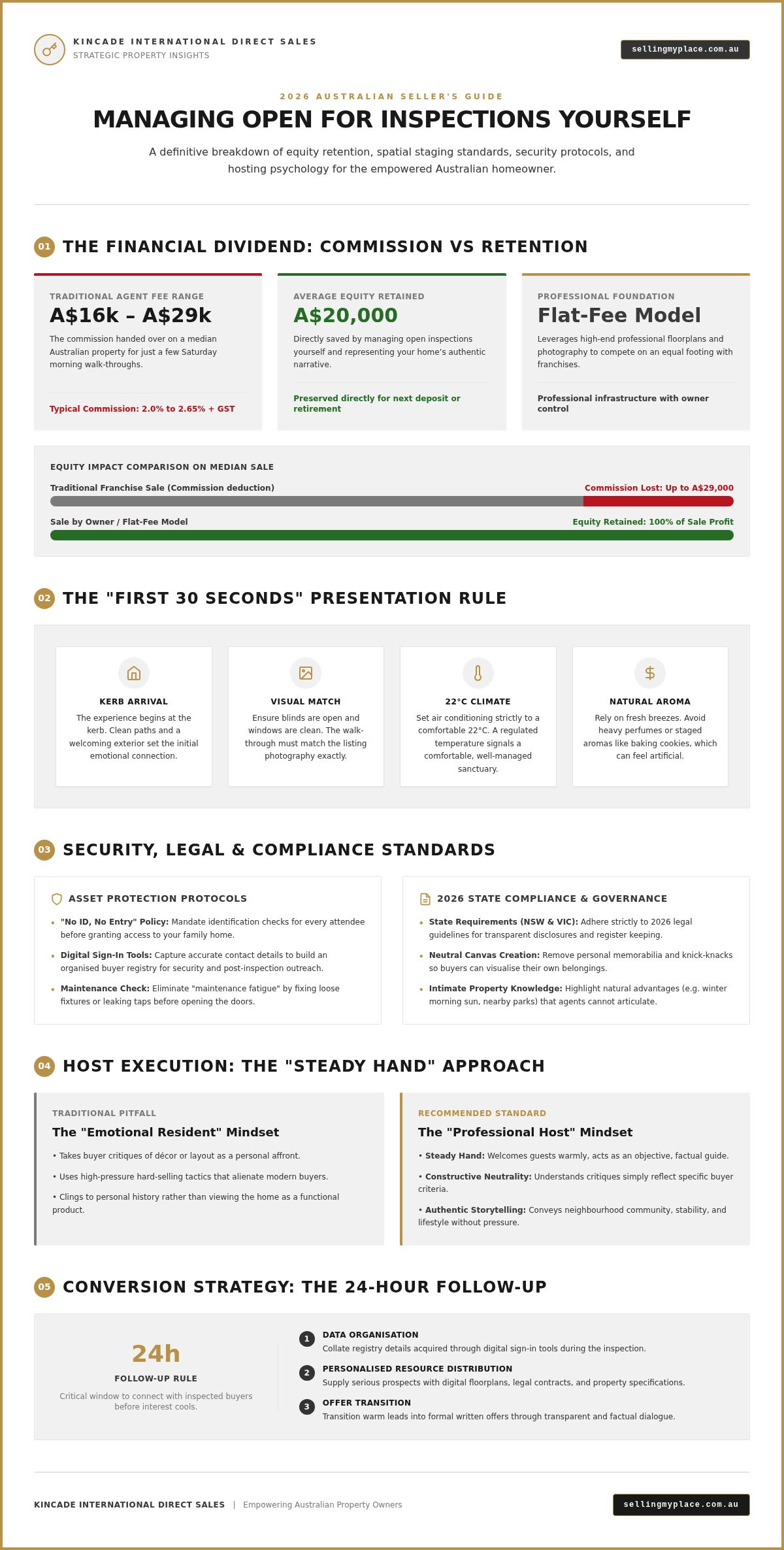
Let’s talk about the elephant in the room: the money. Saving an average of A$20,000 in commissions is a life-changing amount of equity to keep in your pocket. In the current 2026 market, with national commissions sitting between 2.0% and 2.65% plus GST, managing open for inspections yourself is the most direct path to protecting your financial legacy. On a median Australian home, this can represent a saving of up to A$29,000. That is a significant boost to your next deposit or retirement fund (and perhaps a well-earned holiday, too).
But it’s about more than just the bank balance. You possess an intimate knowledge of your home that no agent can replicate in a brief walk-through. You know exactly which window catches the morning light in winter and which local park has the best playground for toddlers. While traditional agencies often claim that owners are “too emotional” to handle buyers, we believe your genuine passion is your greatest asset. When you speak authentically about the lifestyle your home offers, buyers feel a sense of trust that a polished sales pitch can’t replace. You aren’t just selling bricks and mortar; you’re sharing a story of stability and community.
Why the DIY Approach is Gaining Ground in Australia
The 2026 property landscape is more transparent than ever. With digital listing accessibility at our fingertips, the “empowered seller” has moved from the fringes to the mainstream. Modern Sale by owner strategies have evolved alongside technology, giving you the same marketing reach as the big franchises. Many Australians now prefer this direct partnership, valuing the control they have over their own schedules and the quality of buyer interactions. It feels less like a transaction and more like a thoughtful hand-over to the next generation.
Overcoming the “Owner Bias” Hurdle
To succeed, you must master a subtle psychological shift. You’re no longer the resident; you’re the professional property host. This means viewing your home as a “product” designed to meet a buyer’s aspirations. It involves creating a neutral canvas where strangers can visualise their own furniture in the lounge and their own kids in the backyard. When a visitor offers a critique, try not to take it personally. It isn’t a reflection on your memories; it’s simply a buyer trying to see if the house fits their specific needs. Maintaining this “steady hand” ensures you remain a calm, helpful guide throughout the process.
Utilising a flat-fee model provided by Kincade International Direct Sales offers the professional infrastructure, such as high-end floorplans and photography, that allows you to compete on a level playing field. It serves as your professional safety net, ensuring your home is presented with the decorum and authority it deserves while you focus on the heart of the home.
Preparing Your Home and Self for a Successful Inspection
First impressions are everything. The “First 30 Seconds” rule starts from the moment a buyer pulls up at the kerb. You want them to feel a sense of homecoming before they even step through the front door. When managing open for inspections yourself, your goal is to bridge the gap between the professional Photography in your listing and the reality of the walk-through. If the images promised a sun-drenched, airy sanctuary, ensure the blinds are up and the windows are sparkling. A home that looks exactly like its photos builds immediate trust.
Decluttering is your most powerful tool for creating a neutral canvas. It isn’t about erasing your life; it’s about making room for theirs. Removing personal photos or excessive knick-knacks helps prospective buyers imagine their own family heirlooms on your mantelpiece. To facilitate this, you might explore storage units (XS to XL) with JOIN ME self storage to temporarily house your items and maximise your floor space. Think about the sensory experience too. Open the windows to let in a fresh breeze, set the air conditioning to a comfortable 22 degrees, and avoid heavy perfumes or “staged” scents like baking cookies. A clean, fresh-smelling home feels reliable and well-loved. When managing open for inspections yourself, you’re not just opening a door; you’re curating a lifestyle.
The Pre-Inspection Checklist
Before the first visitor arrives, run through a final check to eliminate “maintenance fatigue.” This is the feeling a buyer gets when they see a long list of small jobs, like a dripping tap or a loose door handle, and start mentally deducting thousands from their offer. It’s often helpful to have a partner or friend walk through with fresh eyes to spot things you might have missed.
- Organise a professional clean, paying special attention to windows and high-traffic floor areas.
- Open all internal doors to create a sense of flow and space.
- Turn on every light, even during the day, to highlight the home’s best features.
- Play soft, ambient music at a low volume to settle the “quiet house” nerves.
Professional Marketing Materials on Display
Your hallway table should look like a high-end concierge desk. Providing physical floorplans and brochures allows guests to take a piece of your home with them. It keeps your property top-of-mind when they’re reviewing their options over coffee later that afternoon. Include a “Features List” that points out things they can’t see, like high-grade insulation or recent electrical upgrades. Most importantly, have Neighborhood Market Reports ready to show. This transparency builds immense credibility, proving that your asking price is grounded in local reality. If you’re feeling unsure about how to present these details, reaching out for expert pre-sale advice can help you refine your presentation to a professional standard.
The Logistics of the Day: Safety, Security, and Sign-ins
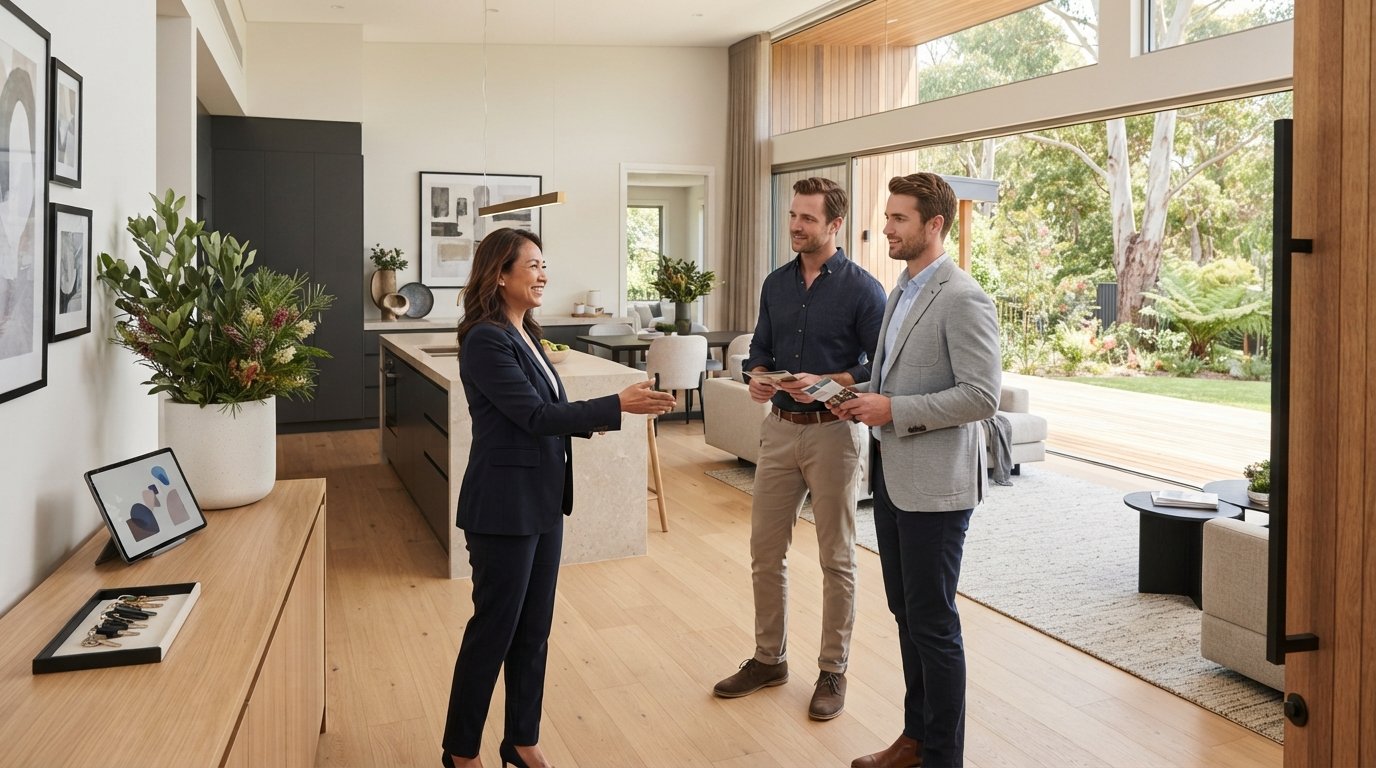
The morning of your first inspection is often a mix of excitement and nervous energy. While you’ve prepared the house to look its best, it’s equally important to prepare for the logistics of welcoming strangers into your private sanctuary. One of the most effective ways to maintain control is by implementing a strict “No ID, No Entry” policy. It’s a standard professional practice that buyers respect. By positioning yourself at the front door, you act as both a welcoming host and a diligent guardian of your family’s space. We strongly recommend using a “partner system” for every event. One person stays at the entrance to manage sign-ins, while the other floats through the home to answer questions and keep a watchful eye on the rooms. Never host an open house entirely alone; having that extra set of hands and eyes is essential for your confidence and safety.
When managing open for inspections yourself, you must be mindful of the Privacy Act 1988. The old-fashioned paper clipboard sitting on a hallway table is now a significant privacy risk, as it allows every visitor to see the names and phone numbers of those who arrived before them. Instead, use a digital sign-in app or a QR code on a framed stand. This ensures that buyer data remains private and secure, while also giving you a clean, accurate list for your post-inspection follow-ups. Most serious buyers expect this level of digital professionalism in 2026.
Managing the Flow of Visitors
If a group of people arrives at once, don’t feel rushed. Greet everyone warmly but keep them at the entrance until they’ve completed the sign-in process and shown identification. If the house starts to feel crowded, it’s perfectly acceptable to ask the next group to wait a moment in the garden or on the porch. This allows those already inside to experience the rooms without feeling cramped, ensuring every corner of your home gets the attention it deserves. Your role is to guide the rhythm of the day, ensuring a smooth and respectful experience for everyone involved.
Digital Security and Privacy Measures
Before the first guest arrives, take a moment to secure your digital life. Ensure your Wi-Fi network is password-protected and that any sensitive documents, such as bank statements or passports, are stored in a locked safe or moved off-site. Small electronics and prescription medications should also be tucked away. It’s a vital precaution because most Australian home insurance policies explicitly exclude theft or malicious damage caused by invited guests where there is no evidence of forced entry. While your policy likely includes up to A$20 million in public liability coverage for injuries, protecting your portable valuables is entirely up to you. If you have smart home cameras, ensure they are used ethically to monitor high-traffic areas, providing you with that extra layer of peace of mind throughout the day.
Hosting Like a Pro: Engaging Buyers Without the Hard Sell
Managing open for inspections yourself doesn’t mean you have to be a high-pressure salesperson. In fact, most Australian buyers find the presence of a pushy agent quite off-putting. They want to wander through your home at their own pace, imagining where their sofa will go or how the kitchen will work for their family dinners. Master the “soft greet”: a warm smile, a friendly hello, and a simple invitation to look around freely. Once you’ve checked their ID and registered them, step back. Give them space to breathe. You’re there as a resource, not a shadow.
When a buyer does approach you, adopt the “Steady Hand” approach. This means answering questions with calm, factual confidence rather than getting defensive or emotional. It’s helpful to categorise your visitors. Research suggests that up to 30% of attendees in suburban Australia are “looky-loos” or curious neighbours. Be polite to everyone, but save your deeper energy for the serious buyers who are asking about settlement terms or local school zones. By remaining objective, you build a bridge of trust that often leads to more transparent conversations.
Common Buyer Questions and Pro-Level Answers
One of the most common questions you’ll face is “Why are you selling?”. Avoid over-explaining or sounding defensive. Instead, keep it future-focused: “We’ve loved our time here, but we’re looking to downsize now that the kids have moved out.” For technical queries about easements or boundaries, never guess. It is perfectly professional to say, “That’s a great question; I’ll check the contract with my solicitor and get back to you this afternoon.” This accuracy protects you and shows the buyer you’re a serious, reliable vendor.
The Art of the Subtle Close
As guests prepare to leave, use open-ended questions to gauge their interest. Asking “How does this home compare to others you’ve seen today?” provides vital feedback without sounding desperate. If they seem keen, you might mention that you’ve already received a few enquiries or point them toward the property sale negotiation tips you’re following to ensure a fair deal for everyone. Before they walk out, ensure they have a brochure and your direct mobile number. If you’d like a “pro in your pocket” to help rehearse these conversations, you can book an agent advisory session to sharpen your hosting skills before the big day.
Post-Inspection Strategy: Turning Walk-throughs into Offers
Once the last visitor has left and you’ve locked the front door, the real momentum begins. Managing open for inspections yourself doesn’t end when the “Open Home” sign comes down; it simply shifts into a more strategic gear. In the Australian market, your speed and professionalism during the follow-up phase often determine how quickly you move from a walk-through to a signed contract. It’s about maintaining that connection you’ve built throughout the day.
Apply the 24-hour follow-up rule. Reach out to every attendee while the memory of your home is still fresh. It’s helpful to categorise your leads into three groups. “Hot” leads are those who asked for settlement terms or requested a contract. “Warm” leads are visitors who spent significant time in the property and asked lifestyle questions. “Cold” leads are typically those who did a quick circuit and left. Send a personalised SMS or email thanking them for their time and include a link to your digital floorplan. This small gesture provides genuine value and keeps your property top-of-mind without feeling intrusive.
Analysing Your Feedback
Don’t be afraid to ask for honest feedback. Use a simple template to gather market insights, asking what they liked most and if anything didn’t quite meet their expectations. If several buyers mention that the “kitchen feels dark,” it’s a clear signal to adjust your lighting before the next weekend. Consistent feedback is a gift. It tells you exactly how the market perceives your home’s value. If you receive complex or conflicting signals, our Real Estate Advisory Services can help you interpret these patterns and decide if a shift in presentation or price is necessary.
Readying the Contract
In the fast-paced 2026 market, being “offer-ready” is essential. Ensure your Section 32 or Contract of Sale is digital and ready for instant sharing via email or a QR code link. Buyers appreciate the transparency of having the legal details at their fingertips immediately after an inspection. We recommend collaborating closely with your Conveyance Advice provider to ensure you’re prepared to handle incoming offers the moment they arrive. There is an incredible sense of accomplishment in closing a deal with confidence, knowing you’ve navigated the process with heart and kept every cent of the commission for your family’s future.
Your Path to a Successful, Commission-Free Sale
You have the tools, the local knowledge, and the genuine heart to present your home better than any third party ever could. By mastering the shift from resident to professional host and implementing robust security measures, you have laid the groundwork for a smooth inspection day. Remember that managing open for inspections yourself is simply about facilitating an emotional connection while maintaining a steady, objective hand during those vital buyer conversations. It is a significant life transition, but it’s one you are now fully equipped to handle with grace and authority.
You don’t have to navigate this journey alone. With professional marketing tools like high-end photography and floorplans at your disposal, plus expert pre-sale consulting to guide your strategy, you can confidently keep 100% of your sale profit. It’s time to take control of your property’s legacy and ensure your hard-earned equity stays exactly where it belongs. We’re here to act as your “pro in your pocket” whenever you need a steady hand to guide you through the process.
Start your commission-free selling journey with our expert advisory today and move toward your next chapter with total peace of mind. You’ve worked hard for your home; now, let’s make sure it works hard for you.
Frequently Asked Questions
Do I legally need an agent to host an open for inspection in Australia?
You are legally permitted to host your own property inspections in every Australian state and territory. However, compliance is key. In New South Wales, you must have a completed Contract of Sale ready before any advertising or inspection takes place. Similarly, Victorian sellers must provide a Section 32 Vendor’s Statement. Managing open for inspections yourself requires following these statutory standards to ensure your sale remains legally sound and protected from potential rescission.
What is the best time and day to hold an open house for maximum turnout?
Saturday is the undisputed king of the Australian open home circuit, typically between 10:00 am and 2:00 pm. This window captures the highest volume of active buyers. For properties in high-demand metropolitan areas, a 30-minute weeknight “twilight” inspection on a Thursday can also be effective. This caters to busy professionals who want to view a home before the weekend rush, helping you build early momentum for your listing.
How do I handle a buyer who wants to negotiate the price on the spot?
If a buyer attempts to negotiate on the spot, maintain your professional decorum. It’s best to thank them for their interest and ask them to submit their offer in writing via email or your digital platform. This gives you space to consult with your solicitor or advisory service without the pressure of an immediate verbal commitment. A formal process ensures that every offer is documented and treated with the seriousness it deserves.
Is it better to have a “Price on Application” or a clear price guide?
Providing a clear price guide is generally more effective than “Price on Application” (POA). In the current 2026 market, buyers value transparency and often filter out listings that lack a price range. A clear guide attracts qualified leads who are actually in your budget, whereas POA can lead to frustration and missed opportunities. Using a Neighborhood Market Report helps you set a realistic range that justifies your expectations to prospective purchasers.
How do I prevent “tyre kickers” from wasting my time during inspections?
You can minimise time-wasters by asking qualifying questions during the sign-in process. Ask if they have a property to sell first or if they’ve already secured finance pre-approval. While you should be welcoming to everyone, focusing your deeper conversations on those who provide specific feedback or ask about settlement terms is a smart way of managing open for inspections yourself. It keeps your energy high for the most serious prospects.
What should I do if nobody shows up to my first open for inspection?
If your first inspection has no attendees, don’t lose heart. It’s usually a signal to review your marketing visibility or your price guide. Check that your listing is prominent on the major portals and that your photography is doing the heavy lifting. You might consider booking a session with a real estate advisory service to audit your presentation and ensure your digital “shop front” is appealing to the right demographic.
Should I provide food or drinks for people attending the inspection?
Keep it simple and professional. While the scent of fresh coffee is a classic touch, providing actual food can be a distraction and creates a risk of spills on your carpets. A few chilled bottles of water on a hot day are a thoughtful, neighbourly gesture that buyers appreciate. Your focus should remain on the property’s features and the lifestyle it offers rather than running a catering service.
How many open for inspections should I plan before considering a price change?
We generally recommend reviewing your strategy after three to four weeks of active inspections. If you have hosted six to eight opens without receiving a serious offer or consistent “warm” leads, the market is giving you a clear signal. This doesn’t always mean a price drop is necessary; sometimes a fresh set of professional photos or a minor adjustment to your marketing copy can reignite buyer interest and attract a different pool of purchasers.