The highest offer isn’t automatically the best one. Knowing how to handle multiple offers on your property means comparing the price with the buyer’s readiness, conditions and proposed timing. Across Australia, real estate agents have a professional obligation to present all written offers to the seller within a reasonable timeframe.
When several buyers make offers, it’s natural to focus on the figure that could make the biggest difference to your next move. But the terms also affect how certain the sale is and whether settlement timing suits your plans.
This guide from Kincade International Direct Sales explains how to compare competing offers, assess finance and conditions, and set a clear process for making your decision while adhering to standard Australian real estate practices. With a calm, structured approach, you can consider the whole offer, not just the headline price.
Key Takeaways
- Compare each offer as a whole: price matters, but so do conditions, buyer readiness and the likelihood of reaching settlement.
- In Queensland, agents must present all offers to the seller in writing within a reasonable time.
- Set a clear process for reviewing offers, including whether buyers can submit a best and final offer by a deadline.
- Consider whether the proposed settlement date fits your moving plans, and how finance or a subject-to-sale condition could affect certainty.
- Understand the terms in the contract, including Queensland’s ordinary five-business-day cooling-off period and when it begins.
What Is A Multiple Offer Situation?
You can keep competing offers in play and invite buyers to submit revised terms, including best and final offers. In Queensland, you may negotiate with one buyer, accept an offer or reject all offers. The highest price doesn’t have to determine your decision. Knowing how to handle multiple offers on your property means setting a fair process and then assessing the complete terms of each written offer.
- Confirm the situation and notify buyers. A multiple offer situation arises when more than one prospective buyer submits a Contract of Sale offer on the same property. Tell each buyer who has made an offer that competition exists, so they can decide whether to revise their terms. In Queensland, agents must present all offers to the seller in writing within a reasonable time. A prudent approach is to notify buyers in writing and obtain their written acknowledgement. Queensland agents commonly use a form confirming buyers understand they may not get another chance to offer.
- Set one clear submission process. Give buyers the same instructions about how and when to submit an offer. You can ask all interested buyers to provide their highest and best offer by a specified deadline. A clear cutoff helps keep the process organised and gives buyers a fair opportunity to respond. Explain whether revised terms should be submitted in writing, and avoid suggesting that an extension or another round is guaranteed.
- Assess the whole offer, not just the price. Compare each figure with the buyer’s conditions, financial position and proposed settlement arrangements. A higher deposit can indicate seriousness, while a cash buyer or someone with pre-approved finance may provide greater certainty. Pre-approval is not the same as completed finance approval, so consider what remains outstanding. Don’t overstate or invent another buyer’s offer when discussing competing terms.
- Decide whether another offer round helps. In Queensland, you may ask each buyer for a best and final offer before making your decision. This can be useful when offers are close or their conditions differ. If you set a deadline, apply it consistently and review the written offers together. You can then accept an offer, negotiate with one buyer, or reject all offers and restart the process.
- Close the loop with unsuccessful buyers. Once you’ve made a decision, tell buyers whose offers weren’t accepted. Keep the message factual and courteous, without disclosing another buyer’s confidential terms or implying that the successful offer was higher unless that’s accurate. Honest communication matters: Australian Consumer Law requires honesty and transparency in how offers are handled. The Queensland Government identifies the Property Occupations Act 2014 as governing rules real estate agents must follow. For anyone learning how to handle multiple offers on your property, clear communication at this stage also helps avoid misunderstandings about the outcome.
Revising an offer and balancing price with other terms
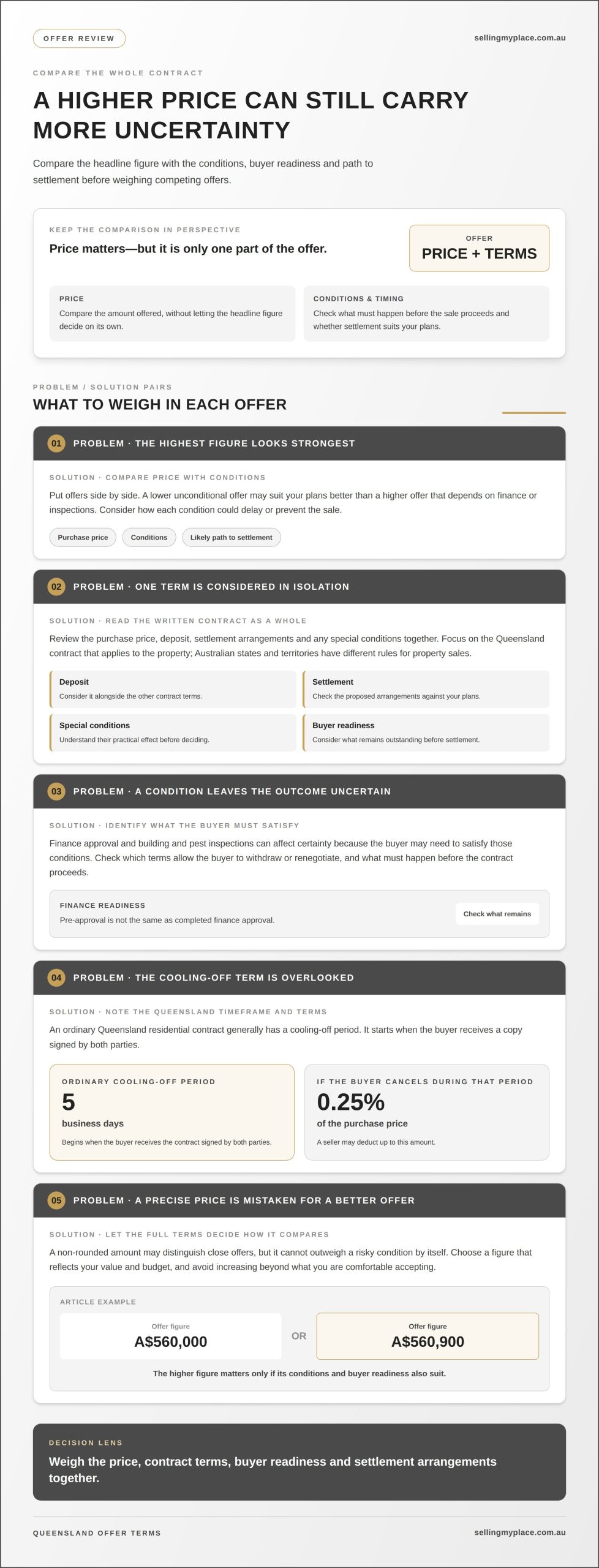
Compare price with the conditions attached, because a higher figure may carry greater uncertainty. In Queensland, an ordinary residential contract generally has a five-business-day cooling-off period, starting when the buyer receives a copy signed by both parties; a seller may deduct up to 0.25% of the purchase price if the buyer cancels during that period.
-
Compare price and offer conditions
Put each offer side by side and compare the price, conditions and likely path to settlement. A lower unconditional offer may suit your plans better than a higher offer dependent on finance or inspections. Consider what each buyer asks you to accept, and how a condition could delay or prevent the sale. Understand the practical effect of each term before weighing the headline figure.
-
Review standard offer terms
Read the written contract terms before deciding whether a revised offer is stronger. Australian states and territories have different rules for property sales, so focus on the Queensland contract applying to your property. Check the purchase price, deposit, settlement arrangements and any special conditions together. The Property Occupations Act 2014 governs rules Queensland agents must follow, but it doesn’t make the highest offer automatically binding on you.
-
Assess conditional offers
Identify which conditions let a buyer withdraw or renegotiate, and what must happen before the contract proceeds. Finance approval and building and pest inspections affect certainty because the buyer may need to satisfy those conditions. In Queensland, the ordinary cooling-off period gives a buyer an option to cancel. It begins when they receive the contract signed by both parties. Weigh this right alongside the price and other terms.
-
Consider a non-rounded offer price
When revising an offer, choose a figure that reflects your value and budget, not simply a round number. For example, compare A$560,000 with A$560,900: the second is higher, but the difference matters only if its conditions and buyer readiness also suit. A precise amount may help distinguish close offers, yet it can’t outweigh a risky condition by itself. Avoid increasing your offer beyond what you’re comfortable accepting.
For support weighing contract terms against your sale priorities, get guidance on your property sale.
Assessing inspection periods and settlement timeframes
Compare the dates and deadlines in each offer with your moving plans and the buyer’s readiness. A settlement that looks fast on paper may be less suitable if the conditions leave too little time to progress.
- Review the inspection period in each offer. Note how long the buyer has to arrange a building or pest inspection and when the relevant condition must be satisfied. A shorter period may move the sale along, but it gives the buyer less time to organise inspections and consider the findings. Compare the dates in the written offers rather than assuming every buyer has allowed the same period.
Consider what the inspection condition allows the buyer to do if an issue comes to light. The wording and deadline matter: they show when the buyer must act and whether the condition could affect progress towards settlement. If two offers are similar in price, a clearly defined inspection process may be easier to assess than a condition with unclear timing.
- Match settlement timing to your next move. Flexible settlement dates can help if your moving plans depend on buying another property, arranging a move or managing other commitments. Compare the buyer’s proposed date with the time you need to vacate and hand over the property. A later date might better fit your plans, while an earlier one could suit you if you’re ready to move.
Ask whether the buyer can accommodate a different date if their proposal doesn’t match your preferred timing. Treat flexibility as a practical term, not a substitute for a workable contract. A settlement date both sides can meet is more useful than an attractive date that creates avoidable pressure.
- Assess the proposed timeframe alongside finance. Thirty-day settlements are still common in Queensland for buyers who need finance approval. Compare that timeframe with the buyer’s finance position and the contract conditions, rather than treating a shorter settlement as automatically stronger. A buyer may offer to settle sooner, but the date needs to allow for the steps required to complete the purchase.
Check whether the offer gives the buyer enough time to meet its conditions and allows the transaction to progress. If the proposed settlement is unusually tight for the buyer’s circumstances, weigh the timing risk against the price and other terms. The clearest offer has dates that fit the buyer’s readiness and your plans.
- Compare every date before choosing. Make a simple timeline for each offer: inspection deadline, any other condition dates and proposed settlement. This makes differences visible without reducing the decision to one attractive date. For example, a buyer offering a flexible settlement may suit you if you’re still organising a move, while another buyer’s shorter timeframe could work better if the property is ready for handover.
Use the timeline to spot dates that need discussion before accepting an offer. Keep the agreed terms clear in the contract so both parties know which deadlines apply. A practical comparison helps you balance inspection time, settlement certainty and the pace of your next move.
Checking finance status and subject-to-sale conditions
To reduce the risk of withdrawal and delay, compare each buyer’s finance position and conditions before deciding. No offer removes every risk, but clear written terms and prompt follow-up can help you assess how ready each buyer is to proceed.
- Clarify the buyer’s finance position. Distinguish a cash offer, pre-approved finance and finance that still needs assessment. A buyer with pre-approval may offer greater certainty, but pre-approval doesn’t mean every step is complete. Consider what approval remains outstanding and whether the contract makes the purchase conditional on finance. This gives you a clearer view of the buyer’s readiness than the offer amount alone.
- Read the finance condition and its deadline. Check what the buyer must do, when they must do it, and what happens if finance isn’t approved. A clearly expressed deadline helps you understand when the buyer needs to update you. If the offer leaves timing unclear, ask for the terms to be clarified in writing before you decide. Don’t treat a buyer’s verbal confidence as a replacement for the contract condition.
- Assess any subject-to-sale condition. This means the buyer’s purchase depends on selling their own property. Consider whether that sale has progressed, what conditions remain, and how its timing could affect your transaction. A linked sale can add another moving part: delays or a change in the buyer’s circumstances may affect their ability to proceed. Fewer special conditions can make a sale smoother, so weigh this dependency against the proposed price and other terms.
- Follow up promptly after accepting an offer. Confirm the agreed terms in writing and keep track of finance and subject-to-sale deadlines. Ask for updates that relate directly to those conditions, and record important changes or agreed extensions in writing. Prompt communication can make emerging issues visible sooner, giving you time to understand their impact rather than discovering them close to settlement.
- Keep competing offers and communications accurate. In Queensland, agents must present each offer to the seller in writing within a reasonable time and without bias or preference. Don’t invent or overstate another buyer’s offer to pressure someone to submit a stronger one. If a buyer’s finance or sale condition creates uncertainty, discuss that specific risk and compare it with the other written terms before making your decision.
Gazumping, withdrawal and contract delays can’t be ruled out simply by choosing the highest offer. Reduce avoidable uncertainty by assessing finance readiness, reading conditions closely and promptly recording agreed terms in writing.
What are the standard terms and conditions in an Australian property offer?
Australian property contracts vary by state and territory, so review the contract that applies to the property. In Queensland, read the written terms carefully before comparing competing offers.
- Compare the key contract details. Start with the purchase price, deposit, settlement date and any special conditions. These terms show what the buyer is offering and what needs to happen before settlement. Compare the actual wording across offers, rather than relying on a summary or verbal explanation. A similar price can come with different obligations, deadlines or flexibility for you as the seller.
- Note the Queensland cooling-off period. An ordinary Queensland residential contract generally has a five-business-day cooling-off period. It starts when the buyer receives a copy signed by both parties. This timing matters when assessing how soon the buyer’s commitment may become firmer. If the buyer cancels during the period, the seller may deduct up to 0.25% of the purchase price. Consider this term alongside the offer’s conditions.
- Check what happens if the buyer cancels. Read the contract’s cancellation provisions and identify which conditions may allow the buyer to end the agreement. Finance, inspection and other special conditions can affect whether the transaction proceeds. For instance, a buyer whose finance condition is unmet may have different options from a buyer cancelling during the cooling-off period. The reason and contract wording matter, so don’t treat every cancellation as the same.
- Understand when risk passes. In Queensland, risk under a property contract usually passes at 5 pm on the next business day after the contract date. Include this timing in your review of each offer, alongside the settlement date and the buyer’s conditions. It’s a distinct contract detail, not simply another way of describing settlement. If competing contracts differ, note the relevant dates clearly before deciding.
- Compare state rules and get contract advice. Australian states and territories have their own property-sale rules, so don’t assume a Queensland contract works the same way elsewhere. For a Queensland sale, have the relevant terms explained before you accept an offer, especially where cancellation rights, special conditions or risk timing affect your decision. This helps you compare the written commitments accurately, rather than choosing on price alone.
For guidance on preparing for a sale and weighing contract terms, discuss your property sale.
Kincade International Direct Sales
Kincade International Direct Sales helps homeowners prepare for a sale and consider their next steps when offers arrive. Pre-Sale Property Consulting and Real Estate Advisory Services can help you weigh offer terms against your plans. Neighborhood Market Reports add context to your sale decisions, while Residential Property Listing Services support the process of bringing your property to market.
If you’re preparing to sell or want support thinking through your approach, contact Kincade International Direct Sales to discuss your property sale.
Make your next property decision with confidence
Before another offer arrives, decide what a good outcome means for your next move. It might involve a preferred settlement window, a price that supports your plans or terms that feel workable for everyone involved. If your next chapter includes purchasing a lifestyle or holiday investment overseas, insights from specialists like Krissy in the Keys (Krissy Carnahan, Realtor) can help guide your planning. Clear priorities make it easier to weigh new information without feeling rushed.
A thoughtful approach to how to handle multiple offers on your property starts with knowing what matters most to you, not simply reacting to competing figures. Kincade International Direct Sales offers Residential Property Listing Services, Buyer Representation and Pre-Sale Property Consulting to support you at different stages of a property transaction.
If you’re preparing for a sale or want help thinking through your next step, contact Kincade International Direct Sales. A clear plan can help you move forward with greater certainty and focus on what comes next.
Frequently Asked Questions
Responding To Offers: What Are Your Options?
You can accept an offer, negotiate with a buyer or reject the offers received. In Queensland, you aren’t required to accept even the highest offer. For example, if the strongest price comes with terms that don’t suit your plans, you could negotiate those terms with that buyer. You can also decide none of the current offers works for you and continue the sale process on your terms.
What Is A “Best And Final Offer”?
A best and final offer is a buyer’s last proposed price and terms in a competing-offer process. The seller or agent invites buyers to submit their strongest offer, often by a stated deadline. Buyers should take the invitation seriously: they may not get another chance to improve their terms. For sellers, the process brings offers together for consideration before deciding what happens next.
What should a seller do after receiving multiple offers on a property in Australia?
Keep a complete record of each written offer and its terms. Organise the documents so you can compare proposals consistently, including revised versions. Note which points need clarification and record each response against the relevant offer. This paper trail can prevent confusion if a buyer changes a term or submits an updated contract while you’re considering other proposals.
How can Australian sellers compare property offers beyond the purchase price?
Assess how each offer fits your priorities, not just its headline amount. For example, if you’re arranging a move, you may value a settlement date that leaves time to organise your next home. You might instead prioritise a buyer whose purchase depends on fewer outstanding conditions. Write down which terms matter most to your circumstances, then weigh each proposal against those priorities before deciding.
How should a seller run a best-and-final-offer process or set a deadline?
Give buyers consistent written instructions explaining what to submit, how to submit it and the closing time. Allow enough time for them to consider their price and terms, and tell all participants about any change to the deadline. After the cutoff, review the offers together rather than deciding based on the first response. A clear process helps buyers understand the opportunity without implying that another round will follow.
Are there Australian state or territory rules for handling competing property offers?
Yes. Property-sale rules differ between Australian states and territories, so the applicable requirements depend on where the property is located. In Queensland, the Property Occupations Act 2014 governs rules real estate agents must follow. Queensland agents must present offers to the seller in writing within a reasonable time. If your property is elsewhere, make decisions using the rules that apply in that jurisdiction.
What are the risks of accepting a higher offer with conditions versus a lower unconditional offer?
A higher conditional offer may not proceed if the buyer can’t satisfy a condition, such as finance approval, or chooses to withdraw under the contract. That can cause delay and leave you needing to reconsider other options. A lower unconditional offer may reduce some condition-related uncertainty, but it isn’t automatically the better choice. Weigh the price difference against the contract terms and your preferred timing.