
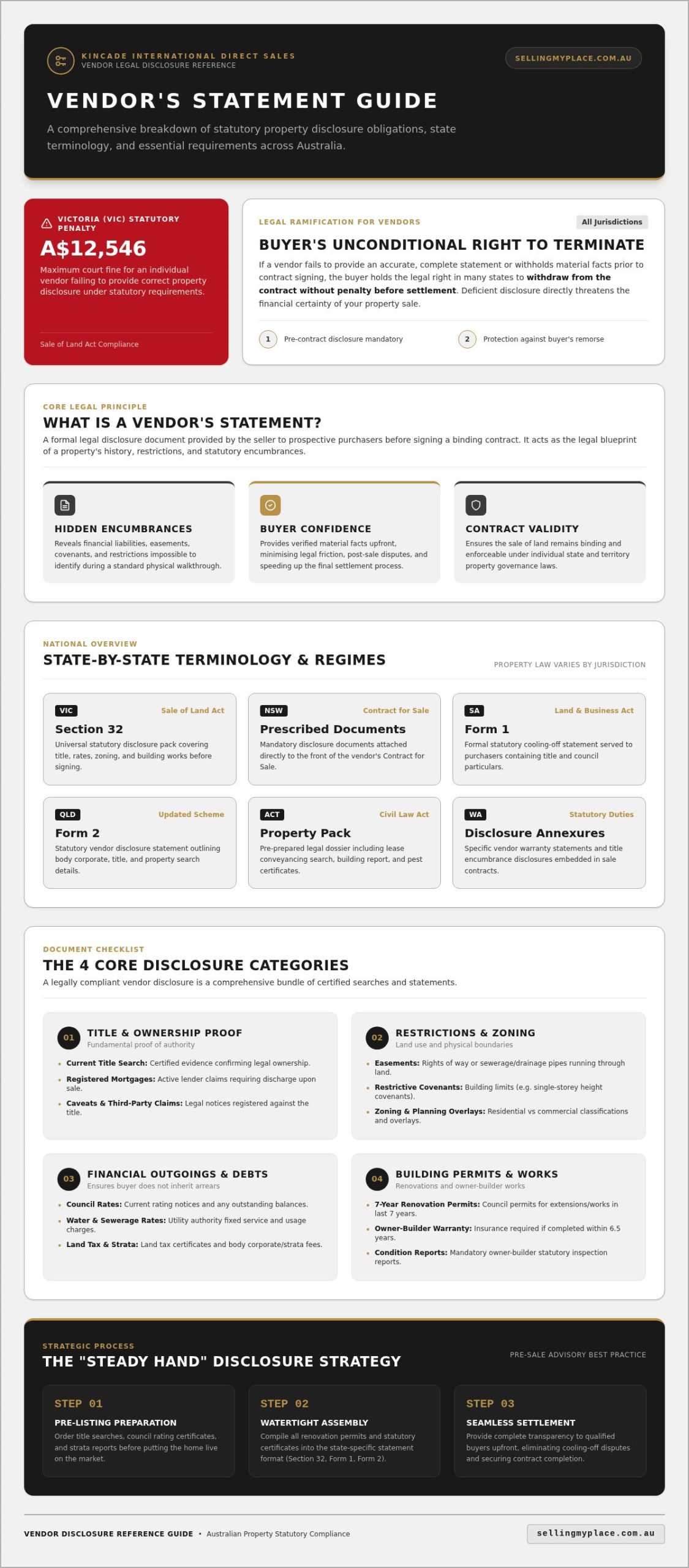
Did you know that in Victoria, an individual vendor can face a court fine of up to A$12,546 for failing to provide the correct property disclosure? It’s a sobering figure that highlights just how serious the legal side of selling can be. Selling your home is a major life transition, and it’s completely normal to feel a bit overwhelmed by the mountain of paperwork landing on your kitchen table. You’re likely asking yourself, what is a vendor’s statement, and why does every state seem to have a different name for it?
We understand the weight of this responsibility and the fear of getting it wrong. This guide will demystify exactly what this document entails, why it’s the most critical piece of your property sale, and how to navigate the legal requirements across Australia with absolute confidence. You don’t have to face this alone or worry about high conveyancing costs eating into your hard-earned equity. We’ll walk you through the specific rules for your state, from Section 32s to Form 1s, and provide a clear checklist to ensure your disclosure is watertight so you can focus on your next chapter.
Key Takeaways
- Gain a clear understanding of what is a vendor’s statement and how this essential disclosure document protects your interests throughout the sale.
- Identify the specific documents required in your state, from title searches to easement details, to ensure your contract remains legally sound.
- Learn why having your paperwork organised before your property goes live on the market fosters buyer confidence and speeds up the settlement process.
- Discover how to navigate complex disclosure laws without the stress of high commissions by using expert pre-sale property consulting.
- Empower yourself with a practical checklist of information you must share to avoid common legal pitfalls and secure a successful, commission-free sale.
What is a Vendor’s Statement in the Australian Property Market?
If you’re preparing to sell your home, you’ve likely come across a pile of paperwork that feels a bit daunting. At its heart, what is a vendor’s statement? It’s a formal legal disclosure document that you, as the seller, must provide to a potential purchaser before they sign a contract. The vendor’s statement is the legal blueprint of a property’s history and restrictions. It serves as the primary way to inform a buyer about encumbrances, financial obligations, or land use issues that aren’t easily spotted during a physical inspection or a Saturday morning walkthrough.
Transparency is the cornerstone of a successful sale. If you fail to provide an accurate or complete statement, the consequences are significant. In many states, a buyer has the legal right to withdraw from the contract without penalty before settlement if the disclosure is found to be deficient. This can be a devastating outcome after you’ve already started packing your boxes and planning your move. Getting this document right isn’t just about ticking a box; it’s about protecting your financial future and ensuring your sale remains “sold”. Professional Victorian agencies like Fateh Real Estate emphasize that this level of disclosure is what builds the necessary trust between a vendor and a prospective buyer.
Why Transparency Protects Your Sale
Choosing to be completely open about your property’s history is a strategic move that builds immediate credibility. When a serious buyer sees a thorough disclosure, they feel a sense of security. It reduces the likelihood of “buyer’s remorse” or legal disputes that can flare up long after the keys have changed hands. We often talk about the “steady hand” approach to selling. By being honest and proactive now, you save yourself a world of stress and potential litigation later. A complete statement shows you’re an organised, professional seller who respects the process and the people involved.
Common Names for the Statement Across Australia
Because property law is managed by state and territory governments, the name of this document changes depending on where your home is located. In Victoria, it’s almost universally called a “Section 32”, which refers to the specific part of the Sale of Land Act. If you’re selling in New South Wales, these disclosures are typically bundled as prescribed documents within the Contract for Sale. South Australians will know it as a “Form 1”, while Queenslanders now use a “Form 2” under their updated disclosure scheme.
While the names differ, the statutory vendor disclosure requirements in Australia all share the same underlying spirit. Whether you’re providing a property pack in the ACT or navigating the specific requirements in Western Australia, the goal is to ensure the buyer has all the material facts before making a life-changing decision. Understanding these local variations is the first step toward a confident, commission-free sale.
The Core Ingredients: What Must Be Disclosed?
Understanding what is a vendor’s statement requires looking closely at the legal bones of your property. It isn’t just a single document. Instead, it’s a comprehensive folder of certificates that ensures the buyer knows exactly what they’re stepping into. At the very top of your list is a current Title Search. This proves you’re the legal owner and reveals any mortgages or caveats that need to be cleared before the property changes hands.
Beyond ownership, you must disclose easements and covenants. Easements, such as sewerage pipes running through your backyard, or restrictive covenants that stop you from building a second storey, can significantly impact a buyer’s plans. Zoning information is equally vital. It confirms if the land is residential or commercial and identifies any specific overlays. You’ll also need to include financial details to ensure the buyer isn’t inheriting your debts. These typically include:
- Current council rates and any outstanding amounts.
- Water and sewerage charges.
- Land tax certificates, where applicable.
- Body corporate or strata fees if the property is on a shared title.
For a reliable benchmark on these requirements, Consumer Affairs Victoria’s guide to Section 32 statements offers a clear look at these statutory duties.
Building Permits and Warranty Insurance
Transparency about building works is non-negotiable. If you’ve renovated or extended in the last seven years, those permits must be included in your disclosure. Owner-builders have additional responsibilities. They often need a condition report and warranty insurance if the works were completed within the last six years and six months. Leaving out unapproved structures, like a “DIY” deck or shed, is a gamble that rarely pays off. It often leads to collapsed sales or messy legal claims after the settlement date.
Environmental and Neighbourhood Factors
Your disclosure must also cover the environment around your fence line. This includes whether the property is in a bushfire-prone area or has a flood-plain overlay. You’re also required to share any formal notices from authorities about future local developments, such as a planned road widening or new infrastructure nearby. These details are critical when you look at how to determine market value of a home in australia, as they affect long-term desirability. If you’re feeling unsure about which specific certificates apply to your street, a quick chat for conveyance advice can provide the steady hand you need.
State-by-State Breakdown: Navigating Regional Rules
Property law in Australia isn’t a “one size fits all” affair. Each state and territory operates under its own specific legislation, which means the answer to what is a vendor’s statement depends largely on where your fence line sits. This regional variation can feel like a hurdle, but it shouldn’t deter you. Whether you’re in a high-disclosure state like Victoria or a “buyer beware” region, the commission-free sale process is absolutely viable. It simply requires a steady hand and the right local knowledge. Securing professional conveyance advice early on is the smartest way to ensure you meet your specific local obligations without the stress of hidden legal traps.
Victoria, NSW, and Queensland Requirements
In Victoria, the rules are particularly clear. A Section 32 is mandatory and must be ready before your property is even “offered” for sale. You cannot legally market the home to the public without this document in place. Moving across the border to NSW, the focus shifts to the Contract of Sale. Specific prescribed documents, such as a Section 10.7 zoning certificate and a drainage diagram, must be attached before you start showing buyers through the front door. Queensland recently updated its framework with the Property Law Act 2023. As of 1 August 2025, sellers must provide a formal Form 2 Seller Disclosure Statement. If you’re selling a unit or townhouse, providing body corporate certificates and sinking fund details is now a critical part of the process. These eastern states place a significant burden of disclosure on the seller to ensure the buyer is fully informed before signing.
Western Australia, SA, and the Territories
South Australia uses a rigorous disclosure document known as a Form 1. This must be served to the purchaser at least 10 clear days before the settlement date. In many cases, the service of this form is what actually triggers the buyer’s statutory two-day cooling-off period. In Western Australia, the approach is slightly different. While WA doesn’t have a single “vendor’s statement” for general land, disclosure is managed through specific warranties within the Contract for Sale of Land. It remains a more traditional “buyer beware” environment, yet material facts about the property’s structural integrity or illegal drug contamination must still be shared to avoid future litigation.
The Territories and Tasmania have their own unique disclosure packets. In the ACT, the seller must commission and provide building, pest, and energy efficiency reports upfront. This is a significant shift from other states where the buyer typically covers these costs. While the names and timelines change across the country, the spirit of disclosure remains the same. Being organised with your paperwork shows you are a professional seller who values transparency and a smooth transition for the next family to call your house a home.
Preparing Your Statement: Timing and Professional Support
Timing is everything. Many homeowners only start asking what is a vendor’s statement after they’ve found a keen buyer, but that’s a risky strategy. You should ideally have your disclosure document finalised before your property ever goes live on the market. In a “Sale by Owner” context, having your paperwork ready is a significant advantage. It signals to every person walking through your open home that you are a professional, organised seller. This transparency builds immediate rapport and gives buyers the confidence to make an offer on the spot.
The process of gathering information starts with contacting your local council, water authorities, and state land registries. You’ll need to collect various certificates regarding zoning, rates, and any notices issued against the land. While you can certainly take the lead in collecting these raw documents to speed things up, the final assembly requires a qualified eye. A legal professional should always draft the final version to ensure every statutory requirement is met.
The Risk of the ‘DIY’ Legal Document
It might be tempting to use a generic template you’ve found online to save a few dollars. However, this is one area where “doing it yourself” can backfire. A minor omission or a misinterpretation of a planning overlay can grant the buyer a legal “right to rescind”. This allows them to walk away from the contract at the 11th hour without penalty. It’s a heartbreaking situation that is easily avoided. Our expert real estate advisory service is designed to help you spot these potential red flags early, keeping your sale on track.
Working with a Conveyancer or Solicitor
A professional conveyancer typically requires about 7 to 14 days to produce a complete statement. This timeframe depends on how quickly local authorities respond to certificate requests. When looking at the costs, you’ll encounter professional fees for the expert’s time and “disbursement” fees, which are the third-party costs for the certificates themselves. We understand that managing these details can feel stressful. That’s why SellingMyPlace integrates expert conveyance advice directly into our partnership approach. We provide the steady hand you need to navigate the legalities of disclosure without the burden of high commissions.
Ready to ensure your paperwork is watertight? Contact our advisory team for a pre-sale consultation.
Selling Smarter: How Expert Advisory Simplifies Disclosure
Taking control of your property sale doesn’t mean you have to walk the path alone. By now, you’ve gained a deep understanding of what is a vendor’s statement and why it serves as the foundation of a secure transaction. At SellingMyPlace, through the Kincade International Direct Sales (KIDS) approach, we’ve reimagined the selling journey. We pair professional authority with heartfelt support. Our Agent Advisory Service acts as the steady hand you need to navigate these complex disclosure requirements. We ensure you’re never just a number in a database, but a partner in a shared mission to protect your family’s legacy.
Success in the modern Australian market requires a two-pronged strategy. First, you need professional marketing, including high-end photography and detailed floorplans, to capture the buyer’s imagination. Second, you need total legal readiness. When these elements work together, you create a sense of trust that naturally leads to higher offers. By having your disclosure documents prepared and vetted early, you eliminate the friction that often kills deals at the last minute. You’re not just listing a house; you’re presenting a transparent, high-value opportunity to the market.
The Partnership Advantage
The traditional DIY route can feel isolating and fraught with legal anxiety. In contrast, the KIDS partnership model provides a safety net. We offer the expertise of a seasoned advisor who understands the emotional significance of your transition. This backing significantly reduces the stress of managing paperwork. If you’re curious about how this fits into the broader process, our guide on how to sell your own home provides the full context you need to move forward with confidence.
Your Next Steps to a Successful Sale
Your journey toward a successful, commission-free sale starts with a single, informed step. We encourage you to reach out for a comprehensive neighbourhood market report to ground your expectations in current data. Remember, the average seller saves around A$20,000 in commissions by choosing this path. That’s a significant amount of equity that stays in your pocket for your next adventure. Getting the foundations right, starting with a watertight vendor’s statement, is the key to unlocking these savings. Contact our expert team today to discuss your commission-free sale and let’s start this chapter together.
Your Path to a Confident, Commission-Free Sale
Selling your family home is more than a transaction; it’s the start of a new chapter. By understanding exactly what is a vendor’s statement and how it functions as the legal backbone of your sale, you’ve already taken a massive step toward a successful outcome. Whether you’re navigating Victoria’s Section 32 or South Australia’s Form 1, being prepared with the right title searches and certificates ensures you stay in the driver’s seat. You don’t have to tackle the legal complexities alone or worry about high costs. Our partnership model means you have a steady hand guiding you through every disclosure requirement.
With expert pre-sale consulting and comprehensive conveyance advice included, you can move forward with total peace of mind. Remember, the average seller saves around A$20,000 in commissions by choosing this transparent, direct path. It’s about keeping your equity where it belongs while ensuring your sale is watertight and professional. Ready to sell smarter and keep 100% of your profit? Contact our expert advisory team today. We’re here to help you protect your legacy and celebrate this significant life transition with confidence.
Frequently Asked Questions
Can I sell my house without a vendor’s statement in Australia?
In most Australian states, including Victoria, New South Wales, and Queensland, you cannot legally sell your residential property without a formal disclosure document. Failing to provide one usually grants the buyer a statutory right to rescind the contract at any time before settlement. While Western Australia operates under a different framework, sellers are still bound by strict warranties. We always recommend having your paperwork finalised before listing to ensure your sale is legally robust and professional from day one.
How long is a vendor’s statement valid for?
There isn’t a single expiry date for the entire document, but the individual certificates within it must be current to be legally valid. Most legal professionals recommend that documents like title searches and council rate certificates be no more than three to six months old. If your property remains on the market for an extended period, you may need to refresh certain reports to ensure the information remains accurate for a new purchaser. This keeps your disclosure “live” and protects you from claims of outdated data.
What happens if I forget to disclose something in the Section 32?
Forgetting a material fact in your Section 32 or vendor’s statement can be a costly mistake that jeopardises your transaction. If the omission is significant, such as a hidden easement or an unapproved renovation, the buyer may have the legal right to walk away from the sale and receive their full deposit back. In some jurisdictions, you could also face statutory fines. Our Agent Advisory Service acts as a steady hand to help you identify these details early, reducing the risk of a collapsed sale.
Do I need a lawyer to prepare my vendor’s statement?
While you can technically gather the certificates yourself, it is highly recommended to have a qualified conveyancer or solicitor prepare the final document. The legal requirements for what is a vendor’s statement are strict, and even a small clerical error can lead to a rescinded contract. At SellingMyPlace, we integrate expert conveyance advice into our partnership approach. This ensures your disclosure is professionally drafted while you still enjoy the benefits of a commission-free, flat-fee sale that protects your hard-earned equity.
Is a vendor’s statement the same as a contract of sale?
No, they are two distinct documents that serve different purposes in the selling process. The vendor’s statement is a disclosure document that provides the buyer with essential facts about the property’s history, zoning, and restrictions. The Contract of Sale is the legal agreement that outlines the purchase price, settlement date, and commercial terms. In many states, these two documents are bundled together, but the statement focuses on “what” is being sold, while the contract focuses on the “how” of the transaction.
How much does it cost to get a vendor’s statement drafted?
The cost typically consists of two parts: the professional fee for the conveyancer’s time and the disbursement costs for the required certificates. Disbursement costs vary depending on your local council and water authority, as they charge different rates for their reports. Since we operate on a flat-fee model, we focus on providing expert pre-sale consulting to help you manage these foundations efficiently. This approach ensures you save an average of A$20,000 in commissions compared to traditional agencies while still receiving professional support.
Does the vendor’s statement show if there is a mortgage on the property?
Yes, a vendor’s statement must include a current title search, which will show any registered mortgages or caveats currently on the land. This transparency allows the buyer’s legal team to confirm that any existing mortgage will be discharged at the time of settlement. It is a standard part of every property transaction and doesn’t affect your ability to sell, provided there is enough equity to cover the debt. Being open about these details from the start builds a foundation of trust with your potential purchaser.
What is the difference between a Section 32 and a Section 10.7 certificate?
A Section 32 is the term used in Victoria to describe the entire vendor’s statement package. In contrast, a Section 10.7 certificate is a specific planning document required in New South Wales that details how a property can be used, including zoning and development restrictions. While a Victorian Section 32 includes many different certificates, a Section 10.7 is just one of the prescribed documents that must be attached to an NSW Contract of Sale before a property can be marketed to the public.