The settlement date in your contract matters more than how quickly the paperwork is completed on the day. In Australia, home settlement usually takes 30 to 90 days after contracts are signed or exchanged, depending on the contract; there’s no single national timeframe. So, how long settlement takes in Australia comes down first to the date agreed by the buyer and seller, as well as the requirements of the transaction.
Settlement is the legal process that transfers property ownership from the seller to the buyer, with the buyer’s lender involved if the purchase is financed. It’s natural to want a clear date for moving, handing over the keys or planning your next home. This article explains how long settlement takes in Australia, what happens during the process and how contract dates and state differences shape the timeline. You’ll also learn what can delay settlement and what may happen if it doesn’t go ahead as planned.
Key Takeaways
- Use the settlement date in the contract to plan your move; timing varies by state and transaction.
- Have finance, required documents and funds organised ahead of settlement to reduce avoidable hold-ups.
- Arrange insurance and a pre-settlement inspection as part of preparing for handover.
- If settlement can’t proceed as planned, the parties need to agree on any date change and amend the contract.
- For help preparing to sell or buy, Kincade International Direct Sales offers property consulting, buyer representation and residential property listing services.
Preparing for settlement
Preparation starts well before settlement day. The buyer’s conveyancer or solicitor typically coordinates with the lender and the seller’s representatives to bring the documents, funds and timing together. Buyers and sellers should keep communication flowing through their representatives, especially if the lender still needs information. A short settlement period doesn’t remove the need for credit assessment, valuation, conveyancing, identity checks, security documents or cleared funds.
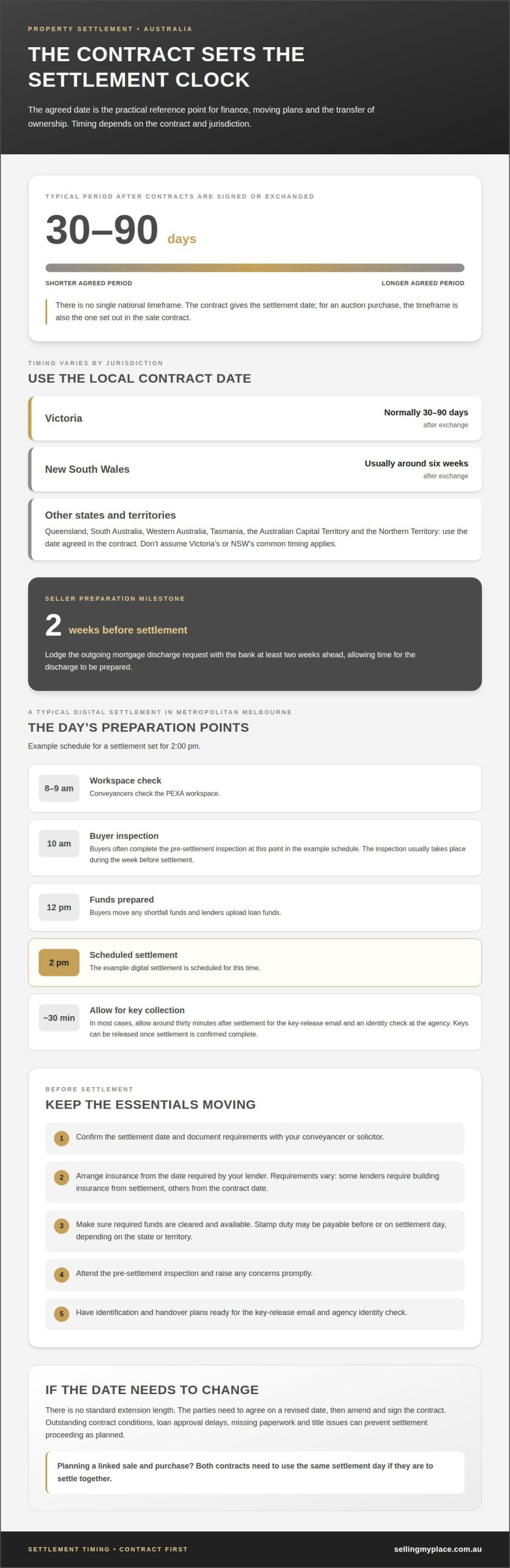
Sellers should deal with an outgoing mortgage early. Lodge a discharge request with the bank at least two weeks before settlement to allow time for the mortgage discharge to be prepared. The seller pays property-related charges up to settlement day, and the buyer takes responsibility from then on. Adjustments may account for charges paid in advance, so information about rates, water and body corporate fees may be needed to calculate the amounts correctly.
Buyers should arrange insurance from the required date. Some lenders require building insurance from settlement, while others require it from the contract date, so confirm the start date with your lender. Stamp duty may also need to be paid before or on settlement day, depending on the state or territory. The buyer’s conveyancer or solicitor can coordinate the transfer and required settlement documents with the lender.
In metropolitan Melbourne, a typical digital settlement scheduled for 2:00 pm has several preparation points. Conveyancers check the PEXA workspace between 8:00 and 9:00 am. Buyers often complete the pre-settlement inspection at 10:00 am. Around 12:00 pm, buyers move any shortfall funds and lenders upload loan funds. The inspection usually takes place during the week before settlement, giving buyers a chance to confirm the property’s condition before handover.
The buyer’s conveyancer or solicitor and lender can complete and sign documents online or in person. Agreeing on the method in advance helps keep the paperwork moving. A practical buyer checklist includes:
- Confirm the settlement date and document requirements with the conveyancer or solicitor.
- Arrange insurance with a start date that meets the lender’s requirement.
- Make sure required funds are cleared and available for settlement.
- Attend the pre-settlement inspection and raise any concerns promptly.
- Plan for the key-release email and identity check at the agency.
In most cases, buyers should allow around thirty minutes after settlement for the key-release email and an identity check at the agency. Once settlement is confirmed as complete, the agent is authorised to release the keys. Having identification and handover plans ready makes the transition from legal completion to key collection more straightforward.
Typical settlement period
Across Australia, home settlement usually takes 30 to 90 days after contracts are signed or exchanged, depending on the contract. For an auction purchase, the settlement timeframe is set by the contract, so check the agreed date before planning your move.
Typical settlement periods across Australia
The settlement period is the time between signing or exchanging contracts and the agreed settlement date. Buyers and sellers use that date to coordinate finance, moving plans and the transfer of ownership. There’s no single official timeframe for every Australian property: the contract and jurisdiction shape the arrangement. A shorter period may be negotiated when the home is vacant and the buyer is ready to move in.
Settlement periods by state and territory
Settlement timing varies across New South Wales, Victoria, Queensland, South Australia, Western Australia, Tasmania, the Australian Capital Territory and the Northern Territory. In Victoria, contracts normally set a period of 30-90 days after exchange. NSW Fair Trading describes residential settlement in New South Wales as usually occurring around six weeks after exchange. For the other jurisdictions, the contract’s agreed date provides the timeframe; don’t assume Victoria’s or NSW’s common timing applies there.
Auction property settlement periods
An auction purchase follows the settlement date set out in the sale contract, not a separate national auction timetable. That date guides the parties as they arrange finance, conveyancing and moving plans. Buyers should make sure the proposed timing allows them to complete the purchase. The same principle applies if the auction property is vacant: a short settlement can be negotiated when both parties agree and the buyer is ready.
For buyers and sellers, the contract date is the practical reference point. A conveyancer can coordinate documents and settlement arrangements around it, while the parties can raise timing needs before agreeing to the contract. If a purchase and sale need to settle together, both contracts must use the same settlement day. This coordination matters because mismatched dates can disrupt plans for moving between properties.
To confirm how long settlement takes in Australia, identify the settlement date in the signed contract and note whether it runs from signing or exchange. Then arrange finance and conveyancing around that date. If you’re planning a sale and want to discuss your property timeline with Kincade International Direct Sales, talk through your sale plans.
Causes of settlement delays
In Australia, outstanding contract conditions, loan approval delays, missing paperwork and title issues can prevent settlement from proceeding as planned. Delays can affect the buyer’s payment of the purchase price, the seller’s handover plans and when the buyer can collect the keys. There’s no standard length for an extension: the parties agree on a revised date, then amend and sign the contract.
Finance is a common pressure point. The buyer’s lender must be ready to provide the loan funds, and cleared money is also needed for the balance of the purchase price. Late loan approval or an unresolved funding shortfall can leave the buyer unable to complete payment on the agreed day. Missing documents or title issues can also interrupt the legal transfer, even when both parties are otherwise ready—which is why many mortgage brokers use platforms such as DocChaser to streamline document collection and keep loan approvals on track.
Other contract conditions may need to be met before settlement can proceed. If a required document hasn’t been supplied, for example, the conveyancers may need time to resolve the gap and update the settlement arrangements. A statement of adjustments can also affect the final payment: it records agreed property-related amounts between the parties. The cause of the delay helps determine what needs to happen next.
- Loan or payment issue: confirm the lender’s position and whether funds can be made available.
- Missing paperwork: identify the outstanding document and arrange its completion.
- Title issue: resolve the matter affecting the ownership transfer before rescheduling.
- Unmet contract condition: establish what remains outstanding and how it affects the settlement date.
If settlement hasn’t completed by 4:30 pm AEST, the parties typically agree to rebook for the next business day. In South Australia, a minor issue may also result in a next-business-day rescheduling. The parties should agree on any change to the settlement date and amend and sign the contract, rather than relying on an informal conversation or assumption.
The financial consequences depend on the contract and jurisdiction. Contracts often allow a grace period of three business days before default interest becomes payable, although terms differ. This isn’t a guaranteed extension: it describes a common contract provision, and the exact wording matters. A delayed payment can affect the buyer’s obligations, while the seller may need to change moving or handover plans.
A property purchase involves linked steps, so one unresolved issue can hold up the whole transaction. Identify the obstacle, have the relevant parties address it, and agree in writing on any revised date. This gives the buyer, seller and their representatives a clear timeline for completing payment, transferring ownership and arranging key collection.
What Happens If Settlement Cannot Complete on the Day?
If finance isn’t ready by the agreed settlement date, the buyer may be unable to complete the purchase as planned. The buyer and seller can choose a different date, but both must agree and record the change properly.
Options when finance misses the settlement date
If a lender can’t provide funds in time, the buyer’s representative can discuss the delay with the seller’s representative and seek a revised date. The lender’s timing matters, but moving settlement also requires the parties’ agreement and completion of the transaction requirements. If settlement hasn’t completed by 4:30 pm AEST, the parties typically agree to rebook for the next business day.
Changing the agreed settlement date
Changing the settlement date requires agreement on a new date and an amendment to the contract of sale. Both parties must agree to the change, then amend and sign the contract. Either party can request a change, but neither can replace the agreed date unilaterally. Bringing settlement forward is also possible if both parties agree and their legal representatives and lenders can meet every requirement.
Start by identifying what’s preventing settlement. The lender may still need to provide funds, for example, or a required document may be incomplete. The representatives can then discuss whether the issue can be resolved by the existing date or whether a new one is needed. A clear written agreement gives the buyer, seller and lender the same reference point for next steps.
Timing affects more than the property handover. A revised date can shift moving arrangements and the point when responsibility for property-related charges changes. For example, council rates may need to be adjusted between seller and buyer using the final settlement date. The representatives can account for these adjustments when preparing the completion figures.
Don’t treat a grace period as automatic permission to settle late. Contracts often allow a grace period of three business days before default interest becomes payable, although terms differ. The contract and its conditions determine the consequences of delay. Buyers facing a funding shortfall should raise it promptly so the parties can consider the contract position and possible date changes.
Choosing a settlement date at the outset also calls for coordination. The buyer needs a date that allows the lender and legal representatives to complete the necessary work; the seller needs time to prepare for handover. A period of up to 90 days may form part of a contract’s settlement timeframe, but the specific date depends on what the parties agree. If a purchase is linked to another sale, matching both settlement dates can help coordinate the moves.
Contractual settlement dates and jurisdictional differences
There’s no single settlement period across Australia: the contract and jurisdiction determine the date. Read the contract of sale carefully. Its wording sets the timeframe and shows whether it runs from signing or exchange. That distinction matters when planning finance, moving arrangements and any linked sale or purchase.
Across Australia, home settlement usually takes 30 to 90 days after contracts are signed or exchanged, depending on the contract. In Victoria, contracts normally set 30-90 days after exchange. NSW Fair Trading describes residential settlement in New South Wales as usually occurring around six weeks after exchange. These are common timeframes, not one national rule that overrides the contract.
South Australia uses a different reference point: the settlement date is agreed by both parties and written into the contract. Settlement typically occurs 30 to 90 days after the contract of sale is signed, with 60 days the most common period. This makes the signed agreement especially important when coordinating a move or a purchase linked to another sale.
The method of completing the transfer can also vary by jurisdiction. South Australian property settlements have been conducted entirely electronically since August 2020, and electronic settlement usually takes between 15 minutes and 1 hour. In Victoria, most property transfers have been required to settle electronically since 2019. These electronic timeframes describe completion on settlement day, not the weeks between signing and settlement.
State rules can affect the steps around settlement. In Victoria, the seller is responsible for rates up to and including settlement day, while the buyer is responsible from the following day. Adjustments can account for council rates, water and body corporate fees paid in advance. Victoria also allows land transfer duty to be paid up to three months after settlement, but the buyer cannot receive title transfer until that duty is paid.
For a simultaneous settlement, the buyer and seller must negotiate the same settlement day for both contracts. If the dates differ, the linked transactions may not align as intended. A solicitor or conveyancer can explain the contract dates and coordinate transfer documents, while the parties agree on any date change before signing.
- Check whether the date runs from signing or exchange.
- Compare dates across linked contracts before committing to arrangements.
- Allow for jurisdiction-specific transfer, duty and adjustment requirements.
For help planning a sale around its contractual timeline, discuss your property sale plans.
Kincade International Direct Sales
Kincade International Direct Sales can support your property decisions as you plan around a settlement timeline. If you’re preparing to sell, Pre-Sale Property Consulting and Residential Property Listing Services can help with sale planning. If you’re buying, Buyer Representation can help you clarify your priorities, while Neighborhood Market Reports provide context as you consider your next move.
These services support your property decisions, while your conveyancer or solicitor and lender coordinate the legal and finance requirements of settlement. Keeping those responsibilities clear helps each part of the move stay with the right professional. To discuss your buying or selling plans, contact Kincade International Direct Sales.
Plan your next property move with confidence
Knowing how long settlement takes in Australia can help you plan your move. Next, consider how your buying or selling plans fit the contract timeline. Align your property goals with the settlement date and focus your next steps on the outcome you want. Sellers can start with Pre-Sale Property Consulting or Residential Property Listing Services; buyers can use Buyer Representation as they assess their options.
Kincade International Direct Sales can help you take those property decisions forward. Talk with Kincade International Direct Sales about your next property move and make a clear start on the plans ahead.
Frequently Asked Questions
What is settlement?
Settlement is when the sale is completed and ownership transfers from seller to buyer, or technically to the buyer’s lender when a home loan finances the purchase. The buyer pays the remaining purchase price, less any deposit already paid. After settlement, the buyer’s conveyancer or solicitor ensures the transfer is registered with the relevant state or territory authority, completing the formal change of ownership.
Can I change the settlement date after the contract has been signed?
Yes, but both parties must agree to change the date after signing. The contract of sale needs to be amended and signed to record the new date. If a buyer needs more time to organise funds, for example, they can request a change, but the seller must agree too. Keep moving arrangements and any connected sale or purchase aligned with the documented date.
Can a settlement date be brought forward?
Yes, the parties can agree to bring settlement forward if their legal representatives and lenders can complete every requirement by the new date. A buyer with finance ready and a seller able to hand over earlier could discuss an earlier date, for example. The agreement still needs to be recorded in the contract. Check that related arrangements, such as a linked property sale, can also move to match.
Do I need to be present on the day?
For a digital settlement, the buyer and seller don’t carry out the electronic transaction themselves. Their conveyancers or solicitors and lenders can complete and sign settlement documents online; documents can also be handled in person. Make sure requested information and funds are ready throughout the process. Once completion is confirmed, the agent is authorised to release the keys to the buyer.
How soon do sale proceeds clear after settlement?
Sale proceeds transferred through PEXA typically clear in the seller’s nominated account on the same business day, often within an hour of settlement. Consider this timing when planning payments or a linked purchase. The proceeds go to the nominated account, so the seller’s conveyancer can confirm that settlement has completed and the funds have been processed.
What happens at settlement day in South Australia?
In South Australia, the settlement is completed electronically, usually between 15 minutes and one hour. It is often scheduled around midday or early afternoon. The buyer pays the outstanding purchase amount, and the ownership transfer is completed. Buyers and sellers are typically notified within minutes after completion. The buyer’s conveyancer or solicitor then ensures registration with the relevant state authority.
How long does property settlement take in Australia?
Property settlement usually takes 30 to 90 days from contract signing or exchange, depending on the contract. The timeframe isn’t identical across the country: NSW Fair Trading describes residential settlement in New South Wales as usually occurring around six weeks after exchange, while Victoria commonly uses 30-90 days. The contract’s stated date is the key reference for organising your move and related arrangements.
What is the standard settlement period for buying a house in Australia?
There’s no single standard period for every Australian home purchase. A timeframe of 30 to 90 days is typical, but the contract and jurisdiction determine the agreed date. The buyer and seller can negotiate a shorter settlement when the home is vacant and the buyer is ready to move in. Consider how the proposed date fits finance, conveyancing and any linked sale before agreeing.